
The Confusion of Names
In the Netherlands, the holiday season brings with it two cookies whose names are so similar that even locals sometimes struggle to keep them straight: pepernoten and kruidnoten. Despite the shared suffix, they are distinct in both flavor and form. Pepernoten are rustic, chewy bites made with honey and ground aniseed, carrying a subtle licorice note.
Kruidnoten, on the other hand, are crisp, tiny rounds flavored with a complex blend of cinnamon, mace, white pepper, cardamom, cloves, and nutmeg. Both appear in abundance during the weeks surrounding St. Nicholas Day, but their differences are essential to understanding Dutch festive baking.

The Origins of Pepernoten
Pepernoten, literally “pepper nuts,” are not nuts at all but small spice cookies. Pepernoten are defined by their texture and taste. Unlike kruidnoten, which are crisp and gingerbread‑like, pepernoten are chewy, rustic, and slightly rusk‑shaped. Honey binds the dough, while ground aniseed lends a subtle licorice flavor.
Additional spices such as cinnamon, nutmeg, and cardamom deepen the aroma. The balance of sweetness and spice makes them both comforting and festive, a flavor that signals the arrival of winter in the Netherlands.
Baking Pepernoten at Home
For those who wish to recreate the tradition, the baking process is straightforward yet rewarding. The dough is rolled into small, even balls to ensure consistent crunch. They are baked at 175°C (350°F) for about eighteen to twenty minutes, though bakers watch closely, as oven temperatures vary.
Once removed, the cookies must cool completely; it is during this cooling that they achieve their crispness. Butter is traditional, but margarine or coconut oil can be substituted for a dairy‑free version, though the texture may shift slightly.

The Supermarket Season
By late October, Dutch supermarkets begin to fill their shelves with pepernoten. Displays grow larger through November, signaling the approach of December 5. Markets sell them by the scoop, and families stock up for the celebrations. The scent of spice becomes part of the seasonal atmosphere, mingling with music, decorations, and the anticipation of gifts.
A Cross Between Cookies
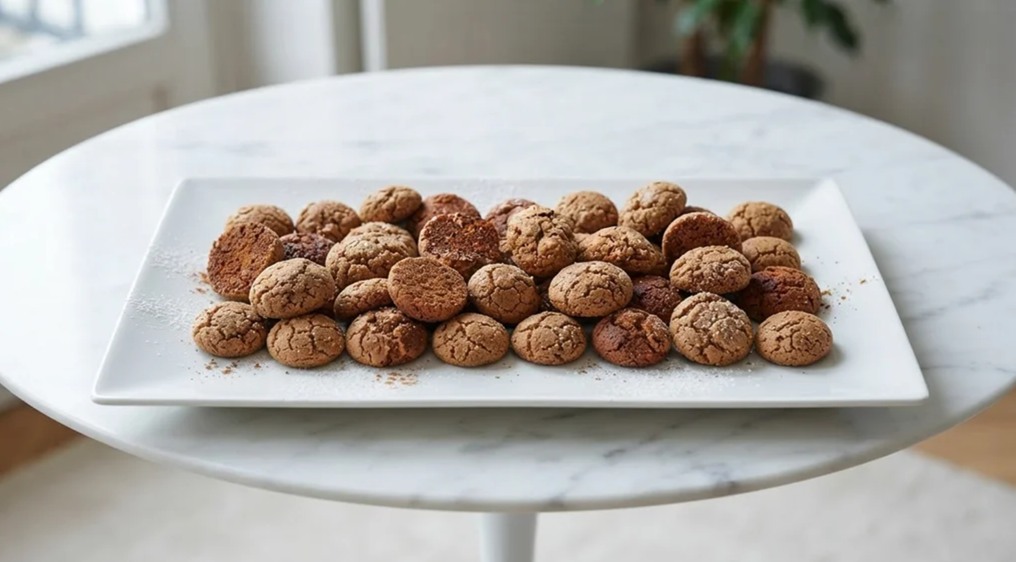
For those unfamiliar, pepernoten can be imagined as a cross between a miniature ginger cookie and a crunchy spice biscuit. Their small size makes them easy to scatter, share, and snack on. They are festive, portable, and deeply tied to the rhythm of Dutch winter traditions.
Pepernoten are not merely confections; they are cultural artifacts. They embody nostalgia, childhood anticipation, and the warmth of winter evenings. They connect families across generations to modern celebrations. They remind us that food often carries meaning beyond flavor—it becomes a vessel of memory, tradition, and identity.
Baking Tips for Success
Crunch factor: Keep dough balls small and uniform, and allow cookies to cool fully. Baking time: 18–20 minutes at 175°C (350°F), but watch carefully. Butter alternatives: Margarine or coconut oil can be used, though texture may differ.
Conclusion
Pepernoten, with their chewy texture, honey sweetness, and subtle anise flavor, are more than seasonal cookies. They are symbols of generosity, nostalgia, and cultural debate. They remind us that traditions evolve, but the essence of celebration—sharing, giving, and gathering—remains constant.