
A Rustic Elegance
Few dishes embody rustic elegance quite like the galette. At first glance, it is simple — a circle of pastry folded loosely over fruit or vegetables, baked until golden. Yet beneath its unassuming exterior lies centuries of French tradition. The galette is both humble and extraordinary, a dish that has evolved across regions and generations, adapting to local ingredients and tastes while retaining its essential character: flat, round, and quintessentially French.
Origins in Norman Times
The word “galette” traces back to Norman roots, derived from gale, meaning flat cake. In medieval kitchens, flour and water were transformed into sustenance, and the galette was born as a practical, everyday food. Over time, the term expanded to encompass a wide range of bakes — sweet, savoury, elaborate, or plain — but always flat and round. This adaptability is what allowed the galette to endure, shifting seamlessly from peasant fare to patisserie.
The Free‑Form Tart
When most people picture a galette today, they imagine the free‑form tart. Unlike a pie, which hides its filling beneath a crust, the galette celebrates exposure. Thinly sliced apples, plums, peaches, or berries are arranged in concentric circles, their juices bubbling and caramelising in the oven.
The pastry edges are folded inward, sometimes crimped neatly, sometimes pinched roughly, depending on the baker’s mood. The result is a tart that feels both artful and approachable, impressive without being intimidating. Sweet galettes often highlight seasonal fruit, while savoury versions lean on vegetables, cheese, and herbs.
Alternative flours such as rye or spelt add depth, their nutty flavours complementing roasted vegetables. This versatility makes the galette a favourite among home bakers: it is forgiving, adaptable, and endlessly creative.
Brittany’s Buckwheat Tradition
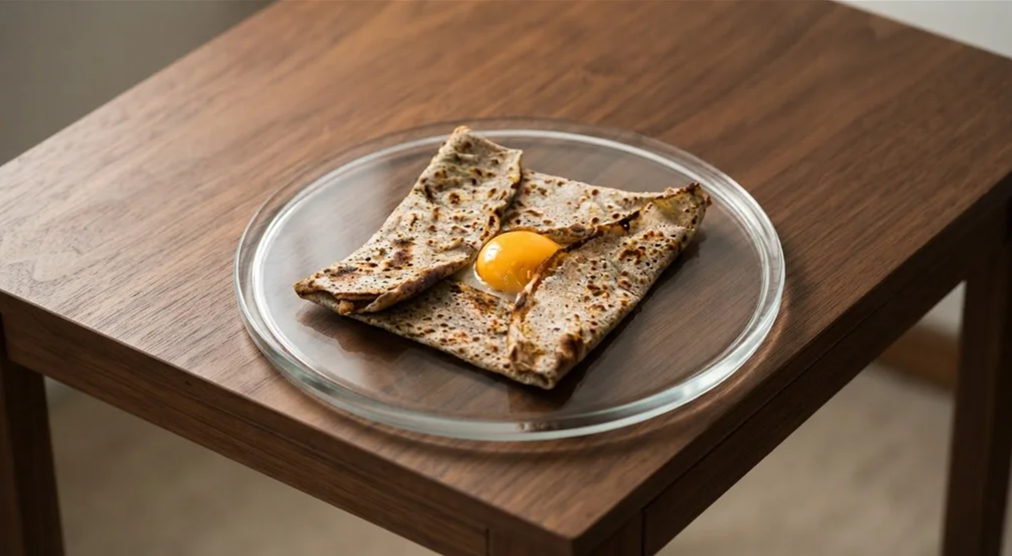
In Brittany, however, the galette takes on a different identity. Here, it is not a tart but a crêpe — specifically, a buckwheat crêpe, known as the galette de blé noir or galette bretonne. Buckwheat, hardy and easy to cultivate, became the staple crop of the region in the fourteenth century.
Its earthy flavour and gluten‑free nature gave rise to a dish that was both practical and distinctive. Cooked on a large bilig (a traditional Breton griddle), these galettes are crisp at the edges, tender at the centre, and typically filled with savoury ingredients.
The most iconic is the galette complète : Emmental cheese, a slice of ham, and a fried egg, its yolk glowing like a jewel. Other variations include mushrooms sautéed in butter, smoked salmon, or chorizo. Though savoury fillings dominate, modern tastes have embraced sweet versions too — Nutella, bananas, or salted caramel tucked into the folds of buckwheat.
The Festive Galette des Rois
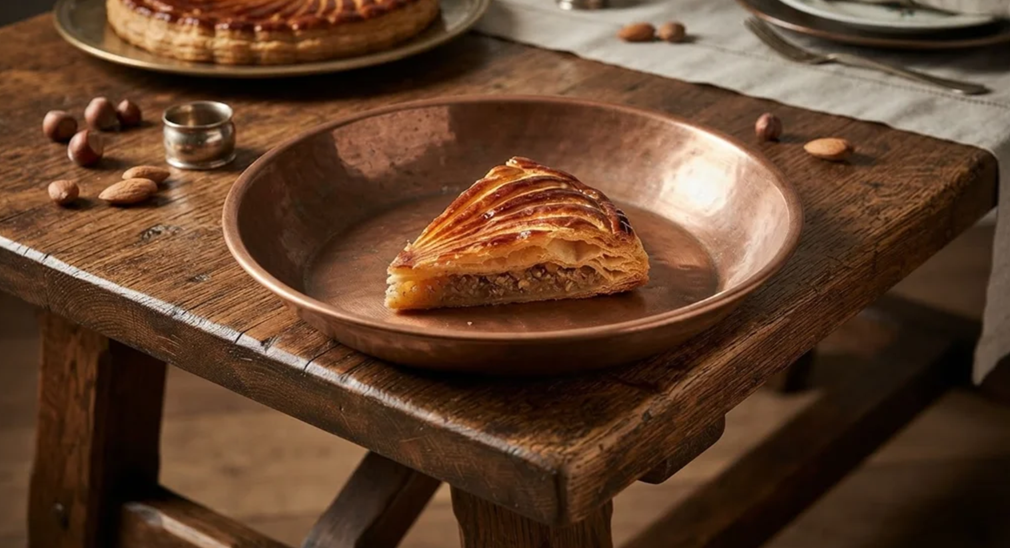
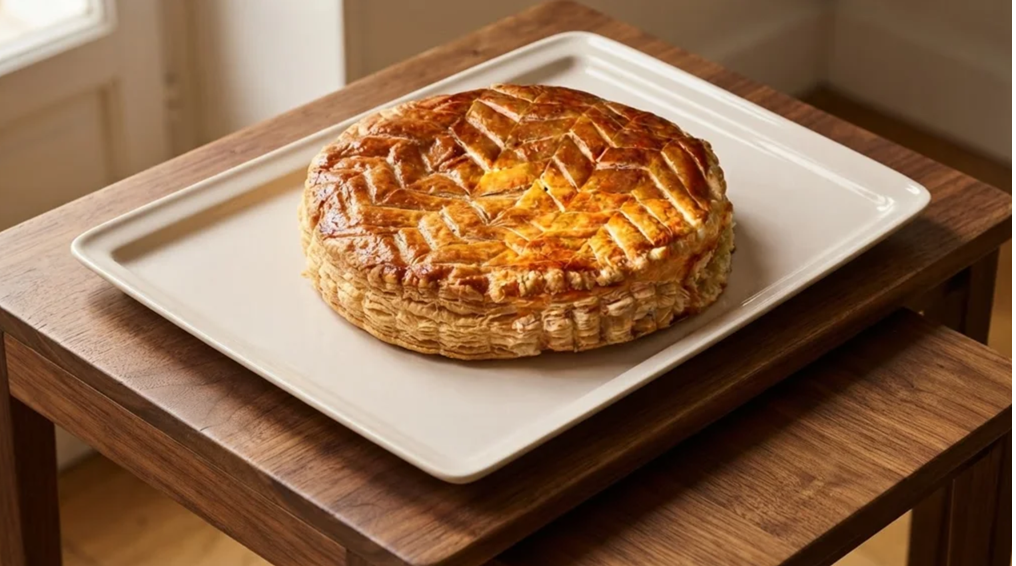
At the opposite end of the spectrum lies the galette des rois, or king cake. Rich, indulgent, and celebratory, it is traditionally served in early January. Puff pastry encases almond cream, the top scored with a diamond pattern, the whole baked until golden.
Though traditionalists cling to the classic almond filling, modern bakers experiment with chocolate, fruit jams, or chopped nuts. Regardless of variation, the galette des rois remains a symbol of festivity, a sweet indulgence that rounds off the Christmas season.
Beyond Flour: The Shape as Identity
Over time, the word galette has stretched beyond its original meaning. Today, any flat, round French dish might be called a galette. Potato galettes, for instance, arrange thin slices of potato in concentric circles, drenched in butter and herbs, baked until tender.
Courgette or tomato galettes follow the same principle. In these cases, the name refers less to the recipe than to the shape — proof of how deeply the concept of the galette has embedded itself in French culinary identity.
Crêpes and Galettes: A Subtle Distinction
For outsiders, the distinction between crêpes and galettes can be confusing. In France, wheat flour crêpes are usually sweet, thin, and golden, eaten as dessert or a treat. Buckwheat galettes, by contrast, are savoury, darker, and often crisp. Yet French speakers themselves often blur the line, using “crêpe” to describe both.
The difference lies not only in ingredients but also in context: crêpes are homemade, casual, while galettes are tied to Brittany, to restaurants, to tradition.
Traditional Fillings and Modern Creativity
Classic wheat crêpes include simple sugar, salted butter caramel, chocolate, or banana, often topped with whipped cream. More elaborate versions, like Crêpes Suzette, involve caramelised sugar and citrus zest, sometimes flambéed for theatrical flair. Buckwheat galettes, meanwhile, showcase savoury fillings: egg, cheese, salmon, or regional sausages.
Yet modern chefs push boundaries, stuffing galettes with foie gras, lobster, or vegan alternatives. Prices reflect this range: simple wheat crêpes cost a few euros, while gourmet galettes command much more. The dish’s adaptability ensures its continued relevance, appealing to both tradition and innovation.
The Symbol of Breton Cuisine
Above all, the buckwheat galette remains a symbol of Breton cuisine. Whether eaten at a seaside crêperie or cooked at home, it embodies the region’s identity: simple ingredients elevated by technique, rustic flavours paired with cider, tradition preserved through everyday practice. The bilig, the griddle on which galettes are cooked, is as iconic as the dish itself, a reminder that tools and rituals shape culinary heritage.
A Dish That Endures
What makes the galette remarkable is its endurance. From Norman flat cakes to Breton crêpes, from festive king cakes to potato rounds, it has survived a thousand years of change. It is both peasant food and patisserie, everyday sustenance and celebratory indulgence. It adapts to ingredients, regions, and eras, yet always retains its essence: flat, round, French.
To bake a galette today — whether folding pastry over apples or frying buckwheat on a griddle — is to join a lineage that stretches back centuries. It is to participate in a tradition that values simplicity, celebrates exposure, and finds beauty in rustic imperfection.