
There are meals that nourish, and then there are meals that create memories. Raclette belongs firmly in the second category. It is not simply cheese, nor merely a dish—it is a tradition, a way of gathering, a winter tradition that turns cold nights into warm celebrations.
Originating in the Swiss Alps, raclette has crossed borders and found a cherished place in French households, where it has become a hallmark of winter cuisine. The name itself comes from the French verb racler, meaning “to scrape.” That simple act—scraping molten cheese onto potatoes, charcuterie, and vegetables—captures the essence of raclette.
It is tactile, interactive, and deeply communal. To understand raclette is to understand not only the cheese but also the culture of sharing that surrounds it.
The Cheese at the Heart of Raclette
Raclette cheese is a semisoft cow’s milk cheese, brine-washed and aromatic, with a flavor that balances creaminess, nuttiness, and a subtle fruity tang. Its defining characteristic is meltability. Heated until bubbling, it transforms into a luscious, gooey cascade that drapes over food like velvet.
Flavor profile: mellow yet complex, buttery with earthy undertones, sometimes carrying a faint sweetness.
Texture: smooth and elastic, yielding a molten consistency when warmed.
Aroma: pungent but inviting, a reminder of alpine pastures and cellar aging.
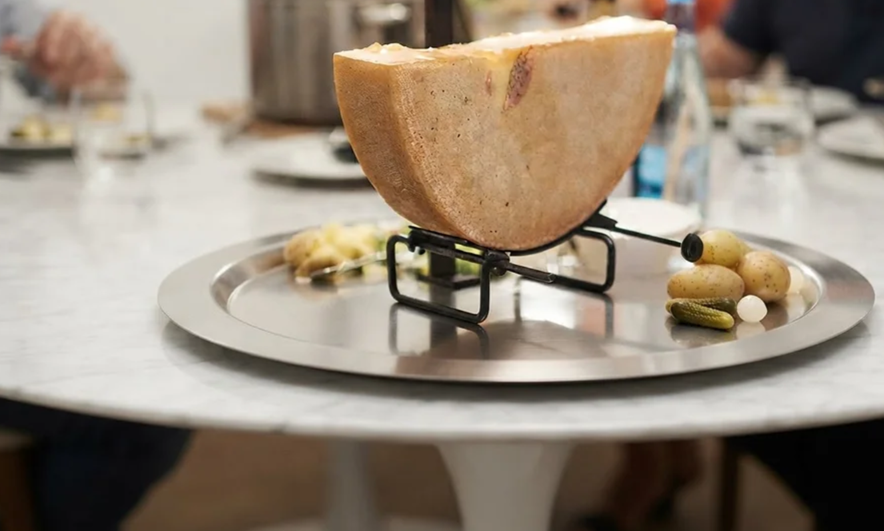
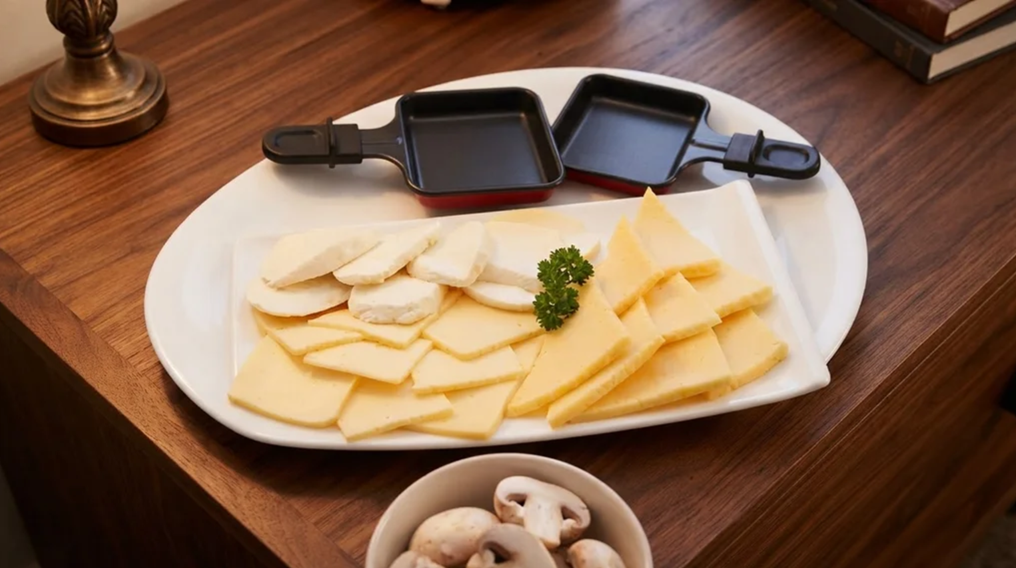
Traditional raclette wheels are large, often weighing several kilograms. In restaurants, a half wheel might be mounted beside a heating element, its surface softened and scraped directly onto diners’ plates. At home, electric raclette grills or smaller “raclonettes” make the ritual accessible, turning any table into a miniature Alpine hearth.
Bringing Raclette Home to Burgundy
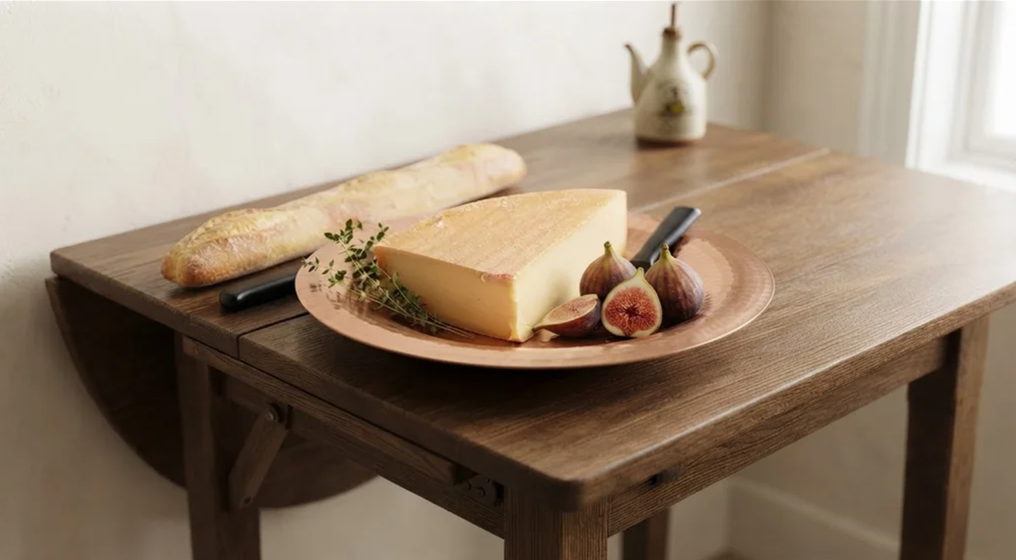
Later, in Burgundy, raclette became something more intimate. A secondhand machine from Emmaüs, bought for ten euros, transformed dining table into a winter hearth. Raclette was no longer just a dish—it was a tradition, a way of marking the season.
Hosting raclette at home is simple yet endlessly adaptable. The accompaniments can be tailored to taste, the pace set by the diners themselves. Each scrape of cheese becomes part of the conversation, part of the evening’s rhythm.
The Classic Spread
Traditional raclette accompaniments are humble but perfectly chosen:
Boiled potatoes: starchy, neutral, the ideal canvas for melted cheese.
Cornichons: tiny, briny pickles that cut through richness.
Pickled onions: sharp and zesty, adding brightness.
Charcuterie: prosciutto, ham, salami, or regional sausages for salt and texture.
Crusty bread: perfect for swiping up cheese and juices.
Together, these elements create a balance of flavors—savory, creamy, tangy, and salty. The simplicity is part of the charm. Raclette does not demand elaborate preparation; it invites improvisation and personalization.
A History Rooted in the Alps
The story of raclette begins not with a single recipe but with a way of life. In the Alpine regions of Switzerland, France, and northern Italy, winters were long and harsh. Communities relied on preserved foods—cheese, bread, potatoes and cured meats—to endure the season.
Cheese was often warmed by the hearth, its softened surface scraped onto whatever staples were available. In Switzerland’s Valais region, this practice became particularly associated with a local semisoft cheese. Over time, the name raclette was adopted, formalizing a tradition that had likely existed for generations.
In France’s Savoie and Haute-Savoie regions, raclette developed its own variations, with cheeses reflecting local terroir. In Italy’s Aosta Valley, shepherds followed similar practices, guided by necessity rather than culinary convention. By the mid-20th century, the invention of the electric raclette grill brought the tradition indoors, making it easier to prepare and serve.
Raclette spread across Europe and eventually North America, where it became a wintertime favorite for holiday meals and cozy gatherings.
Raclette vs. Fondue
Raclette is often mentioned alongside fondue, its melted-cheese cousin. Both share Alpine roots and a spirit of conviviality, but the experiences differ.
Fondue: cheese melted in a communal pot, eaten by dipping bread or vegetables.
Raclette: cheese scraped directly onto individual plates, layered over accompaniments.
Fondue emphasizes dipping and sharing from a single vessel. Raclette emphasizes scraping and customizing, with each diner creating their own plate. Both traditions embody warmth and togetherness, but raclette carries a tactile, theatrical flair.
Modern Variations and Pairings
While the classic accompaniments remain beloved, modern raclette invites experimentation. Pickled asparagus, roasted Brussels sprouts, or even sweet peppers can add new dimensions. In contemporary kitchens, raclette has become a canvas for creativity.
The cheese’s meltability makes it versatile, able to drape over vegetables, meats, or even seafood. Yet the essence remains the same: melted cheese, scraped and shared.
Wisconsin’s Alpine Connection
Across the Atlantic, Wisconsin cheesemakers have embraced raclette, drawing inspiration from Swiss and French traditions. Using premium local milk and Old World techniques, they have crafted raclette-style cheeses that rival European originals.
Alpinage Classic Raclette: made by a first-generation French cheesemaker near Milwaukee, offering creamy texture and Alpine flavor.
Roelli Cheese Haus’ Little Mountain: a celebrated raclette-style cheese, blending tradition with American terroir.
These cheeses reflect both heritage and innovation, proof that raclette’s spirit can thrive wherever winters are long and tables are warm.