
Origins in the Haute‑Savoie
Tartiflette is more than a recipe; it is a story of the French Alps, of valleys where winters are long and food must be warming, sustaining, and communal. The dish was born in Haute‑Savoie, a region where potatoes became a staple after their introduction to Europe, and where cheese was already central to daily life.
The name itself comes from “tartiflâ,” a local dialect word for potato, grounding the dish in its rustic roots. Yet despite its humble beginnings, tartiflette has become a celebrated centerpiece of Alpine cuisine, a dish that embodies both tradition and indulgence.
The Role of Reblochon
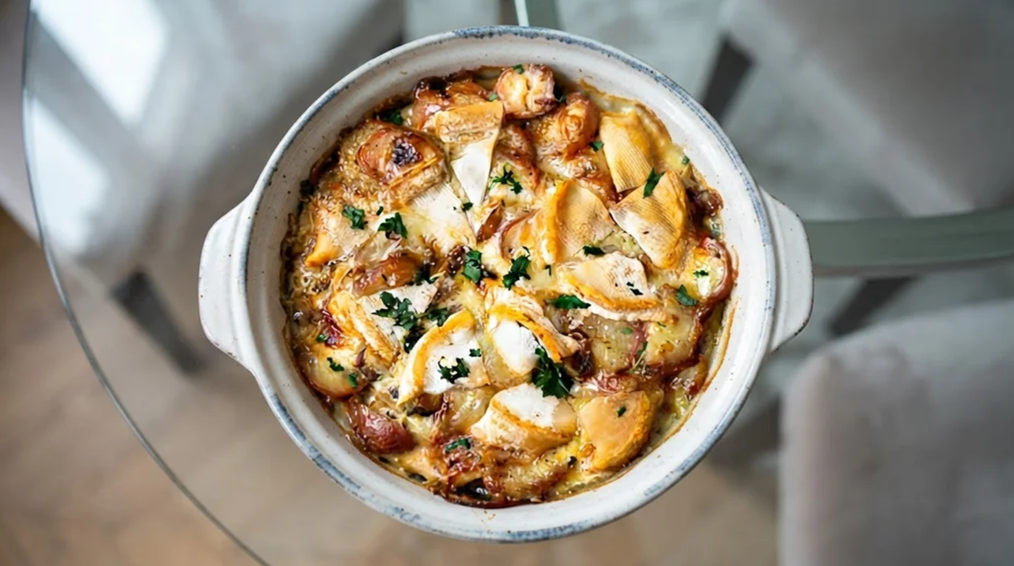
At the heart of tartiflette lies Reblochon, a washed‑rind cheese with a fruity, nutty profile and a texture that melts into creamy decadence. Its history is as colorful as the dish itself: farmers in the 13th century would “re‑milk” their cows after the tax collector had gone, producing a richer, fattier milk that became the basis for Reblochon.
This cheese, with its thin rind and luxurious melt, is what gives tartiflette its authenticity. Outside France, however, Reblochon is difficult to source — raw‑milk cheeses are banned from import into the United States, and even in Europe it can be costly.
Substitutes like Camembert, Taleggio, or Gruyère can be used, each lending a slightly different character, but none quite replicate the Alpine original.
Anatomy of the Dish
Tartiflette is built in layers. Potatoes, preferably waxy varieties like Yukon Gold or Charlotte, are boiled until tender. Onions are sautéed until golden, their sweetness balancing the richness of the cheese. Traditionally, beef are added, though other meats can be substituted.
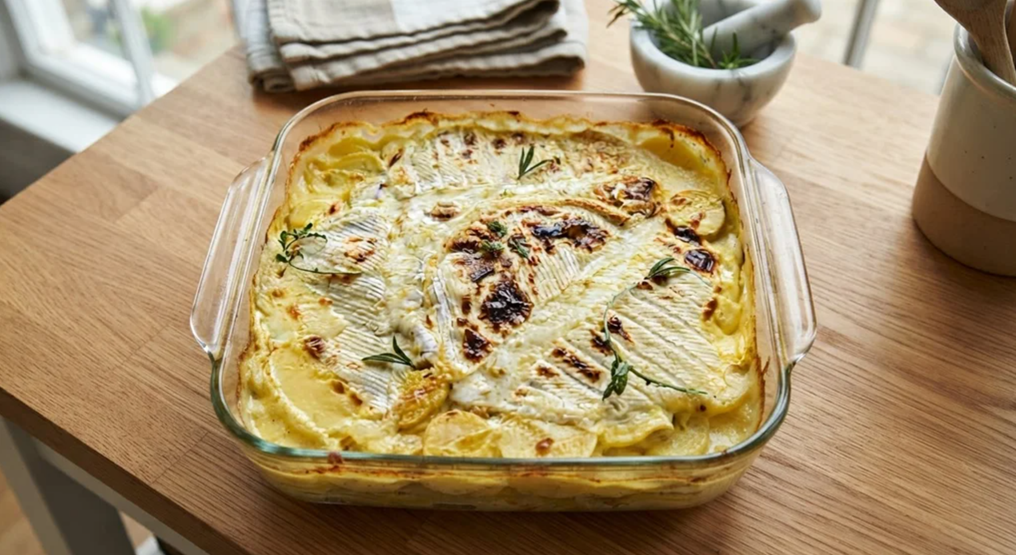
These elements are assembled in a casserole, topped with slices of Reblochon, rind intact, and baked until the cheese bubbles and the potatoes absorb its creamy essence. The result is a gratin that is both rustic and luxurious, a dish that feels at once peasant and aristocrat.
Cooking Techniques
The success of tartiflette lies in technique. Potatoes should be started in cold, salted water, allowing them to cook evenly and absorb seasoning from within. Cutting them before boiling saves time and ensures tenderness. Onions must be sautéed slowly, coaxing out their natural sweetness.
The cheese should be added in generous slices, rind and all, because the rind crisps in the oven, adding texture and flavor. Baking at 350°F for about twenty minutes allows the cheese to melt into the potatoes without overcooking them. These small details elevate the dish from simple casserole to Alpine masterpiece.
Substitutions and Adaptations
While Reblochon is the traditional choice, adaptations are inevitable outside France. Camembert offers a buttery flavor, Taleggio a fruity tang, Gruyère a firmer, nuttier bite. Each creates a slightly different tartiflette, but all retain the essence of melted cheese over potatoes.
Vegetarian versions omit the meat, relying on mushrooms or herbs for depth. Cream, though not traditional, is sometimes added for extra richness. These variations reflect the adaptability of tartiflette — a dish that can be tailored to local ingredients while still honoring its Alpine roots.
Cultural Significance
In the Alps, tartiflette is more than food; it is tradition. After a day of skiing, it is served in chalets with crusty bread, saucisson, cornichons, and bitter salads. It is convivial food, meant to be shared, eaten slowly, accompanied by laughter. Its richness demands balance, which is why it is often paired with acidity — pickles or vinaigrettes.
This interplay of indulgence and sharpness is part of its charm, making tartiflette not just a dish but an experience.
Tartiflette Beyond the Alps
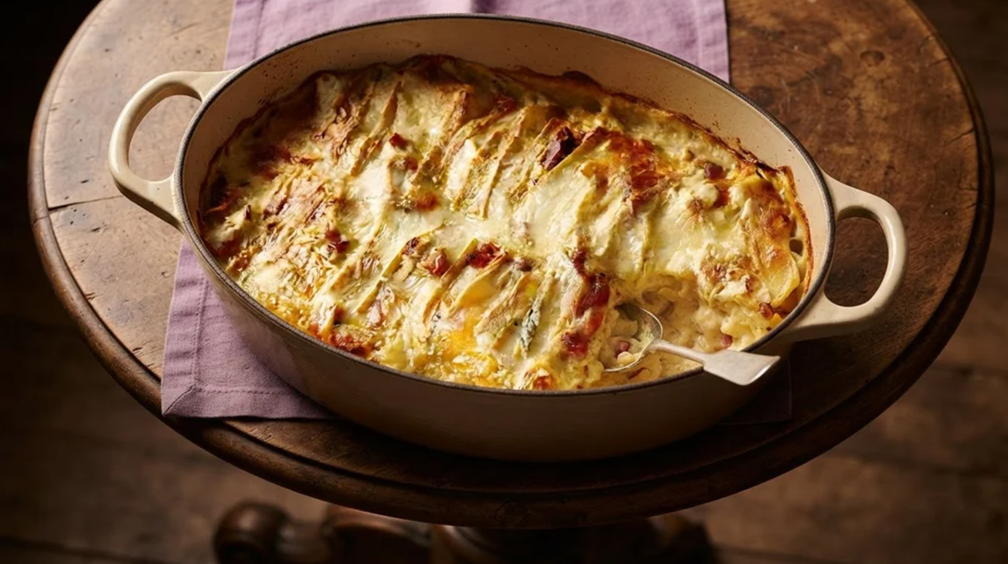
Though rooted in Haute‑Savoie, tartiflette has traveled. In Paris, it appears on bistro menus as a winter special. In North America, it is recreated with local cheeses, adapted to available ingredients. Its appeal lies in its universality: potatoes, onions, cheese — simple, accessible, beloved.
Yet it retains its Alpine identity, a reminder of snowy slopes and rustic kitchens. For many, making tartiflette at home is a way of bringing a piece of France into their own kitchens, of connecting with a tradition that transcends geography.
Personal Memories and Nostalgia
Cooking tartiflette often evokes nostalgia. For some, it recalls trips to Paris or ski holidays in the Alps. For others, it becomes a family tradition, a holiday staple that brings warmth to winter tables. The act of layering potatoes and cheese, of watching the oven transform them into bubbling comfort, is itself a tradition, a reminder to stay curious in the kitchen, to try dishes that might not have been natural choices but become favorites. Tartiflette, in this sense, is both food and memory, both sustenance and story.
Pairings and Balance
Because tartiflette is so rich, pairings are essential. A simple roast chicken, a fresh green salad with tart vinaigrette, or vinegary pickles can cut through the creaminess. Bitter greens like frisée or radicchio add contrast. These pairings transform tartiflette from overwhelming indulgence into balanced meal, allowing its richness to shine without overpowering.
Tartiflette as Comfort Food
Ultimately, tartiflette is comfort food. It is heavy, yes, but in the best way — the kind of heaviness that makes you dream of naps by the fire, that makes winter feel less harsh. It is food that gathers people, that fills tables, that creates warmth in both body and spirit.
Its simplicity — potatoes, onions, cheese — belies its depth, proving that comfort lies not in complexity but in care.
Conclusion: A Dish of Place and Memory
Tartiflette is more than cheesy potatoes. It is a dish of place, of Haute‑Savoie valleys and Alpine chalets. It is a dish of memory, of ski holidays and family dinners. It is a dish of comfort, of warmth against winter. Whether made with Reblochon in France or Camembert elsewhere, it carries the same essence: indulgence, conviviality, and the quiet joy of food that feels like home.