🚦Mobility in Kuala Lumpur City Centre (KLCC)
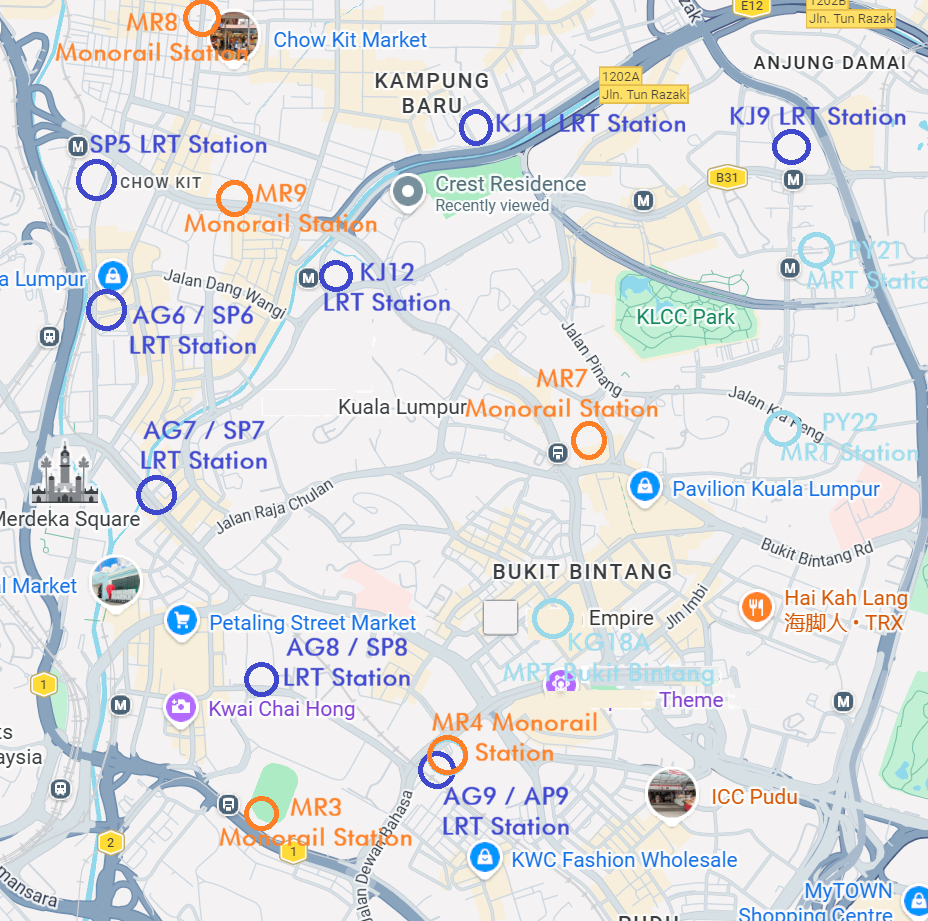
Getting around Kuala Lumpur City Centre (KLCC), is seamless and highly connected. The area is one of the most transit-dense zones in Malaysia, with around 12 rail stations nearby—5 LRT, 4 MRT, and 3 Monorail stations. Whether you prefer the speed of rail, the convenience of buses, or the flexibility of e-hailing services, KLCC offers multiple transport options that link directly to the rest of the city. From quick LRT rides to Bukit Bintang, free city buses to shopping hubs, or on-demand rides with Bolt, mobility here balances speed, affordability, and comfort.
🚈 Rail Access – LRT, MRT & Monorail
KLCC is directly served by the Ampang Park LRT Station (KJ11) on the Kelana Jaya Line. Within the same radius, you’ll also find Kampung Baru (KJ9), Dang Wangi (KJ12), and Masjid Jamek (KJ13), giving a total of five LRT stations.
On the MRT Line, four stations fall within reach: Bukit Bintang (SBK20), Pasar Seni (SBK17), and Muzium Negara (SBK16). These connect commuters to Pavilion, and KL Sentral.
For elevated travel, the KL Monorail adds three more stations: Bukit Nanas (MR1), Raja Chulan (MR2), and Bukit Bintang (MR3), serving the Golden Triangle and shopping belt. Together, this dense network ensures that residents and visitors are never far from a rail option.
🚌 Bus Access
Rapid KL buses provide feeder routes linking KLCC’s commercial and residential areas to nearby rail stations and shopping districts. The GoKL City Bus offers free rides within central Kuala Lumpur, making it easy to reach hotspots like Bukit Bintang, Chow Kit, and Kampung Baru without extra cost. This makes public transport both budget-friendly and practical for daily commutes.
🚗 E-Hailing Services – Bolt & inDrive
For door-to-door convenience, Bolt and inDrive are widely used in KL City Centre. They’re especially handy for late-night returns from the city’s nightlife, quick trips to Mid Valley or Bangsar, or airport transfers. With competitive fares and cashless payment options, e-hailing ensures seamless mobility for professionals, expats, and tourists who prefer flexibility over fixed routes.