
The Origins of Bitterballen
The history of bitterballen stretches back to the 17th century. Writers like Vondel and Bredero frequented these establishments, and when hunger struck, tavern owners offered cheese, sausage, and these fried meat ragout balls. The name “bitterbal” comes not from bitterness of taste but from their association with “bitters,” the drinks they accompanied.
Anatomy of a Bitterbal
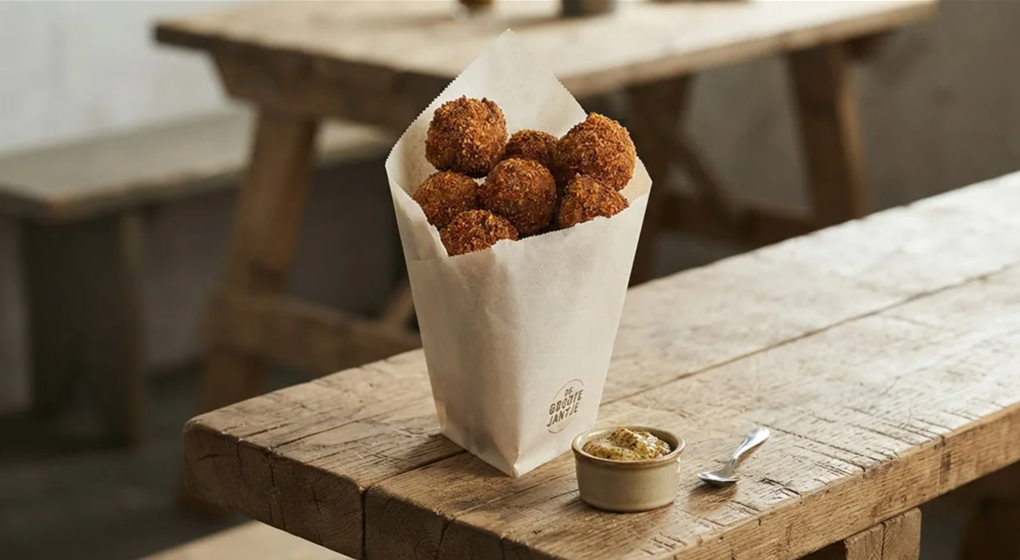
A bitterbal is a small, round croquette, typically 3 to 5 centimeters in diameter. Its crisp breadcrumb shell hides a molten filling of beef ragout thickened with a roux. Unlike the oblong kroket, bitterballen are spherical, making them perfect for sharing. They are almost always ordered in portions—never alone—and often appear as part of a bittergarnituur, a platter of assorted fried snacks.
The Role of Roux
The secret to bitterballen lies in the filling. Stewing beef is simmered until tender, then folded into a roux made of butter and flour. This mixture is chilled until firm, rolled into balls, coated in breadcrumbs, and fried until golden. The roux ensures the ragout holds together, creating a creamy interior that contrasts beautifully with the crisp exterior.
Eating Traditions and Lava Warnings
Bitterballen are inseparable from Dutch life. They are served hot, often with sharp mustard that cuts through the richness. The tradition of eating them is almost as important as the flavor: nibble the crust first, let the steam escape, and only then dive into the molten center. Bite too quickly and you risk the infamous “lava burn.”
Pairings: Mustard
Traditionally, bitterballen were paired with mustard. The sharpness of mustard balances the creamy ragout. Together, they create a perfect harmony of flavors.
Bittergarnituur Tradition
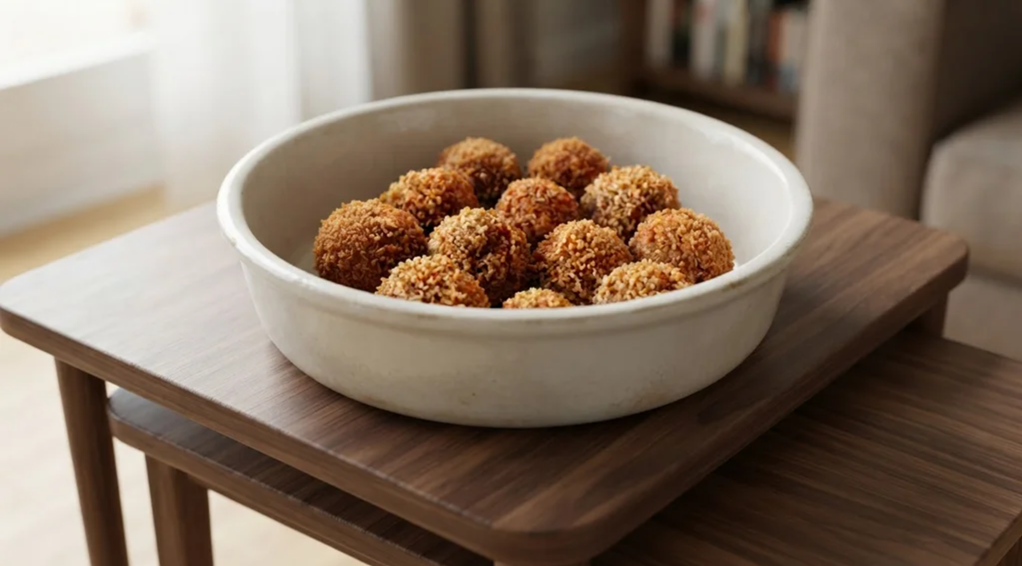
Bitterballen are often served as part of a bittergarnituur, a platter of fried snacks meant for sharing. Alongside bitterballen, you might find cubes of Gouda, slices of sausage, or small egg rolls. This tradition embodies gezelligheid, the Dutch concept of cozy conviviality.
Variations Beyond Beef
Though beef is the classic filling, Dutch kitchens have experimented widely. Veal, shrimp, cheese, and even vegetarian versions exist. Each variation retains the essential structure—ragout thickened with roux, breaded, and fried—but offers a different flavor profile. The beef version, however, remains the most iconic.
Making Bitterballen at Home
Preparing bitterballen is time‑consuming but rewarding. The beef must be braised slowly, the roux carefully balanced, and the mixture chilled before shaping. Once fried, they can be frozen and reheated, making them ideal for parties. Air fryers have even modernized the reheating process, ensuring crispness without excess oil.
Bitterballen vs. Global Croquettes
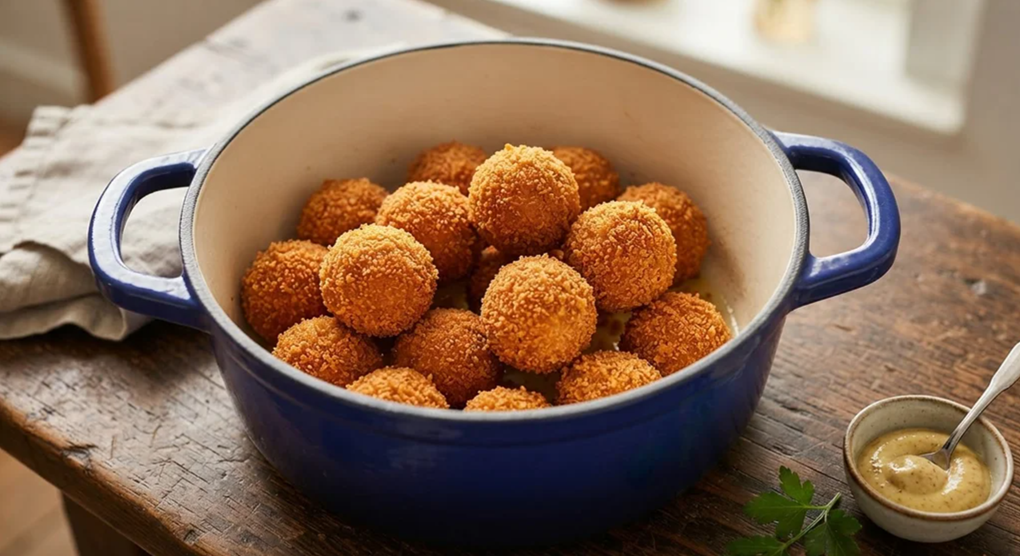
Croquettes are found worldwide, from French kitchens to Japanese izakayas. The Dutch kroket is oblong, while the bitterbal is spherical. Both rely on ragout and roux, but bitterballen are uniquely tied to Dutch culture. Their small size makes them more snackable, more communal, and more emblematic of Dutch.
Flavor Profile and Sensory Experience
The first bite of a bitterbal is a sensory event. The crunch of the breadcrumb crust gives way to a creamy, savory filling. The beef is tender, the spices subtle, and the roux adds a buttery richness. Paired with mustard, the flavor is balanced—sharpness against creaminess, crispness against softness.
Bitterballen as Cultural Heritage
Though simple in form, bitterballen are a national treasure. They represent Dutch ingenuity in turning leftovers into delicacies, Dutch conviviality in sharing food with drink, and Dutch resilience in preserving traditions across centuries. They are as much a part of the Netherlands as canals, bicycles, and stroopwafels.