
🌷Amsterdam is a city that breathes through its canals. Every bridge, every ripple of water carries a story, and along the Singel canal lies one of its most whimsical chapters—the Bloemenmarkt. This floating flower market, the only one of its kind in the world, has been charming visitors since 1862. It is not just a place to buy tulip bulbs or wooden clogs; it is a living symbol of Amsterdam’s love affair with flowers, commerce, and water.
A Market Born of Waterways
In the 19th century, Amsterdam’s canals were its lifelines. Farmers from the countryside would load barges with tulips, hyacinths, and daffodils, sailing them into the city center. The Singel canal became their stage, where flowers spilled from boats into the hands of eager buyers. Over time, these barges moored permanently, transforming into floating shops.
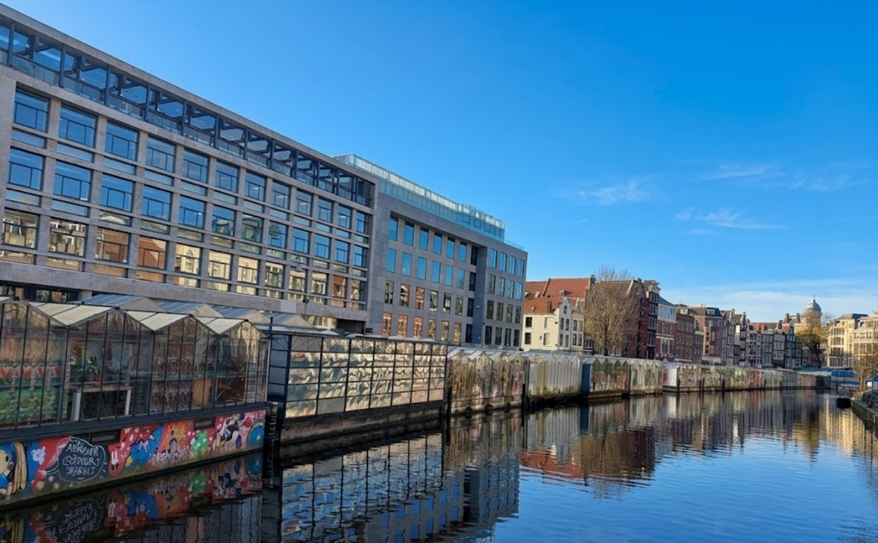
What began as necessity became tradition, and tradition became spectacle.Walking along the Singel today, you can still feel that history. The barges, supported by poles, line up like a floating street. Their decks are crowded with bulbs, souvenirs, and blooms, echoing the days when flowers were traded like gold.
What You’ll Find Today
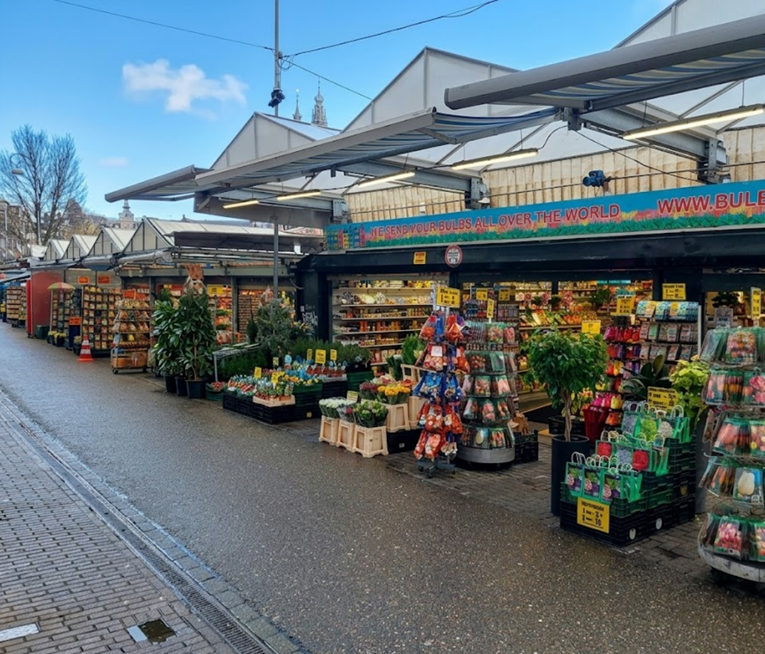
The Bloemenmarkt is no longer the florist’s daily haunt—it has become a tourist’s delight. Yet its charm lies in this transformation. Here’s what you’ll encounter:
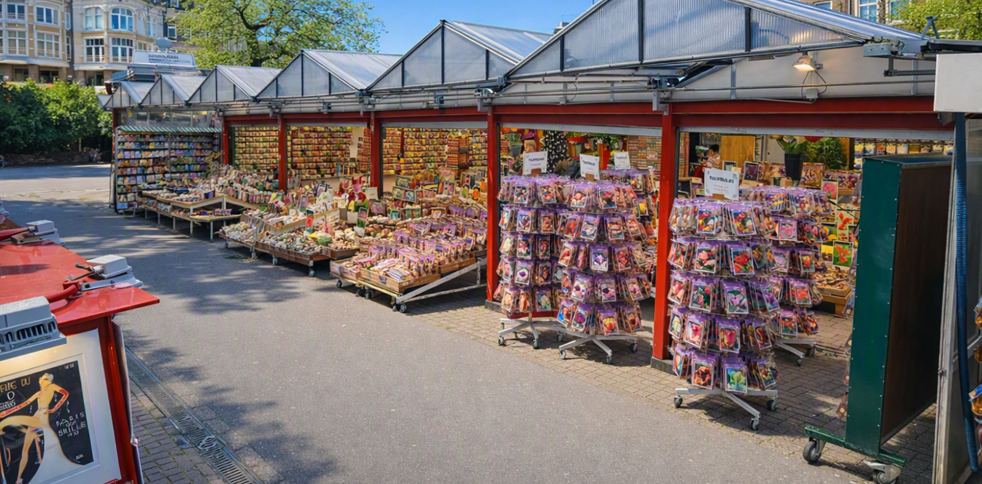
Tulip bulbs: Some certified for export, neatly sealed with phytosanitary certificates, others decorative, colorful, and less reliable.
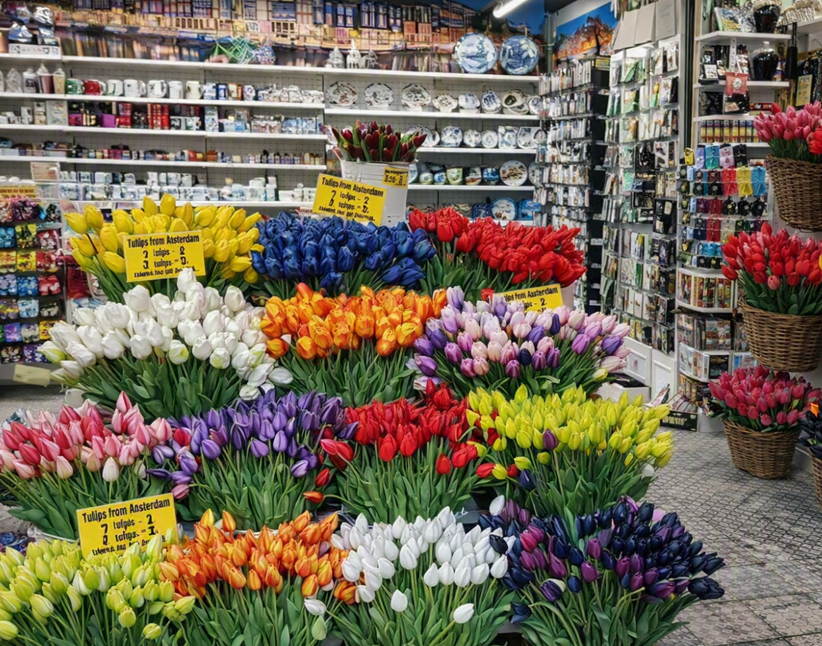
Wooden tulips: Brightly painted blossoms that never wilt, carved into permanence.
Dutch clogs and Delftware: Souvenirs that carry the essence of Dutch tradition.
Seasonal treasures: Faux flowers, seeds, and quirky ornaments.
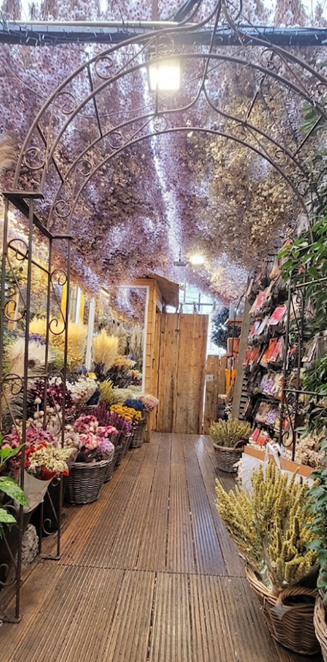
It’s not a lush botanical paradise. Instead, it’s a floating bazaar, a collage of color and commerce, where the romance lies in the setting as much as the wares.
The Atmosphere
There’s something irresistibly nostalgic about the Bloemenmarkt. The air is a mix of fresh blooms and dried petals. Tourists pause for photos, their reflections caught in the canal’s surface. Locals hurry past, weaving between stalls. The barges sway gently, reminding you that this is not a street but a floating strip of history.
It’s here that tulip mania whispers through the centuries. In the 17th century, tulips were so prized they sparked one of the world’s first economic bubbles. Prices soared, fortunes were made and lost, and yet the flower endured as a symbol of Dutch identity. The Bloemenmarkt carries that legacy, even if today’s bulbs are more souvenir than speculation.
Practical Details
Location: Singel canal, between Muntplein and Koningsplein, in the Grachtengordel-West district.
Address: Singel 630, 600 Amsterdam, Netherlands.
Opening Hours: Monday–Saturday: 09:00–17:30Sunday: 11:00–17:30
Transport: Trams 1, 2, 5 to Koningsplein.Trams 4, 9, 14 to Muntplein. Metro stop Waterlooplein (10-minute walk).
Entry is free, and the market is open year-round. For the most dazzling displays, visit in spring—March to May—when tulip season paints the city in riotous color.
A Word of Caution
Not all bulbs are equal. Fresh tulip bulbs are typically sold from late August to December. Outside this window, you may find older stock that won’t bloom as promised. Travelers have shared stories of “black tulips” sprouting red, or rare fringed varieties turning ordinary. If you’re buying to plant back home, look for export-certified packaging and check your country’s customs rules.
Nearby Sights
The Bloemenmarkt sits at the heart of Amsterdam’s historic core, making it easy to pair with other landmarks:
Muntplein & Munttoren – A 17th-century tower once guarding the medieval gate.
Amsterdam Museum – A deeper dive into the city’s layered past.
Begijnhof – A hidden courtyard of serenity, tucked away off Spui square.
Kalverstraat – The city’s busiest shopping artery.
Rembrandtplein – A lively square of cafés and nightlife, just minutes away.
Tulips Beyond the Market
If you want to see tulips in bloom, you’ll need to leave the city:
Keukenhof Gardens – In Lisse, 40 minutes from Amsterdam, showcasing over 7 million flowers each spring.
Bollenstreek – The bulb-growing region between Haarlem and Leiden, perfect for cycling through fields of color.
Tulip Festival Amsterdam – Held each April, planting tulips across parks, museums, and squares.
Is It Worth Visiting?
Yes—but go with the right expectations. The Bloemenmarkt is not a botanical wonderland. It is a floating relic, a quirky blend of commerce and history, a place where Amsterdam’s watery veins meet its floral heartbeat. Come for the story, the setting, and the snapshots.
Buy a bulb or a wooden tulip if you must, but linger for the atmosphere—the gentle sway of barges, the kaleidoscope of colors, the reminder that even commerce can be romantic when it floats on a canal.
A Walk Through Time
Imagine arriving in December. Wooden tulips stand in rows, painted in impossible shades. The canal reflects it all, doubling the magic. Or picture spring, when tulip season bursts into life. The stalls overflow with bulbs, promises of gardens yet to bloom. Tourists clutch bags of souvenirs, while locals smile knowingly—this is Amsterdam’s heartbeat, pulsing through petals and water.
Final Thoughts
The Bloemenmarkt is a paradox: authentic yet touristy, historic yet commercial. It is not the lush paradise some imagine, but it is undeniably Amsterdam. It tells a story of trade, tradition, and tulip mania, wrapped in the gentle sway of barges on the Singel canal. Visit it not for the flowers alone, but for the atmosphere, the history, and the romance of a city that has always floated between commerce and beauty.