
Camembert de Normandie is a cheese that carries with it the weight of history, the richness of terroir, and the artistry of tradition. To explore it fully, we must move through its story in carefully structured stages, each one a mini topic that reveals another layer of its character.
Protected Status
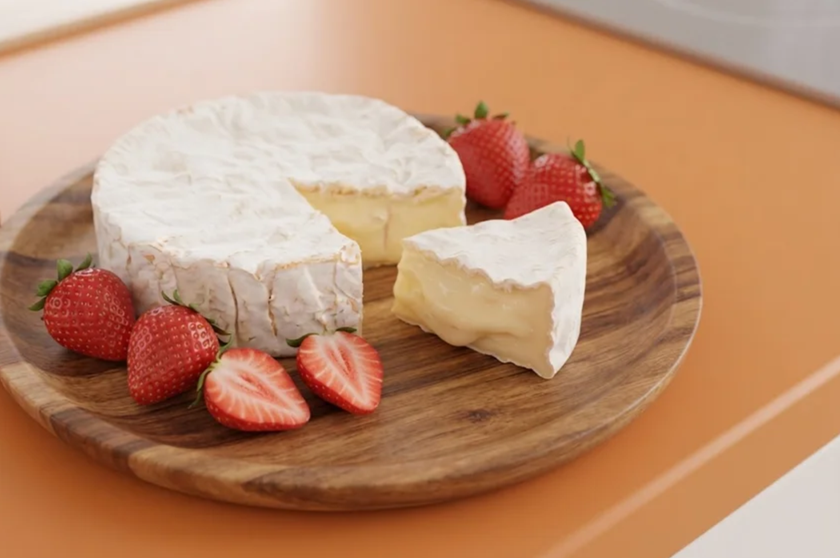
As Camembert’s fame spread, imitation followed. The name “Camembert” itself was never protected, and so cheeses bearing the name appeared across France and beyond. But in 1983, Camembert de Normandie was granted AOC status, and in 1996, AOP status.
These protections ensured that only cheese made in Normandy, from raw milk of Normande cows, hand-ladled into moulds and ripened for at least 21 days, could bear the name. Camembert de Normandie thus became a safeguarded treasure, its authenticity preserved against dilution.
The Make Post-Make Model
The Academy of Cheese’s Make Post-Make model captures the artistry of Camembert de Normandie. In the Make stage, raw milk from cows grazing Normandy’s lush pastures is gently heated, rennet added, and curds cut into large cubes to retain moisture. These curds are ladled by hand into moulds, layer by layer, allowing whey to drain naturally.
In the Post-Make stage, the cheese is salted to enhance flavour and preserve it, then aged for at least 21 days in humid cellars. During this time, Penicillium candidum blooms across the rind, ripening the cheese from the outside in and creating its creamy interior.
Appearance and Texture
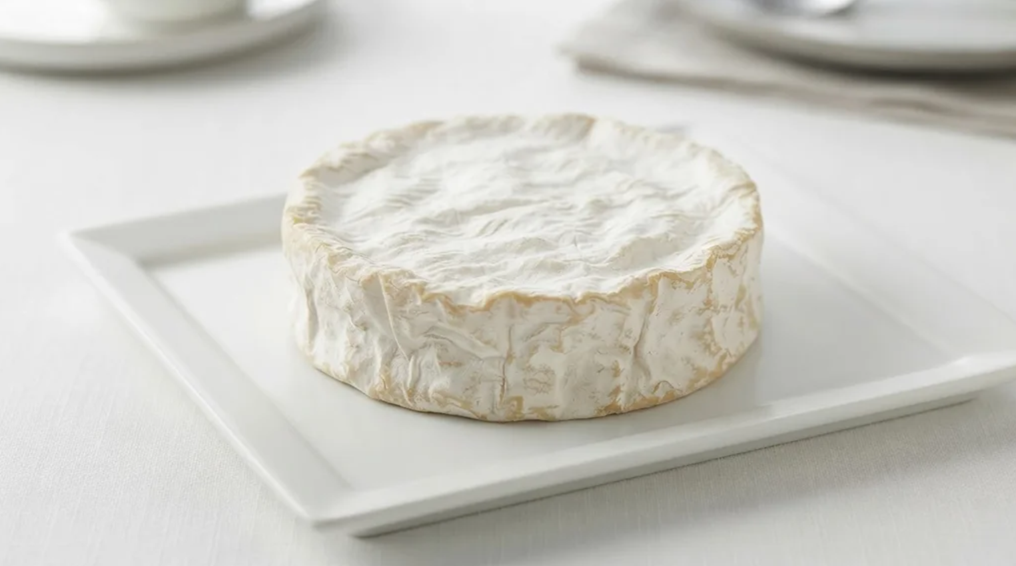
Camembert de Normandie presents itself as a small, round wheel cloaked in a white, bloomy rind, sometimes tinged with golden flecks. Beneath lies a paste that evolves from chalky firmness to creamy velvet. At peak ripeness, the paste is smooth, glistening, and punctuated by tiny holes, a sign of fermentation’s quiet work.
Aroma and Flavour
The aroma blends earth, mushrooms, and damp hay, with a creamy undertone. The flavour begins with warm milk and soft mushroom notes, deepening into barnyard richness, nutty undertones, and a lingering tang. This complexity reflects Normandy’s terroir and the raw milk’s character, offering a taste that is both rustic and refined.
Culinary Uses
Camembert de Normandie is versatile, elevating both simple and elaborate dishes. On its own, it is best savoured at room temperature with a crusty baguette and a glass of Normandy cider. Baked in its box with garlic, rosemary, and honey, it becomes a molten centrepiece.
Paired with apples, pears, figs, walnuts, hazelnuts, truffle oil or honey, it transforms a cheeseboard into a celebration of French terroir.
Normandy’s Terroir
Normandy’s temperate climate, fertile soils, and lush pastures shape the milk’s richness, ensuring authenticity and connection to place. The cows’ diet, the land’s character, and the artisans’ techniques all converge to create a cheese that is inseparable from its terroir.
Structured Tasting Approach
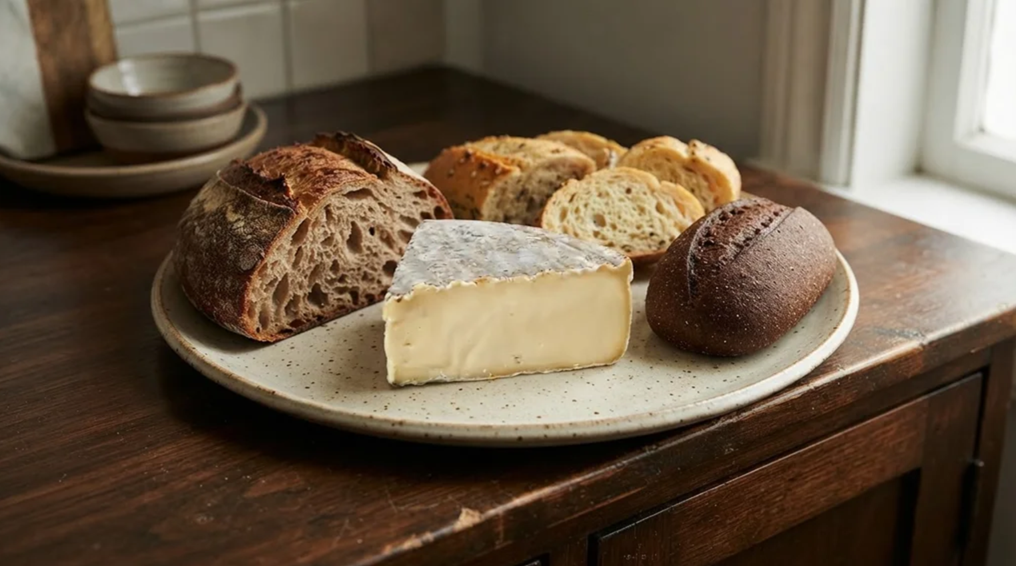
Applying the structured approach enhances appreciation. The appearance is a perfect white rind with occasional golden spots. The aroma blends earth, mushrooms, and farmyard with a creamy undertone. The texture is silky and smooth, melting in the mouth. The taste is a harmonious mix of creamy, savoury, and tangy flavours, with nutty and umami undertones.
Legacy and Symbolism
Camembert de Normandie is more than food—it is heritage. From Marie Harel’s farmhouse to soldiers’ rations, from Normandy’s meadows to global cheeseboards, it embodies French tradition and charm. Its rind carries the story of revolution, its paste the richness of terroir, and its flavour the timeless allure of authenticity.