
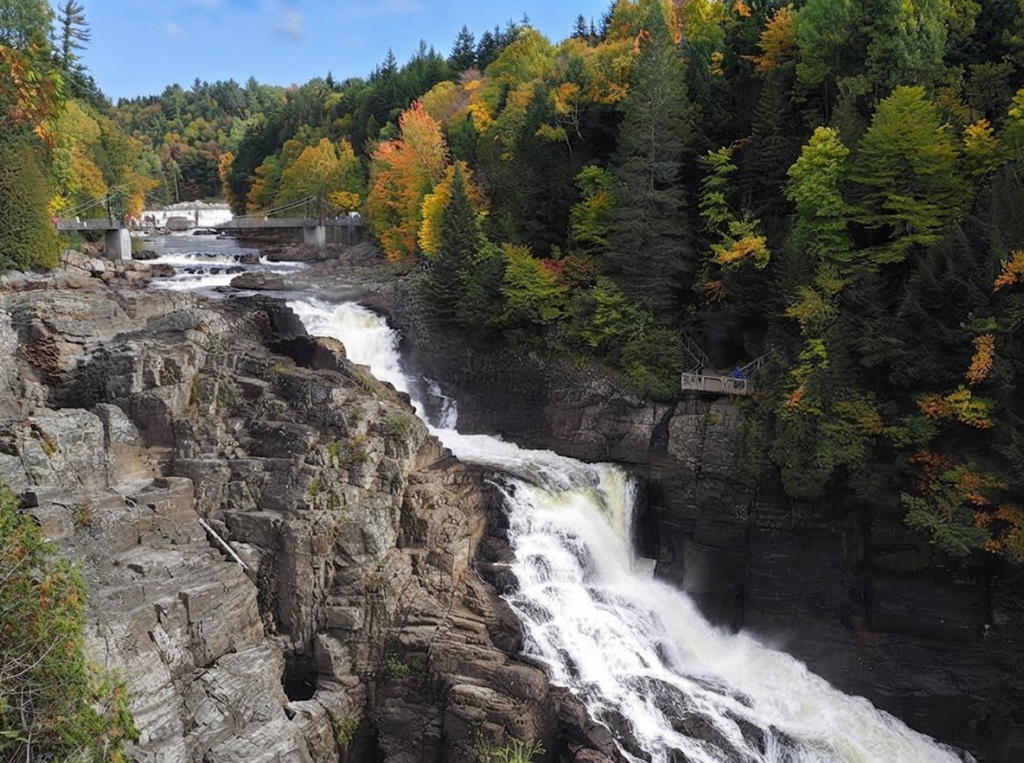
A gorge of thunder and light, Canyon Sainte-Anne is one of Québec’s most dazzling natural treasures. Just thirty minutes from the cobbled streets of Old Québec, the forest suddenly parts to reveal a vertical drama: waterfalls plunging 73 metres into a billion-year-old ravine, suspension bridges trembling above the void, and autumn leaves igniting the cliffs in firelight.
It is a place where geology, adventure, and poetry converge — a canyon that feels alive, breathing with the roar of water and the laughter of families who cross its bridges.
The First Encounter
The Sainte-Anne-du-Nord River does not announce itself politely. It hurls itself into the canyon with a force that shakes the air. Standing at the first suspension bridge, you see two rivers: upstream, a tranquil ribbon winding through forest; downstream, a torrent exploding into white spray.
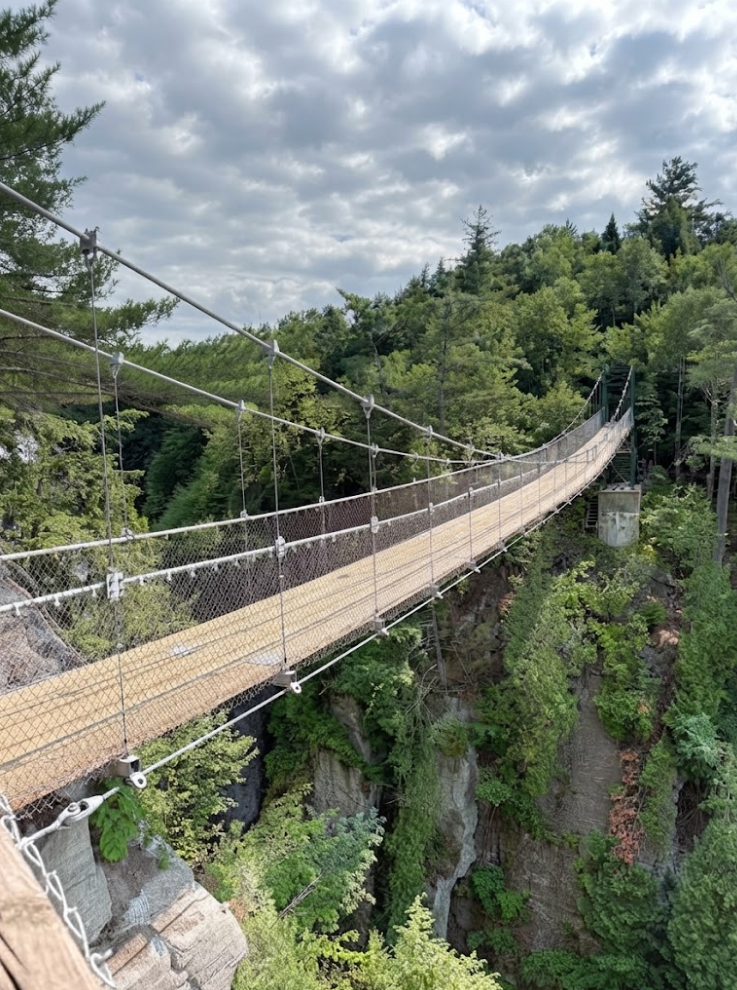
The contrast is startling, a reminder that nature can shift moods in a heartbeat. Discovered in 1965 by a logger camping nearby, the falls were once a secret known only to those who worked the forests. By 1973, Canyon Sainte-Anne opened as a privately owned park, its trails and bridges designed to let visitors walk above the torrent. Today, three suspension bridges span the gorge, each offering a different perspective: calm river, thundering chaos, dizzying height.
The Journey from Québec City
The road to Canyon Sainte-Anne is itself a prelude. Leaving the old city, you join Route 440, passing Montmorency Falls — a curtain of water taller than Niagara. The freeway becomes Route 138, winding past the Basilica of Sainte-Anne-de-Beaupré, its twin spires rising above the river. The road climbs steeply, then bends into forest.
Suddenly, the sound of rushing water fills the air. The canyon announces itself before you even glimpse it. For visitors, this proximity is part of the magic. In less than half an hour, you move from cobblestones to wilderness carved by glaciers. Canyon Sainte-Anne is not a distant expedition but a day trip, accessible yet untamed.
Walking the Loop
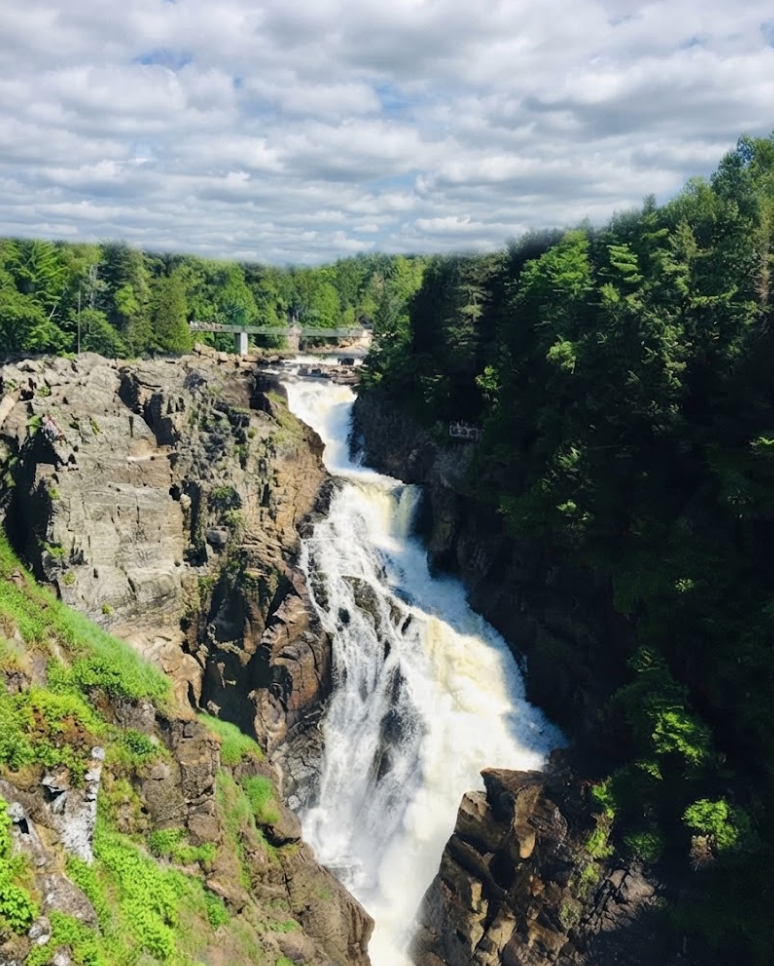
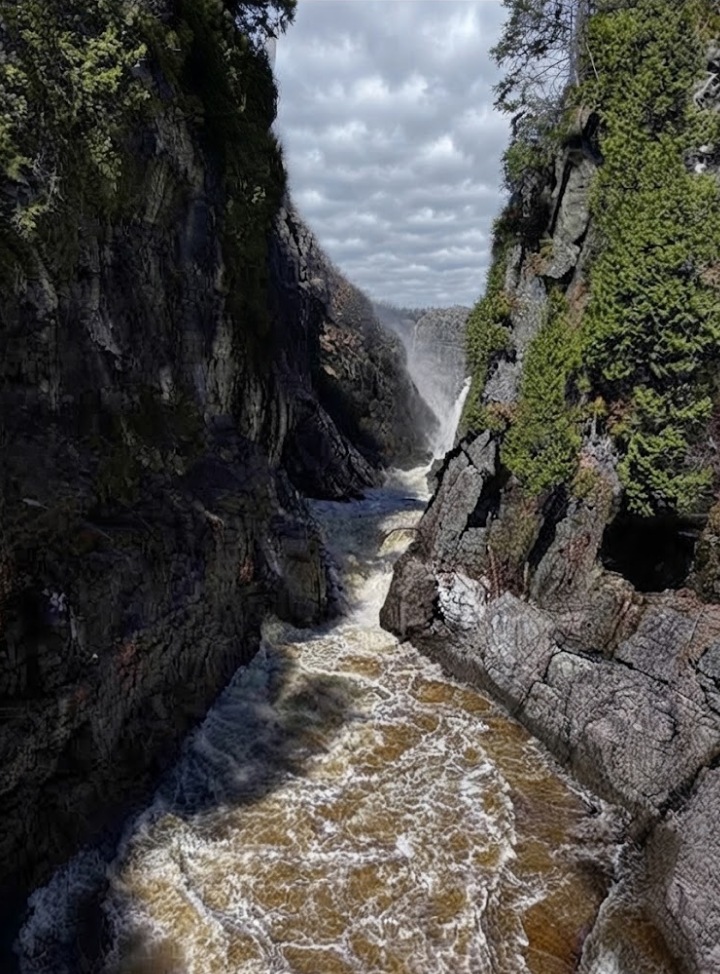
The trail around the canyon is a 3 km circuit, a counter-clockwise rhythm of bridges, decks, and staircases. At the first suspension bridge, the river lies calm upstream, deceptive before its plunge. Downstream, the gorge tightens, and the water hurls itself into a drop taller than Niagara.
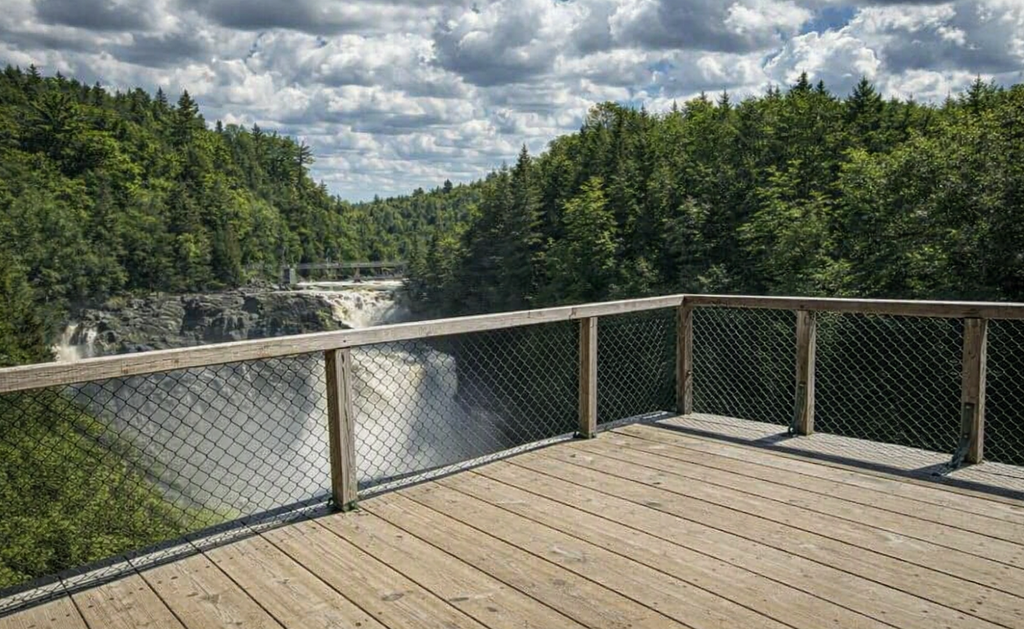
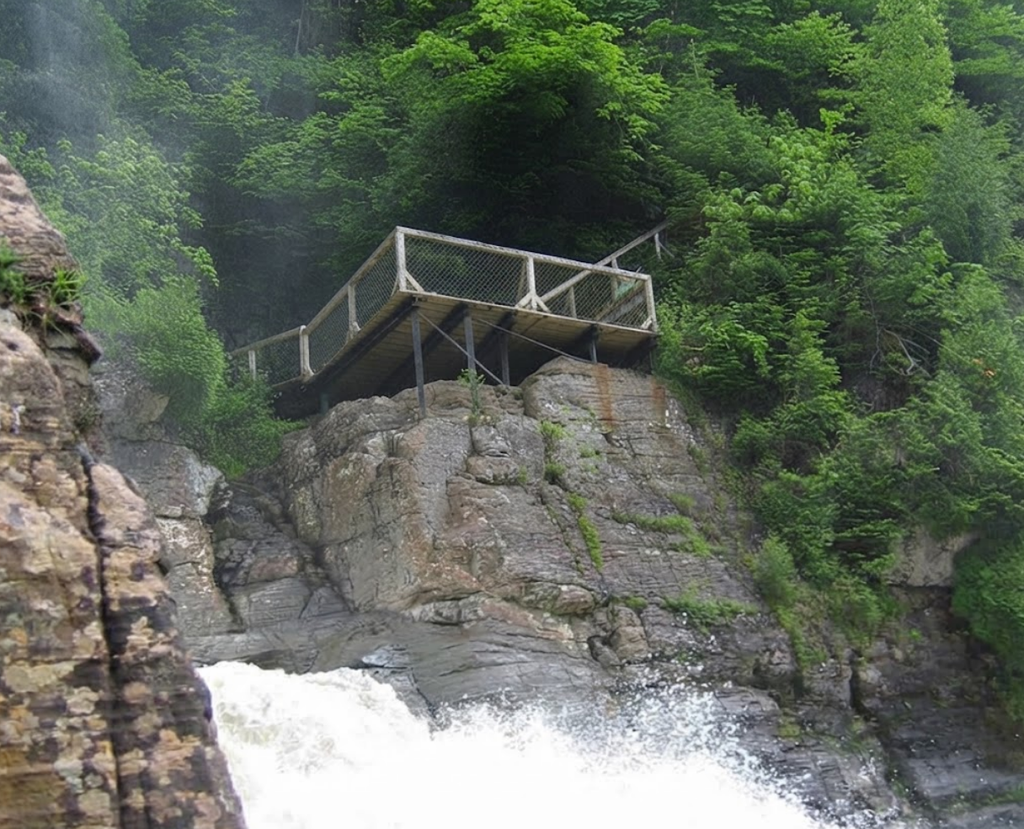
Wooden decks jut out from the cliff, offering panoramic views of the torrent and the bridges strung across it like ribbons. The second bridge is the star: the McNicoll Bridge, 60 metres above the chasm. To step onto it is to feel the canyon’s pulse beneath your feet. Children laugh, adults grip the rails, and everyone feels the rush of standing above such force.
Descend the staircase to the Laurent Bridge at the canyon’s base, and the perspective shifts — now you look upward, cliffs towering, water thundering, sky framed by stone.
Airborne Adventure
For those who crave more than walking, the AirCanyon ride launches you across the gorge, suspended 90 metres in the air. It is part chairlift, part zipline, and wholly thrilling. Riders soar above the Giant’s Pothole, the waterfall, and the forest canopy, returning with wide eyes and wind-tangled hair.
In 2026, families can also discover the new Pétraminis adventure park — a playful ground-level quest for children, rounding out the canyon’s offerings. Picnic grounds, play gyms, and woodland trails make this one of Québec City’s most family-friendly day trips.
A Living Landscape
The Sainte-Anne-du-Nord River feeds the gorge, carrying waters from thirty lakes through the reserve. Its bed above the falls is dotted with speckled rocks polished by glaciers, home to frogs and fish. Geologists trace the canyon’s origins to cycles of freezing and melting that split the rock into a ravine.
Loggers once floated timber through here; painters and philosophers later came to marvel. Today, it is both a park and a hydroelectric site, where nature and industry coexist. The cliffs themselves are ancient — 1.2 billion years old, their surfaces scarred by ice and time. To walk here is to feel history underfoot, not written in books but carved in stone.
Seasons of the Canyon
Spring: The river swells with meltwater, the falls at their most ferocious. Trails can be muddy, but the spectacle is unmatched.
Summer: Golden light filters through the forest canopy. Families picnic on grassy grounds, children scamper across play gyms, and the canyon hums with laughter.
Autumn: The masterpiece season. Cliffs blaze with colour, rainbows hover above the falls, and the air carries the crisp scent of leaves.
Winter: The park closes, bridges too icy to trust. The canyon sleeps, its roar muted under snow.
Family-Friendly Thrills
Canyon Sainte-Anne is not just for adventurers. The trails are well-marked, manageable even for young children. Baby carriers are recommended for the steep staircases, but the loop itself is accessible. Dogs are welcome, adding to the park’s family-friendly charm.
Observation decks provide safe vantage points, while picnic grounds and play gyms offer space to rest. Statues of local wildlife dot the grounds, inviting children to climb and explore. For families, the canyon is both playground and classroom — a place to learn geology, feel adrenaline, and marvel at nature.
Nearby Wonders
A day trip to Canyon Sainte-Anne can easily expand into a circuit of nearby attractions:
Montmorency Falls: A waterfall taller than Niagara, just minutes from Québec City.
Basilica of Sainte-Anne-de-Beaupré: A pilgrimage site with soaring spires and stained glass.
Mont-Sainte-Anne: A ski resort and mountain biking haven.
Spa des Neiges: A Nordic spa nearby, offering hydrotherapy packages that pair perfectly with a canyon hike.
Together, these sites form a constellation of experiences — waterfalls, basilicas, mountains, and spas — all within reach of Québec City.
Practical Notes
Drive 30 minutes from Québec City along Route 138.
Walk the 3 km loop with bridges, decks, and staircases.
Cross the McNicoll Bridge for the canyon’s highest vantage point.
Ride the AirCanyon for thrills above the gorge.
Visit between April and October when the park is open and the falls are at their strongest.
Closing Reflection
Canyon Sainte-Anne is more than a waterfall. It is a vertical drama of stone and water, a place where bridges suspend you between fear and wonder, where rainbows linger above the torrent, and where every season writes its own story into the gorge. To walk here is to feel the ancient heartbeat of Québec’s wilderness, echoing through cliffs, cascades, and sky.