
A Plate That Whispers
Carpaccio is one of those dishes that thrives on restraint. It doesn’t need heavy sauces or complicated garnishes; it’s about the quiet theatre of thin slices, the interplay of textures, and the way freshness can be layered into something that feels both elegant and effortless. Ostrich, lean and ruby‑red, becomes the perfect canvas.
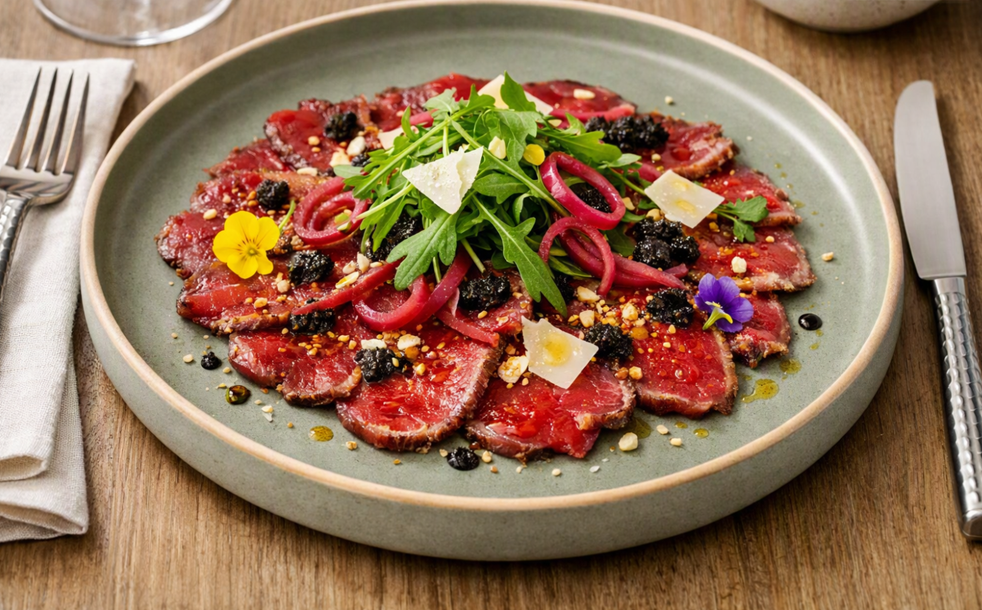
Rolled in pepper and salt, seared for mere seconds until the edges caramelize, it rests just long enough to hold its rare centre. When sliced, each piece falls away like silk, translucent and delicate, ready to be arranged across a platter as though painting with food.This is not a dish that shouts. It whispers.
It invites you to pause, to notice the sheen of olive oil, the scatter of greens, the shimmer of parmesan shavings. It is food that feels like spring air — bright, light, and full of promise.
The Custom of Preparation
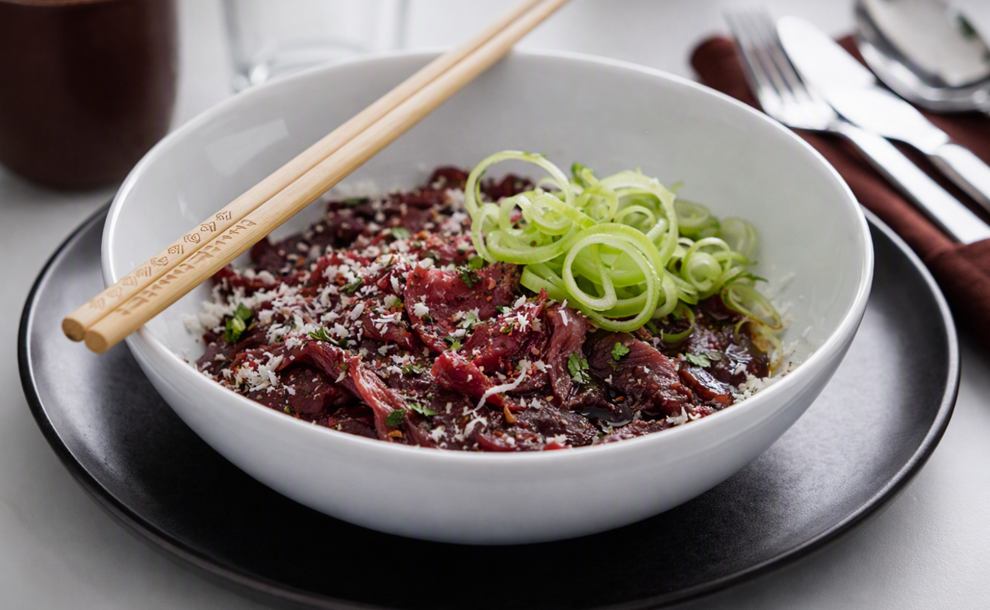
The custom begins with the fillet itself. Ostrich is unusual, a meat that surprises with its delicacy despite its bold colour. To prepare it properly, you start with patience: seasoning with salt and pepper, rolling it in crushed peppercorns until the surface is speckled and aromatic.
The pan must be smoking hot, the oil shimmering, because the sear is fleeting — thirty seconds on each side, no more. The goal is not to cook but to kiss the meat with heat, to create a caramelized crust that contrasts with the rare interior.Once seared, the fillet rests. This pause is essential.
It allows the juices to settle, the fibres to relax, so that when the knife comes in — sharp, precise — the slices fall cleanly, thin enough to be almost translucent. Each slice is laid out on a platter, overlapping slightly, forming a canvas of deep crimson edged with char.
The Salad of Brightness
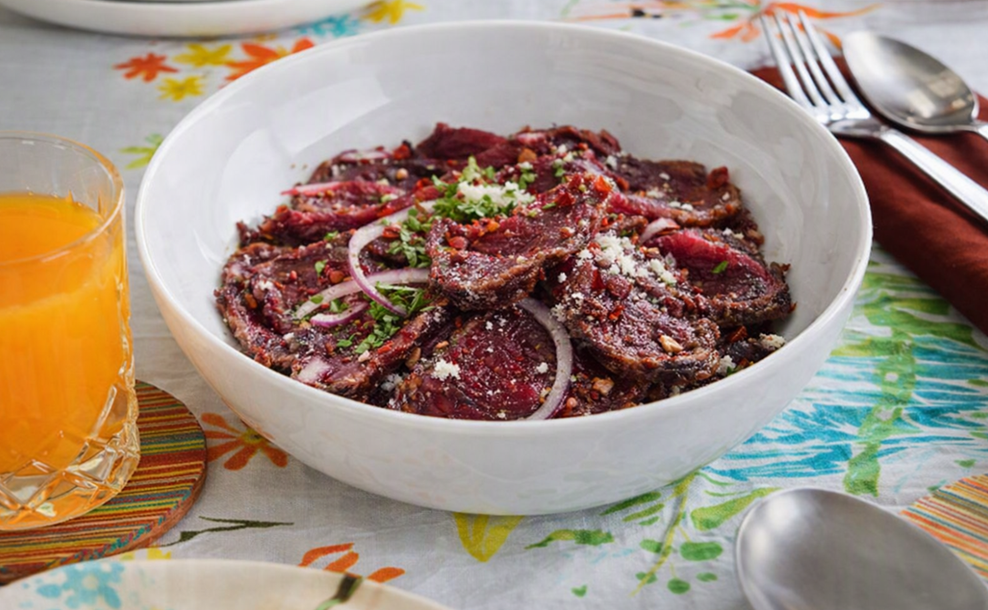
Carpaccio is never complete without its companions. Here, the salad becomes a study in brightness and crunch. Apples are shaved into ribbons, their pale flesh catching the light. Beetroot is sliced into jewel‑toned discs, earthy and sweet. Kohlrabi, crisp and pale, adds a subtle pepperiness.
A squeeze of lemon juice keeps their colours sharp, their edges true, preventing the browning that would dull their vibrancy. Layered together, these vegetables create a chorus of contrasts: the sweetness of beetroot against the tartness of apple, the crunch of kohlrabi against the silkiness of ostrich.
It is a salad that doesn’t overwhelm but instead frames the meat, offering freshness and bite.
Dressing the Plate
The dressing is the thread that ties everything together. Olive oil, golden and smooth, drizzles across the slices like morning dew. A touch of lemon juice sharpens the flavours, while a whisper of Dijon mustard adds depth and warmth. Pecorino is scattered in fine shavings, salty and nutty, bringing a savoury edge that balances the brightness of the vegetables.
This is where carpaccio becomes more than just meat and salad. It becomes a conversation between contrasts: rare ostrich against crisp vegetables, heat against coolness, savoury against sweet. Each bite is layered, complex, yet refreshingly simple.
The Atmosphere of Eating
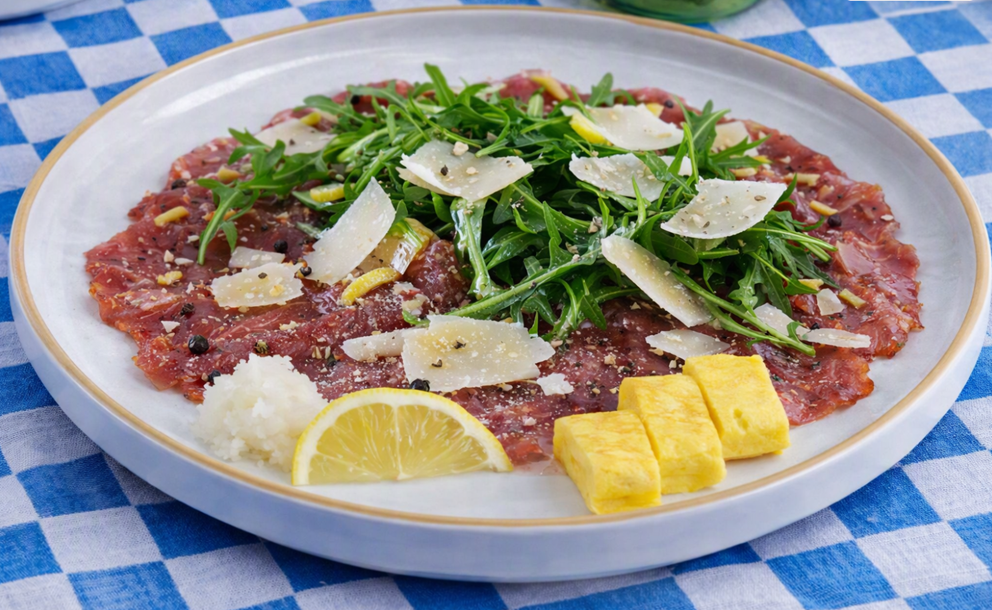
Imagine this plate served outdoors, on a terrace where the air is warm but breezy. The table is set simply: the carpaccio arrives not as a heavy meal but as an invitation to linger, to sip, to savour. It is food for conversation, for laughter, for the kind of afternoons that stretch lazily into evening. The lightness of the dish mirrors the lightness of the day.
It is al fresco dining at its finest — elegant yet unpretentious, refined yet refreshingly uncomplicated.
Variations and Play
Carpaccio thrives on variation. One version might lean into earthiness, pairing ostrich with caramelized mushrooms and minted horseradish cream. Another might embrace tang, layering beetroot and kohlrabi with a garlicky vinaigrette. Yet another might push towards creaminess, serving the slices atop a mousse of pecorino and mascarpone, brightened with lemon zest.
Each variation tells a different story, yet all share the same foundation: thin slices of rare meat, dressed lightly, paired with freshness. The beauty of carpaccio lies in its adaptability. It can be rustic or refined, simple or elaborate, depending on the mood, the season, the setting.
The Sensory Journey
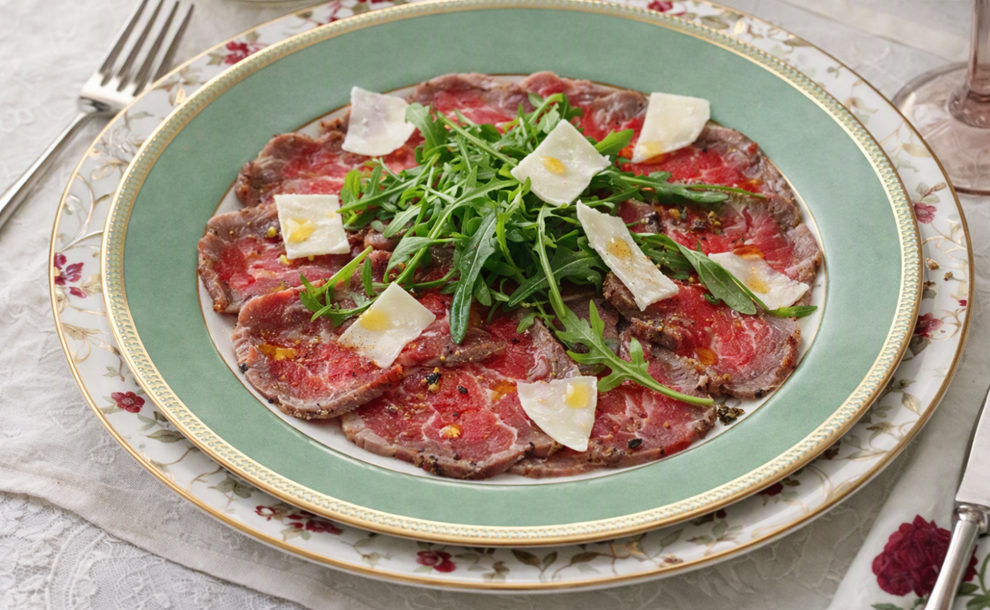
Eating carpaccio is a sensory journey. The first bite is always surprising: the tenderness of the meat, the crunch of the vegetables, the tang of the dressing. The flavours unfold slowly, each layer revealing itself in turn. The pepper crust adds a subtle heat, the lemon a bright lift, the pecorino a savoury depth.
The textures play against each other — soft against crisp, smooth against sharp.It is a dish that demands attention, not because it is heavy or complex, but because it is delicate. To eat carpaccio is to notice, to savour, to appreciate the small details that make food memorable.
A Dish for Light, Bright Days
Carpaccio belongs to light, bright days. It is not a dish for winter evenings or heavy dinners; it is for spring afternoons, summer terraces, moments when the air itself feels fresh. It is food that mirrors the season, that captures the spirit of al fresco dining. It is elegant enough to impress, yet simple enough to feel effortless. In this way, carpaccio becomes more than just a dish.
It becomes an experience, a moment, a memory. It is the kind of food you remember not just for its flavour but for the atmosphere in which you ate it — the sunlight, the laughter, the breeze.
The Quiet Joy of Carpaccio
In the end, carpaccio is about quiet joy. It is about the pleasure of thin slices, the beauty of contrasts, the elegance of restraint. Ostrich, rare and delicate, becomes the perfect canvas. Apples, beetroot, kohlrabi, pecorino — each adds its own note, its own colour, its own texture.
Together, they create a dish that is light, bright, and full of promise.It is food that whispers rather than shouts, that invites you to pause, to notice, to savour. It is a dish made for light, bright days, for terraces and laughter, for the quiet joy of eating something that feels both refined and refreshingly uncomplicated.