
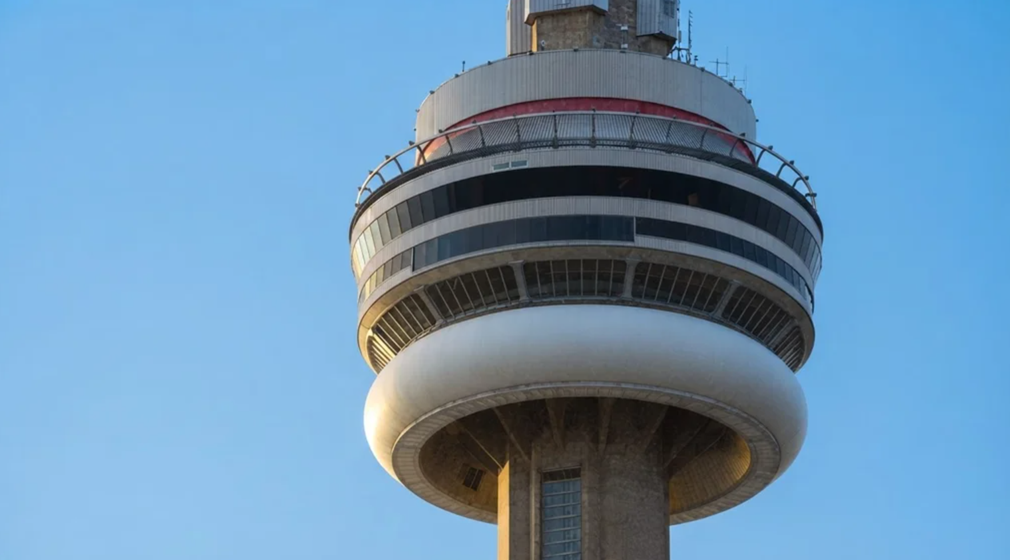
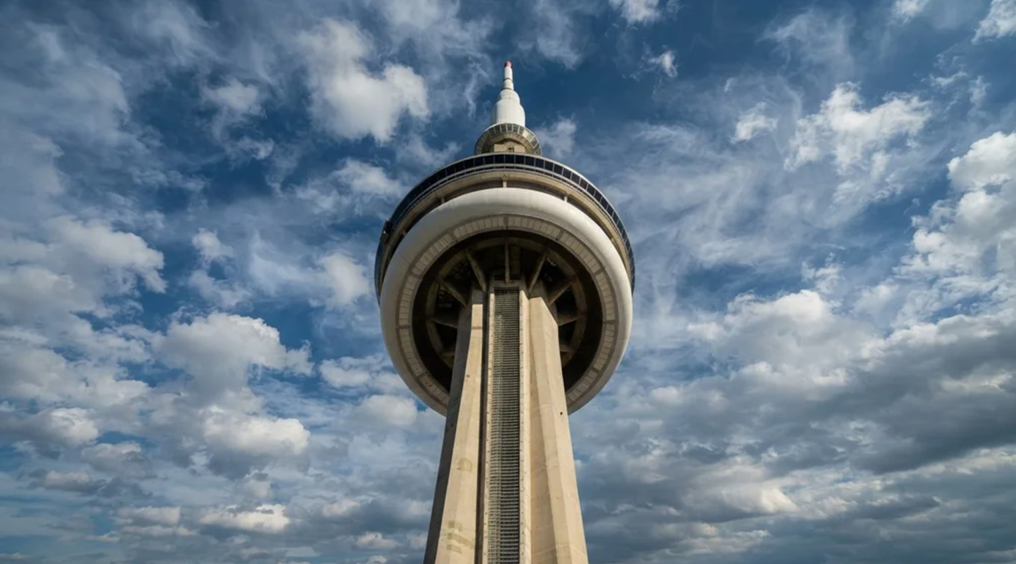
Toronto’s skyline is crowned by the CN Tower, a needle of concrete and steel rising 1,815 feet into the sky. For decades it was the tallest freestanding structure in the world, and even now it remains a symbol of ambition, a beacon visible from miles away. To stand beneath it is to feel small; to ascend it is to feel the city unfurl beneath you.
The CN Tower is not just an attraction—it is Toronto’s icon. Built in the 1970s to solve a practical problem of blocked broadcast signals, it quickly became a monument to engineering and national pride. Today, it is both transmitter and tourist magnet, drawing millions each year to its decks and daring experiences.
The Elevator Ascent
The journey begins with speed. In less than a minute, the glass‑walled elevator whisks you upward at 22 km per hour. The ground drops away, the city shrinks, and suddenly you are 116 storeys above Toronto. The doors open to light and glass, and the observation deck stretches around you in a full circle.The ride itself is part of the thrill.
Children press against the glass, wide‑eyed, while adults grip the rail, hearts racing. The ascent is smooth, but the sensation of rising so quickly is unforgettable.
The View in Four Directions
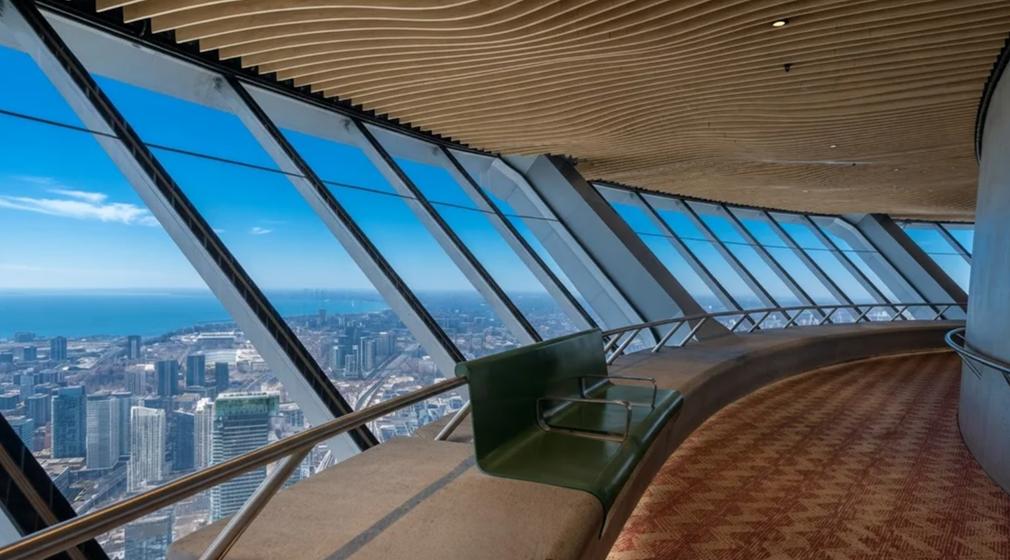
From the main deck, the city divides into quadrants. To the north, downtown Toronto rises in clusters of skyscrapers—103 towers over 150 meters, a testament to growth and ambition. To the south, Lake Ontario spreads vast and blue, its shoreline dotted with islands.
East and west, the city stretches endlessly, neighborhoods fading into horizon.On a clear day, mist from Niagara Falls is said to be visible across the lake. Even on cloudy days, the view is mesmerizing—planes lifting from Billy Bishop Airport, ferries drifting toward the islands, highways threading through the city like veins.
The Glass Floor
For the daring, the glass floor awaits. Transparent panels reveal the city directly below, cars and pedestrians moving like toys. Children jump on the glass, laughing, while adults hesitate, testing trust in engineering. It is safe, but the thrill is real—the sensation of standing on air, suspended above the city.
The glass floor is more than novelty; it is perspective. Looking down, you see Toronto from a new angle, its scale redefined.
The Skypod
Higher still lies the Skypod, the tallest observation deck in the Western Hemisphere. Smaller, more intimate, it feels like a secret chamber above the world. The view is sharper, the silence deeper. Here, Toronto is not just seen—it is surveyed, its sprawl stretching into distance.
The Skypod is worth the extra ticket. It is the pinnacle of the tower, the place where you truly grasp its height.
EdgeWalk: The Adrenaline Circle
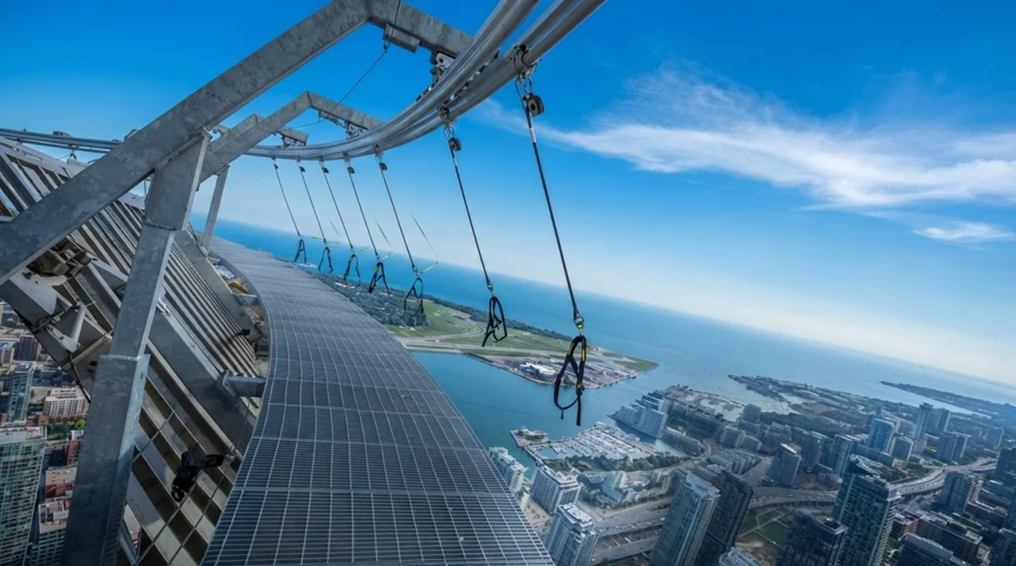
For those who crave more than views, the EdgeWalk offers adrenaline. Harnessed yet hands‑free, you step onto a ledge 356 meters above the ground, circling the tower’s edge. Feet on steel, body leaning into air, the city roaring below.It is the world’s highest full circle walk, a test of courage and trust.
Photos, video, and a certificate mark the achievement, but the memory is etched in nerves and exhilaration. For many, it is the highlight of their visit, a story retold for years.
Kidzone and Family Moments
Families find respite in the Kidzone, a play area tucked near the gift shop. Children climb and laugh, parents browse souvenirs, energy balanced before or after the ascent. The CN Tower is not only spectacle—it is experience tailored for all ages.
Time at the Top
A visit unfolds slowly. Two hours allows for elevator rides, observation decks, glass floors, Skypod ascents, Kidzone play, and browsing exhibits. Longer if you linger— the EdgeWalk. The tower is not rushed; it invites pause, reflection, and awe.
Day or Night
The CN Tower opens from morning to evening, and each time offers its own magic. Daylight reveals detail—streets, islands, distant horizons. Night cloaks the city in glittering lights, a sea of illumination. Photos are clearer by day, but the romance of night is undeniable.
Crowds swell midday, so mornings before 11am or weekday evenings promise quieter moments. Each visit is unique, shaped by weather, season, and time.
History in Concrete
The tower’s story begins in 1968, when Toronto’s growing skyline blocked broadcast signals. Canadian National Railway envisioned a new radio and TV tower—one that would also showcase the nation’s engineering prowess. By 1976, the CN Tower stood complete, its hexagonal shaft rising from three support legs, its observation decks designed for tourists eager to ascend the world’s tallest structure.
Plans originally called for a tripod design, but evolved into the single‑tower hexagonal form we see today. It was believed—rightly—that tourists would be drawn to ascend the tallest structure in the world, so multiple decks were built to hold them and offer different experiences.
Reflections from Above
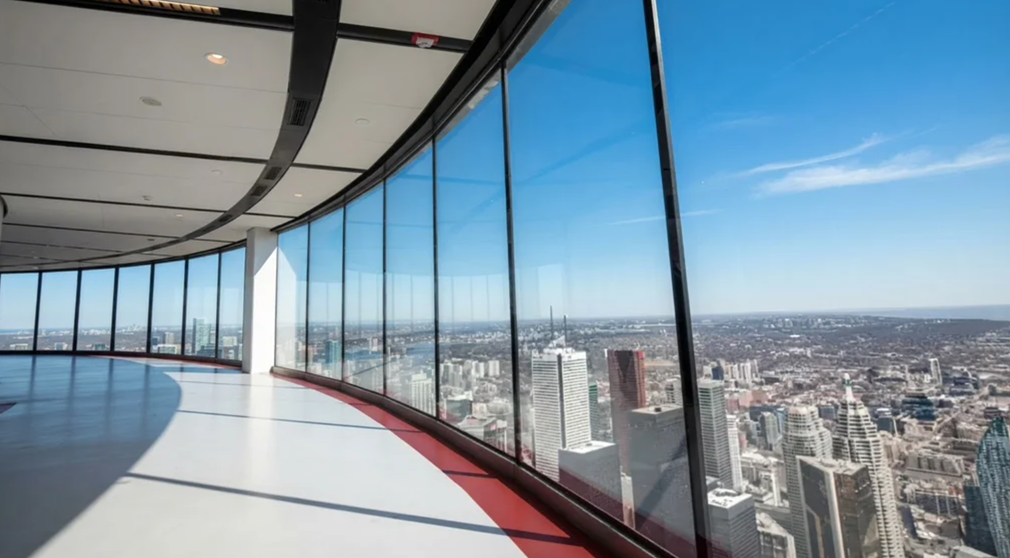
Standing at the windows, you see Toronto spread beneath you. Skyscrapers gleam, ferries drift, planes lift from the island airport. The city feels vast yet intimate, its rhythm visible from height. The CN Tower is not just worth visiting—it is worth experiencing slowly, letting its views sink into memory.
Verdict: Worth the Climb
In 2025 and beyond, the CN Tower remains Toronto’s defining landmark. Whether you stand on the glass floor, ascend to the Skypod, brave the EdgeWalk, or simply gaze from the observation deck, the tower offers perspectives no other place can. It is history, adrenaline, family fun, and above all, a view that captures the essence of Toronto.