
Comté is not simply a cheese; it is a landscape translated into flavor, a centuries‑old tradition pressed into wheels that weigh nearly forty kilograms each. To taste Comté is to taste the Jura Massif itself—its high pastures, its spruce forests, its long winters, and the patient rhythm of village life.
This French AOC treasure carries the mountain pastures in its nutty, fruity depth, and the cooperative spirit of its makers in every slice.
Origins in the Jura
The story of Comté begins in the twelfth century, when farmers on the high plateaus of the Jura faced winters so long and severe that survival demanded ingenuity. Milk from their Montbéliarde cows was abundant in summer but scarce in the cold months. To preserve it, they pooled their resources, crafting cheeses large enough to last through the season.
That cooperative spirit survives today in the fruitières—small village dairies where milk is transformed into curds, pressed into vast wheels, and salted before the long wait of aging begins. Each wheel requires one hundred gallons of milk, a testament to the scale of the endeavor and the devotion of the community.

The Craft of Aging
Once formed, the wheels pass into the hands of the affineurs, guardians of time and flavor. At Fort des Rousses and Fort Saint‑Antoine, now turned into sanctuaries of cheese, thousands of wheels rest on spruce boards. Here, they are brushed, salted, and turned, their rinds slowly developing as the interior matures.
The affineur’s trier—a tool that both taps and tastes—guides the process, revealing the balance of bitter, sweet, sour, and savory that defines a great Comté. The patience required is immense. Some wheels are released after four months, creamy and mild, while others remain for twenty‑four months or more, developing crystalline textures and profound flavors.
The affineur listens to the wheel, taps its surface, and draws a sample from its heart. Only experience can judge when the balance is right.
Flavor and Texture
Young Comté, aged 5 to 7 months, is creamy and mild, with whispers of fruit and hazelnut. As months stretch into years, the cheese deepens: twelve‑month wheels carry bold nuttiness, while twenty‑five‑month wheels resonate with earthy, crystalline intensity.
Its melting quality rivals Gruyère and Beaufort, yet Comté’s aromatic depth—savory, fruity, and faintly sweet—sets it apart. The French eat more Comté than any other AOC cheese, a fact that speaks to its versatility. It is flavor‑forward yet approachable, firm yet yielding, and it melts with elegance.
Culinary Versatility
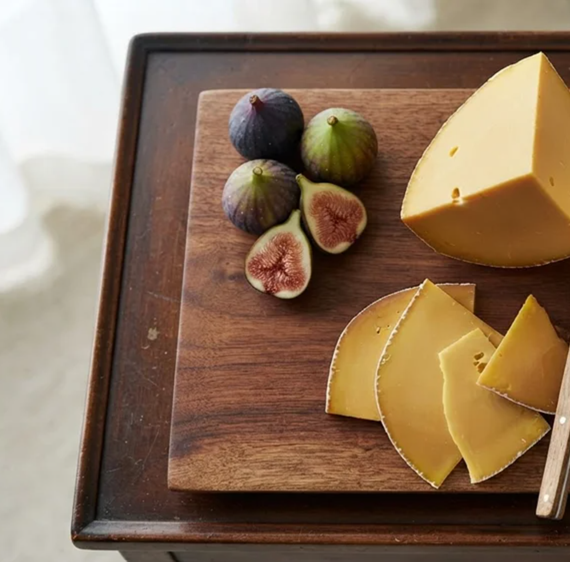
Comté is both a kitchen workhorse and a showpiece. On a board, it pairs beautifully with toasted nuts, rich preserves, and cured meats. In cooking, its smooth melt makes it indispensable: folded into macaroni and cheese, layered in croque madame, or grated into au gratin potatoes. Younger wheels lend creaminess, while older ones bring intensity.
Its versatility extends to soups, fondues, and casseroles, where its nutty sweetness enriches the broth or sauce. In sandwiches, it melts into a silky layer that binds ingredients together. For chefs, Comté is a rare cheese that can be both centerpiece and supporting actor.
Buying and Storing
The best way to buy Comté is at a cut‑to‑order shop, where you can taste different age profiles before choosing. Once home, unwrap plastic packaging and rewrap in parchment or butcher paper, storing in a breathable container in the refrigerator. If plastic flavors linger, “face” the cheese by scraping its surface lightly.
Properly stored, Comté keeps for weeks, its flavor intact. Vacuum‑packed wedges extend shelf life further, but the tradition of rewrapping and caring for the cheese connects the eater to the traditions of the Jura.
Nutritional Profile
Comté is rich in protein, calcium, and vitamins. Its lactose content diminishes with age, making it more digestible for some individuals. Pasteurized versions are considered safe during pregnancy, while raw‑milk wheels carry the authenticity of tradition. Its fat content, though significant, is balanced by its nutritional density.
Cheeses like Gruyère, Beaufort, or Emmental can substitute for Comté in recipes. For melting applications, Fontina provides a similar creamy texture. Yet none replicate the precise aromatic depth of Comté, which remains singular.
A Collective Legacy
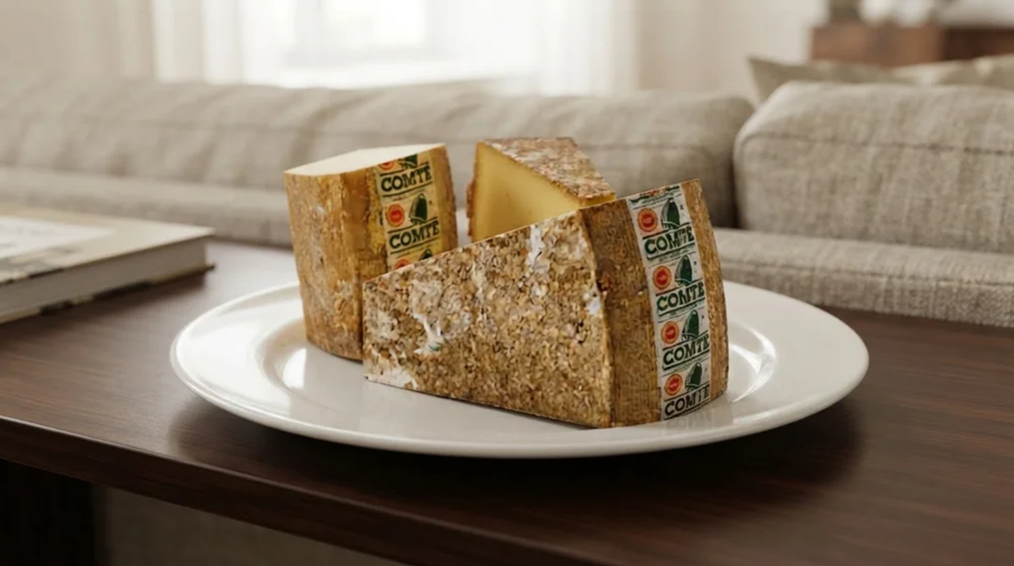
Comté is not the product of a single hand but of an entire region’s rhythm. Farmers tend the cows, fruitières craft the wheels, and affineurs nurture them to maturity. Each green‑banded wheel represents the pinnacle of this collective effort, while brown‑banded wheels, though imperfect, still carry the Jura’s soul.
Nearly 1.7 million wheels are produced annually, yet each one is a singular expression of land, milk, and time. The impressive size of today’s wheels reflects the legacy of winter survival, while the cooperative structure mirrors the medieval pooling of resources. Production remains a collective effort, a living heritage of the Jura.
To savor Comté is to taste patience itself. It is the sound of an affineur tapping a wheel, the scent of spruce boards in a mountain cellar, the memory of farmers pooling milk centuries ago. Whether sliced on a board or melted into a dish, Comté is a reminder that flavor is born not only of milk and salt, but of community, tradition, and the quiet work of time.
Travel and Experience
Visitors to the Jura can witness this heritage firsthand. Fort Saint‑Antoine, with its vaulted stone chambers, welcomes enthusiasts to see the wheels resting in silence. The air is cool and damp, filled with the scent of spruce and aging milk. Guides explain the process, but the true lesson is in the atmosphere: patience, care, and reverence for tradition.
The Jura landscape itself mirrors the cheese. Rolling pastures, spruce forests, and mountain plateaus create a rhythm of abundance and scarcity, of summer grazing and winter hay. The cows graze freely, their diet strictly controlled to preserve flavor. No fermented feed is allowed, only grass and hay, ensuring purity.