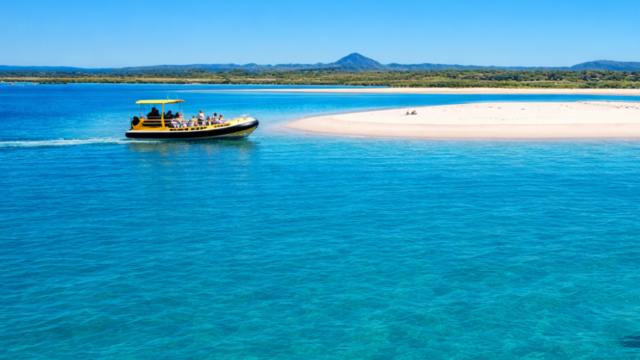
Noosa: A Weekend of Sunlight, Salt Spray, and Dolphins
- Noosa Shire, Queensland, Australia
Cairns Beyond the Reef
Most visitors arrive in Cairns with one destination in mind: the Great Barrier Reef. It is the headline act, the shimmering turquoise stage upon which countless adventures are played. Daintree is often mentioned, whispered like a promise of ancient green, but its distance makes it a detour.
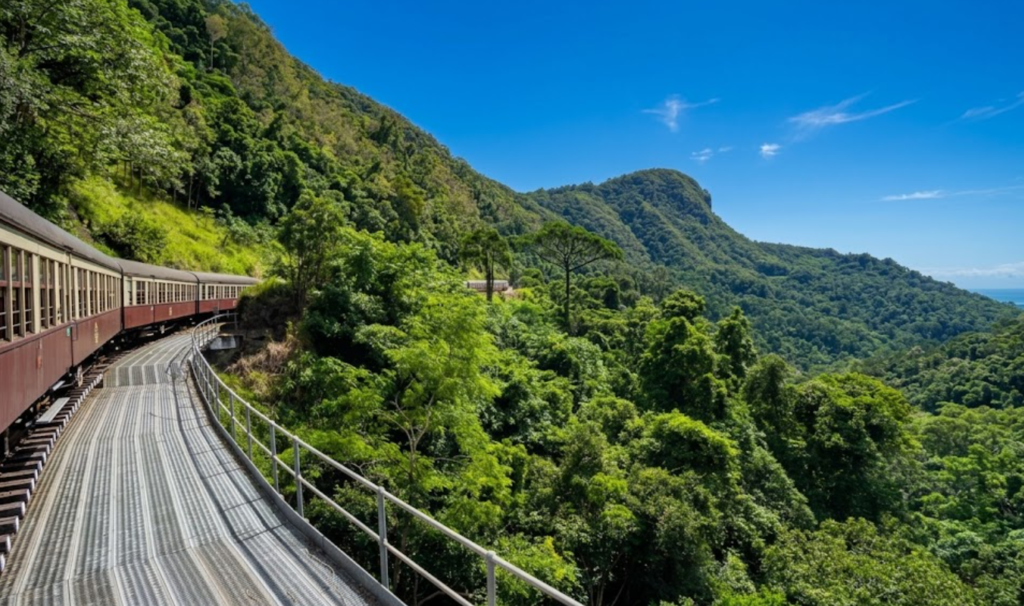
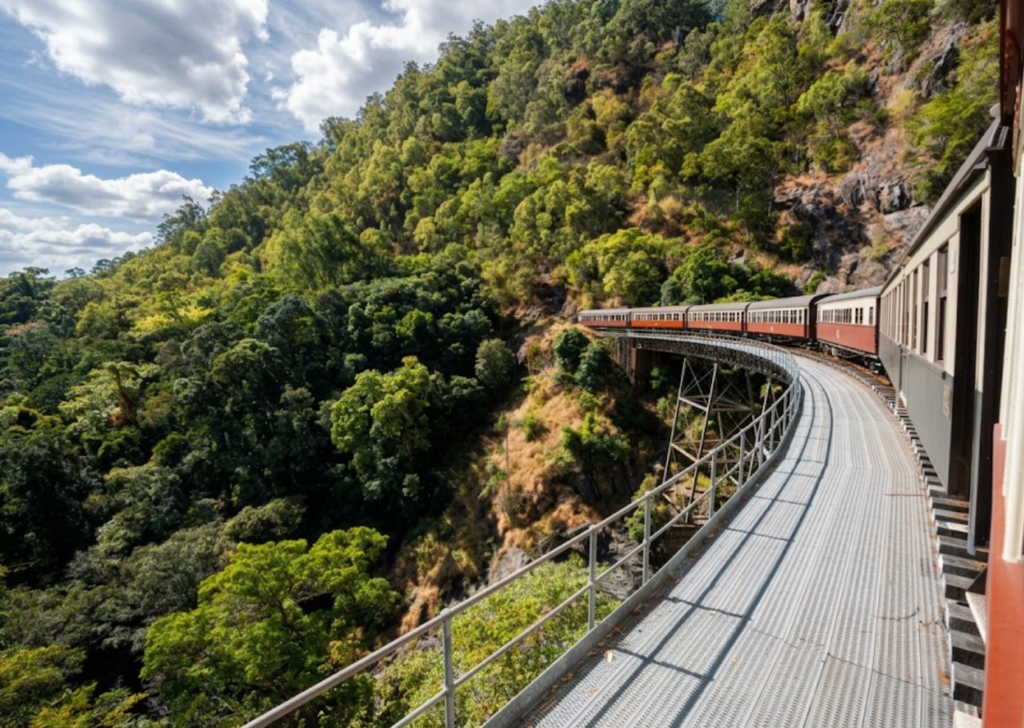
For travelers from such landscapes, the allure of Kuranda lies not in rainforest alone but in its identity as a village with a hippie soul. The journey there is part of the story: a railway more than a century old, winding through the Barron Gorge.
Choosing the Journey
Planning a trip to Kuranda can feel like standing at a crossroads with too many signposts. Scenic Railway. Skyrail cableway. Combination packages. Coach upgrades. Add-ons. Choices multiply until decision fatigue sets in. Simplicity often wins: a day return on the Kuranda Scenic Railway.
No cable cars, no bundled tours. Just the train, the village, and the freedom to wander without being rushed.At Cairns railway station, heritage lingers in the air. A dedicated lobby for the Scenic Railway sells tickets and offers advice. The atmosphere recalls a time before apps and QR codes, when travel began with conversation at a counter.
Boarding the Train
The Kuranda Scenic Railway is a time capsule. Vintage carriages with polished wood and brass fittings evoke a bygone era. Onboard, a guidebook offers history, route maps, and Aboriginal Dreamtime legends. The Barron Gorge is not just geology—it is mythology.
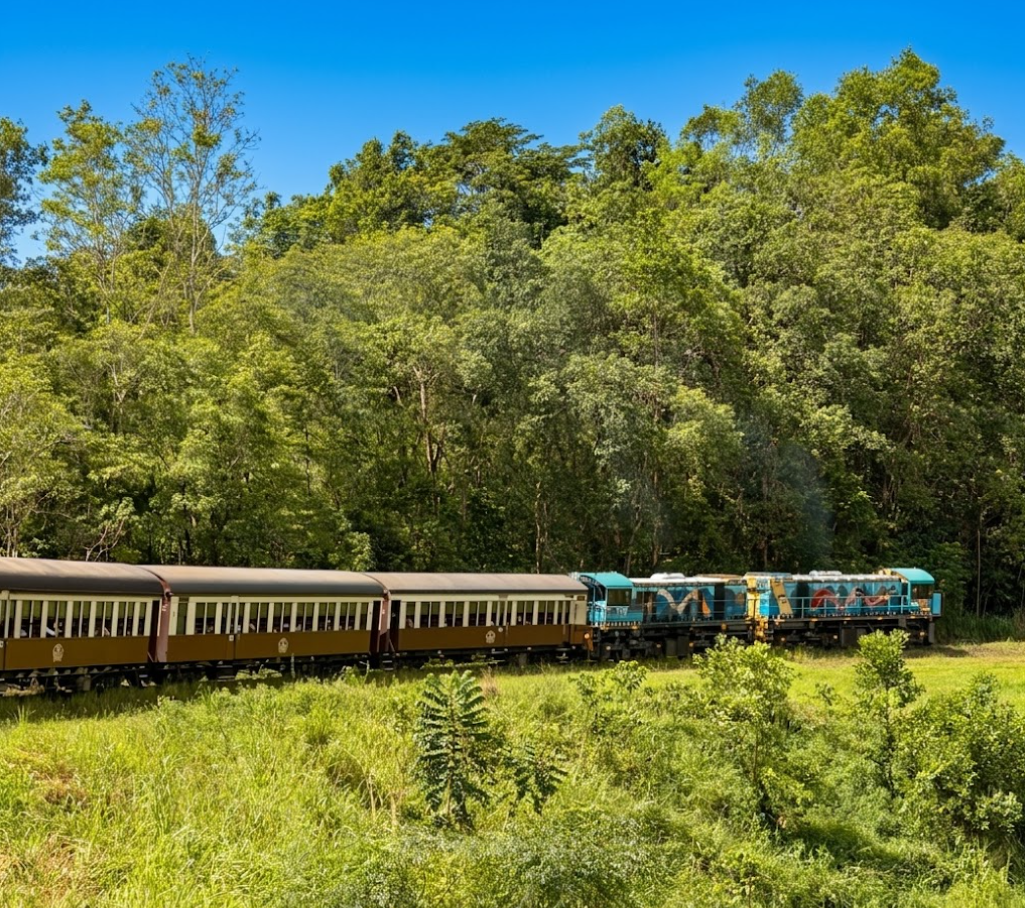
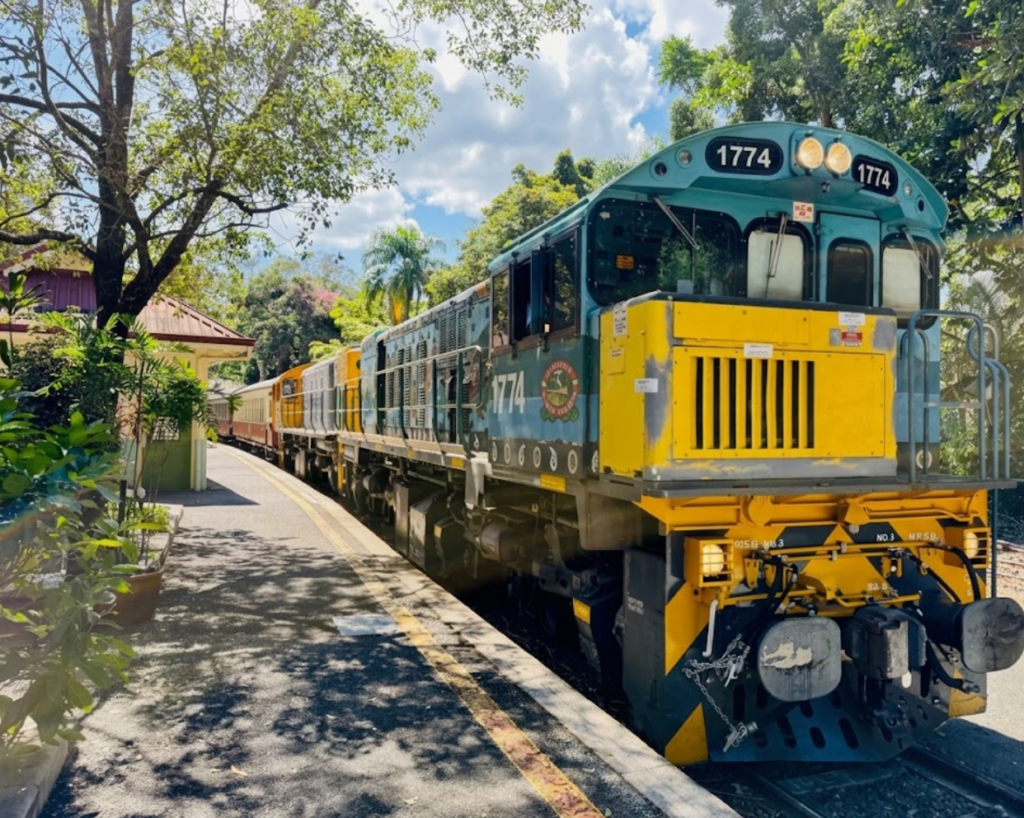
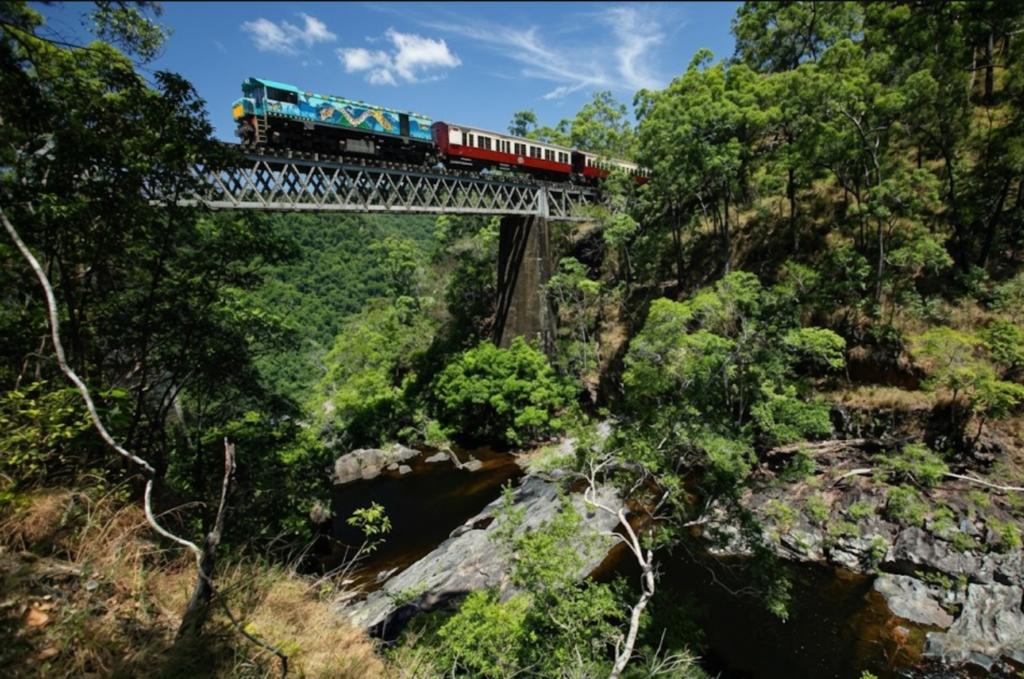
Djabugay legend tells of the Carpet Snake Buda-Dji carving the gorge, and the locomotive itself bears the serpent’s image on its sides. Departure comes with a gentle lurch, narration beginning as rainforest slips past the windows. The voice mentions landmarks along the way, weaving together fragments of Cairns’ past and present.
Freshwater Station
Soon the train passes Freshwater Station. Once vital for steam locomotives to replenish water, today it is a quaint stop with a restaurant and souvenir shop. Boarding here is an option depending on the package chosen. In earlier times, steam engines paused, hissing clouds of vapor into the rainforest air before pressing on up the range.
Jungara and the Malaria Unit
Further along lies Jungara Station, now disused. During wartime, it housed a Malaria Research Unit. Soldiers volunteered to be infected so that cures could be found—a reminder of sacrifices made in tropical campaigns. Even remote rainforest stations played roles in global history.
The Railway Workers
At some of the smaller stations, rail workers stand waiting, waving at the train as it passes. Whether on duty or not, they greet passengers. It is more than a job—it is pride, tradition, and belonging. The railway is not just infrastructure here; it is identity.
Building the Kuranda Range Railway
The Barron Gorge is steep, unforgiving terrain. In the 19th century, blasting tunnels and building bridges across ravines hundreds of metres deep was a feat bordering on madness. Migrant workers carved the line by hand, many losing their lives in the process.
Some are said to be buried beneath the tracks. The railway was born of necessity. Mining towns beyond Kuranda had been cut off during a prolonged wet season in 18th century, their supply routes impassable. Starvation loomed, and so the railway was conceived.
It remains a monument to human determination, etched into rainforest cliffs.
Barron Falls Station
The train makes one stop before Kuranda: Barron Falls Station. Ten minutes are given to gaze at the waterfall from panoramic viewing decks. The gorge yawns beneath, vertigo-inducing, the falls cascading in white fury. Information boards explain that this is Djabuganydji territory.
Behind the mountain, a hydroelectric station has harnessed the river’s power since 1935.Looking out, it is easy to imagine the flying fox system once used to transport supplies—and even people—across the gorge. History is not as distant as it seems; it lingers in living memory.
Kuranda Station
Kuranda station is the terminus, but stepping off the train can be disorienting. Signs point either towards the village and Skyrail station, or across to the Barron River for boat cruises. Temptation lies in the water, but the village markets are the true destination.
The Search for the Markets
Finding Kuranda markets is simple. Finding the right Kuranda markets—the ones with the hippie vibe—is trickier.The first shops encountered are neat rows of modern storefronts, interspersed with cafés. Semiprecious stones nod to the mining heritage. Aboriginal-inspired souvenirs abound.
Handmade artisan candy tempts visitors. Yet these shops, though excellent, are too orderly. Too polished.Further along, more markets appear. One beside the shops, another across the road called Heritage Market. Both vibrant, but still too modern. Persistence is required.

The Original Kuranda Market
At last, the original market reveals itself. A rambling collection of shacks spilling down the rainforest slope, steps winding around tree trunks, stalls nestled in leafy alcoves. It feels organic, grown rather than built. Here, the offerings are eclectic, almost whimsical.
Bohemian dresses sway beside racks of handmade jewelry. A Japanese tea house offers serenity, while another stall sells “Japanese pizza.” Reiki healers, massage tables, incense, crystals, spiritual trinkets—all jostle together in a kaleidoscope of culture. This is the Kuranda of legend.
A market that breathes with the rainforest, humming with eccentric energy. Less commerce, more conversation. Less transaction, more story.
Reflections in the Rainforest
Kuranda is more than a village. It is a reminder that heritage is not just about monuments or landscapes—it is about people, their creativity, their resilience, their eccentricities. The railway itself is a testament to human determination, carved through impossible terrain.
The markets are a testament to human imagination, spilling into the rainforest with color and chaos. Cairns holds dual heritage: reef and rainforest. One beneath the sea, one above the land. Kuranda, perched between them, embodies the spirit of the tropics—wild, whimsical, and wonderfully human.
There are no reviews yet.