
A Cheese Born of Place
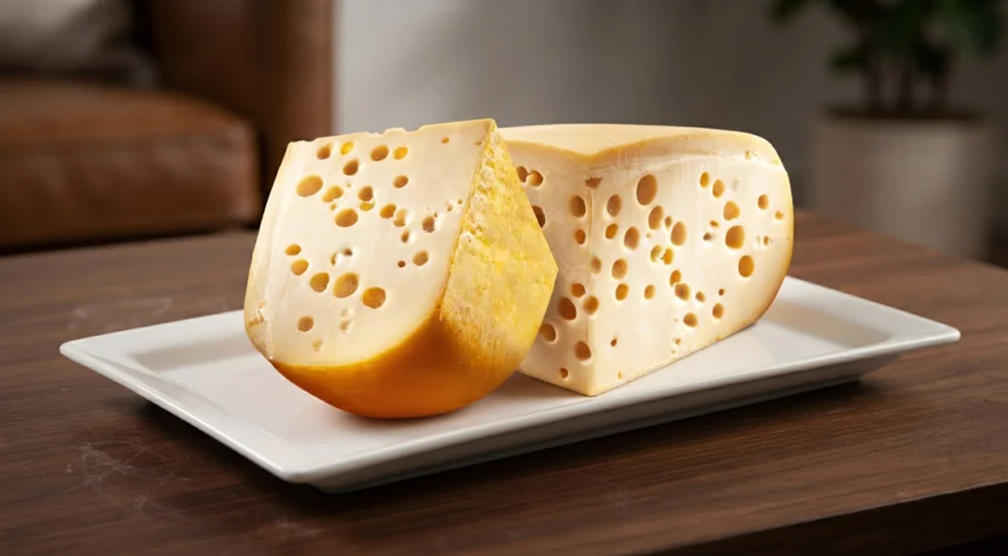
In the rolling hills of Bern, where the river Emme winds through meadows and dairy farms, a cheese was born that would come to define Switzerland’s culinary identity. Emmental, Emmentaler, or Emmenthaler depending on the language—carries the valley in its very name.
Tal means valley in German, and the Emme is the river that nourishes the land. Together, they form a word that is both geography and flavor, a reminder that cheese is never just food but a landscape translated into taste.
The Oldest Swiss Cheese
Tracing its lineage back to the 13th century, Emmental is Switzerland’s oldest cheese. It is more than a product; it is heritage. Protected by appellation d’origine protégée (AOP), true Emmental must be made from raw cow’s milk, drawn from animals fed only on grass and hay within the designated region.
No additives, no shortcuts, no genetically modified feed. This strict discipline ensures that every wheel is not just cheese but a living archive of Swiss tradition.
The Tradition of Making
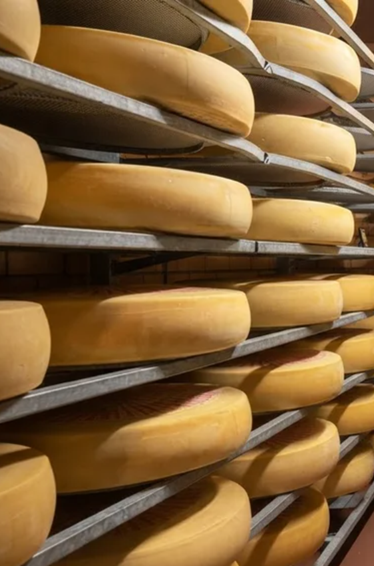
The making of Emmental is a tradition, almost liturgical in its precision. Raw milk is gently warmed in vast copper kettles, vessels that gleam like relics of the past. Rennet and whey are added, coaxing the milk into curds. These curds are pressed into molds, drained of whey, and brined to begin their transformation.
The wheels are immense—three and a half feet wide, weighing nearly 200 pounds. They are giants among cheeses, monumental in scale, as if designed to embody the grandeur of the Alps themselves.
The Mystery of the Eyes
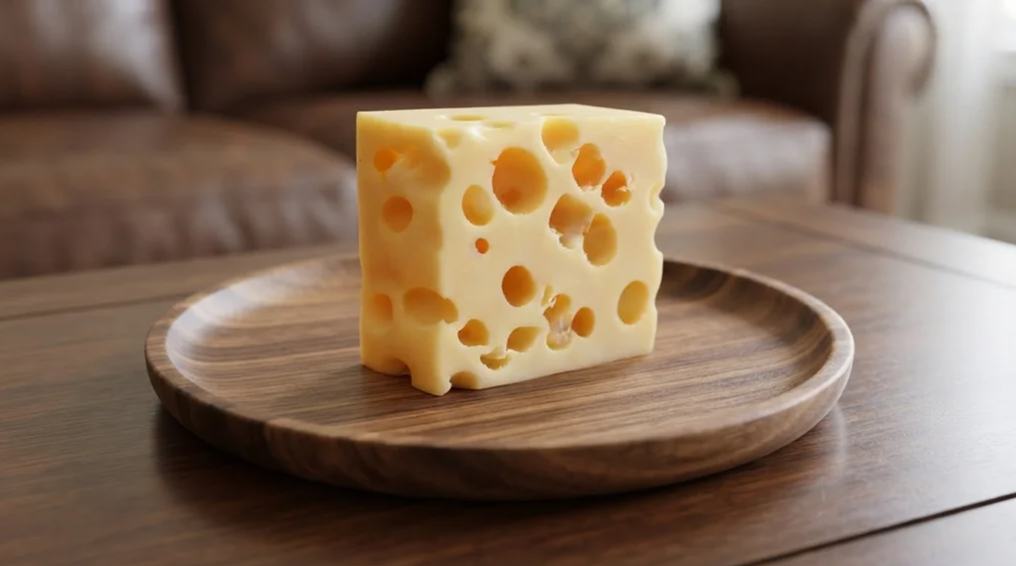
What sets Emmental apart are its eyes—the walnut‑sized holes that punctuate its pale yellow body. These are not imperfections but the living breath of fermentation. Propionic bacteria, added during the maturing process, feed on lactic acid and release carbon dioxide.
The gas forms bubbles, trapped within the rind, slowly expanding into the signature holes. The process requires warmth, patience, and trust. After two months, the cheese begins to reveal its character, its eyes opening like windows into its soul.
Flavor Across Time
Emmental is a cheese that changes with age, its flavor deepening as months pass.
Classic Emmental, aged at least five months, is mild, buttery, and fruity.
Réserve Emmental, aged eight months, grows nuttier and stronger.
Cave‑aged Emmental, aged twelve months, becomes piquant, layered, and complex.
Premier Cru Emmental, aged fifteen months, is the pinnacle, a cheese of resonance and depth.
Each stage is a different voice in the same choir, from the gentle notes of youth to the full‑bodied chorus of maturity.
Switzerland’s Definitive Cheese
Switzerland does not have “Swiss cheese.” Instead, it has Alpine cheeses, each tied to a region and culture. Gruyère speaks French, Fontina Italian, but Emmental, with its German name and Bernese roots, is the definitive Swiss cheese. It is the valley translated into taste, the Germanic heart of Switzerland expressed in dairy form.
Beyond the Alps
The name Emmental is not protected, and so versions of the cheese are made in France, Germany, Finland, and the United States. These are milder, less complex, lacking the terroir of the Bernese valley. In America, “Swiss cheese” is the everyday echo of Emmental, sliced into sandwiches or melted into Reubens.
Wisconsin, with its dairy heritage, produces traditional Emmental that rivals its European cousins, proving that the spirit of the valley can travel, even if the exact flavor cannot.
The Taste of the Valley
Emmental’s flavor is a balance of nutty sweetness and buttery smoothness, with a faint fruity acidity. Its aroma recalls fresh‑cut hay, pastoral and sweet. The rind is thin, hard, and inedible, often wrapped in paper stamped with the producer’s name—a seal of authenticity, a promise of origin.
Culinary Versatility
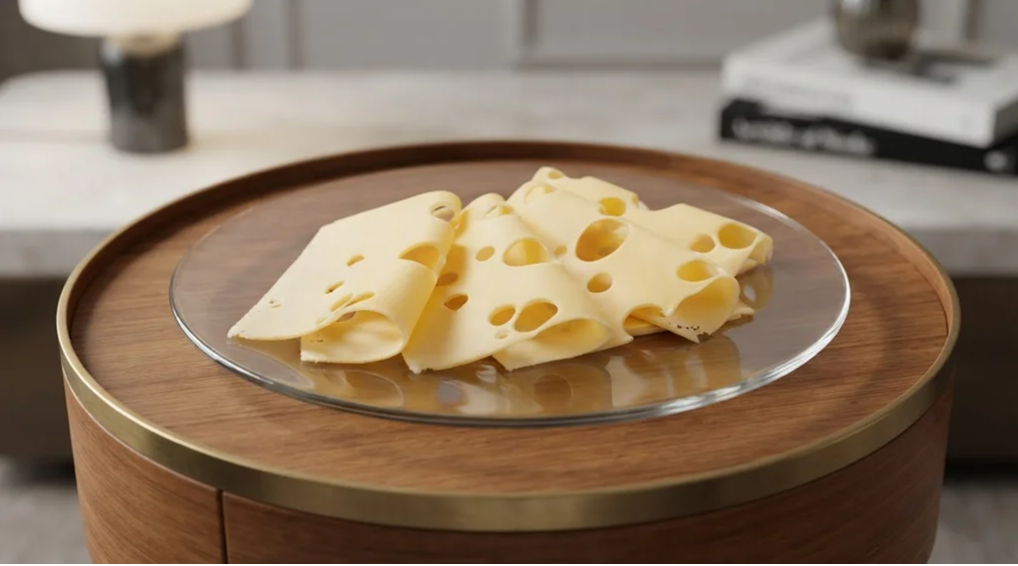
Emmental is a cheese of versatility, equally at home in rustic Alpine kitchens and modern urban recipes.
Fondue: melted into silky richness, paired with bread.
Sandwiches: lending tang to Reubens.
Gratins and sauces: where its melting quality shines.
Salads and wraps: adding character and depth. It is a cheese that enhances without overwhelming, a companion rather than a conqueror.
Storage and Care
To store, wrap in parchment or wax paper, then seal in a container. It keeps for seven weeks refrigerated, or three months frozen, with minimal loss of flavor. Mold can be cut away, carefully, without touching the knife to the growth. Frozen, it can be grated and stored, ready to melt into sauces or gratins.
A Giant Among Cheeses
Emmental is monumental, not just in size but in significance. Its wheels are vast, its flavor layered, its heritage deep. It is a cheese that carries the valley in its body, the culture in its rind, the history in its holes. It is the definitive Swiss cheese, the giant among cheeses, the taste of Bern translated into food.