
A Harbour Corner That Breathes Colour
Step away from the polished curve of Victoria’s Inner Harbour and you’ll find yourself in a place that feels stitched together from whimsy and salt air. Fisherman’s Wharf is not a landmark you simply tick off a list; it’s a living, floating village where the tide carries stories, and every boardwalk turn reveals something unexpected.
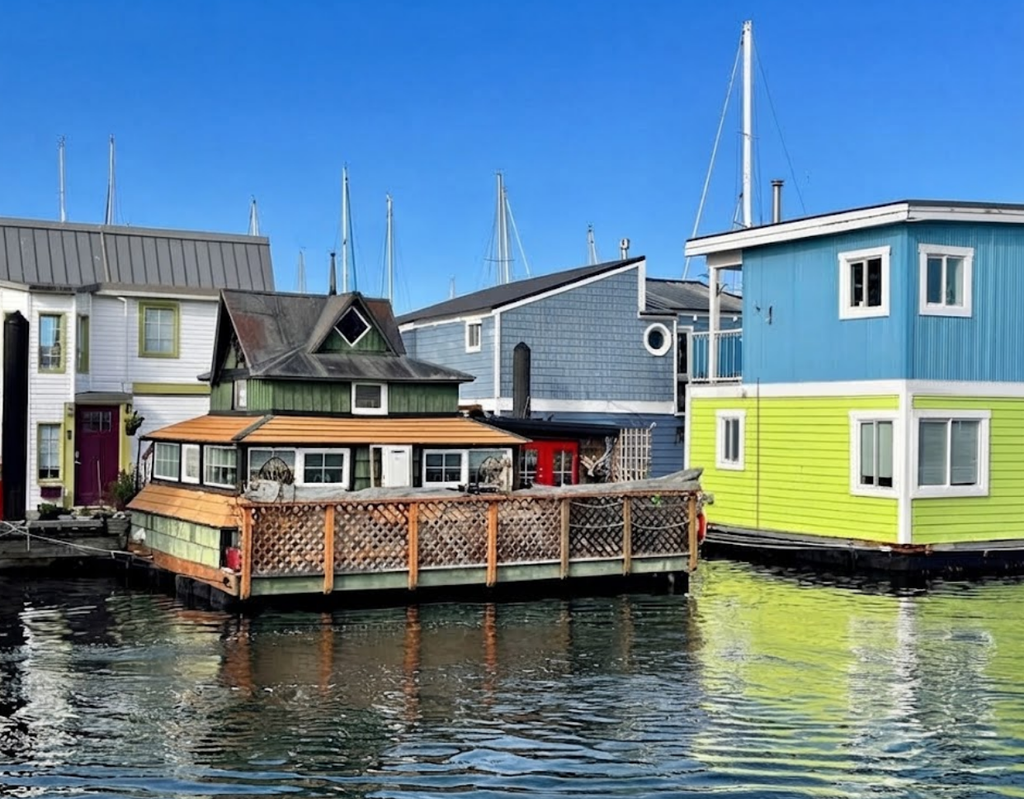
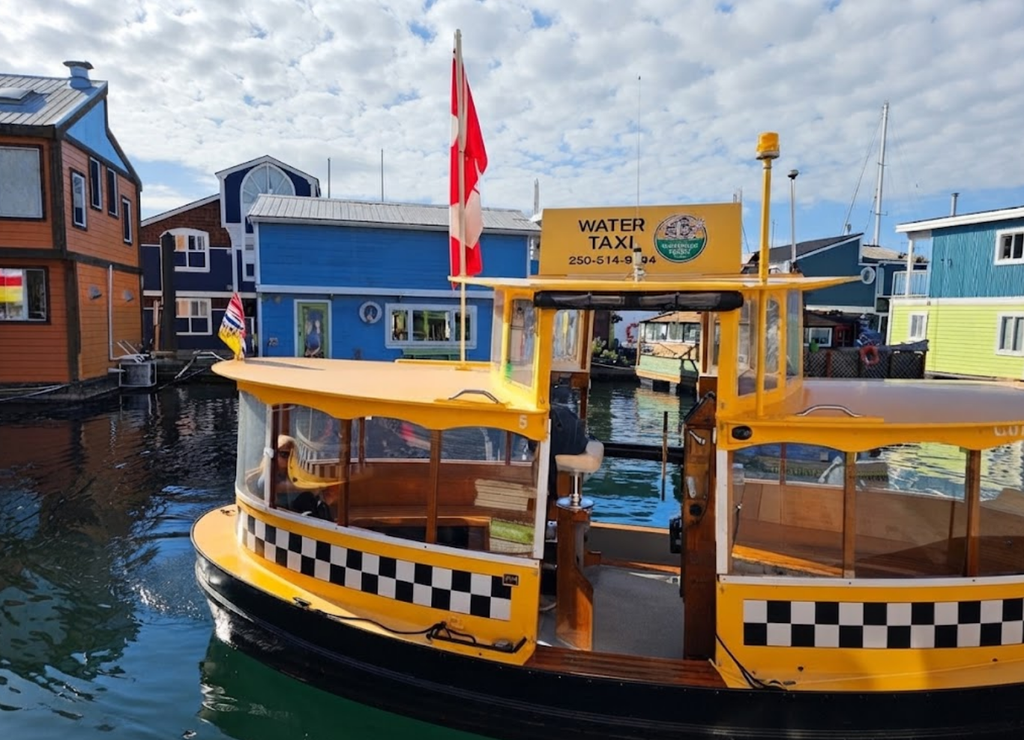
The first impression is colour. Float homes painted in sherbet hues — lemon yellows, sea‑foam greens, coral pinks — bob gently against the docks. They look like toy houses set adrift, but they are lived‑in, loved, and layered with character. Each one is a tiny world, with potted plants on porches, bicycles leaning against railings, and curtains fluttering in the breeze.
You catch yourself wondering what it might feel like to wake up here, coffee in hand, seals splashing just outside your window.
Food with a Sea Breeze
The scent of fried halibut drifts from The Fish Store, mingling with briny air and the chatter of gulls. Chowder steams in paper cups, crab legs crack open, and someone nearby is balancing a cone of ice cream against the sun. It’s casual, it’s messy, and it’s perfect. Menus here are Oceanwise‑certified, meaning the seafood is sustainably sourced.
Salmon chowder, steamed mussels, halibut fish and chips, Dungeness crab — the bounty of the Pacific served fresh and unfussy. But don’t let the name fool you: vegetarian wraps, gluten‑free salads, and edamame bowls remind you that this is a place where everyone finds something to savour.
Adventures Afloat
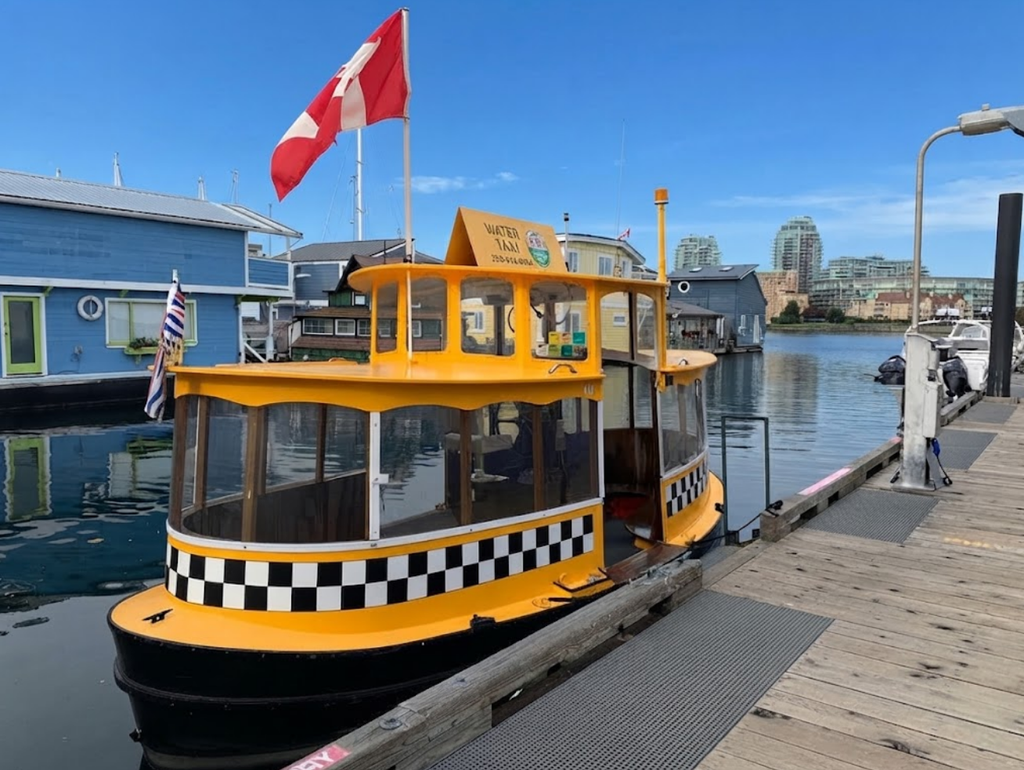
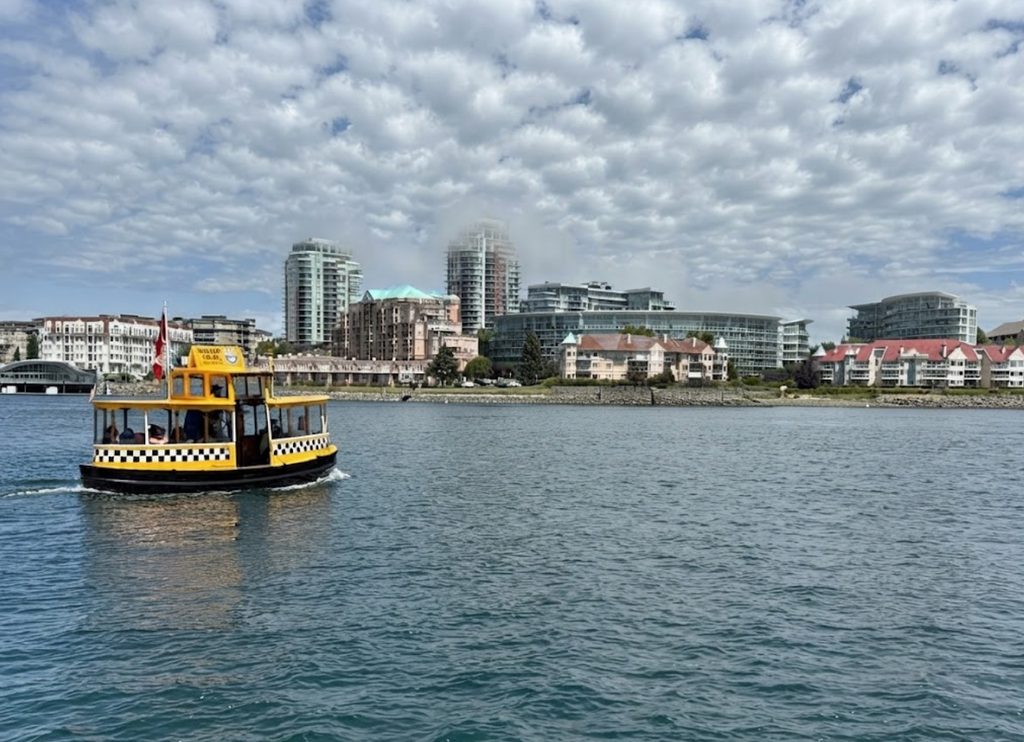
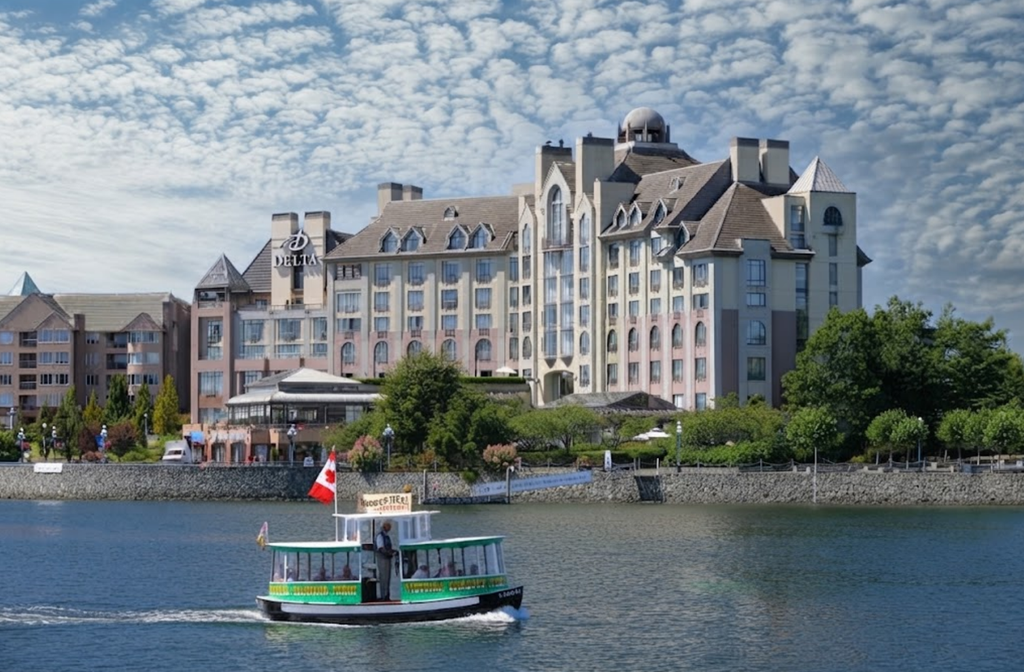
If you’re restless, the harbour itself beckons. Victoria Harbour Ferries — affectionately called “pickle boats” — putter in and out, their green hulls glinting. On Sunday mornings, they even dance in choreographed “water ballets,” a whimsical show that makes the whole harbour grin. Or slip into a kayak with Kelp Reef Adventures.
The water lies glassy at sunset, seals bobbing like curious neighbours, and the city skyline glowing behind you. It’s the kind of moment that feels stitched into memory. Tours are tailored for families, couples, or solo paddlers, with guides who know the harbour’s moods and secrets.
For those who want to venture further, whale watching tours leave daily from the docks, chasing the horizon into the Salish Sea. Orcas slice through the waves, humpbacks breach in arcs of spray, and seabirds wheel overhead. It’s a reminder that Victoria’s harbour is not just a postcard — it’s a gateway to wilderness.
Wildlife at the Docks
Lean over the railings and you might spot a harbour seal blinking up at you, or an otter darting between pilings. Herons stalk the shallows, fish ripple beneath the surface, and the wharf hums with life both human and wild. Children squeal as seals bob like spotted dogs of the sea, their whiskered faces breaking the surface.
Tourists snap photos, locals smile knowingly. The rule here is simple: admire, but don’t feed. The wildlife is part of the rhythm, not a sideshow.
Shopping on the Water
Between the eateries and float homes, you’ll stumble upon boutiques that feel like treasure chests. 4 Winds Nest Boutique offers pottery, glass, wood, and jewellery — all handmade, all whimsical. Each piece feels like it belongs to the tide. On the marina side, Hi Gear Crab Sales sells top‑grade Dungeness crabs straight from the boat. It’s seafood commerce at its most direct: no middlemen, just the ocean’s catch and your appetite.
A Past of Salt and Smoke
It’s hard to imagine now, but Fisherman’s Wharf wasn’t always so playful. When it opened in the late 1940s, this was a working marina — six wharves carved into a tidal marsh, four for fishing boats, two for makeshift “live‑aboards.” The docks were rough, lawless, and alive with industry.
It was a frontier outpost on the water’s edge, improvised and unruly. Being built on the edge of a sprawling tidal marsh meant the wharf was difficult to access by land. Erie Street was a block away, but the path was muddy, tangled, and often impassable.
The wharf existed in its own world, separate from the city, a place where rules bent and broke with the tide. Over decades, the chaos softened. Regulations arrived, tourism grew, and the float homes became more than shelters — they became icons. Today, the wharf has transformed into a kaleidoscope of homes, cafés, and eco‑tours, but beneath the paint and postcards, you can still feel the pulse of its working past.
Seasons on the Wharf
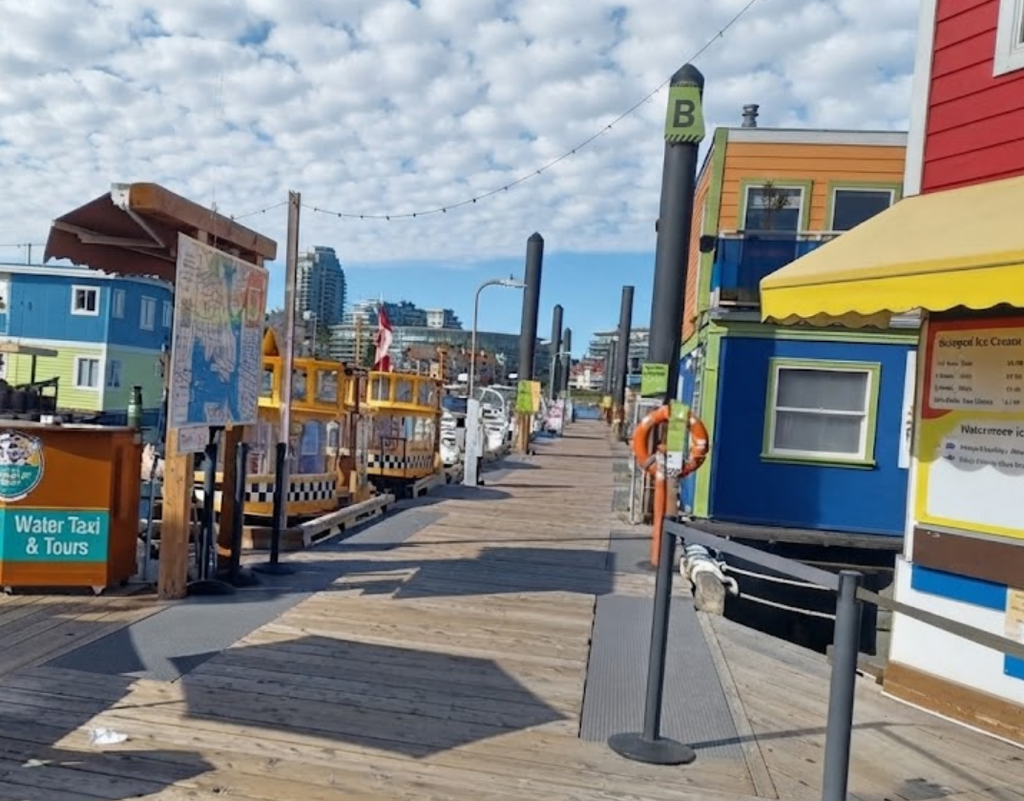
In summer, Fisherman’s Wharf hums with energy. Tour boats depart, kiosks bustle, and the boardwalks are crowded with families, cruise passengers, and day‑trippers. The vibe is casual, colourful, and lively, with seals basking in the sun and music drifting from open windows.
In winter, the pace slows. Some restaurants close, tours pause, and the docks feel quieter, more contemplative. The float homes glow against grey skies, and the wharf becomes a place for locals to stroll, dogs to run in the park, and photographers to capture mist rising from the water.
Fisherman’s Wharf Park
At the entrance, Fisherman’s Wharf Park spreads out in green lawns. Families picnic, children climb play structures, and dogs run leash‑free in the designated area. It’s a community space, a buffer between city streets and floating village, where land and water meet in harmony.
Getting There
The journey is part of the charm.
Walking: The most scenic route is the 1.5 km stroll along the David Foster Harbour Pathway. As you approach, the float homes appear across the bay, perfect for a photo stop.
Biking: Bike racks are available, and the ride is breezy.
Driving: 135 paid parking spots at 12 Erie Street make access easy.
Water Taxi: The pickle boats ferry you across the harbour, connecting destinations with charm.
Public Transit: BC Transit routes link downtown to James Bay.
Golf Cart Rentals: For something quirky, street‑legal golf carts add whimsy to the journey.
Photography and Atmosphere
Fisherman’s Wharf is a photographer’s dream. The float homes reflect in rippling water, seals pose like seasoned models, and sunsets paint the harbour in gold. Every corner offers a frame worth capturing, from fishing boats unloading their catch to kayaks slicing through twilight.
Why It Matters
Fisherman’s Wharf is more than a tourist stop. It’s a living community, a reminder of Victoria’s maritime roots, and a place where industry and leisure coexist. The float homes are privately owned, the fishing boats still work, and the tours connect visitors to the wild beyond the harbour.It’s a microcosm of coastal life: colourful, unpredictable, and deeply tied to the sea.