
Introduction
Fogo Island is not simply a destination—it is a feeling. Off the north coast of central Newfoundland, this island is a place where the Atlantic Ocean presses against jagged cliffs, where fishing villages cling to coves, and where art, heritage, and wilderness converge.
Known for its dramatic landscapes and the iconic Fogo Island Inn, the island is also a living community of nine villages, each with its own rhythm and story. To step onto Fogo is to slow down, to breathe in salt air, to listen to waves and wind. It is a place where the edge of the Earth feels tangible, yet where hospitality and culture make you feel at home.
Getting to Fogo Island
The journey is part of the adventure. Most travelers drive to the ferry terminal at Farewell, one hour from Gander, 3.5 hours from Deer Lake, and 4.5 hours from St. John’s. The ferry cannot be reserved, so patience is required. On busy summer days, waits can stretch long, but the ritual of lining up becomes part of the island’s rhythm.
Two ferries serve the crossing: a direct 45‑minute voyage, and a longer route that pauses at the Change Islands, extending the trip to 75 minutes. Once aboard, cars are left below and passengers ascend to lounges or outer decks. On clear days, the Atlantic horizon is mesmerizing; on stormy ones, a book and a warm drink suffice.
For those seeking speed, charter planes or helicopters can be arranged from Gander or St. John’s—especially if staying at the Fogo Island Inn, whose staff orchestrate seamless arrivals.
Getting Around
Fogo Island is 25 kilometres long and 14 wide, with nine villages stitched together by winding roads. Driving every route takes about 90 minutes, but each community deserves its own pause. A car is essential, not for distance but for discovery.
Connectivity and Currency
Cell service is patchy, LTE flickering in towns but fading in open stretches. Offline maps are wise companions, and the visitor centre near Stag Harbour offers paper maps when open. Banking is absent; cards are the currency of choice, with some businesses refusing cash altogether.
How Long to Stay
A day trip is possible—first ferry in, last ferry out—but rushed. Fogo rewards lingering. One night offers a taste; two nights allow hikes, conversations, and the rhythm of island time. Fogo is not a place to hurry—it is a place to breathe.
Seasons of Fogo
Locals speak of seven seasons: winter, pack ice, spring, trap berth, summer, berry, and late fall. Each carries its own character. Independent travelers often favour July and August, when weather is mild and businesses open. June and September bring quieter days, variable skies, and fewer crowds. Whatever the season, Fogo is Atlantic—windy, brisk, and alive.
Weather
Summer temperatures hover between 10 and 20°C, but wind makes them feel cooler. Rain jackets and fleeces are essential. The island’s treeless expanses amplify the elements, reminding visitors that this is not the tropics but the edge of the North Atlantic.
The Nine Villages
Stag Harbour: Gateway community near the ferry dock, quiet and photogenic.
Seldom: Once called Seldom‑Come‑By, home to historic buildings and the Marine Interpretation Centre.
Deep Bay: Fog‑shrouded cliffs, the Courting Trail leading to lookouts and artist studios.
Island Harbour: Picturesque fishing shacks, views of ferry traffic and Channel Islands.
Fogo: Largest community, rich with shops, churches, museums, and trails to Brimstone Head.
Shoal Bay: Home to Food Land grocery, marshy boardwalk trails, and coastal studios.
Barr’d Islands: Oldest settlement, historic buildings, causeways linking tiny islets.
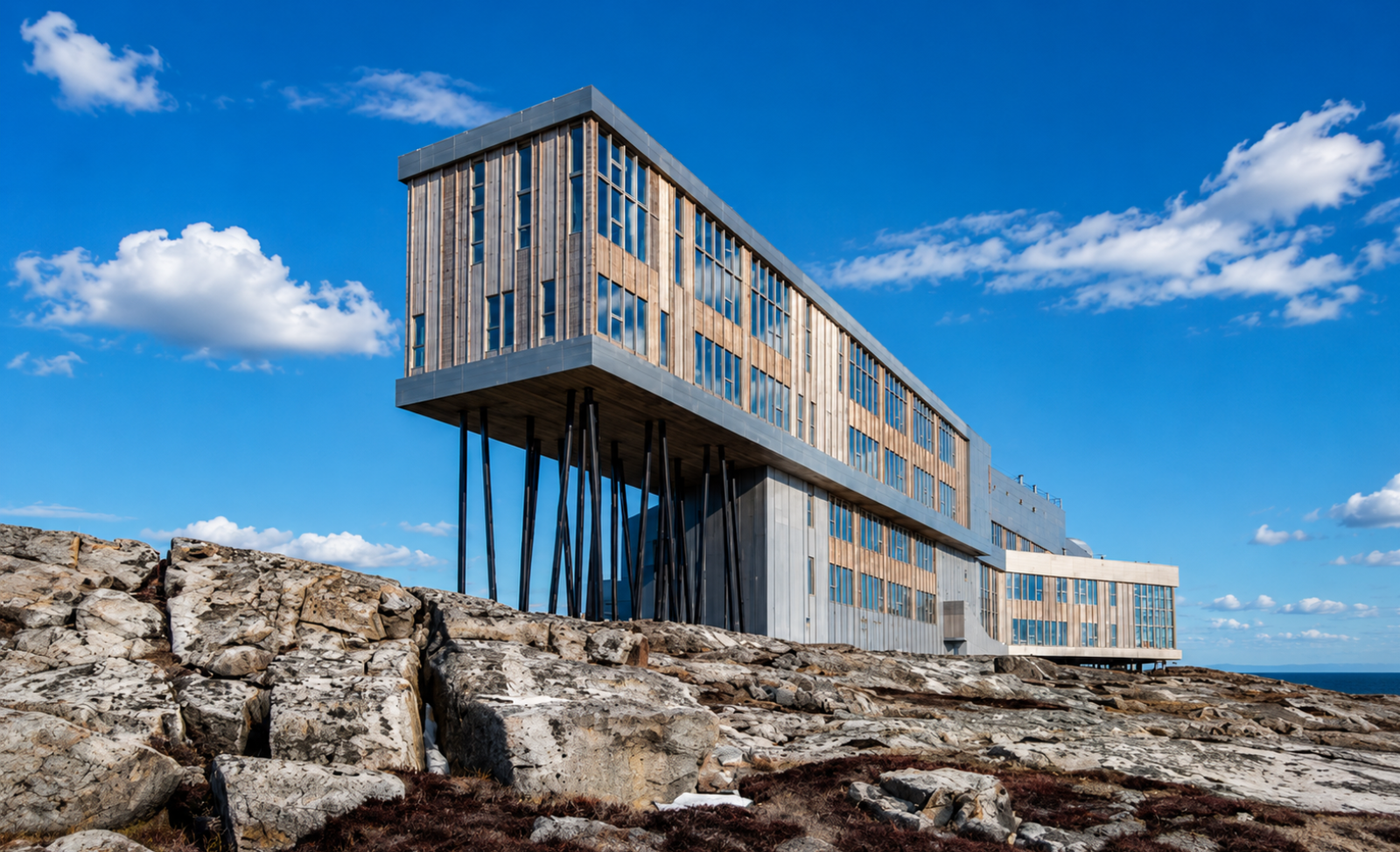
Joe Batt’s Arm: Named for a sailor, now home to the Fogo Island Inn, museums, and the Great Auk sculpture trail.
Tilting: Irish heritage, historic sites, trails, and Sandy Cove beach.Each village carries its own rhythm, its own story, its own invitation.
Hiking Trails
Brimstone Head: A 1.2 km climb to one of the “four corners of the Earth,” with sweeping ocean views.
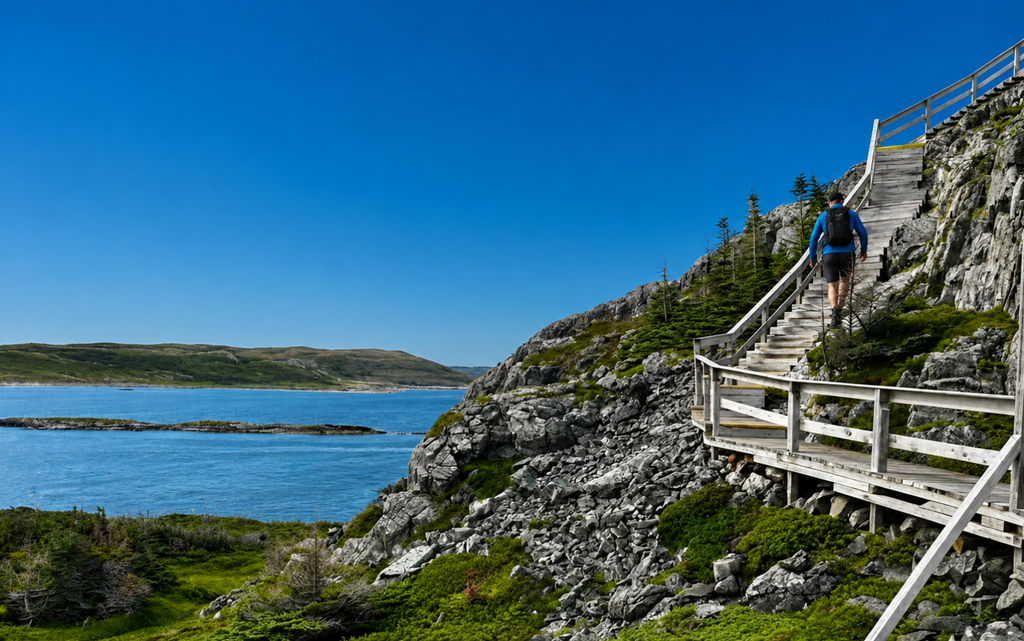
Deep Bay Courting Trail: Stairs and heathland leading to a bluff 60 metres above sea level.
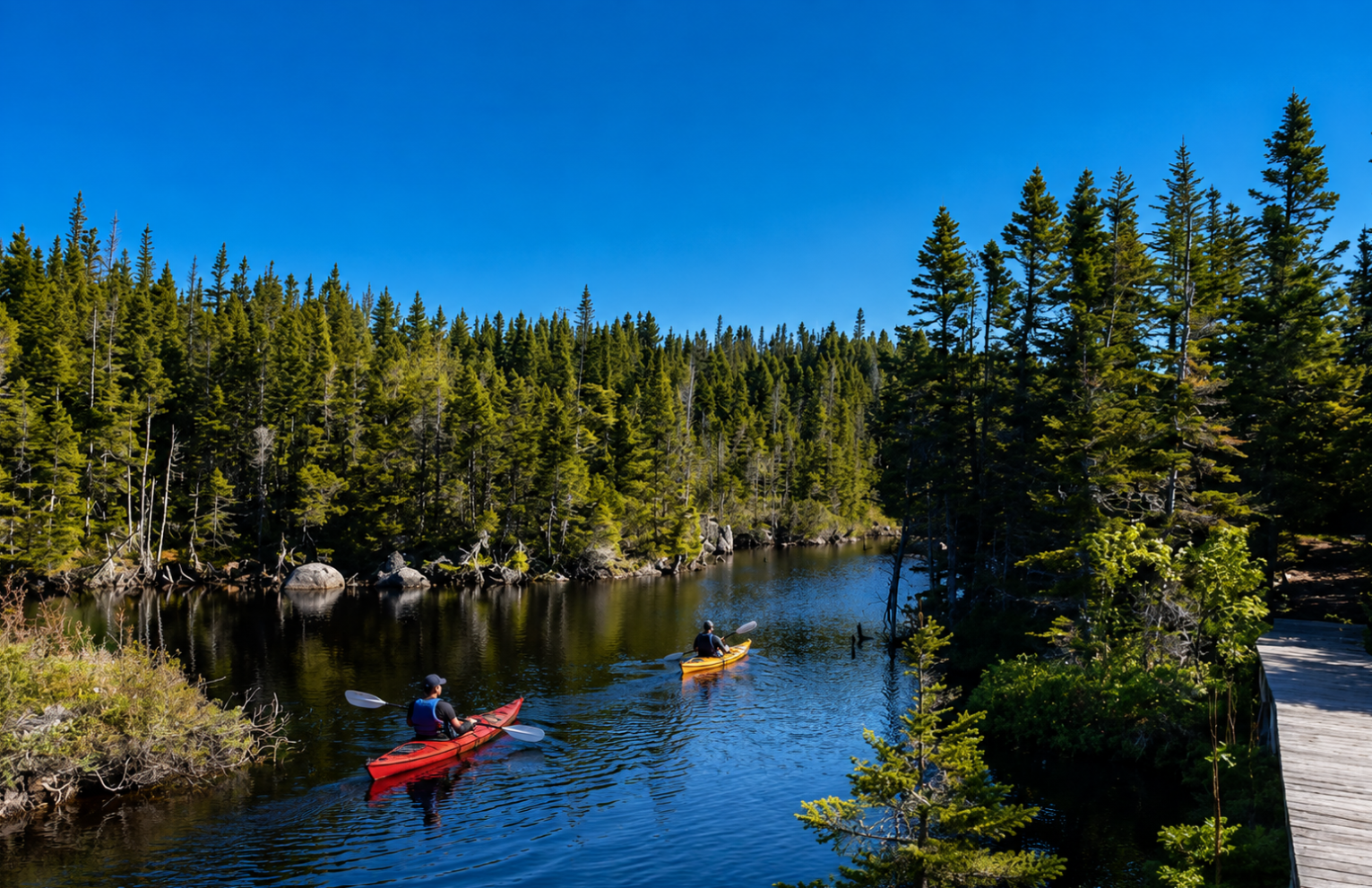
Shoal Bay Trail: Boardwalk through bogs to Tower Studio, 1.2 km round‑trip.
Joe Batt’s Point: A 5 km coastal walk past studios to the Great Auk sculpture.
Fogo Head: A 2.1 km climb across a 103‑metre bluff, with loop options and harbour views.
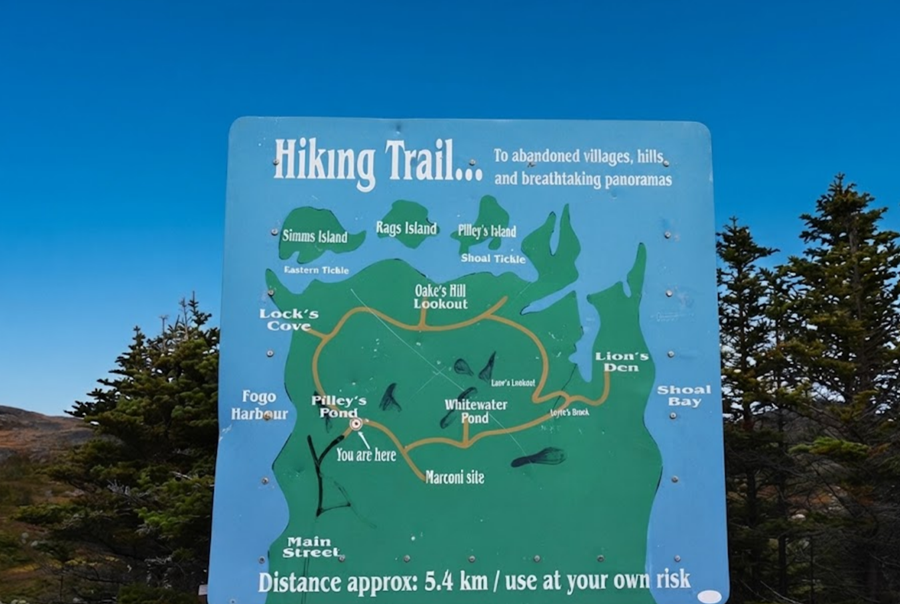
Lion’s Den: A 6.3 km loop with interpretive signs, marsh boardwalks, and coastal viewpoints.
Each trail blends effort with reward, offering perspectives that linger long after the hike ends.
Art and Architecture
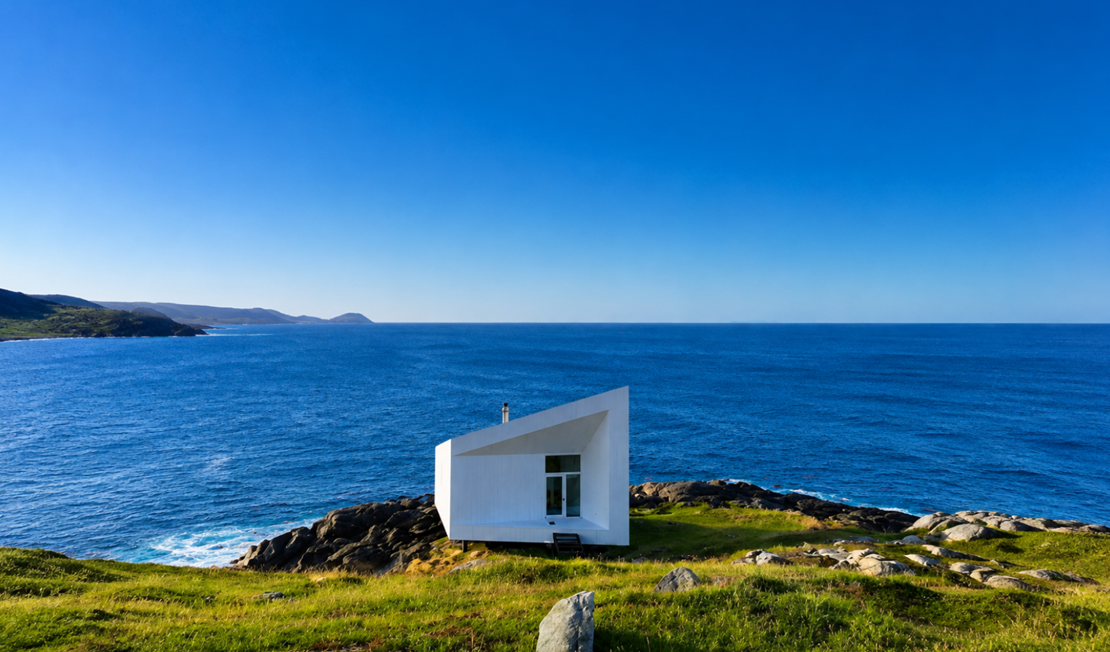
Fogo Island is not only natural—it is cultural. The Fogo Island Arts residency program has created striking studios perched on cliffs and marshes: Tower Studio, Long Studio, Bridge Studio. These minimalist structures contrast with traditional fishing stages, yet both speak to resilience and creativity.
The Fogo Island Inn itself is a masterpiece, rising from the rocks with angular grace. Its design honours tradition while embracing modernity, and its presence has revitalized the island’s economy and identity.
Museums and Heritage
History is woven into Fogo’s communities. The Marine Interpretation Centre in Seldom tells stories of fishing and survival. The Old School House Museum in Tilting preserves Irish heritage. The Bleak House Museum in Fogo recalls merchant life. Each museum is small but rich, offering glimpses into lives shaped by sea and land.
Food and Flavour
Dining on Fogo is rooted in place. Cod, crab, and lobster appear on menus, alongside berries and vegetables from local gardens. The Fogo Island Inn’s restaurant elevates these ingredients into fine dining, while smaller cafes and bakeries offer comfort food. Sustainability is not a trend here—it is necessity, tradition, and pride.
The Spirit of Fogo
What makes Fogo unique is not only its geography but its spirit. The island has faced decline and renewal, hardship and hope. Its communities are resilient, its culture vibrant, its landscapes unforgettable. Visitors come for hikes and views, but they leave with something deeper: a sense of connection, of belonging, of having touched the edge of the Earth.
Fogo Island is a place where the Atlantic shapes every moment, where heritage and art intertwine, where slowing down becomes the essence of travel. To stand atop Brimstone Head, to walk fog‑shrouded trails, to watch the sun set over Joe Batt’s Arm—these are not just sights, they are memories etched in salt and wind. Fogo Island is the edge of the Earth, and yet, for those who visit, it feels like the heart of Newfoundland.