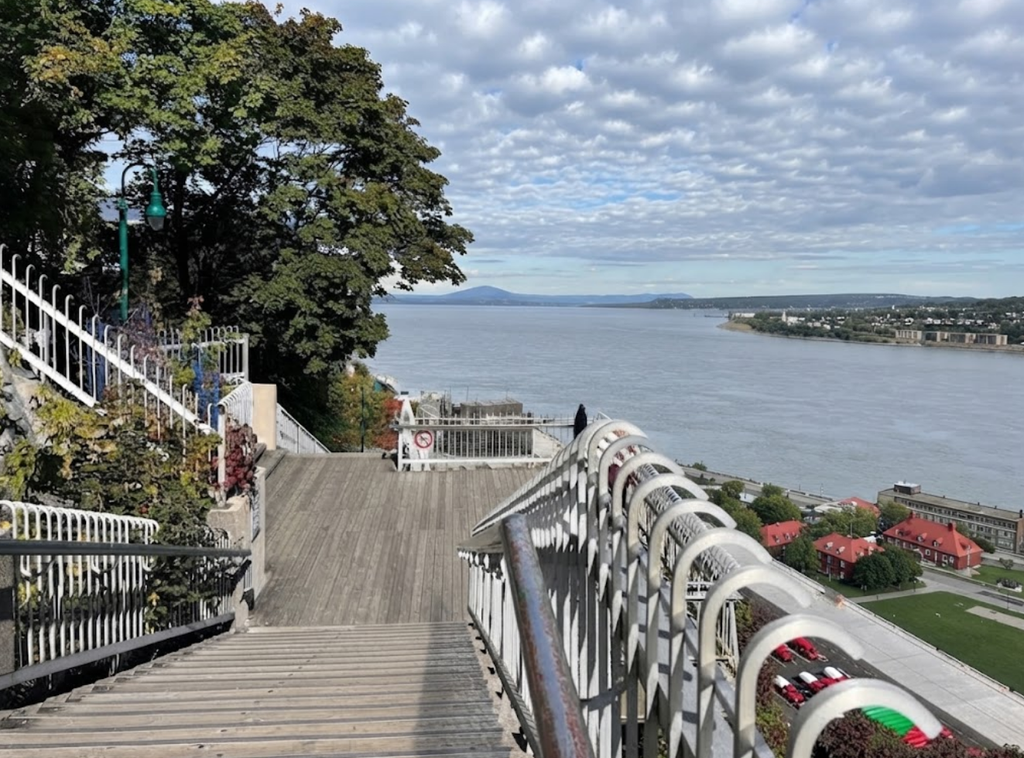
A Cliff‑Edge Ribbon of Timber and Stone
Things to do and see in Quebec. The Promenade des Gouverneurs is more than a walkway; it is a suspended ribbon of timber and stone that clings to the cliff face of Cap Diamant, carrying you between the Château Frontenac and the Plains of Abraham. To step onto it is to step into Québec City’s vertical soul, where the fortification wall of the Citadelle rises on one side and the wide, luminous sweep of the St. Lawrence River unfurls on the other.
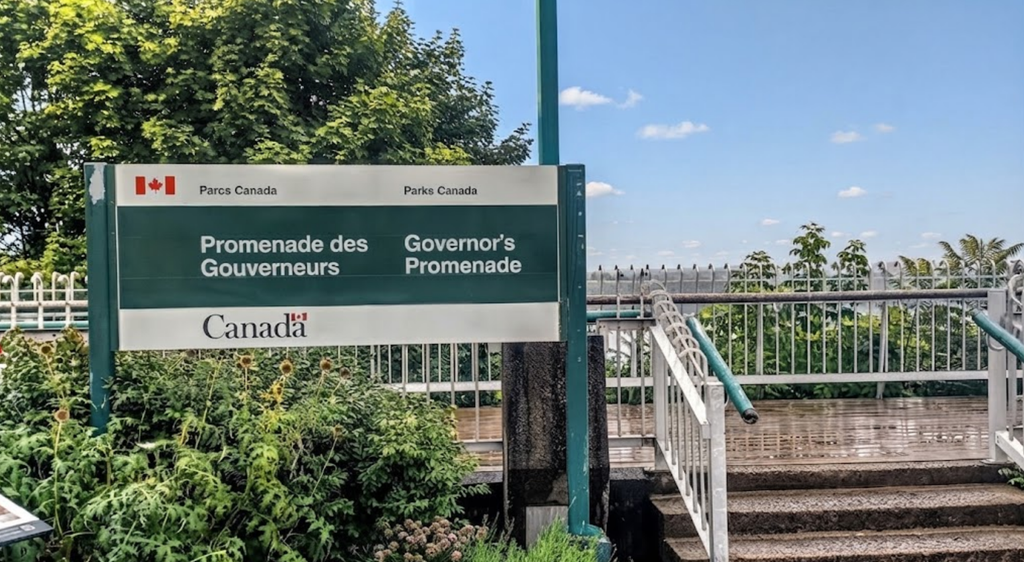
The Terrace and the Château
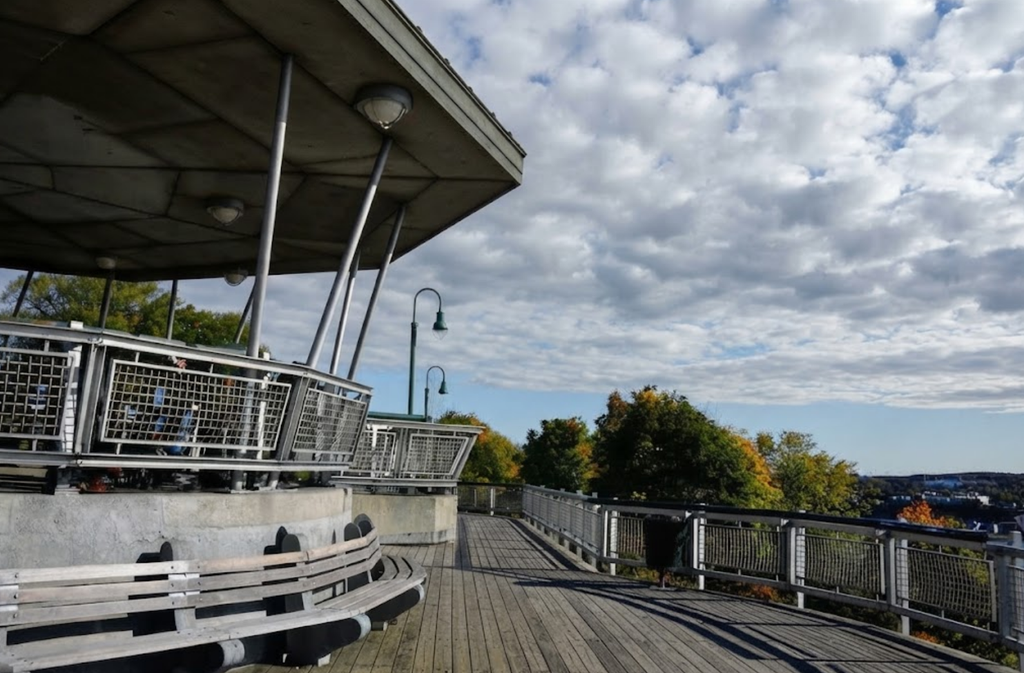
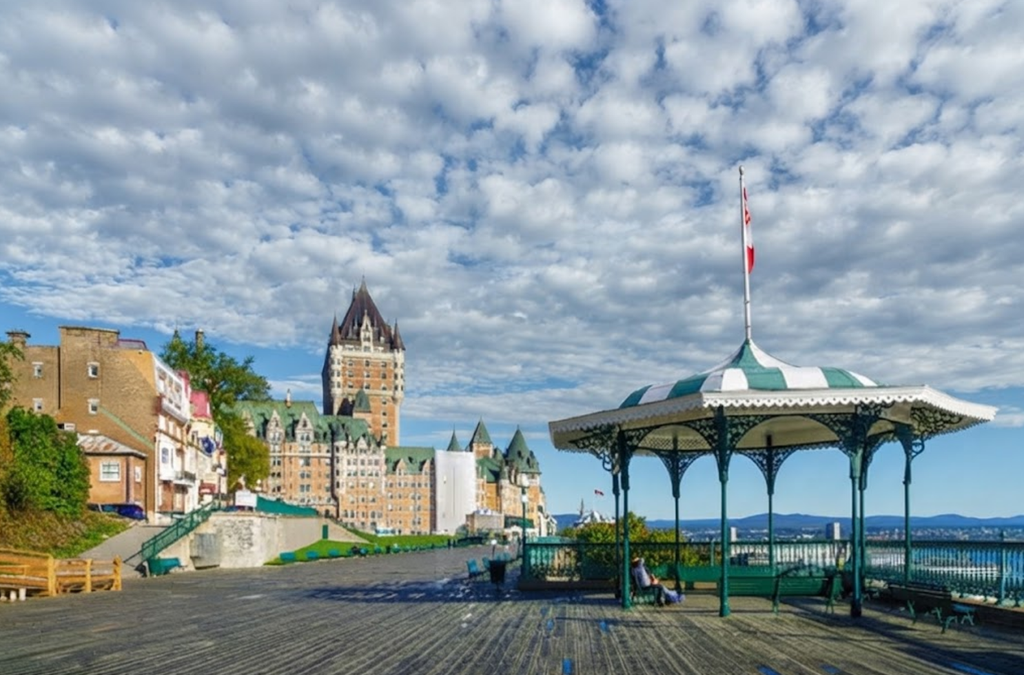
The promenade begins at the southern edge of Dufferin Terrace, a giant boardwalk shaded by pavilions and watched over by the copper‑roofed silhouette of the Château Frontenac. Here, the city feels theatrical: the terrace is a stage, the hotel its backdrop, and the promenade the path that leads you offstage into a quieter drama. The wooden staircase drops you into a sequence of platforms and steps, each one a pause in the story.
The Citadelle’s Shadow
Walking southward, the Citadelle looms above, its stone walls a reminder of centuries of military vigilance. Built to guard against invasion, it now guards memory. The promenade hugs its outer wall, a passage once used by soldiers, later reshaped for governors, and eventually opened to the public. To walk here is to feel history pressed close, the cliff face on one side, the fortress on the other.
The River’s Horizon
On the opposite side, the St. Lawrence River stretches wide and luminous. From the platforms you can see eastward to Lévis, its shoreline a mirror to Québec’s own. Look further and the Île d’Orléans shimmers, a green island set against the river’s silver. The promenade offers angles unavailable from terrace or street: vertiginous views down to the Cap‑Blanc neighbourhood, rooftops clustered beneath the cliff, and long horizons that dissolve into light.
Steps and Rhythm
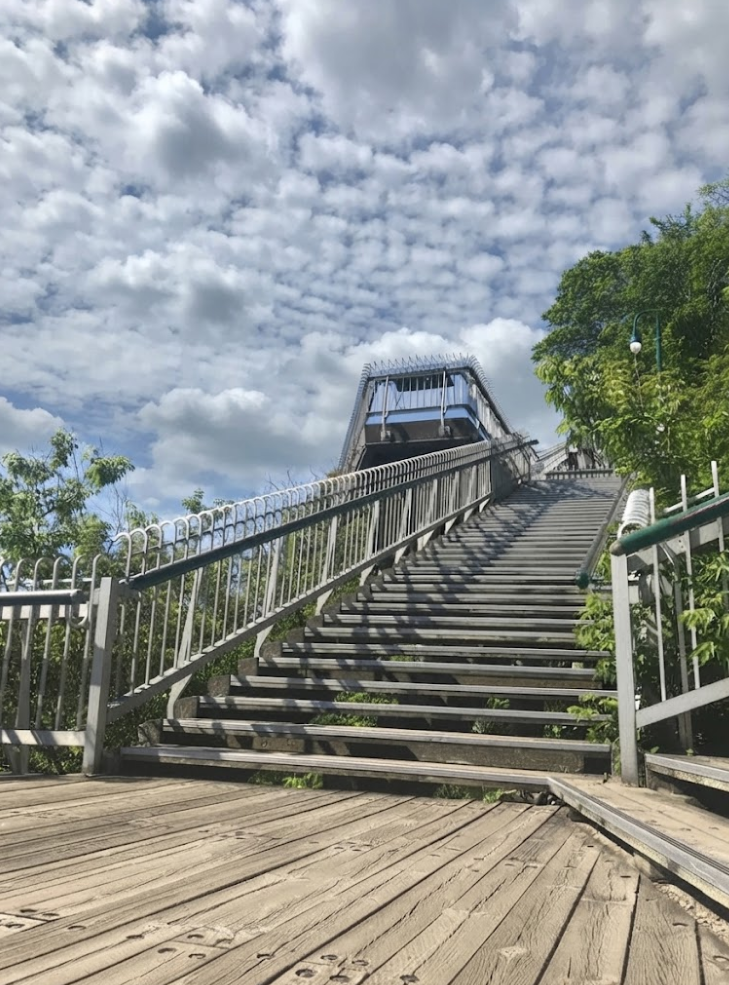
The promenade is a rhythm of ascent and descent: 308 steps over 655 metres, timber staircases tumbling downward or climbing steadily upward depending on where you begin. Start at the Plains of Abraham and you descend, each step a release. Start at the Château Frontenac and you climb, each step a negotiation with gravity. Either way, the rhythm becomes part of the experience, a pulse that carries you through the city’s verticality.
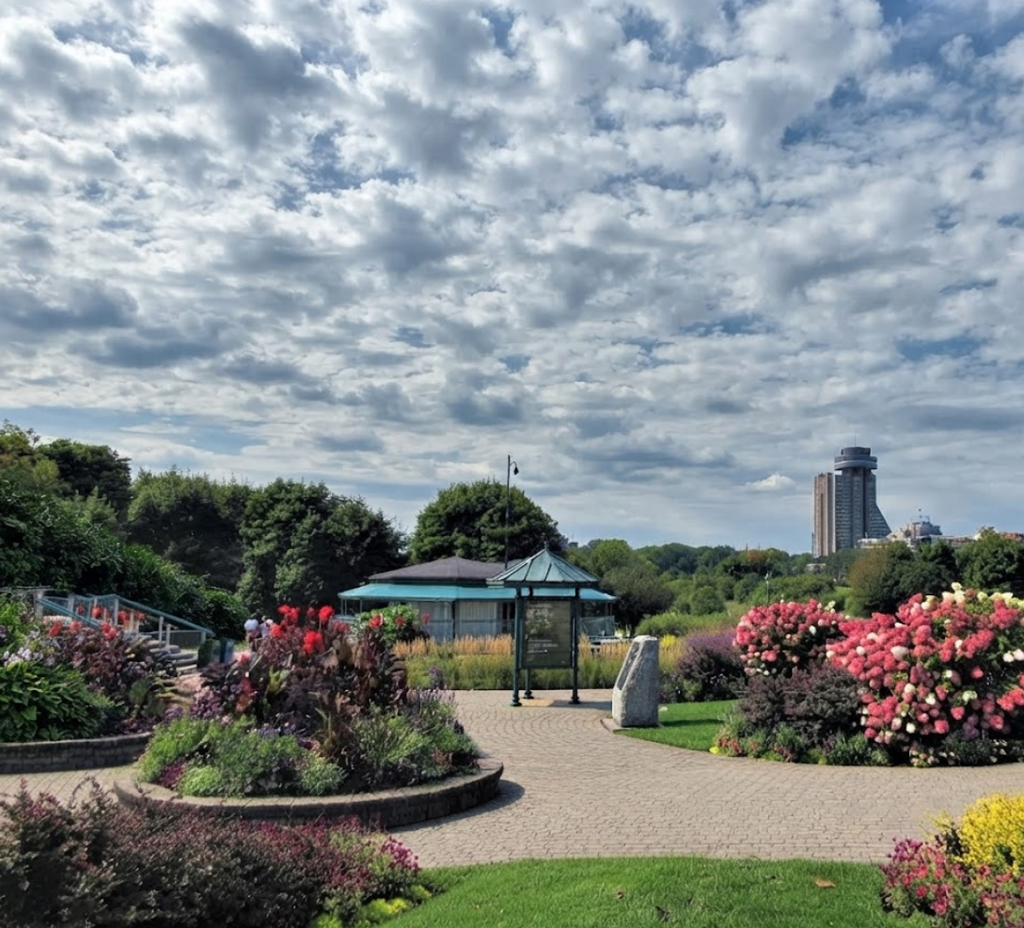
Seasons on the Cliff
Season shapes the walk. In late spring, the cliff face bursts green, fresh leaves trembling against the river’s surge. Summer evenings bathe the path in golden light, the hour when the St. Lawrence glows like molten glass. Autumn transforms the walk into a chromatic theatre, the cliff ablaze with reds and golds, the river reflecting fire. Winter closes the promenade, ice making its timber bones too treacherous to trust — a reminder that beauty here is seasonal, fleeting, and earned.
The Plains of Abraham
At the promenade’s northern end lies the Plains of Abraham, a sprawling park where battles once decided empires. Today it is a place of picnics and sunlight, joggers and families, but beneath the grass lies history: the Battle of 1759, the clash that reshaped North America. To arrive here after the cliff‑edge walk is to step from vertical drama into open expanse, from fortification into field.
A Walk Through Time
The promenade’s story is layered. Once a precarious dirt road winding up the cliff, it became a military passage when the British fortified the Citadelle. Later, it was reshaped into a heritage amenity for governors, then opened to the public, renovated in the 1960s, and again in 2007. Each renovation added permanence to what was once fragile, turning danger into leisure, necessity into beauty.
The Circuit of Heritage
To walk the promenade is to connect landmarks: the Terrasse Dufferin, the Château Frontenac, the Citadelle, and the Plains of Abraham. Together they form a circuit of heritage and horizon, a loop that requires no vehicle, only time and breath. Combine the promenade with a Citadelle tour and a return via the Grande Allée and the Porte Saint‑Louis, and you have the finest single walking circuit in Old Québec — cliff face, fortress, and plateau in one.
The Vertical Soul of Québec
Québec City is a city of stairs, a city where verticality defines experience. The Governors’ Promenade expresses this most completely: a path suspended between earth and air, history and horizon. To walk it is to inhabit the city’s geological drama, to feel its heartbeat in timber and stone.
Practical Notes in Poetic Rhythm
Start at Château Frontenac for the full uphill climb, rewarding views at every pause.
Begin at the Plains of Abraham if you prefer a gentler descent, more time to linger with the scenery.
Visit in spring or autumn for the most vivid colours, though summer evenings offer golden light.
Avoid rainy days when stone steps become slippery.
Allow 20–30 minutes for the walk itself, longer if you stop often for photographs.
Closing Reflection
The Governors’ Promenade is not just a walkway. It is Québec City’s cliff‑edge heartbeat, a suspended theatre of stone, timber, and sky. It is where history and landscape entwine, where every step carries you deeper into the city’s vertical soul. To walk it is to understand Québec not as a flat map but as a layered drama, a city built on height, defended by stone, and revealed in views that linger long after you have left the boards behind.