
British Columbia > Say Nuth Khaw Yum Provincial Park > Granite Falls
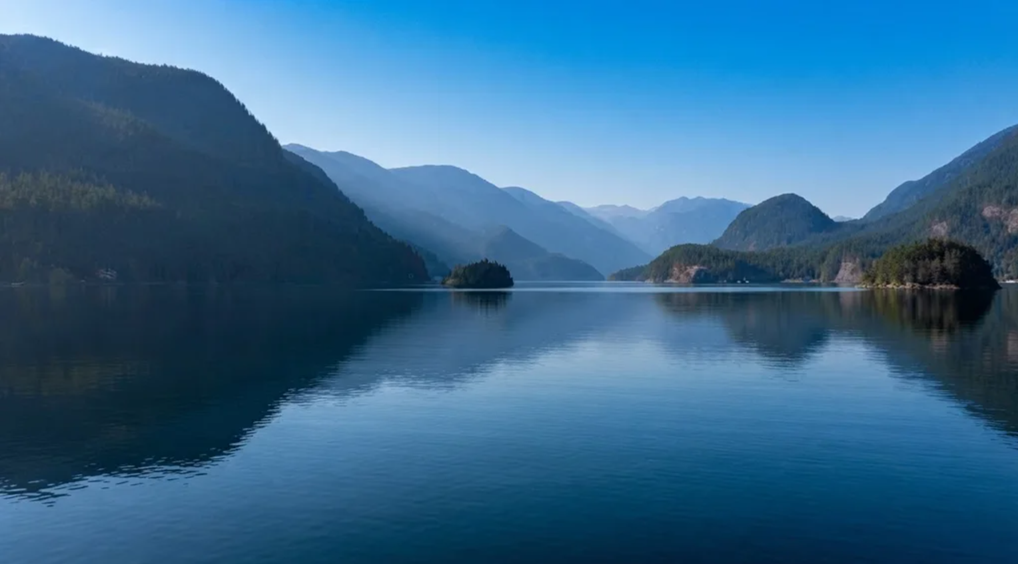
The fjord of Selilwet, stretches inland from Burrard Inlet like a glacial scar filled with seawater. Its cliffs rise steeply, forests cling to the slopes, and waterfalls tumble from hidden valleys. Granite Falls, at the northern end, has long been a destination for paddlers, hikers, and boaters.
The journey there is both demanding and rewarding, a passage through landscapes shaped by ice and time, and a reminder of the fragile balance between wilderness and human presence.
The Rhythm of Departure
Deep Cove awakens early in summer. Streets fill with cars, kayaks line the shore, and the inlet hums with anticipation. Launching at dawn offers calm water and quiet air, the fjord lying flat and reflective, its surface mirroring cedar and fir. The paddle strokes fall into rhythm, carrying the journey northward before the southerly winds rise to churn the water.
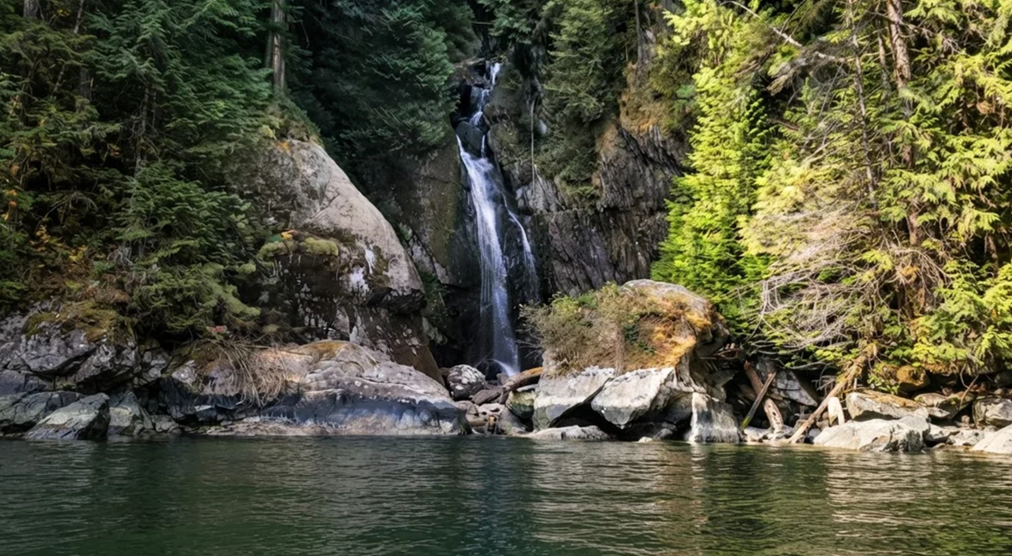
Thywates Landing provides the first pause, a small beach tucked against the west shore. A short trail leads to a shaded waterfall and pool, a place to rest before pressing onward. Silver Falls soon follows, its cascade spilling silver threads down the rock face, a highlight of the fjord’s northern passage.
Camps Along the Fjord
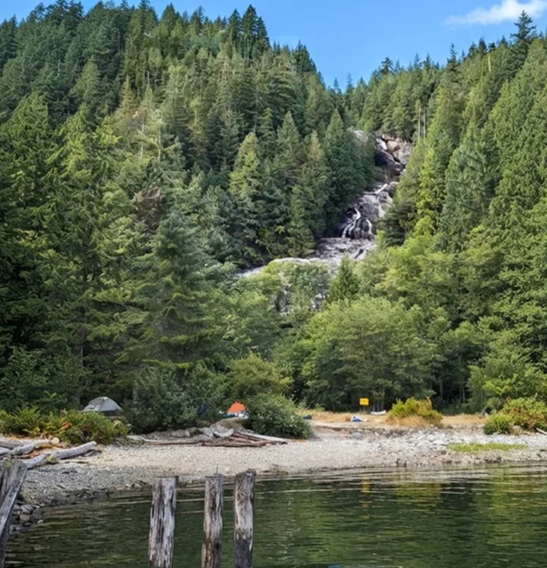
Berg’s Landing stretches wide and open, a meadow with space for tents and a shoreline for landing. Lunch is taken here, the wind beginning to stir as the final push toward Granite Falls approaches. The last two kilometers carry choppy water, but a tailwind eases the effort, and soon the waterfall comes into view, tumbling from the cliffs into a shimmering pool.
Granite Falls is already alive with voices, tents scattered along the shoreline, motorboats anchored offshore. The site holds contradictions—wild and beautiful, yet crowded and treated more like a picnic ground than a backcountry camp. Bear bins are too few, coolers too many, and the tension between wilderness and misuse is palpable.
Still, the waterfall remains, gentler now in late summer, and its pool offers a cold, refreshing swim.
Evening by the Water
The hours stretch long once camp is set. Shade offers rest, books fill the quiet, and supper is tacos of yam and halloumi, prepared in advance and savored after miles of paddling. Later, kayaks slip back onto the water, the evening light softening the fjord, strokes quiet against the surface.
Warmth lingers at sea level, and sleep comes early, preparing for dawn’s departure.
Rain at Dawn
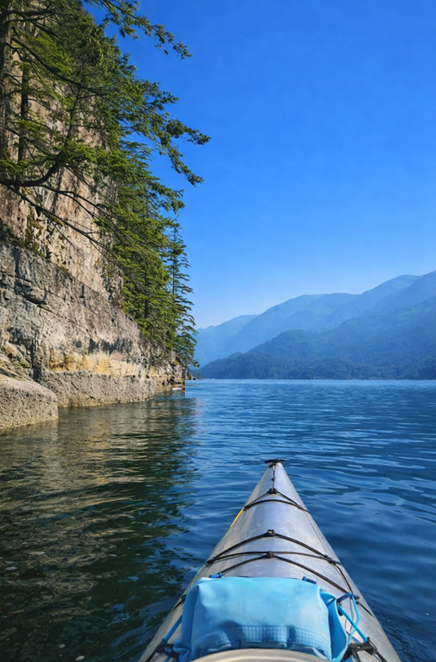
Morning arrives with rain, a brief shower that soaks tents and gear, leaving everything damp as it is packed away. By 7:30 the kayaks are back on the water, the fjord calm again, the east shore unfolding in long stretches of rock and forest. Breaks are fewer here, but the water is kind, and progress is swift.
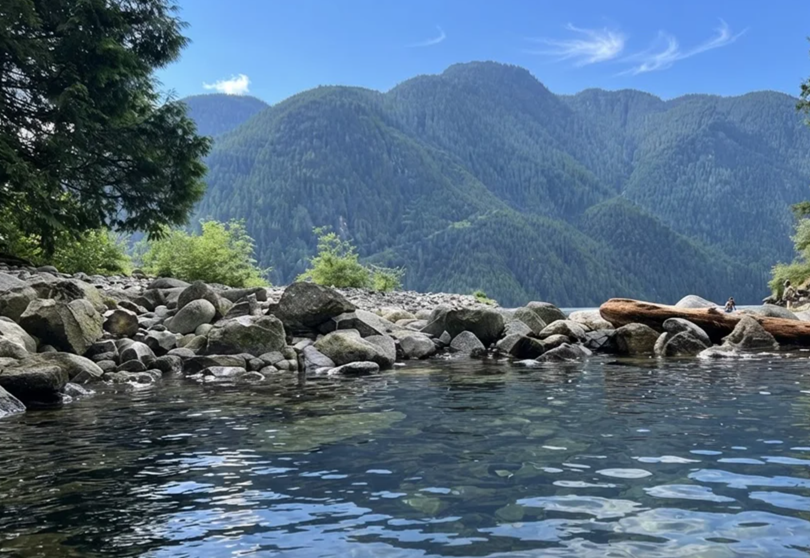
Buntzen Bay offers a rocky beach for pause, hydroelectric penstocks looming above. The northern facility still draws water from Buntzen Lake, while the southern facility stands decommissioned, its architecture a relic of another era. From there, the paddle carries onward to Twin Islands, where lunch is taken on the South Island, tide low and shoreline wide.
Returning to Deep Cove
By the time Deep Cove comes back into view, the crowds have swelled, cars packed tight along the streets, kayaks scattered across the inlet. The journey has stretched seventeen kilometers into the fjord, claimed an anniversary beneath the waterfall, and returned with the memory of saltwater and stone.
Granite Falls may have left frustrations, but the rhythm of paddle strokes, the stillness of morning water, and the swim beneath the cascade remain as the true reward.
The Falls in Contrast
Granite Falls changes with the seasons. In spring, the cascade roars with snowmelt, a violent torrent spilling over granite slabs. By late summer, the flow softens, trickling into a pool that invites swimmers. The cliffs frame the water, forests lean close, and the fjord feels alive with movement.
It is one of the largest waterfalls in the Vancouver area, a reminder of glacial power and seasonal change. The site is popular because of its freshwater source and dramatic scenery, but popularity brings problems. Motorboats anchor offshore, coolers of food and beer arrive in abundance, and bear caches prove insufficient.
The site is backcountry in designation but treated like a picnic ground, its wilderness compromised by misuse.
Wilderness and Misuse
Bear safety is often ignored, with food left unsecured and bins overflowing. The risk is not simply inconvenience; it is the habituation of wildlife, the loss of access, and the death of bears drawn into human carelessness. The outhouses, modern in design, suffer from neglect, their systems clogged by inexperience.
Granite Falls becomes a paradox: a place of beauty diminished by its own accessibility. Yet even amid misuse, the site retains its allure. The waterfall continues to fall, the cliffs continue to rise, and the fjord continues to stretch inland. The challenge lies not in the landscape but in the way it is treated, a reminder that wilderness demands respect.
Holding onto Summer
Summer in Vancouver may be brief, but Granite Falls offers a way to hold onto it. Each paddle stroke, each climb, each night beneath the cliffs becomes part of that fleeting season. The contradictions of the site do not erase its beauty; they simply remind that wilderness is fragile, and that respect is as essential as the journey itself.
Granite Falls, with its contradictions and beauty, becomes part of that fleeting season, a reminder that even short summers can hold long journeys.
Expanding the Journey
The fjord itself is a glacial relic, carved during the ice age and filled by the sea. Its length stretches twenty-five kilometers inland, its cliffs rising steeply, its forests dense and green. Along its shores lie campgrounds, waterfalls, and hydroelectric relics, each telling a story of human interaction with wilderness.
Twin Islands, at the southern end, is the most popular site, often crowded with day-trippers. Berg’s Landing, midway, offers space and quiet. Granite Falls, at the northern end, holds the drama of cascading water and the contradictions of popularity. Each site contributes to the journey, each stop a reminder of the balance between access and preservation.
Conclusion
Granite Falls endures as both gem and frustration. Its waterfall remains timeless, its cliffs and forests unchanging, yet its campsites reveal the fragility of wilderness when treated carelessly. The fjord invites paddlers, hikers, and boaters, but demands respect that is too often withheld. The journey to Granite Falls is not simply about reaching a destination.
It is about the rhythm of departure, the pauses along the way, the contrasts of the falls, and the contradictions of the campsite. It is about holding onto summer, refusing to let it slip too quickly away, and remembering that wilderness is fragile, beautiful, and worth protecting.