
The Valley of Approach
The journey to Falensee Lake begins in the rolling green pastures of Appenzell, where the village of Brülisau sits quietly at the edge of the Alpstein. From here, the trail rises sharply, carrying you past streams that tumble over rocks and meadows alive with the sound of cowbells. The first hour is steep, demanding, but it leads to Lake Sämtis, a broad alpine basin that shifts with the seasons—sometimes flooded, sometimes nearly dry. It is a place to pause, to breathe, to feel the rhythm of the mountains before pressing on toward the hidden fjord of Falensee.
The Ridge Descent
Another path begins high above, at Hoher Kasten, where a cable car lifts you into the sky and sets you on the spine of the Alpstein. The ridge walk here is dramatic, the limestone walls pale and sheer, the valleys dropping away on either side. At Saxer Lucke, a jagged rock window frames the world below, a view that feels infinite. From this vantage point, the descent to Bollenwees is swift, only twenty minutes, and Falensee lies just beyond, waiting in its narrow valley.
The Pilgrimage of Lakes
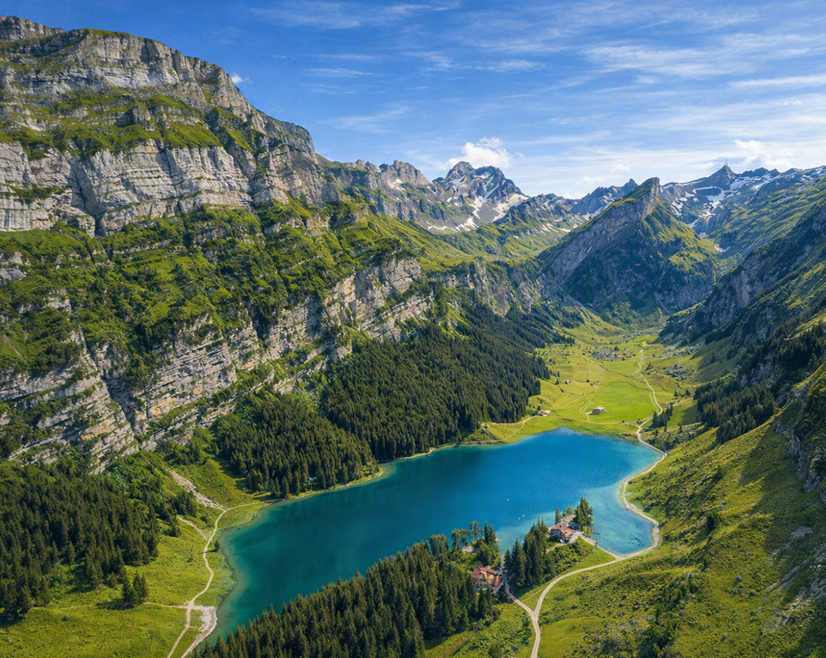
The celebrated Three Lakes Hike begins in Wasserauen, winding first to Seealpsee, a lake cradled beneath towering cliffs. From there, the trail climbs to Meglisalp, a high alpine settlement, before crossing a pass and descending toward Falensee. This pilgrimage through water and stone links three of the Alpstein’s most beautiful lakes, each one a chapter in the story of the mountains. Many hikers finish at Sämtis, but those who linger at Falensee are rewarded with solitude and the chance to see the alpenglow reflected on its waters at dusk.
The Lake at Sunset
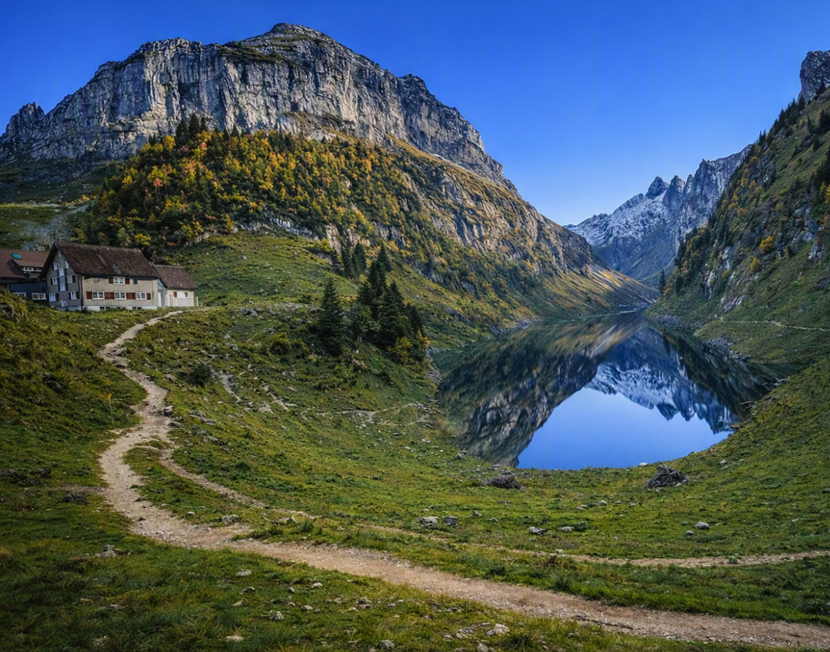
Arriving at Falensee near sunset is to step into stillness. The water lies perfectly calm, mirroring the faint blush of alpenglow on the ridges above. The valley grows hushed, and the lake becomes a mirror of the sky. Even when the sunset is modest, the scene is unforgettable—the colors soft, the reflections delicate, the silence complete. To stay here is to surrender to the rhythm of the Alpstein, better to rest at the Bollenwees Hut than to chase the last bus down to Weissbad in darkness.
The Crossroads of Trails
Falensee is not only a destination but a hub. Trails branch from here into every corner of the Alpstein.
The Altmann Ascent leads to one of the region’s highest peaks, demanding strength but rewarding with sweeping views.
The Mutschensattel Pass crosses meadows and ridges, gentler but no less beautiful.
The Lisengrat Ridge is a knife-edge traverse, narrow and exposed, for those who seek adventure.
The Rotsteinpass Hut lies further afield, linking valleys with alpine hospitality, while the Hundstein Hut offers a quieter refuge above Appenzell’s folds.
Each path carries its own rhythm, its own challenge, its own reward, but all pass through or begin at Falensee.
The Inns of the Alpstein
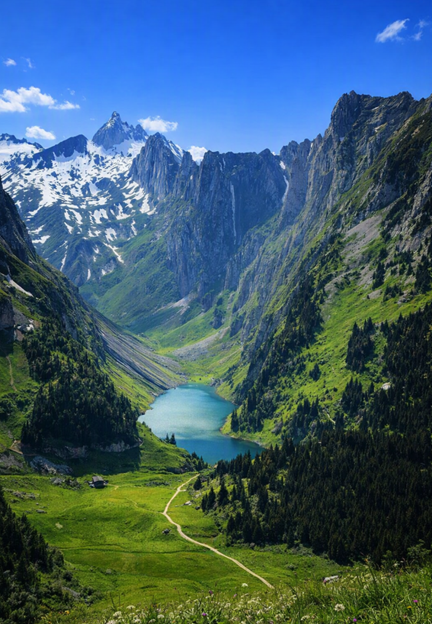
At Bollenwees, tradition meets comfort. The inn has been renovated, its rooms welcoming. From the terrace, the view of Falensee is unforgettable, the lake stretching beneath you, the ridges rising beyond. Just behind the inn lies the Ruhebänkli, a bench that offers the best view of all.
Here, the lake lies framed by cliffs, the silence deep, the scene private. To sit here is to feel the power of Falensee, a place where nature fills you with energy, where silence becomes strength, where the world feels both vast and intimate.
The Practicalities of Travel
Switzerland’s trains, buses, and cable cars are expensive, and the distances deceptive. To move through the country with ease, many hikers choose the Swiss Half-Fare Card, which halves the cost of every ticket and quickly pays for itself. Others opt for the Swiss Travel Pass, which offers unlimited rides but at a high daily cost.
The most versatile option is the Flexi Swiss Travel Pass, which allows you to activate travel days only when needed, saving money while preserving freedom. For those who plan to explore the Alpstein and beyond, these passes are more than conveniences—they are keys to the rhythm of Swiss travel.
The Hidden Dilemma
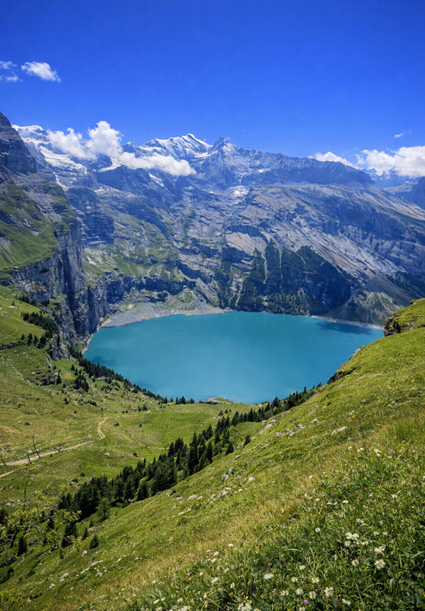
Falensee is beautiful, but not untouched. Its waters contain high levels of phosphorus, carried by streams that bring sediments and cow excreta from the surrounding pastures. Until 2001, wastewater from Bollenwees was discharged directly into the lake, adding to the problem.
Sediment samples reveal that phosphorus concentrations have been high for centuries, perhaps partly natural, perhaps partly man-made. In response, American char were introduced, a fish that thrives in cold, nutrient-rich waters. They survive where native fish struggle, but they also consume the natives, creating a dilemma.
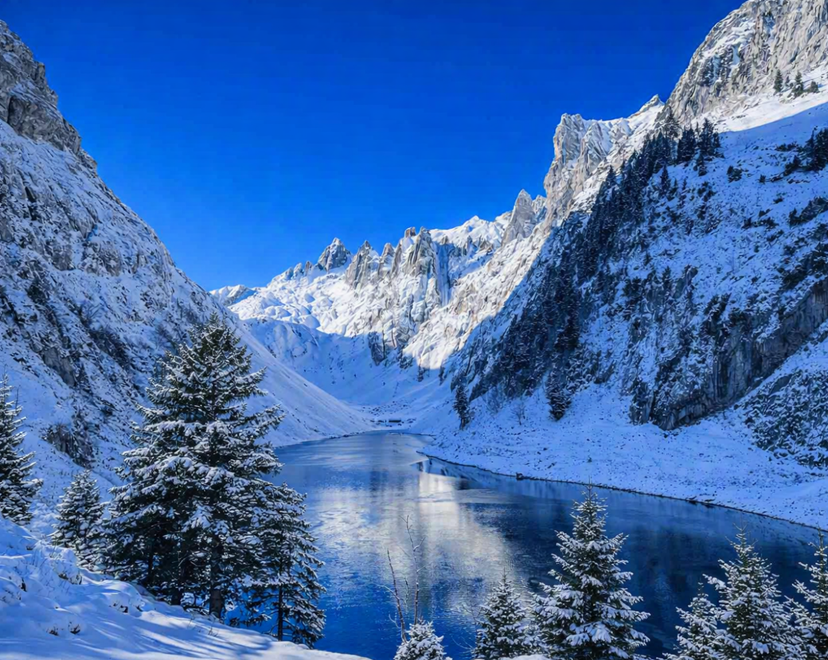
The lake is frozen in winter and long into spring, its surface hard and silent, but beneath the ice the char endure, reshaping the balance of life in Falensee.
The Lasting Impression
Despite these challenges, Falensee remains a place of power. Its narrow valley, its still waters, its reflections at sunset—all combine to create a scene that feels timeless. The journey to reach it is steep, the paths demanding, but the reward is a place where silence reigns, where the mountains press close, where the world feels distilled into water and stone.
To hike to Falensee is to step into the heart of the Alpstein, to feel its rhythm, to surrender to its silence. It is a journey not only of distance but of experience, a passage into a landscape that lingers long after you have left.