
The Gateway to Wilderness
At the western edge of Algonquin Provincial Park, the Oxtongue River slips free of the interior and winds toward Oxtongue Lake. Here, in a modest provincial park, lies Ragged Falls — a waterfall that is neither the tallest nor the widest in Ontario, yet one of the most powerful.
Hiking to Ragged Falls is not about conquering distance or elevation; it is about immediacy. A short climb, a sudden roar, and then the river unfolding around you in wild, unbroken force.
The Trail Begins
From the parking lot, the path rises gently beside the Oxtongue River. Two routes diverge briefly, each threading through forest before meeting again at the top. The ascent is modest, no more than thirty metres, but the sound of rushing water grows louder with every step. By the halfway point, the river’s voice is constant, a pulse that draws you forward.
First Glimpse of the Falls
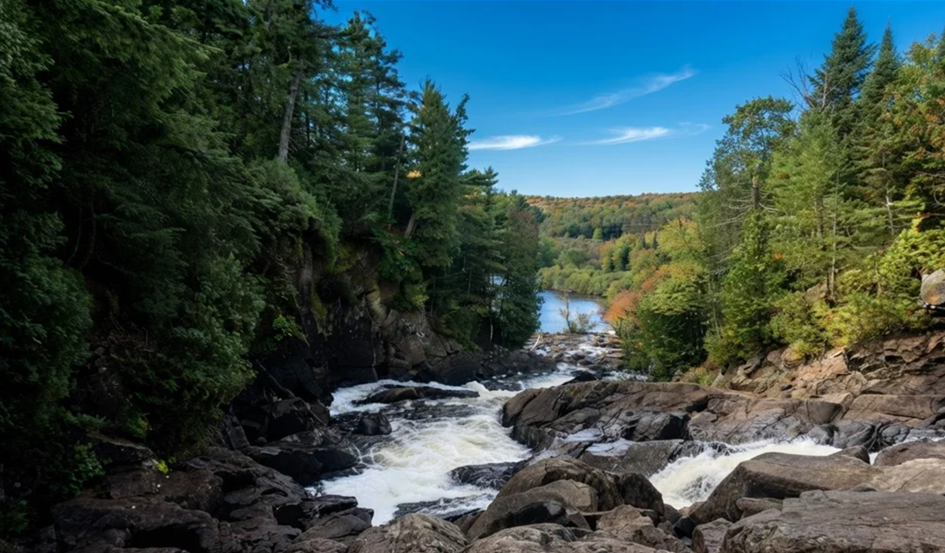
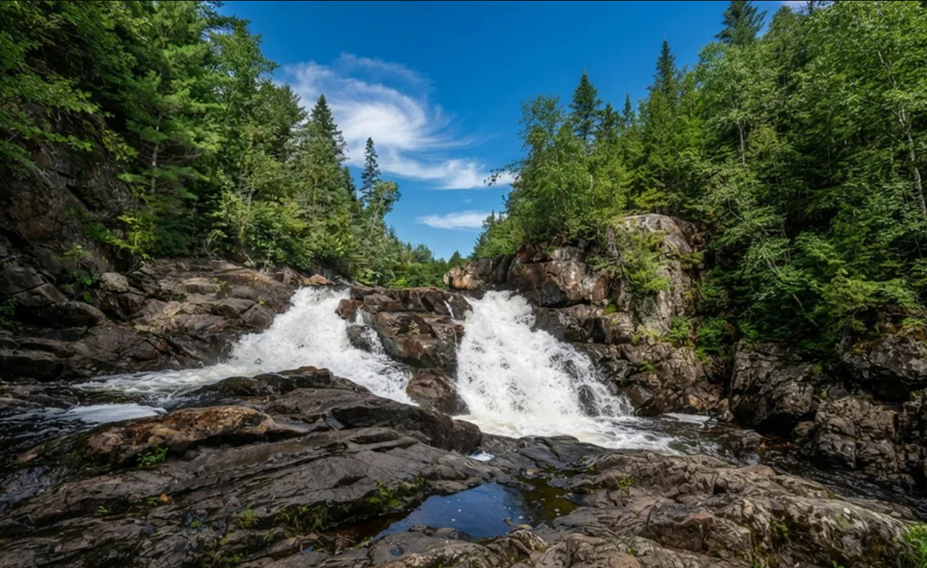
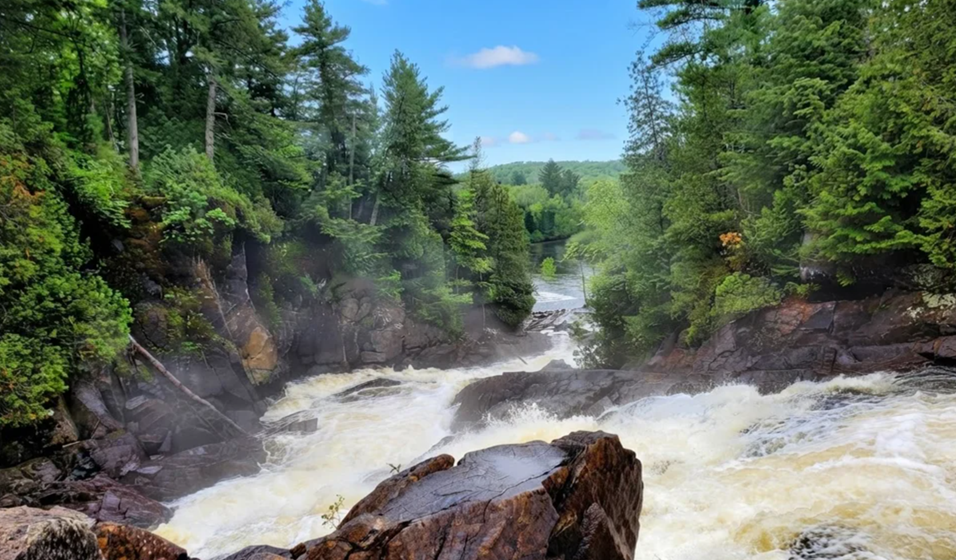
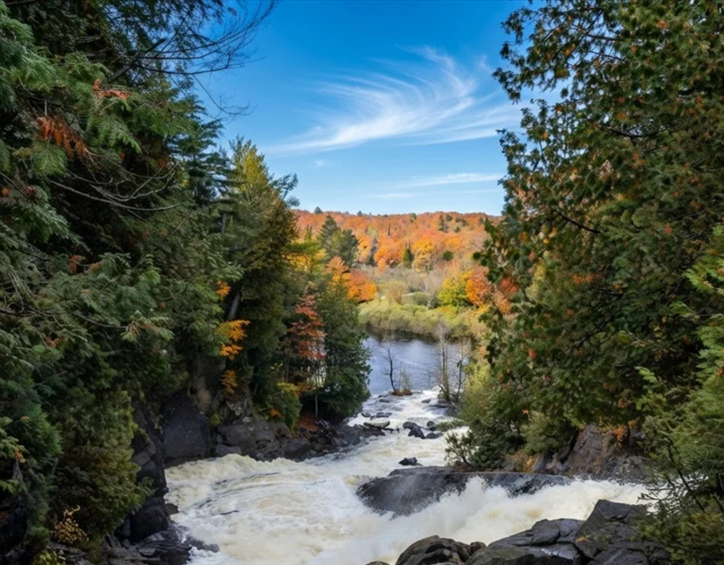
At the summit, the trail opens onto flat rocks. Suddenly, the falls are all around you. Ragged Falls is not a single curtain of water but a fractured torrent. The river rushes through granite channels carved by glacial meltwater, splitting and colliding around the shoulders of the Canadian Shield.
Wherever you stand, the water seems to encircle you, its spray catching the light in fleeting rainbows.
The Character of Ragged Falls
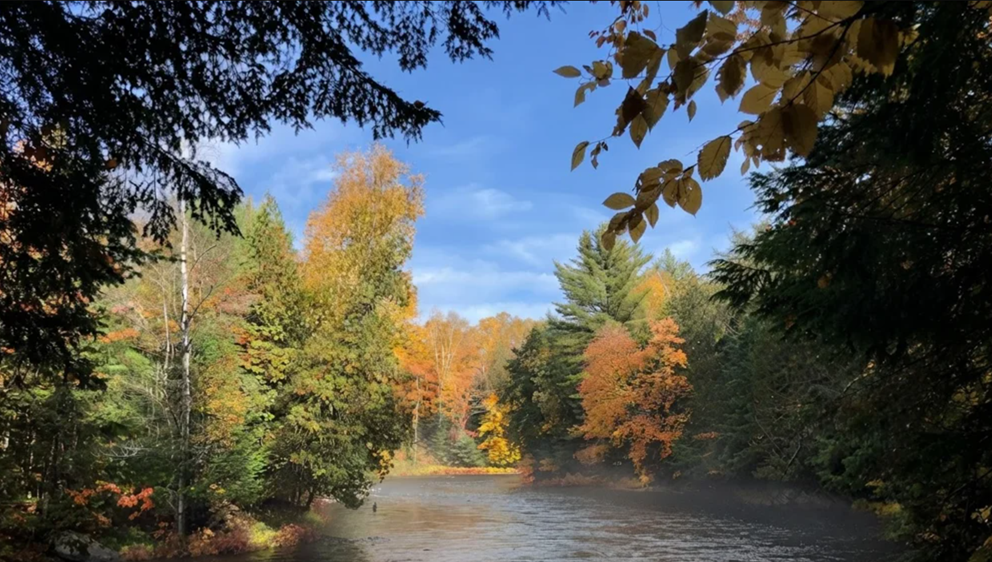
This is a wild waterfall, untouched by dams or diversions. Its force is amplified in spring when snowmelt swells the river, and in autumn the scene transforms into a living painting. Maples ignite in red and orange, birches shimmer gold, and the roar of water becomes a backdrop to colour.
The hike feels less like a climb and more like a passage into something elemental.
Forest Communities
Though small, the park shelters nine distinct forest communities. Pines and maples mix with birch and cedar, each lending its own texture to the canopy. In summer, the forest is lush and green, the air warm and filled with the scent of pine needles.
In winter, snow drapes the branches, and the frozen river creates a hushed, crystalline world. Each season reshapes the Ragged Falls hike, offering a different kind of beauty.
Routes to the Falls
The Ragged Falls Trail itself is short, less than a kilometre out and back, but it connects to broader experiences. The classic option is the direct hike, easy and safe, suitable for families and beginners. For those seeking something more adventurous, paddling from Oxtongue Lake offers a quintessential Canadian journey.
Canoe across calm water, listen for loons, and portage briefly before arriving at the falls by river. For solitude seekers, the Western Uplands Trail provides a longer, more rugged approach. Here, the hike is not just about reaching the falls but about earning them. The path winds through deep forest, past lakes and ridges, eventually delivering you to the roar.
It is best suited for experienced hikers, those who enjoy the journey as much as the destination. For first‑time visitors, guided tours provide a stress‑free option. Local guides handle logistics, share knowledge of Algonquin’s ecology, and ensure that the experience is as rich as it is effortless.
Practical Details
The distance is modest, the elevation gain gentle, and the time required no more than an hour. The park is open from mid‑May to late October, with gates closing in the off‑season. Facilities are limited to a large parking lot and seasonal toilets.
Camping is not permitted within the park, but nearby Algonquin Provincial Park and Arrowhead Provincial Park offer places to stay.
Packing for the Trail
Packing for Ragged Falls is simple. Sturdy shoes are essential, as the rocks can be slick. A water bottle, light snacks, and layers for shifting weather are all you need. Bug spray is useful in summer, and sunscreen protects against the open sun on the rocks.
Ticks are common in Ontario’s woods, so precautions are wise. A light pack is enough; the trail is short, but the experience lingers.
Crowds and Timing
Crowds are the one challenge. In autumn, when colours peak, weekends bring heavy traffic. The parking lot fills, and the trail becomes busy. Weekdays are quieter, offering space to linger and photograph without interruption. Arriving early is the best way to find solitude, even in peak season.
Beyond Ragged Falls
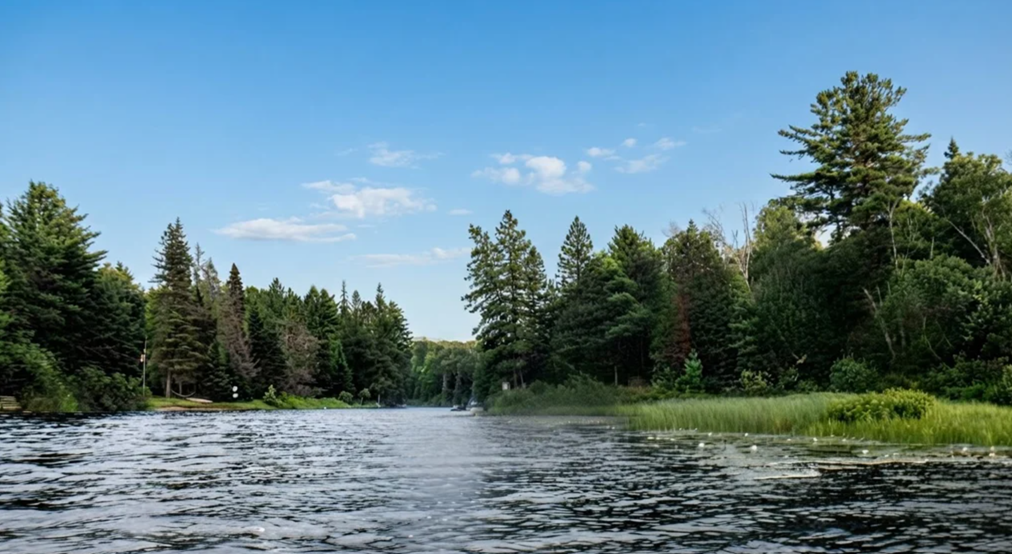
The Oxtongue River continues upstream to Gravel Falls, another testament to the river’s erosive power. The trail does not reach it, but paddlers who venture by canoe or kayak can follow the river north, chasing the sound of water deeper into the woods. Downstream, the river flows toward Oxtongue Lake, its waters calmer, its pace gentler.
Nearby Adventures
Ragged Falls is often a stop on a larger Muskoka or Algonquin journey. Pair it with Algonquin’s endless trails, Arrowhead’s winter skating paths, or Limberlost Forest with its private reserves. Each adds depth to the experience, weaving Ragged Falls into a broader tapestry of wilderness.
The Spirit of the Hike
What makes Ragged Falls special is not its size but its immediacy. A brief climb delivers you to a torrent that feels untamed, framed by forest and stone. The hike is accessible to beginners, yet the reward is immense. It is a reminder that hiking is not always about distance or difficulty.
Sometimes the most memorable journeys are the brief ones, where the effort is light but the experience lingers.
Why Ragged Falls Endures
The spirit of Ragged Falls endures because it is elemental. The Canadian Shield cradles the water, the forest frames it, and for a moment you stand at the edge of something raw and unbroken. It is a waterfall that feels alive, a park that feels like Algonquin’s secret doorway, and a reminder that sometimes the smallest places hold the greatest power.