
Forest Retreats in France > Huelgoat
There are places in the world where the landscape feels alive, where every stone and stream seems to whisper a story. In Brittany, France, the Forest of Huelgoat is one such place. Nestled within the Armorica Regional Natural Park, this woodland is not merely a collection of trees and trails; it is a stage where geology, and human history intertwine.
To hike here is to step into a Breton legend, to wander through corridors of moss‑covered granite, to follow rivers that vanish underground, and to discover sites whose names echo with folklore: the Trembling Rock, the Fairies’ Pond, the Chaos of Rocks. Walking in Huelgoat is not just exercise. It is immersion — in nature, in the timeless rhythm of forest and stone.
The Forest and Its Chaos
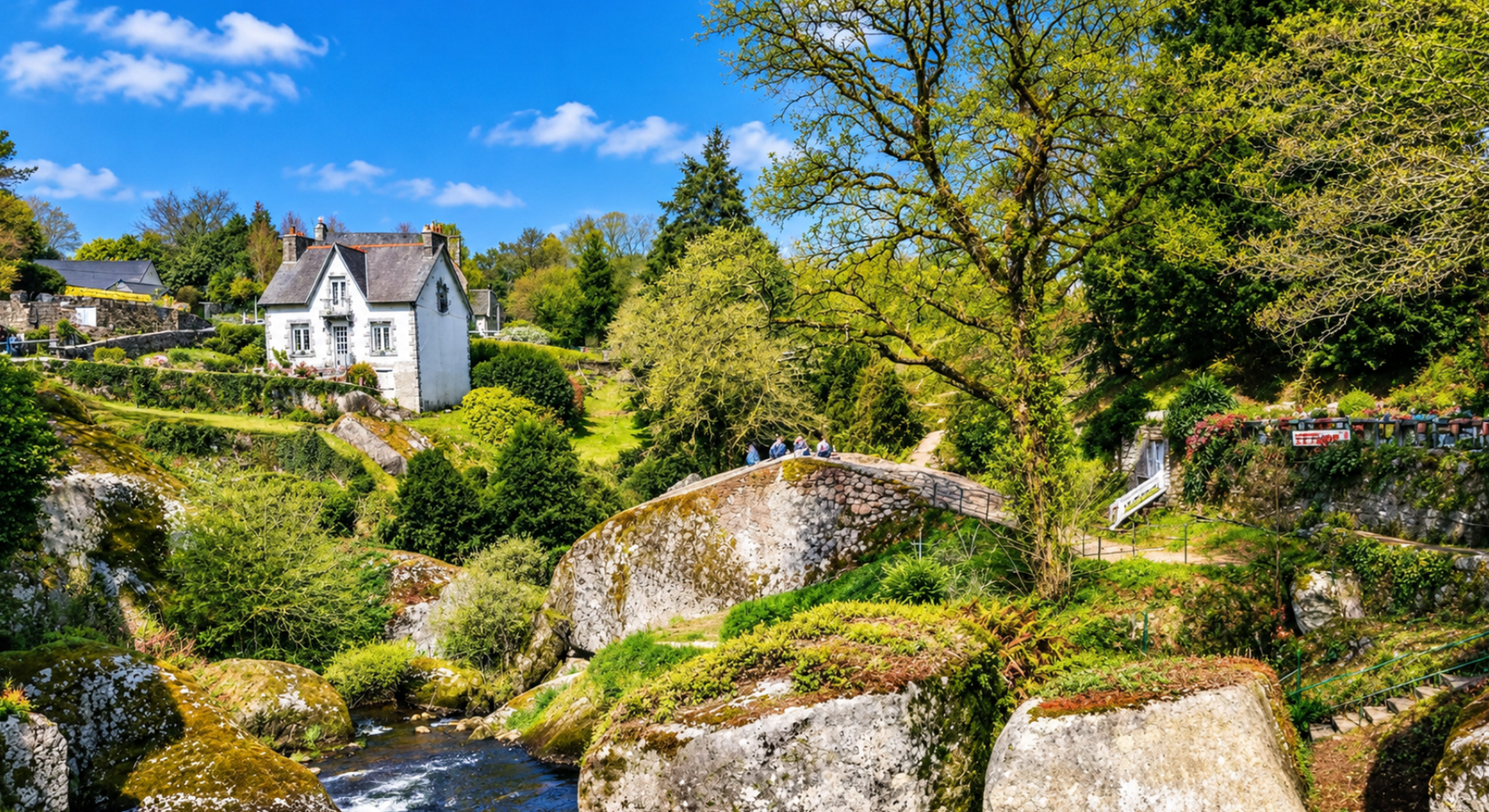
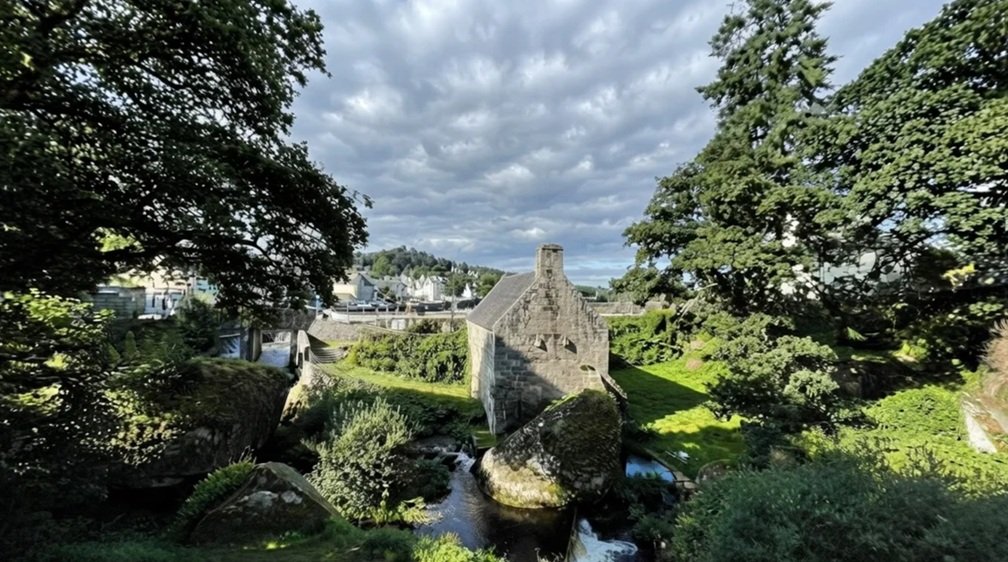
The word “Huelgoat” itself means “high wood” in Breton, and the forest lives up to its name. Tall oaks and beeches form a canopy that filters the light into shifting patterns. Beneath them, the ground is littered with boulders so immense and irregular that they seem to have been hurled here by giants.
This is the famous Chaos of Rocks, a geological marvel created by erosion. The Argent River threads through this chaos, sometimes tumbling into waterfalls, sometimes slipping underground, only to reappear downstream. Its waters once powered silver‑lead mines, and remnants of that industrial past still linger along certain trails. Yet the river feels older than any human endeavor, a silver ribbon weaving memory together.
The Gouffre de Huelgoat Waterfall Loop
The most celebrated hike begins at the Town Hall car park in Huelgoat village. From here, the trail quickly leaves the streets behind and enters the forest, following a canal shaded by trees. Bridges carry you across the water, and soon the sound of rushing currents grows louder.
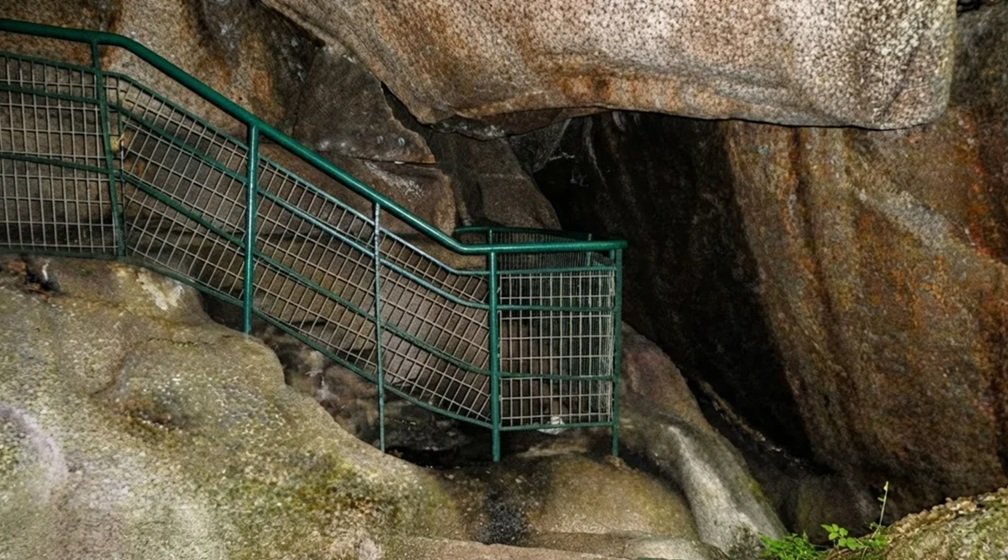
After about 11.5 km — roughly three hours of walking — you reach the Gouffre de Huelgoat Waterfall, where the Argent River plunges into a chasm of granite. The sight is dramatic: water foaming white against dark stone, mist rising into the canopy, the roar echoing through the forest. It is easy to see why this place has inspired legends of devils and spirits.
The loop continues through clearings, past slag heaps from old mines, and along gravel roads marked with the red‑and‑white stripes of the GR®37 long‑distance trail. Eventually, the path circles back toward the village, crossing streams and passing landmarks like the Fairies’ Pond and the Trembling Rock. By the time you return to the car park, you have not only completed a hike but also traced a narrative through geology.
The Canal de la Mine and Fairies’ Pond
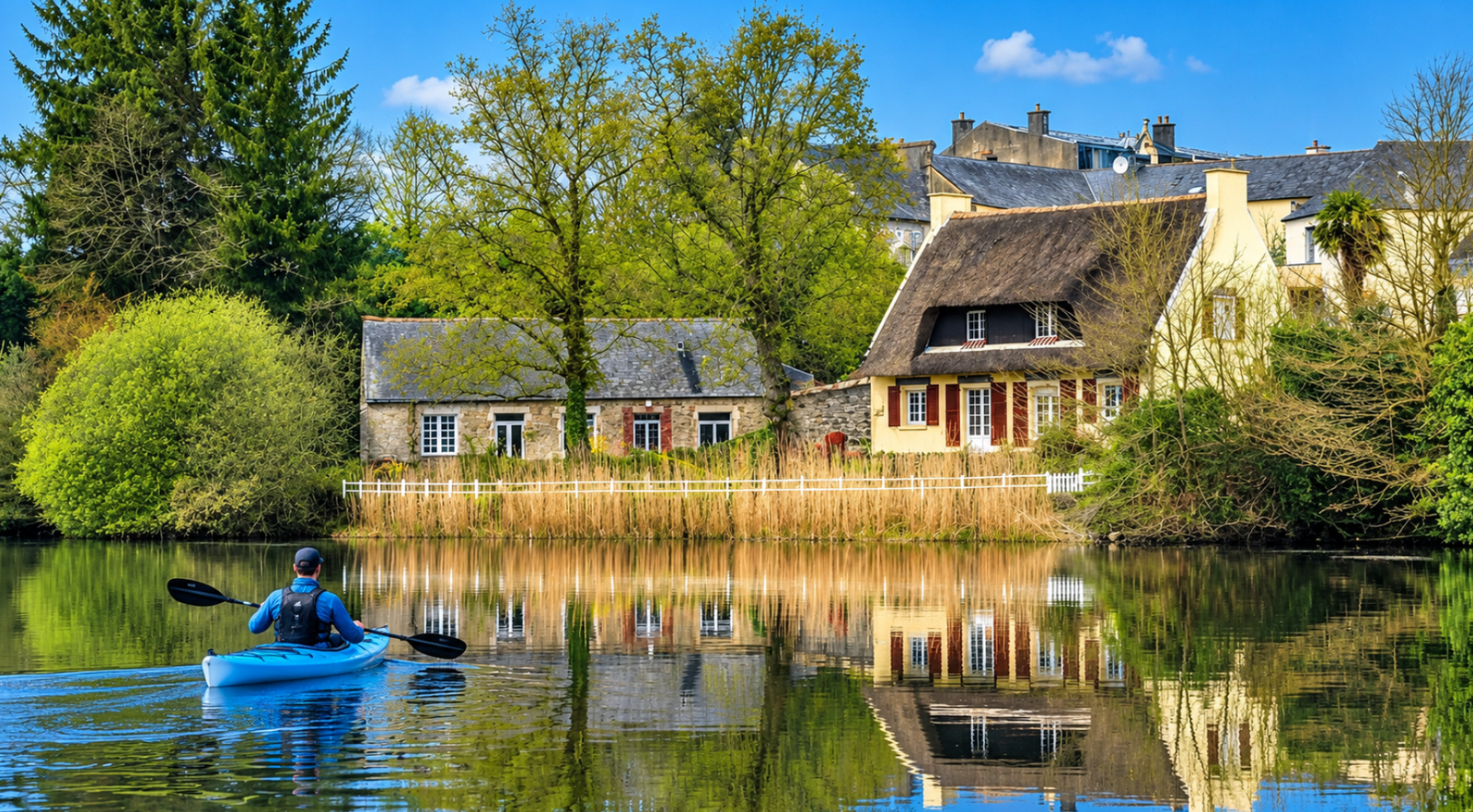
For families or those seeking a gentler walk, the Canal de la Mine Trail offers a 7.2 km loop that can be completed in under two hours. This path follows the canal built to serve the mines, winding through shaded woodland until it reaches the Fairies’ Pond. The pond is a place of quiet enchantment.
Its still waters reflect the trees and sky, and its name invites imagination. Adults appreciate the serenity of a landscape. The trail is easy, accessible, and rich in atmosphere — perfect for a family outing or a contemplative stroll.
Longer Wanderings: Boars’ Pond and Beyond
For those who crave distance and solitude, the Boars’ Pond loop stretches 15.7 km through deeper forest. This moderate trail takes several hours to complete, leading hikers past streams, ponds, and secluded clearings. The forest feels wilder here, less touched by human presence, and the silence is profound.
Walking this loop, you may encounter deer or wild boar, hear the call of birds echoing through the trees, or simply lose yourself in the rhythm of footsteps and breath. It is a hike for those who want to immerse themselves fully in Huelgoat’s natural world.
Legendary Sites Along the Trails
Huelgoat’s trails are not only about scenery; they are about stories.
Trembling Rock: A 137‑ton boulder balanced so precariously that a push can make it quiver.
Camp d’Artus: A site linked to King Arthur, adding a Celtic layer to the Breton landscape.
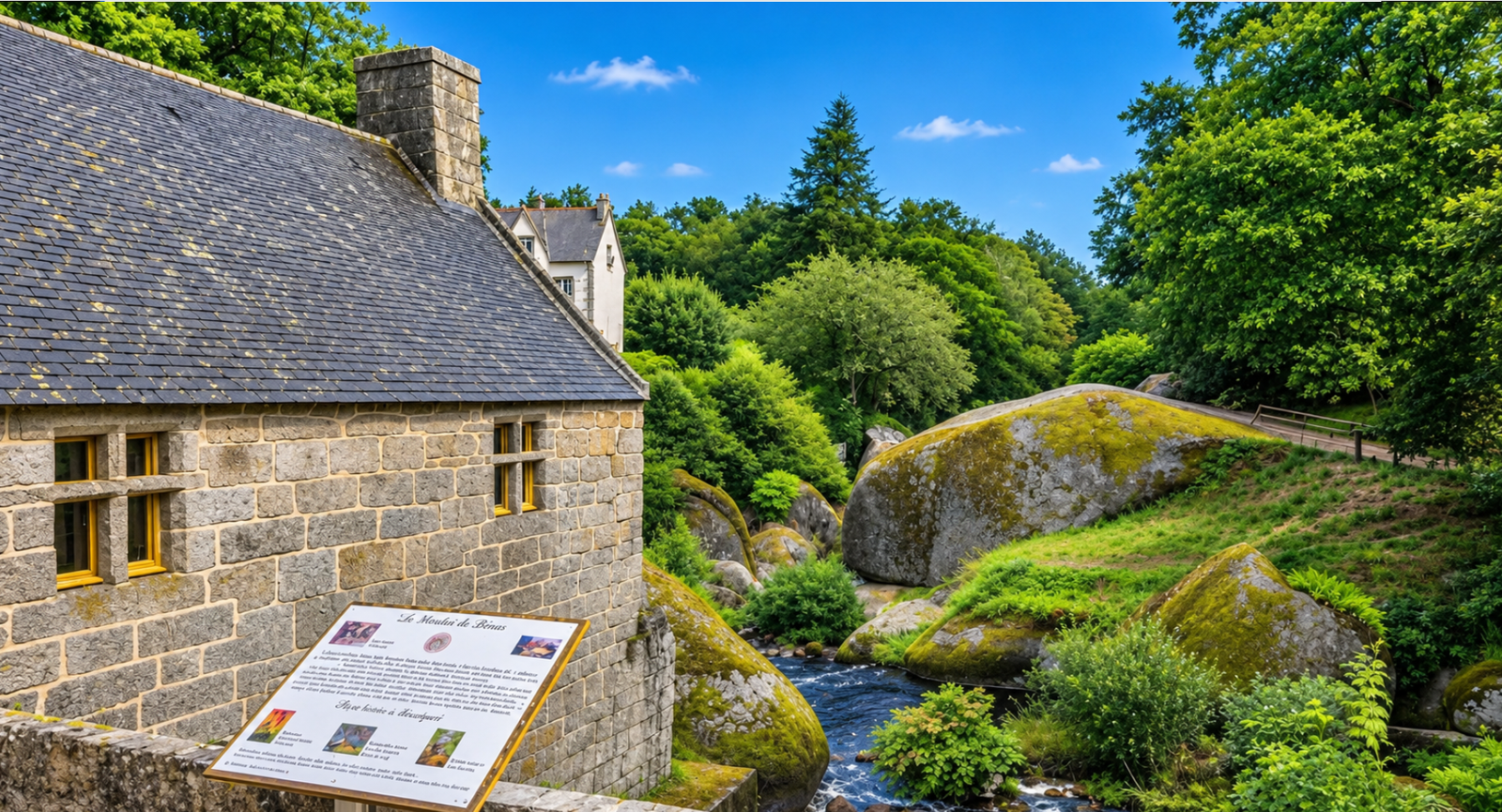
Chaos du Moulin: A jumble of boulders near the old mill, where the Argent River crashes through stone.
These names are not mere labels; they are invitations to imagine. Walking past them, you feel the forest’s atmosphere deepen, as though the myths themselves are part of the terrain.
The Monts d’Arrée
Beyond the forest, the Monts d’Arrée rise in rugged ridges. Hiking here offers a different experience: open moorland, heather and gorse, panoramic views stretching across Brittany. The contrast with the enclosed forest is striking. Where Huelgoat feels intimate and mysterious, the Monts d’Arrée feel expansive and elemental.
Trails along these ridges provide opportunities for longer treks, combining forest paths with highland vistas. The wind carries scents of wildflowers, and the horizon seems endless. It is a reminder that Brittany’s landscapes are diverse, shifting from woodland to moor within a few kilometers.
Seasons in Huelgoat
Each season transforms the forest:
Spring brings fresh greenery, wildflowers, and the sound of birds returning.
Summer offers warm days, shaded paths, and lively streams.
Autumn paints the forest in fiery colors, turning leaves into a tapestry of gold and crimson.
Winter cloaks the rocks and trees in frost or snow, lending the landscape a stillness. Whatever the season, sturdy boots are essential. The terrain shifts from smooth paths to uneven rock passages, and the granite boulders demand careful footing.
Practical Notes
Starting Point: Most loops begin at the Town Hall car park in Huelgoat village.
Wayfinding: Trails are well marked, often with GR® signs. Maps from AllTrails or Komoot provide additional guidance.
Difficulty: Options range from easy family walks to moderate loops and longer treks.
Atmosphere: Expect a blend of natural beauty.
Why Huelgoat Captivates
What makes Huelgoat extraordinary is not just its scenery but its atmosphere. The forest feels alive with stories. The rocks are not merely geological formations. The river is not just water; it is a thread weaving past and present together. Hikers praise the trails for their beauty, but they also speak of the forest’s mood — enchanting. To walk here is to experience more than nature; it is to step into a narrative where geology and folklore merge.