
Banff National Park is a place where landscapes feel larger than life. Towering peaks, turquoise lakes, and glaciers that have carved valleys for millennia create a setting that draws millions of visitors each year. Among its many trails, the Plain of Six Glaciers Trail stands out as one of the most iconic.
Beginning at the shoreline of Lake Louise, this 14‑kilometre round‑trip hike carries you into a world of alpine drama, ending at a historic teahouse perched beneath the icy amphitheater of Victoria Glacier.
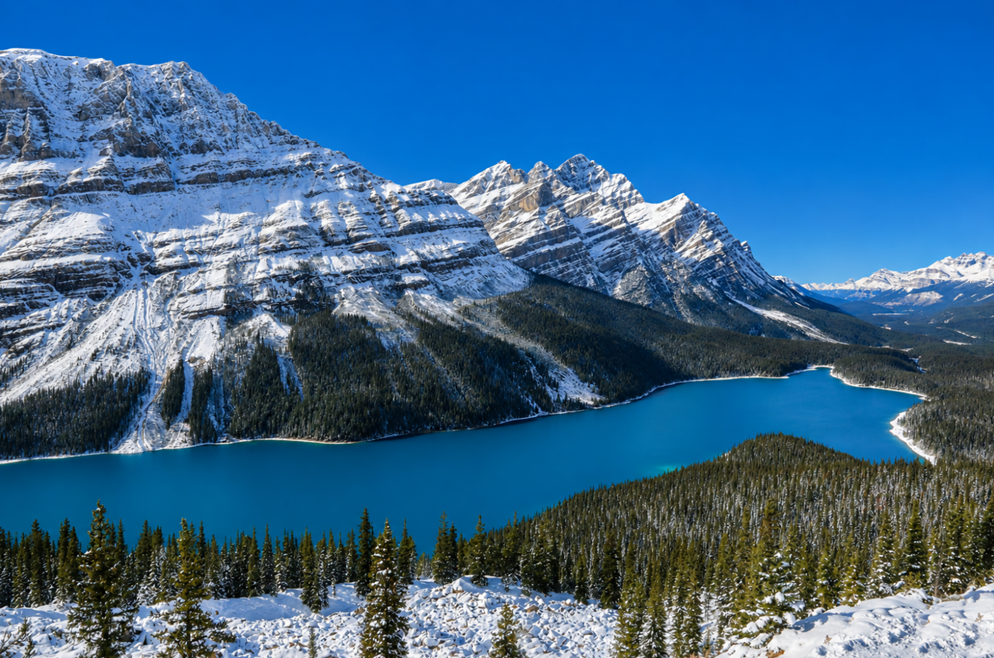
🌊 Lake Louise — The Gateway
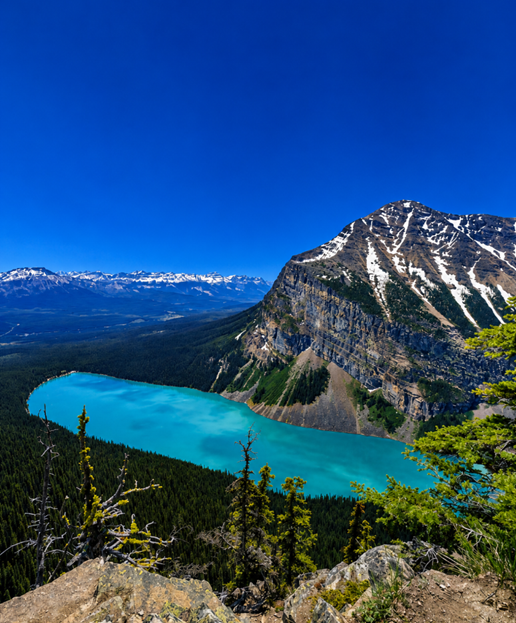
The trail begins at Lake Louise, perhaps the most photographed lake in Canada. Its turquoise waters shimmer beneath Mount Victoria, a colour born from glacial silt suspended in meltwater. Standing at the shoreline, you join thousands of hikers who set out each summer, yet the moment you step onto the trail, the crowds thin and the wilderness begins to unfold.
Lake Louise itself welcomed over 1.3 million visitors in 2025, making it one of Banff’s busiest sites. The Plain of Six Glaciers Trail is among the top three hikes chosen by those visitors, meaning tens of thousands of people walked this path last year.
🥾 The Trail’s Rhythm
Distance: 14.2 km round trip
Elevation Gain: 591 metres
Duration: 4–6 hours depending on pace
Difficulty: Moderate; steady climb but accessible to most fit hikers
The trail’s rhythm is steady. It begins gently along the lakeshore, then climbs gradually through forest and alpine meadows. Each switchback reveals new perspectives: the lake shrinking below, peaks rising above, and glaciers gleaming in the distance.
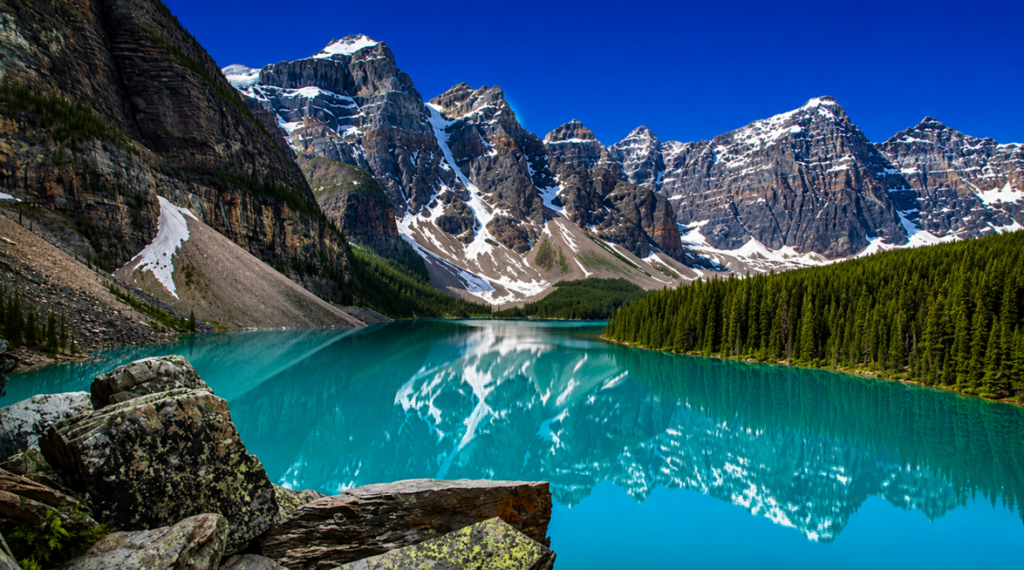
🏔️ The Six Glaciers
The trail’s name comes from the six glaciers visible from its upper reaches: Victoria, Lefroy, Aberdeen, Popes, Mitre, and Lower Victoria. Together they form a dramatic amphitheater of ice and rock.
Victoria Glacier: Dominates the view, feeding Lake Louise.
Lefroy Glacier: Clings to Mount Lefroy’s slopes.
Aberdeen Glacier: Cascades down Mount Aberdeen.
Popes Glacier: Smaller, tucked into a cirque.
Mitre Glacier: Nestled beneath The Mitre peak.
Lower Victoria Glacier: Extends below its larger sibling.
Standing at the trail’s end, you feel surrounded by frozen giants, their meltwater rushing into streams that carve the valley.
🍵 The Historic Teahouse
At the trail’s turnaround point sits the Plain of Six Glaciers Teahouse, built in 1927 by Swiss guides. It remains a rustic refuge, serving tea, soup, and baked goods to weary hikers. There is no electricity; supplies are carried in by staff or helicopter. The teahouse embodies Banff’s heritage — a reminder of the era when mountaineering was new to Canada and guides led visitors into the alpine wilderness. Today, sipping tea while gazing at glaciers is a ritual for thousands of hikers each summer.
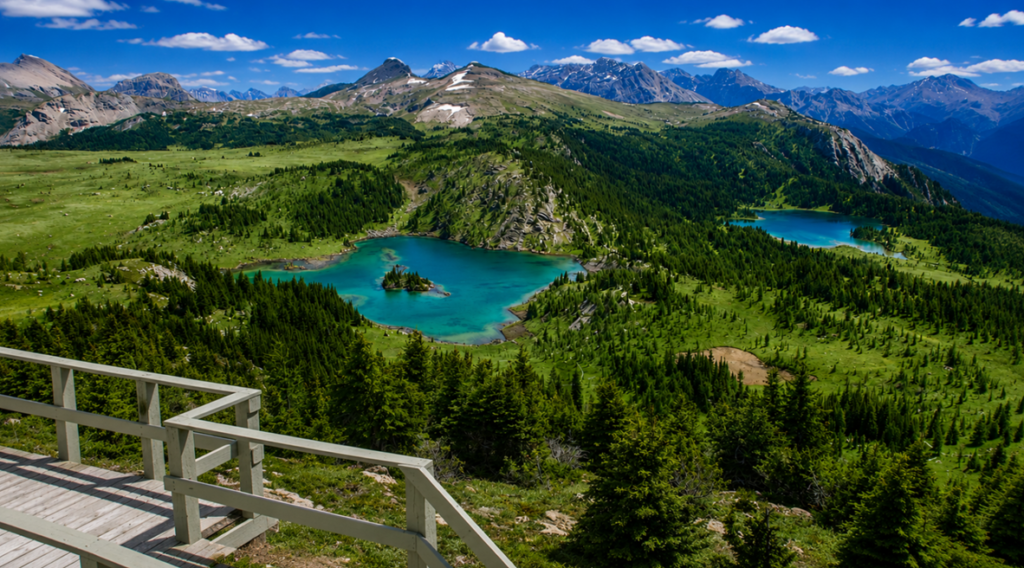
🌿 Flora and Fauna
The trail passes through diverse ecosystems:
Lower Forests: Spruce and fir, with chipmunks darting across the path.
Alpine Meadows: Wildflowers like Indian paintbrush and glacier lilies bloom in July.
High Alpine: Sparse vegetation, but marmots whistle from rocky outcrops.
Birds such as Clark’s nutcracker and gray jay often accompany hikers, bold enough to swoop near picnic spots.
❄️ Seasonal Experience
Spring (June): Snow lingers; avalanche risk remains high. Trails open gradually.
Summer (July–August): Peak season, with hundreds of hikers daily. Wildflowers bloom, teahouse fully open.
Autumn (September–October): Crisp air, golden larches, fewer crowds. Glaciers gleam against clear skies.
Winter: Trail largely inaccessible due to avalanche danger.
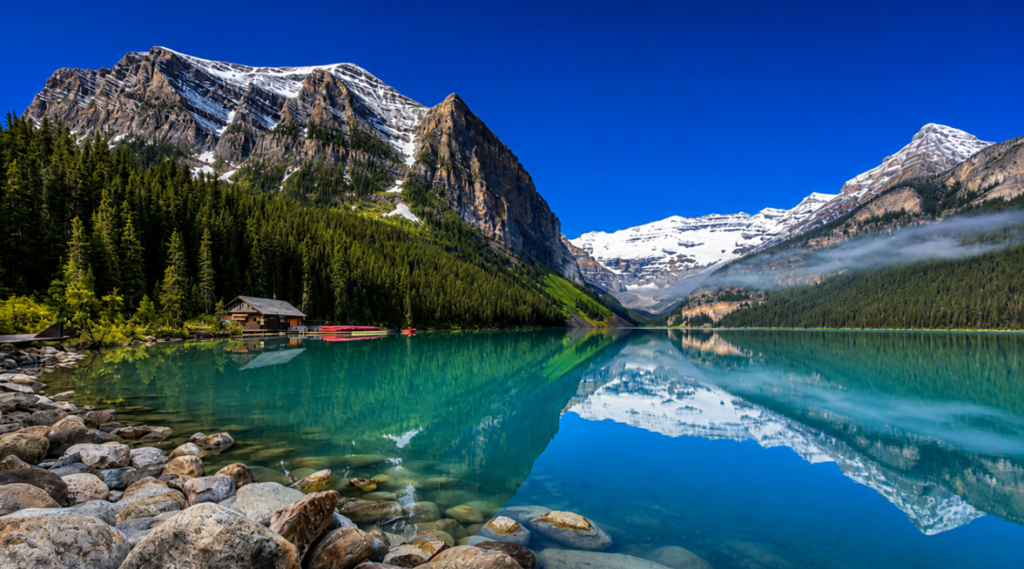
🚍 Access and Logistics
Parking at Lake Louise is limited, often full by 8 am in summer. Parks Canada operates shuttles from Lake Louise Park and Ride. Reservations are strongly recommended.
Trailhead: Lake Louise shoreline
Facilities: Washrooms at trailhead and teahouse
Dogs: Allowed on leash
Safety: Carry bear spray; grizzly sightings are possible
📊 Visitor Numbers
While Parks Canada does not release trail‑specific counts, estimates suggest tens of thousands of hikers completed the Plain of Six Glaciers Trail in 2025. With Lake Louise hosting over 1.3 million visitors, and this hike ranking among the most popular, its share is significant.
🧭 Comparisons with Other Banff Trails
Lake Agnes Tea House: Shorter (7 km), also ends at a teahouse. More crowded but easier.
Big Beehive: Extends from Lake Agnes, offering panoramic views.
Sentinel Pass: More strenuous, with dramatic views of Paradise Valley.
Plain of Six Glaciers balances accessibility with grandeur, making it ideal for those seeking a full‑day adventure without extreme difficulty.
🏞️ Cultural Significance
The trail reflects Banff’s history as a mountaineering destination. Swiss guides brought European alpine traditions, building teahouses and leading climbs. The glaciers themselves are symbols of Canada’s natural heritage, though they are retreating due to climate change. Hiking here is both a celebration of wilderness and a reminder of its fragility.
🌍 Environmental Notes
Glaciers in Banff have retreated significantly over the past century. Interpretive signs along the trail highlight this change, urging visitors to consider their role in conservation. The trail is part of a broader effort by Parks Canada to balance tourism with ecological protection.
✨ A Trail of Perspectives
The Plain of Six Glaciers Trail is more than a hike. It is a journey through ecosystems, history, and geology. It begins at Canada’s most famous lake, climbs through forests and meadows, and ends in a cathedral of ice. Along the way, you encounter wildlife, heritage, and the sheer scale of the Rockies.
For tens of thousands of hikers each year, it is a highlight of Banff — a chance to sip tea beneath glaciers, to walk where ice and rock meet sky, and to carry home memories of a landscape both timeless and changing.