
Canada Ski Resorts > Quebec > Mont-Tremblant
Arrival in the Laurentians
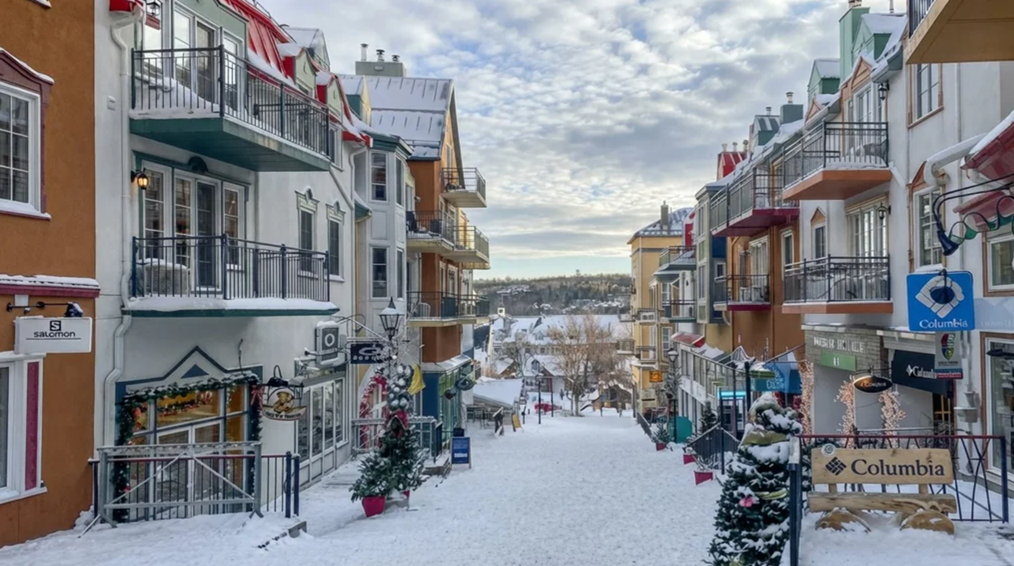
Mont‑Tremblant lies just ninety minutes north of Montreal, nestled into Quebec’s Laurentian Mountains. The journey north feels like a gradual immersion into winter’s embrace: frozen rivers, snow‑laden pines, and villages tucked into valleys. By the time the resort’s pedestrian village appears, its cobblestone streets and colorful façades glow against the snow, a blend of European charm and North American ease.
The Pedestrian Village
At the base of the slopes, Tremblant’s village is more than a staging ground. Cafés spill warmth onto the streets, boutique shops invite browsing, and Lake Tremblant glimmers just beyond. The gondola rises directly from the square, carrying skiers from the bustle of the village into the silence of the summit.
The Mountain’s Faces
Mont‑Tremblant is defined by its four distinct ski areas, each with its own personality.
South Side: The busiest and most family‑friendly, with wide groomers like Nansen and Flying Mile. Ski schools and beginner zones make this the heart of Tremblant.
North Side: Quieter, colder, and more technical. Long fall‑line runs such as Duncan and Lowell Thomas carve through glades and steeps.
Sunny Side: A mellow adjunct, reached from the summit, offering scenic intermediate trails and fewer crowds.
Edge Side: Remote and expert‑focused, with steep glades and challenging terrain like Haute Tension.
Snow Quality and Season
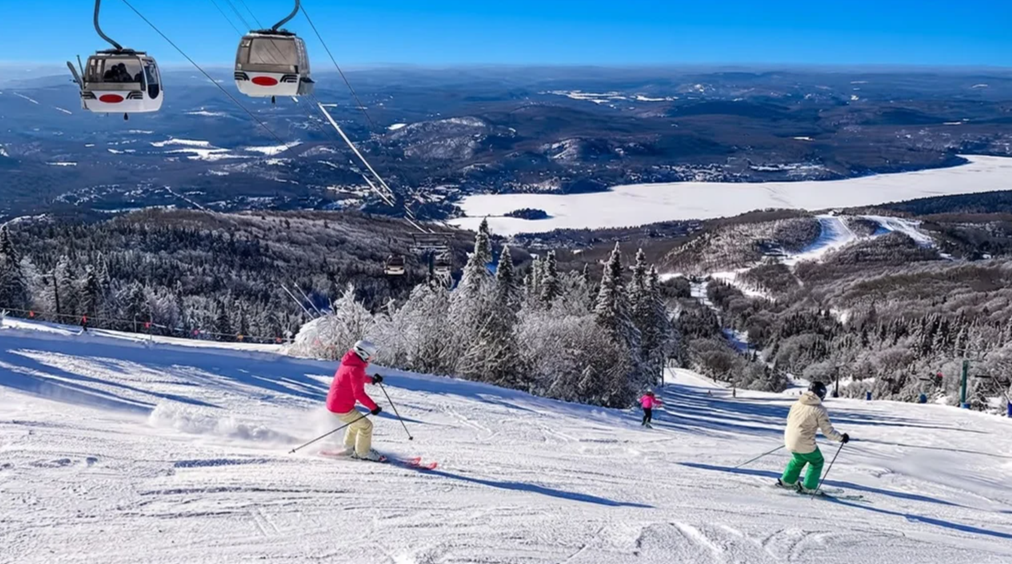
Tremblant averages 150 inches of natural snowfall each winter, bolstered by snowmaking that covers over 70% of its trails. Grooming is meticulous, preserving snow quality even in warmer spells. The season stretches from late November to mid‑April, with January and February offering the crispest conditions. March brings sunshine and softer snow, perfect for spring skiing.
Vertical and Views
Though the Laurentians lack the altitude of the Rockies or Alps, Tremblant’s summit reaches 875 meters, with a vertical drop among the highest in Eastern Canada. From the top, the panorama sweeps across frozen lakes and endless forest, a reminder that this mountain is as much about beauty as it is about skiing.
Lifts and Access
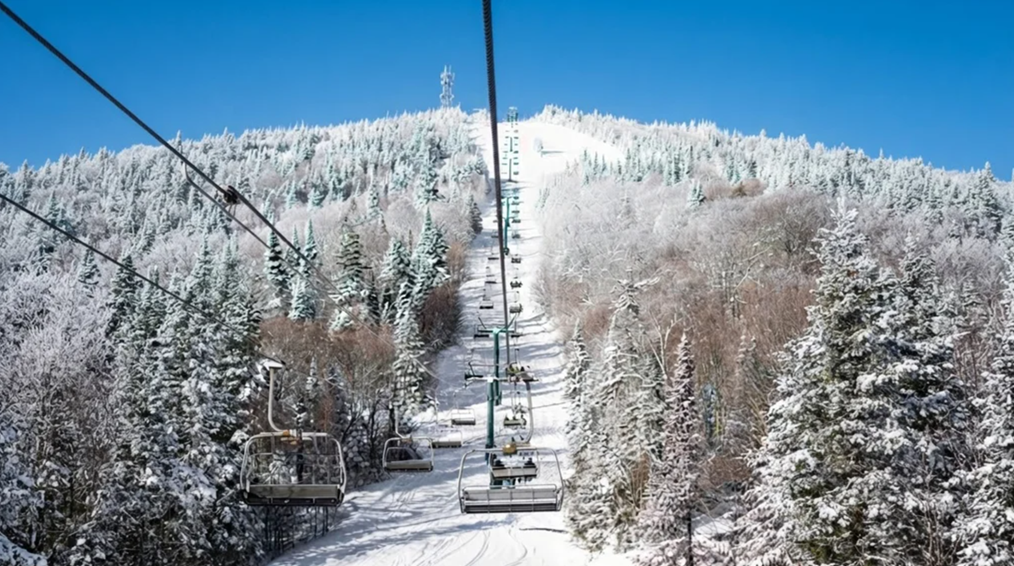
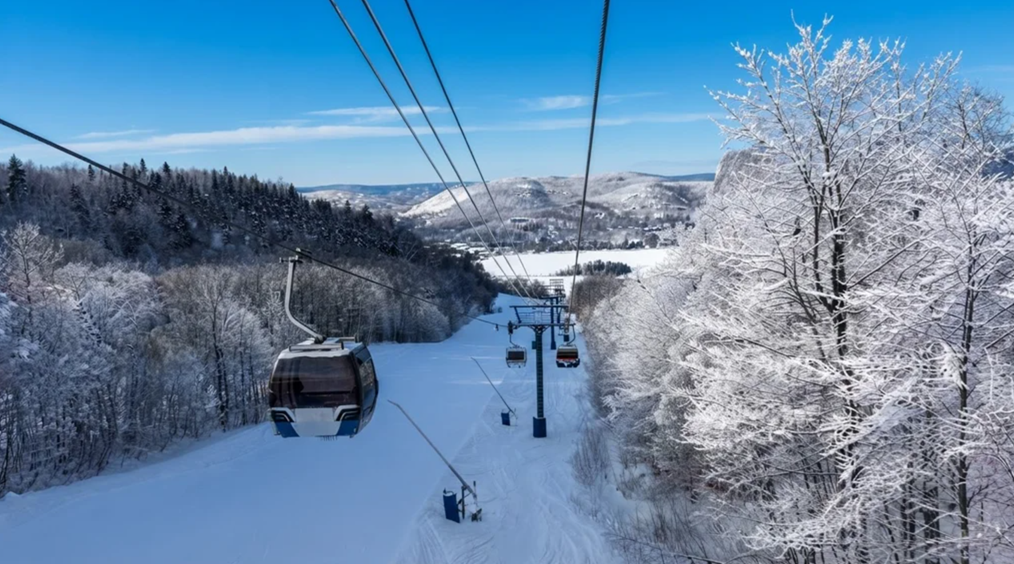
Fourteen lifts serve the resort, including two gondolas, six high‑speed quads, and the scenic Cabriolet that links village levels. The infrastructure ensures smooth access across all faces of the mountain, reducing wait times even on busy days.
Lessons and Rentals
The Tremblant Snow School offers instruction in both French and English, with programs for children, beginners, and adaptive skiers. Rentals are available at both South and North bases, though savvy visitors often head to nearby shops like Below Zero Rental for lower prices and shorter lines.
Parking and Shuttles
Day visitors find parking at P1, steps from the gondola, with additional lots connected by free shuttles. Operating from 7 AM to 10 PM, the shuttle system keeps the village and base areas seamlessly connected.
Getting There
Travelers can fly into Mont‑Tremblant International Airport, just 35 kilometers away, or into Montreal‑Trudeau International Airport, 130 kilometers south. From Montreal, the drive takes about ninety minutes, while Tremblant International offers seasonal direct flights from Toronto and New York.
Beyond Skiing
While skiing and snowboarding dominate, Tremblant offers a winter playground beyond the slopes. Ice skating, tubing, snowshoeing, snowmobiling, sleigh rides, and even ice fishing round out the experience. The village itself invites lingering, with shops and ski patios alive with energy.
Crowds and Atmosphere
Despite its proximity to Montreal, Tremblant remains less crowded than many resorts of similar caliber. Holiday weeks bring bustle, but mid‑season weekdays often feel spacious. The blend of Euro‑style charm and North American ease makes the atmosphere both lively and welcoming.
A Day on the Mountain
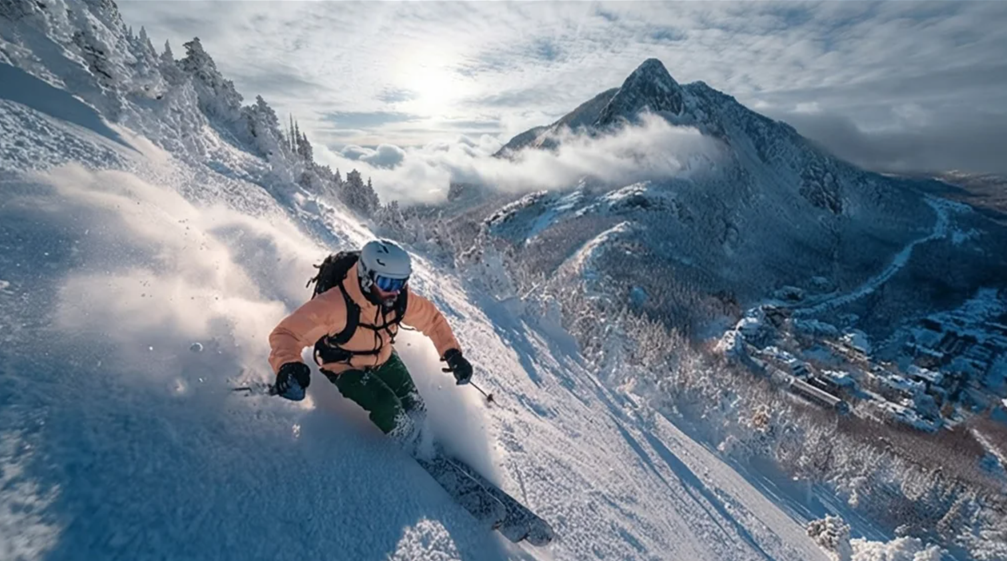
From the Lowell Thomas chair, the summit opened again, leading to Beauchemin Bas, a long descent to the North base. By midday, the south wind had calmed, and Toboggan—an old favorite on the South Side—was ready. Wide, forgiving, and exhilarating, it captured the essence of Tremblant: a mountain that balances challenge with joy.
The Jewel of the East
Mont‑Tremblant may not boast the altitude of western giants, but it shines with variety, grooming, and atmosphere. Its expert trails are wide and forgiving, its beginner zones welcoming, and its village alive with charm. For many, it is the crown jewel of eastern Canadian skiing—a place where every run feels like a story, and every visit leaves a memory worth keeping.