
Anticipation on the Road
Montmorency Falls had long lingered as a destination waiting to be claimed. In Toronto, Niagara Falls was the familiar giant, a place visited often enough to know its moods—the mist rising on summer mornings, the thundering roar during spring floods, the icy stillness in winter.
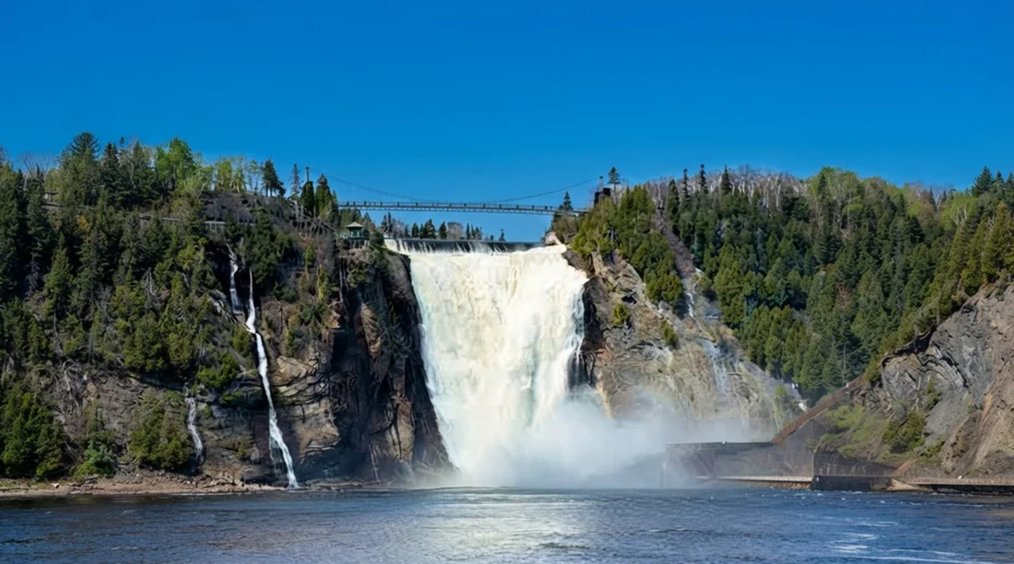
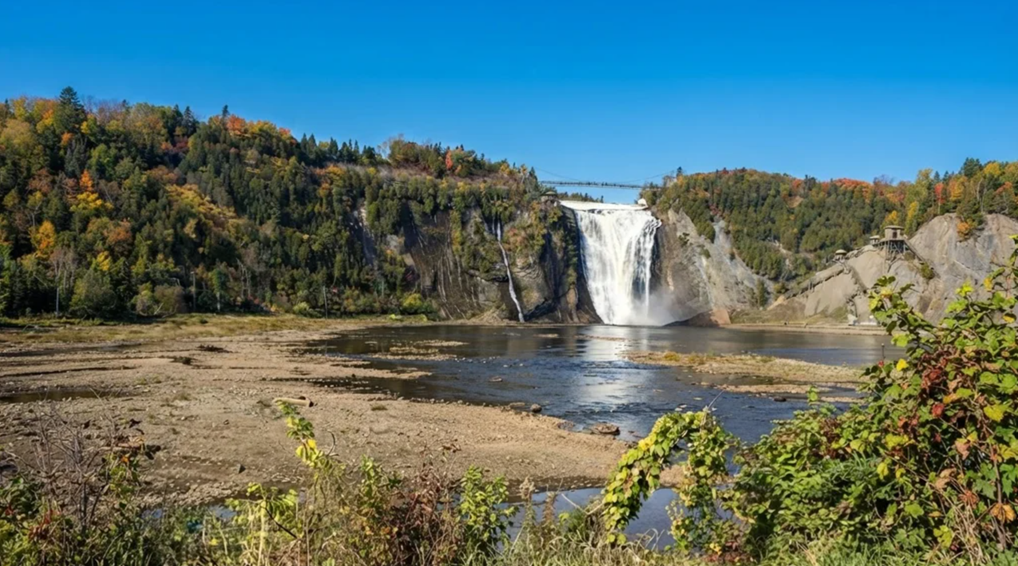
Yet Montmorency, just outside Quebec City, promised something different. Taller by thirty metres, narrower but more dramatic, it plunged 83 metres into the St. Lawrence River. On a previous trip to Quebec City, the falls had been missed entirely, glimpsed only from the highway.
This journey was meant to correct that oversight, to finally stand before the cascade and feel its power.
Arrival at Manoir Montmorency
The visit began at the top, parking at Manoir Montmorency. The lot opened early, and arrival coincided with the first light of day. The manor itself was shuttered, its windows reflecting the pale glow of morning. Around the building, flowers spilled from beds in riotous colour, a painter’s palette against stone walls.
The lookout nearby offered the first glimpse—white spray rising, a roar carried on the wind, a promise of spectacle waiting just beyond.
Crossing the Suspension Bridge
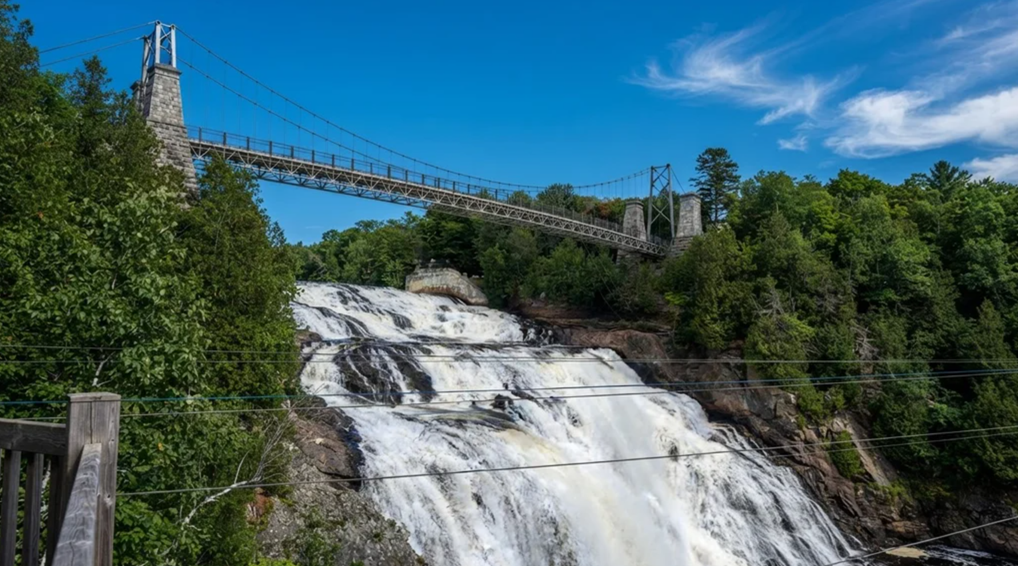
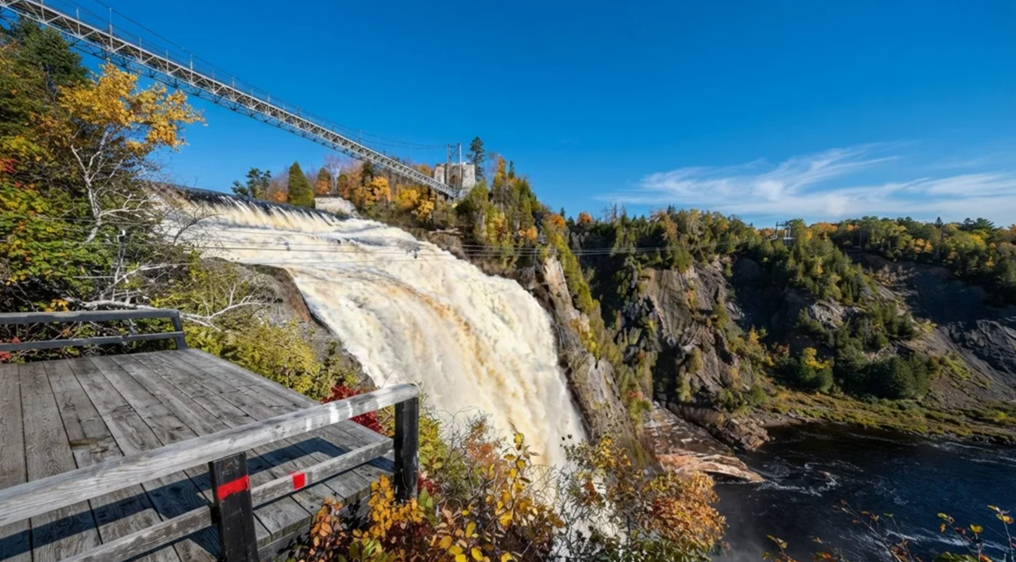
Shaded paths wound toward the suspension bridge. The sound of rushing water grew louder with each step, a crescendo building in the trees. Early morning solitude meant the bridge was empty, a rare gift. Standing above the torrent, the view stretched upriver, calm and steady, before plunging into chaos.
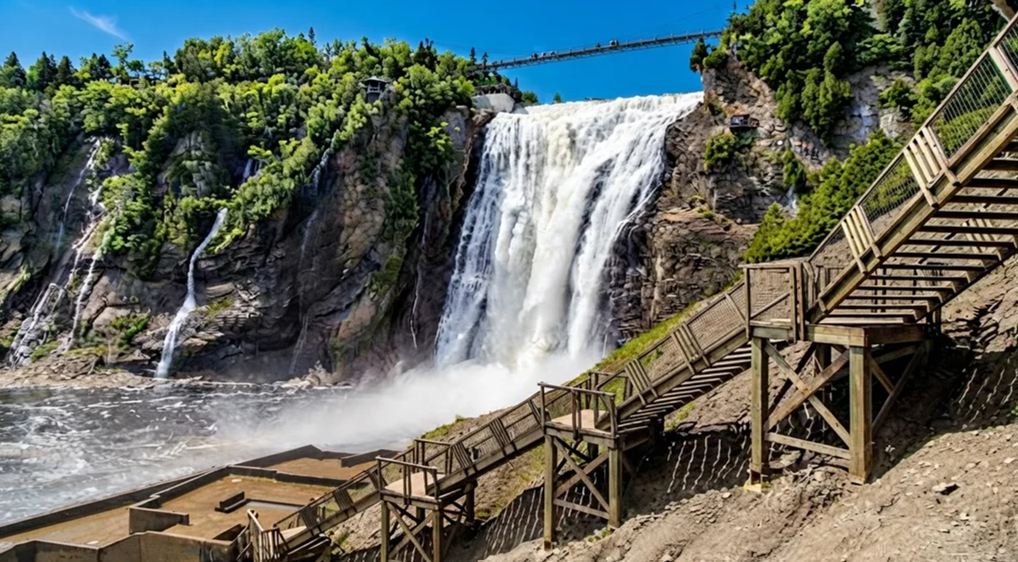
Looking down, Montmorency thundered into the gorge, spray rising like smoke. Beyond, the Pont de l’Île d’Orléans arched across the St. Lawrence, a reminder of the city’s reach. Behind, Manoir Montmorency perched on its hill, and beside the falls, the Escalier Panoramique zigzagged downward, inviting descent.
The Stairway Descent
The staircase offered shifting perspectives at each landing. From one, the suspension bridge framed itself against the spray. From another, the delicate Chute de la Dame Blanche revealed its smaller cascade, a whisper beside Montmorency’s roar.
The horizon carried the faint outline of Quebec City, its skyline softened by distance. Each step downward reshaped the falls, offering fresh drama and perspective. The descent became a meditation, each pause a chance to absorb the spectacle anew.
Choices at the Bottom
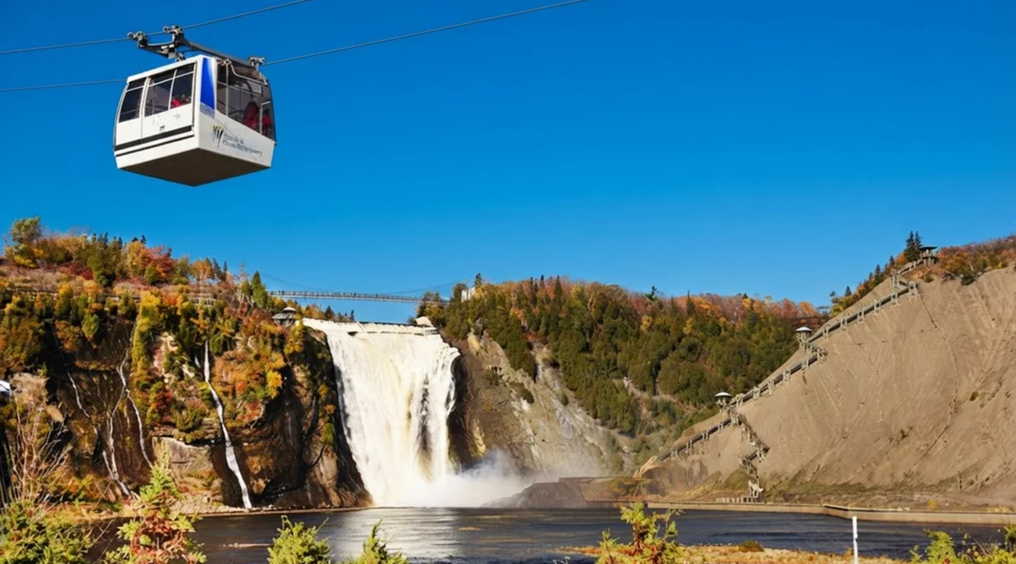
At the foot of the staircase, decisions awaited. Retrace the climb, or ride the cable car back to the top? The funicular glided smoothly up the cliff, an accessible option for those less inclined to tackle 487 steps. Every path here led to another encounter with the falls, another way to understand their power.
Adventures Beyond the View
Montmorency is not only for gazing. Harnessed climbers tackled the Via Ferrata, inching along the Boischatel crevasse, clipped to cables under the watchful eye of guides. Posters promised the thrill for $35 CAD, a chance to cling to rock while the river thundered nearby.
Across the gorge, zipline platforms stood silent during the visit, but the idea of soaring across the face of the falls lodged itself in imagination. One day, the ride would be taken, the plunge across the canyon embraced.
The Park Experience
The falls sit within Parc de la Chute-Montmorency, managed by Sépaq. The park opens daily from 9 a.m. to 6 p.m., with entry fees ranging from CA$9 in low season to CA$13 in high season. Children enter free. Trails weave through green spaces, picnic tables dot the lawns, and families spread blankets under the spray.
For those without cars, public transit or shuttle tours provide access, often paired with a stop at Sainte-Anne-de-Beaupré.
A Place of Perspectives
Montmorency is taller than Niagara, though narrower, and its drama lies in the way it is experienced. From the suspension bridge, the thunder is felt beneath the feet. From the staircase, the falls shift with each descent. From the cable car, cliffs and spray glide past.
In autumn, foliage ignites the scene with colour; in winter, ice sculptures form as the cascade freezes mid-flight. Each season reshapes the falls, offering new reasons to return.
The Future of Montmorency
Nearly a million visitors arrive each year, and upgrades worth $33 million promise more: play zones for children, expanded rest areas, new gardens, and improved parking. The falls are already the second most-visited site in the Quebec City region, after Old Quebec.
Their popularity will only grow, but the essence remains unchanged—water plunging into the St. Lawrence, a spectacle of nature framed by human pathways.
The Memory
The visit lasted ninety minutes, a brief communion with Montmorency. Shaded paths, the suspension bridge, panoramic stairs, and awe at the cascade filled the time. The promise of return lingered—perhaps to zipline, perhaps to see the falls frozen in winter.
Montmorency is not a single view but a collection of perspectives, each one reshaping the way its power is understood. The morning air carried a crispness that sharpened every sound. Birds called from the trees, their notes mingling with the distant roar of water.
The path to the suspension bridge wound gently, shaded by maples and birches. Each step forward heightened anticipation, the sound of the falls swelling until it became impossible to ignore. The bridge itself swayed lightly underfoot, a reminder of the power rushing below.
Looking down, the torrent seemed endless, a curtain of white plunging into shadow. The descent along the Escalier Panoramique became a journey through perspectives. At one landing, sunlight caught the spray, creating a fleeting rainbow. At another, the smaller Chute de la Dame Blanche whispered beside Montmorency’s roar, a delicate counterpoint.
The city skyline appeared faintly in the distance, a reminder of civilization beyond the wilderness. Each pause offered a new tableau, a fresh way to understand the falls. At the bottom, the choice between retracing the climb or riding the cable car carried its own symbolism.
The stairs demanded effort, a return through the same shifting perspectives. The cable car offered ease, a smooth ascent past cliffs and spray. Both paths led back to Manoir Montmorency, both offered closure to the journey. Beyond the falls, the park invited exploration.
Families spread blankets on the grass, children chased each other under the spray, couples lingered on benches. The air carried the scent of flowers from manicured beds, mingling with the earthy smell of wet stone. Trails wound through green spaces, offering quiet moments away from the roar.
The Via Ferrata added an element of adventure, climbers inching along rock faces under the watchful eye of guides. The zipline promised adrenaline, a plunge across the canyon with the falls thundering below. Both adventures spoke to the human desire to not only witness nature but to engage with it, to feel its power directly.
Montmorency’s drama lies not only in its height but in its accessibility. Unlike remote waterfalls hidden in wilderness, Montmorency sits just outside Quebec City, a short drive from urban streets. Its proximity makes it a popular destination, yet its power remains undiminished.
The roar of water, the spray rising into the air, the sheer drop into the gorge—all remind visitors of nature’s force. In autumn, the scene transforms. Leaves ignite in shades of red, orange, and gold, framing the falls in fire. The suspension bridge becomes a vantage point for foliage as much as for water.
In winter, ice sculptures form, the cascade freezing mid-flight, creating a surreal tableau of motion captured in stillness. Each season reshapes the falls, offering new reasons to return. The future promises more. Upgrades worth $33 million will add play zones for children, expanded rest areas, new gardens, and improved parking.
The falls are already the second most-visited site in the Quebec City region, after Old Quebec. Their popularity will only grow, but the essence remains unchanged—water plunging into the St. Lawrence, a spectacle of nature framed by human pathways. The memory of Montmorency lingers long after departure.
The roar of water, the sway of the suspension bridge, the shifting perspectives of the staircase—all remain vivid. The promise of return lingers, perhaps to zipline across the canyon, perhaps to see the falls frozen in winter. Montmorency is not a single view but a collection of perspectives, each one reshaping the way