
The Hand‑Shaped Traditions
There is something profoundly human about the Montréal bagel. Each one begins not in a machine but in the hands of a baker, rolled and shaped with care, smaller and thinner than its New York cousin. The dough carries a whisper of sweetness, infused with honey or maple syrup, before being plunged into simmering water enriched with honey.
This ritual of poaching gives the bagel its distinctive chew, its golden hue, and its crisp crust. Finally, the wood‑fired oven completes the transformation, smoke curling around the dough, leaving behind a flavor that is both earthy and ethereal. At home, a baking stone can mimic the fire’s embrace, but the true Montréal bagel is born only in the glow of those ovens, where tradition and craft meet flame.
Immigrant Roots and Culinary Identity
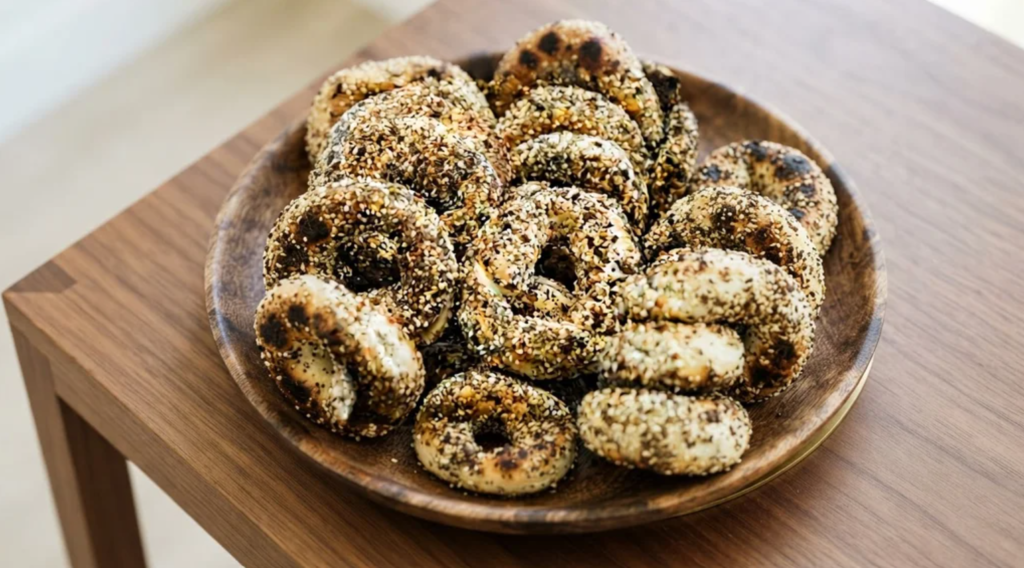
Montréal’s food scene is a tapestry woven by immigrants. Eastern Europeans arrived with their culinary customs, and among their greatest gifts to the city were smoked meat and bagels. These foods became more than sustenance; they became identity markers, symbols of belonging and heritage.
The bagel, in particular, took root in Montréal’s neighborhoods, evolving into something distinct from the versions found elsewhere. Where New York bagels grew plump and uniform, Montréal’s remained intimate, imperfect, and deeply artisanal. Each bagel is a story of migration, adaptation, and resilience, carrying with it the flavors of old Europe and the spirit of a new city.
The Contrast with New York
To understand the Montréal bagel, one must place it beside its New York counterpart. The New York bagel is dense, often machine‑made, and designed for fillings—sandwiches piled high with lox, tomatoes, onions, and capers. Montréal’s version resists this.
Its larger hole makes fillings impractical, its thinner body insists on immediacy, and its sweetness demands simplicity. The Montréal bagel is not a vessel but a centerpiece, meant to be eaten alone, hot from the oven, with perhaps only a schmear of cream cheese.
The difference lies not only in texture and flavor but in philosophy. New York bagels are about abundance; Montréal bagels are about purity.
The proper way to eat a Montréal bagel is fresh out of the bag, steam rising, crust still crackling. If you are fortunate enough to stand inside one of the city’s famed bakeries, you will know the joy of tearing into one immediately, the honey‑kissed chew meeting the smoky crust.
Tradition allows only a schmear of cream cheese, nothing more. For travelers, bagels become souvenirs, packed into suitcases, carried across borders, a taste of Montréal tucked away for later mornings. Yet even when eaten far from the city, they carry with them the memory of fire, sweetness, and craft.
On Menus and in Memory
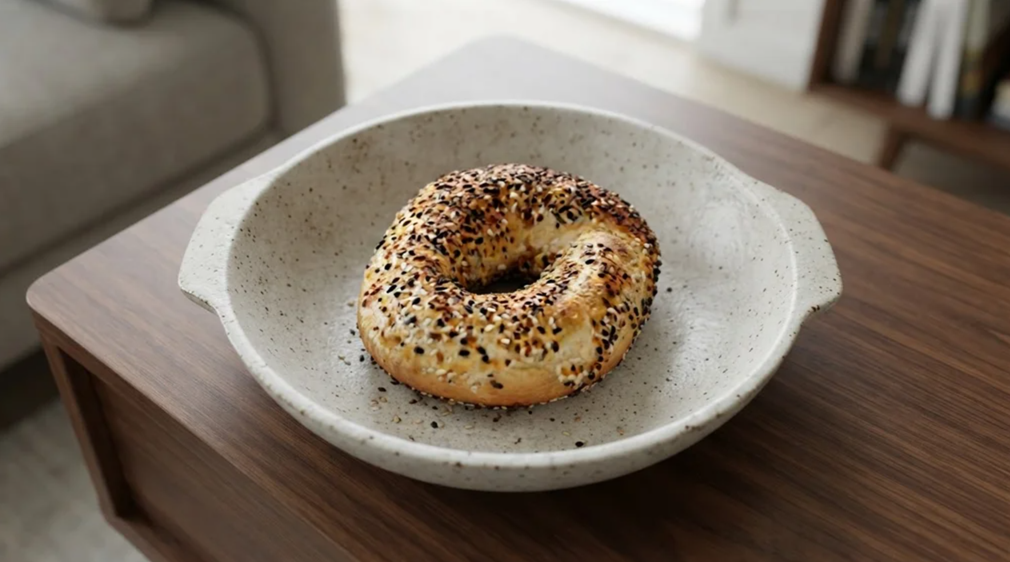
Across Montréal, breakfast menus often feature the bagel as a choice in the bread basket. Its presence is more than practical; it is cultural shorthand, a nod to the city’s heritage. The sweetness from honey water, the smoke from the oven, the crisp exterior and chewy heart—these are flavors that linger, flavors that define.
To order a bagel in Montréal is to participate in a tradition that stretches back generations, a tradition that continues to shape the city’s identity.
The Flavor of Fire
The wood‑fired oven is the soul of the Montréal bagel. Flames lick the dough, smoke curls around it, and the result is a flavor profile unlike any other. The crust is crisp, the interior chewy, the sweetness balanced by the earthiness of smoke. This duality—sweet and smoky, crisp and soft—creates a complexity that elevates the bagel beyond mere bread.
It becomes an experience, a memory, a taste that lingers long after the last bite.
The Larger Hole
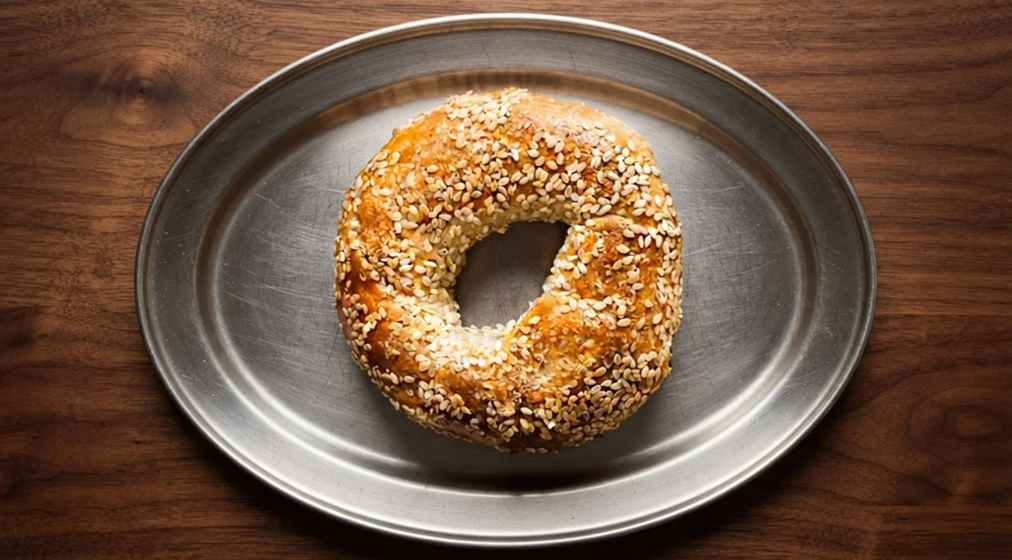
One of the most distinctive features of the Montréal bagel is its larger hole. This design makes fillings difficult, but that is precisely the point. The bagel is meant to be eaten alone, immediately after coming out of the oven. The exception, traditionally, is a schmear of cream cheese.
Sesame and poppy seed bagels remain the classics, though modern palates often reach for the “everything” bagel. Yet even with these variations, the essence remains the same: simplicity, immediacy, authenticity.
The Traveler’s Souvenir
For visitors, Montréal bagels become souvenirs, carried home in paper bags, tucked into suitcases, shared with friends and family. They are more than bread; they are tokens of experience, reminders of mornings spent in bakeries, of the smell of smoke and sweetness, of the joy of tearing into a bagel fresh from the oven.
Even when eaten far from Montréal, they carry with them the spirit of the city, the memory of its traditions, the taste of its identity.
In Montréal, bagels are not only found in bakeries but in restaurants, cafes, and breakfast tables. They are part of the everyday fabric of the city, a presence that shapes its culinary landscape. To order a bagel is to participate in a tradition, to connect with the city’s heritage, to taste its identity. They are more than food; they are culture, history, and memory.
The Sweetness of Tradition
The sweetness of the Montréal bagel comes from honey water, from the ritual of poaching before baking. This sweetness is not overwhelming but subtle, a whisper that balances the smoke of the oven. It is a reminder of tradition, of the customs brought by immigrants, of the flavors that have shaped the city’s identity.
To taste this sweetness is to connect with history, to participate in a ritual that has endured for generations.
The Chew of Authenticity
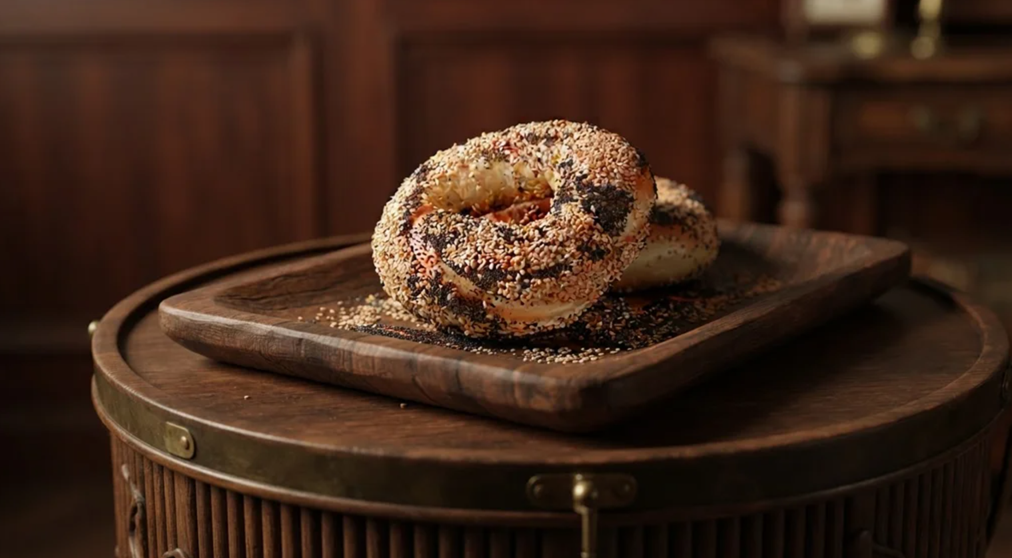
The chewiness of the Montréal bagel is one of its most distinctive features. It comes from the ritual of poaching, from the balance of sweetness and smoke, from the craft of hand‑shaping. This chew is not merely texture but authenticity, a reminder that the bagel is more than bread.
It is a cultural symbol, a tradition, a memory. To bite into a Montréal bagel is to taste authenticity, to connect with the city’s identity, to participate in its heritage.
The crisp exterior of the Montréal bagel comes from the wood‑fired oven, from the flames that lick the dough, from the smoke that curls around it. This crisp is not merely texture but flavor, a reminder of the fire that birthed it, of the tradition that shaped it, of the culture that sustains it.
To taste this crisp is to connect with the city’s identity, to participate in its heritage, to remember its history.
The Imperfection of Craft
Each Montréal bagel is imperfect, hand‑shaped, unique. This imperfection is not flaw but feature, a reminder that the bagel is artisanal, authentic, human. It is a symbol of craft, of tradition, of culture. To eat a Montréal bagel is to taste imperfection, to connect with authenticity, to participate in a ritual that has endured for generations.
The Montréal bagel is the identity of a city, a symbol of its immigrant roots, its artisanal traditions, its insistence on authenticity. It is more than food; it is culture, history, memory. To eat a Montréal bagel is to taste Montréal itself, to participate in its heritage, to connect with its identity.
Conclusion: A Taste of Montréal
In the end, the Montréal bagel is more than bread. It is a ritual, a tradition, a cultural symbol. It is hand‑shaped, poached in honey water, baked in a wood‑fired oven. It is sweet, smoky, chewy, crisp. It is imperfect, authentic, artisanal. It is the identity of a city, the memory of its heritage, the taste of its culture.
To eat a Montréal bagel is to taste Montréal itself, to participate in its tradition, to connect with its identity. It is more than food; it is experience, memory, culture.