
The Smell of New Year’s Eve
In the Netherlands, the season of oliebollen begins long before the fireworks. By late November, stalls appear in town squares and train stations, their deep pots of oil bubbling steadily, sending out a scent that is unmistakable: yeast, sugar, and frying dough.
It is the smell of anticipation, of winter evenings when the streets grow darker earlier and the promise of celebration hangs in the air. By December 31st, queues stretch around corners, families and friends waiting patiently for paper bags filled with hot, golden spheres. The bags grow translucent with heat, the sugar dusting clings to fingers, and the first bite is always the same—crisp outside, pillowy inside, warm enough to fog your breath.
A Grandmother’s Kitchen
For many, oliebollen are not just bought but made at home. A grandmother stood guard over the stove every New Year’s Eve, a slotted spoon in hand, watching the color of each fritter with hawk-like precision. She knew the exact shade of brown that meant perfection: not too pale, not too dark, crisp enough to hold its shape, soft enough to yield.
She scooped them from the oil one by one, laying them on paper towels, the kitchen filling with steam and the scent of fruit. It was a ritual as much as a recipe, a way of marking time and memory.
The Batter’s Secret
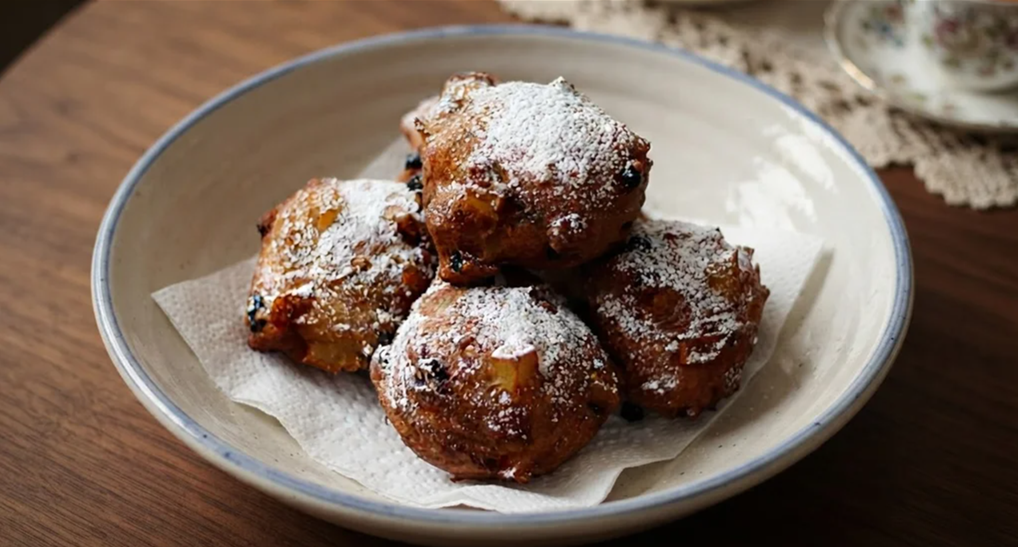
The dough is deceptively simple: flour, fresh yeast, lukewarm milk, sugar, eggs. It rises slowly, gathering air, until it is ready to fold in raisins or chopped apple. The trick lies in the texture. A sticky, wet batter is essential—too stiff, and the fritters turn dense, heavy, unyielding.
The wetness ensures an open crumb, a lightness that makes each bite feel celebratory rather than stodgy. Two spoons are all you need: scoop, drop, fry. The batter slides into the oil, bubbles rise, and within minutes the spheres puff into golden orbs.
Raisins, Apples, and Variations
Tradition calls for raisins or currants, their sweetness deepened by the frying. Some prefer apple, chopped into small cubes that soften inside the dough, adding brightness and moisture. Cinnamon can be folded in for warmth, or sprinkled afterward with sugar for a spiced finish.
In some regions, variations abound: appelflappen, made with apple rings instead of dough balls; modern versions filled with berries or custard. Yet the essence remains the same—fried dough, dusted with sugar, eaten hot.
A Seasonal Tradition
Unlike doughnuts, which are available year-round, oliebollen are tied to a season. They are eaten almost exclusively at the turn of the year as fireworks scatter across the sky. In Flanders they are called smoutebollen, in Wallonia croustillons, in Germany schmalzkugeln. Names shift, but the ritual holds: a once-a-year indulgence, a food that belongs to endings and beginnings.
Troubleshooting Tradition
Making oliebollen at home requires patience. The dough must rise for one to two hours, covered with a damp towel to keep the yeast active. The oil must be kept steady—no hotter than 350°F (180°C), no cooler than 325°F. Too hot, and the fritters burn outside while remaining raw inside.
Too cold, and they absorb oil, turning greasy and heavy. Frying too many at once cools the oil, so restraint is part of the process. Each batch demands attention, each fritter its own moment.
The Precursor to the Doughnut
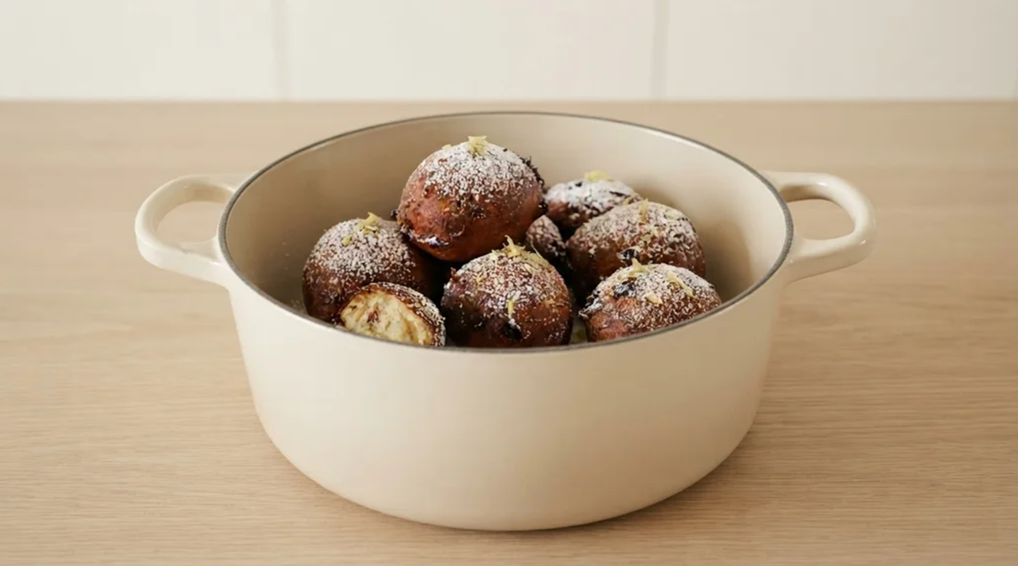
Oliebollen have often been called the precursor to the American doughnut. Dutch settlers carried their recipes to the New World, where the fritters evolved into rings, glazed and filled, eaten year-round. In Holland, they remained seasonal, tied to the calendar rather than convenience. The doughnut became an anytime snack; the oliebol stayed a ritual.
Stalls and Street Corners
Today, oliebollen are sold from mobile food trucks at train stations, markets, and city squares. The stalls are temporary, appearing in late autumn and vanishing after New Year’s Day. Their presence signals the season as much as lights or decorations.
People gather not just for the food but for the atmosphere—the warmth of the stall against the cold air, the shared anticipation of celebration.
Eating Them Hot
The rule is simple: eat them hot. The sugar clings better, the crumb stays tender, and the crisp shell gives way to a center that feels almost cakelike. Cold oliebollen lose their magic, turning heavy and dull. Hot, they are alive—steam rising, sugar melting, dough yielding. They are best eaten standing in the street, paper bag in hand, fireworks overhead.
Regional Names and Variations
Across the Low Countries, oliebollen take on different names. In the Netherlands, oliebol or smoutbal; in Flanders, smoutebol; in Wallonia, croustillon; in Germany, schmalzkugel. Each name reflects local dialects and traditions, but the food remains recognizably the same. The variations are minor—different fruits, different sugars—but the essence is shared.
The Tradition of Powdered Sugar
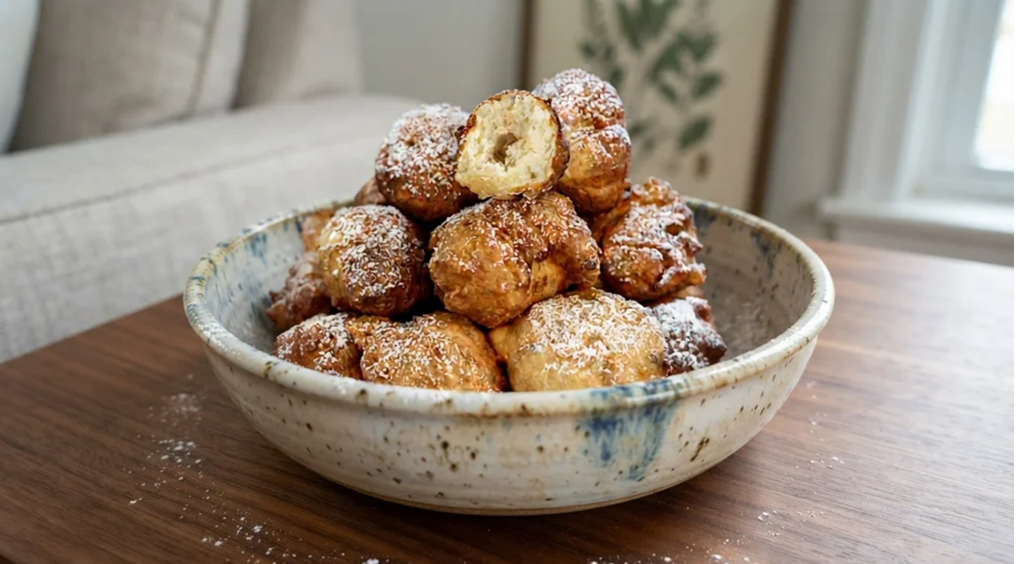
No oliebol is complete without its snowfall of powdered sugar. The sugar clings to the crisp surface, melts into the hot dough, and leaves fingers sticky. Some add cinnamon for warmth, others leave it plain. The sugar is not decoration but necessity, the final touch that transforms fried dough into celebration.
Nostalgia and Memory
For many, oliebollen are inseparable from childhood memories. They recall kitchens filled with steam, grandmothers with slotted spoons, paper bags carried home through cold streets. They are foods of nostalgia, tied to family and tradition. Eating them is not just about taste but about memory, about reliving moments of celebration and belonging.
Modern Twists
In recent years, modern variations have appeared—oliebollen filled with berries, custards, or chocolate. Some bakeries experiment with savory versions, adding cheese or herbs. Yet the traditional form remains dominant, especially at New Year’s. The modern twists are novelties; the classic oliebol is ritual.
A Food of Endings and Beginnings
Oliebollen are more than fritters. They are foods of transition, eaten at the cusp of the year, marking both an ending and a beginning. They belong to a moment when time feels suspended, when one year closes and another opens. Eating them is a way of participating in that transition, of embodying celebration in taste and texture.
Warm, soft, dusted with sugar, oliebollen are the taste of tradition. They are crisp nooks and crannies, pillowy centers, sweetness balanced by yeast. They are not overly sweet, not cloying, but celebratory. They are foods that demand to be eaten hot, in the moment, as part of a ritual that is both personal and communal.
Nothing captures the Dutch New Year like oliebollen. They are seasonal markers, foods of nostalgia, traditions of celebration. They are simple in ingredients, complex in memory, rich in history. They are eaten hot, dusted with sugar, shared with family and friends. They are not just fritters but symbols—of endings, beginnings, resilience, and joy.