
In Québec, maple syrup is not just a sweetener. It is heritage, ritual, and memory distilled into amber drops. Each spring, families gather at the sugar shack, where boiling sap is poured onto fresh snow, twirled onto sticks, and licked until lips are sticky and cheeks flushed. This annual pilgrimage is more than indulgence; it is communion with the land.
From this maple‑sweet tradition comes one of the province’s most beloved desserts: pouding chômeur, the “pudding of the unemployed.”
Origins in Hardship
The name itself tells a story of resilience. Born in 1929 during the Great Depression, pouding chômeur was created by female factory workers who needed to feed their families with what little they had. Flour, eggs, butter or shortening, sugar — these were staples, always on hand.
The earliest versions used brown sugar and water for the sauce, poured hot over biscuit‑like batter. It was a dessert of necessity, yet it carried comfort. A soft cake, a gooey caramel sauce, a sweetness that made hardship taste bearable. Later, as times improved, maple syrup replaced brown sugar, transforming the pudding into something richer, more distinctly Québécois.
The Transformation: Maple as Crown
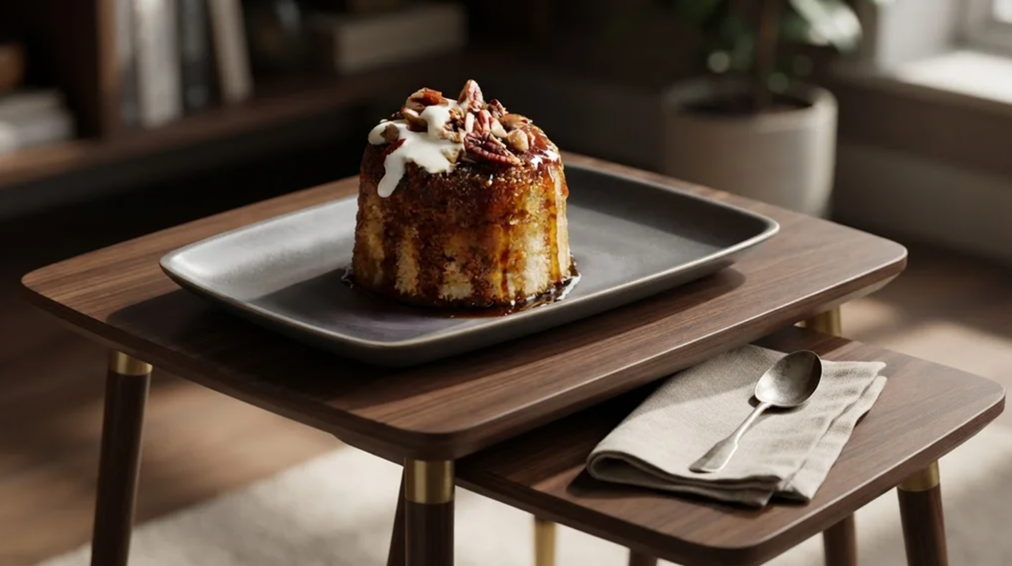
Maple syrup elevated the humble pudding into a cultural icon. Amber syrup brought gentle vanilla notes, bright and aromatic. Dark syrup added depth, caramel, and roasted edges. Both made the sauce lush, indulgent, and unmistakably tied to the land.
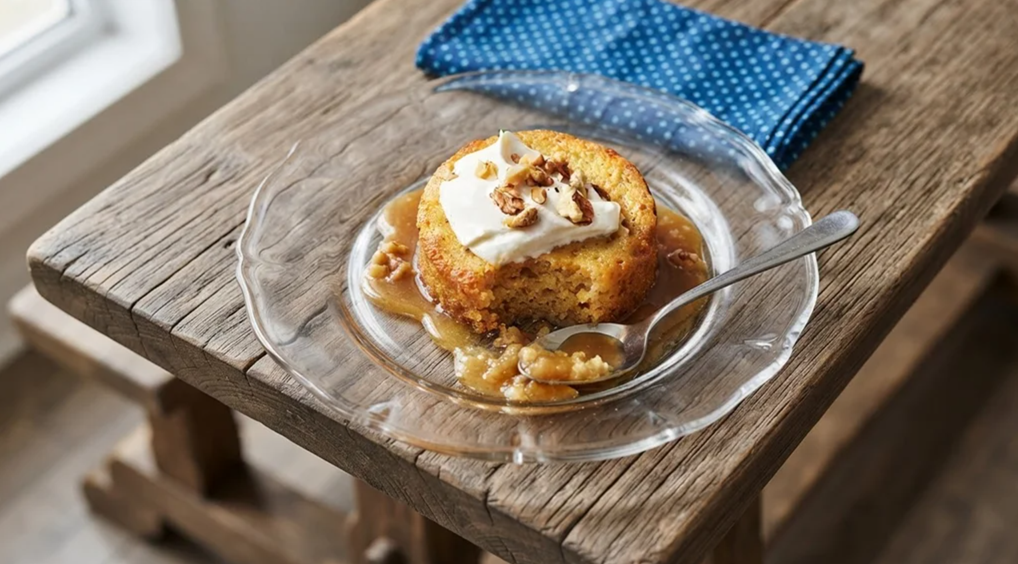
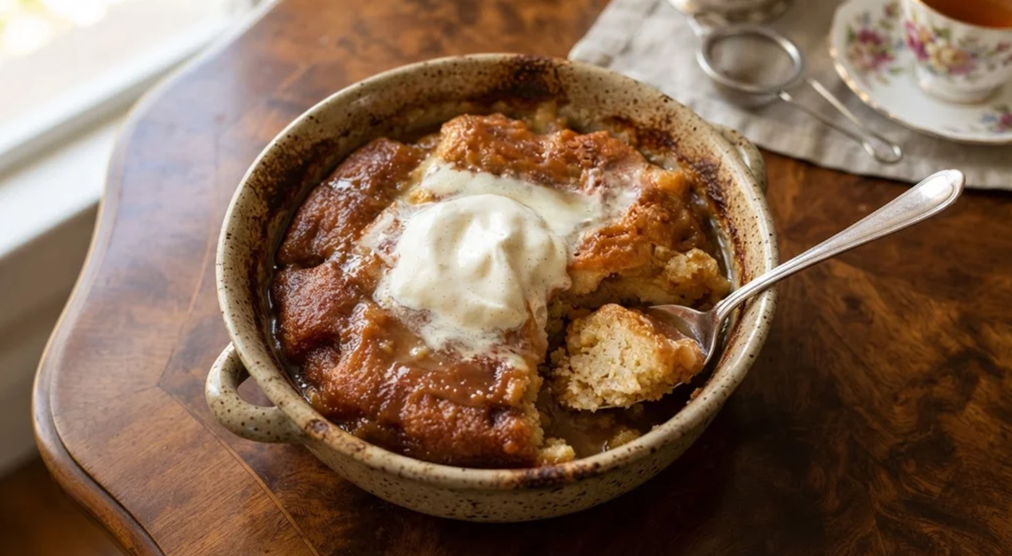
Today, the pudding is baked with a simple vanilla cake batter spooned over bubbling maple cream sauce. In the oven, the two merge into a self‑saucing marvel: tender cake above, molten maple beneath. Serve it warm, and the sauce pools like liquid gold.
The Rhythms of Serving
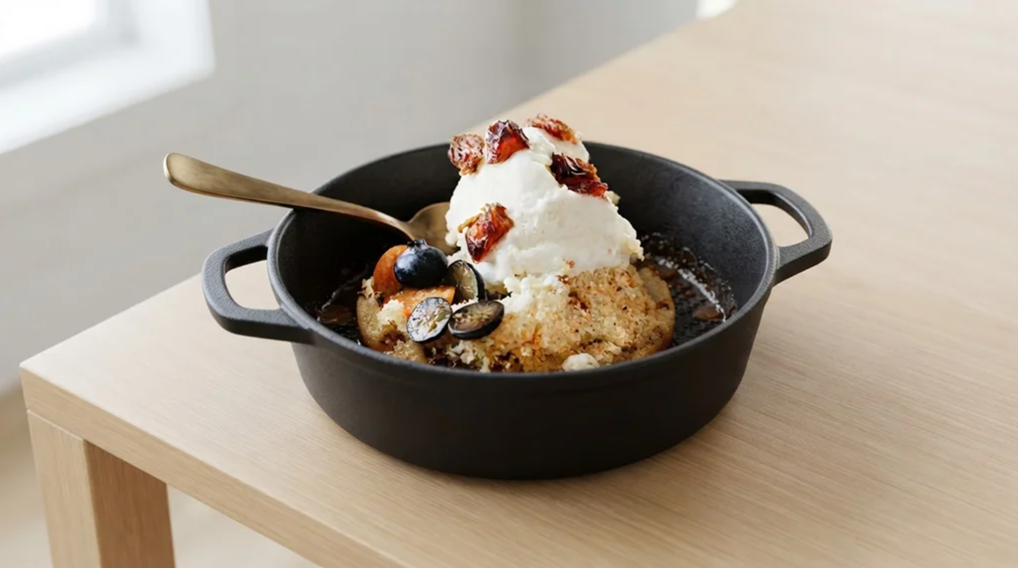
Traditionally, pouding chômeur is served with a drizzle of cold heavy cream. The contrast of warm pudding and cool cream is irresistible. Yet many modern bakers crown it with vanilla gelato or ice cream, letting the cold melt into the hot maple sauce. The result is decadent, a balance of textures and temperatures that feels almost ceremonial.
The Recipe: Simple, Luxurious
To make pouding chômeur at home, remember the rules of restraint:
Pure maple syrup — amber for brightness, dark for depth. Never pancake syrup.
Heavy cream — cuts sweetness, adds luxury.
Vanilla cake batter — flour, eggs, butter, sugar, simple and light.
Self-saucing trick — spoon batter over sauce, do not stir. Let the oven do the work.
Serve warm — reheating restores gooey magic.Bake on a sheet pan, as the pudding bubbles enthusiastically. Cover with foil if reheating, to keep moisture intact.
Ahead of Time
Yes, you can make pouding chômeur a day ahead. Bake, cool, refrigerate, then rewarm gently until the sauce loosens again. Freezing works too, though the texture is best fresh. Thaw overnight, reheat slowly, and the pudding will return to its maple‑soaked glory.
The Cultural Symbol
Pouding chômeur is more than dessert. It is history sweetened, hardship transformed, identity preserved. It reminds us that even in times of scarcity, creativity and comfort can flourish. It is a dish that belongs to Québec, fiercely claimed by its people, tied to the sugar shacks and maple groves that define the province.
To taste it is to taste resilience, tradition, and the joy of maple syrup itself.
The Experience
Imagine a winter evening in Montréal. Snow drifts against the windows, the air outside sharp and cold. Inside, a pan of pouding chômeur emerges from the oven, bubbling and fragrant. A scoop of vanilla ice cream melts into the hot maple sauce, pooling into rivers of sweetness.
It is humble, yet indulgent. Born of necessity, yet now a luxury. A dessert that tells the story of a people, a province, and the enduring comfort of maple.
Maple Syrup Grades: Choosing the Flavor
Québec’s maple syrup comes in grades, each with its own personality. Golden syrup is light, delicate, often used on crêpes. Amber syrup carries gentle vanilla notes, bright and aromatic, perfect for pouding chômeur. Dark syrup is bold, with caramel and roasted edges, giving the pudding depth and intensity.
The choice is personal. Use the syrup you love to eat by the spoonful. The only non‑negotiable is purity — real maple syrup, never imitation.
Sugar Shack Lore
No discussion of pouding chômeur is complete without mention of the sugar shack. Each spring, families gather for maple‑laden feasts: ham glazed with syrup, baked beans sweetened with maple, pancakes drenched in amber gold. And always, tire sur la neige — hot syrup poured onto snow, hardened into chewy ribbons.
This ritual is more than indulgence. It is cultural memory, a celebration of the land’s bounty, a reminder that maple is not just food but heritage. Pouding chômeur carries this spirit into the home, bringing sugar shack sweetness to the everyday table.
Variations and Modern Twists
Chefs today experiment with pouding chômeur, adding spices, nuts, or even chocolate. Some bake it in ramekins for individual servings, others drizzle extra syrup over the top. Yet the essence remains: cake and sauce, simple and sweet. The danger of embellishment is losing the core.
Pouding chômeur is not meant to be complicated. Its beauty lies in its simplicity, its ability to transform basic ingredients into indulgence.
Once poor man’s food, pouding chômeur is now a celebrated dessert. Its transformation mirrors Québec’s journey from hardship to prosperity. Yet it remains accessible, made with simple ingredients, shared across generations.It is a reminder that comfort does not require extravagance. Sometimes, flour, eggs, butter, and maple are enough.
A Dessert of Identity
Pouding chômeur is more than a recipe. It is a symbol of Québec’s identity, its resilience, its love of maple. It is a dish that tells a story, that carries history in every bite. To eat it is to join that story, to taste not only sweetness but heritage.
Pouding chômeur is proof that even in times of scarcity, sweetness can be found. It is a dessert that transforms hardship into comfort, simplicity into indulgence, maple into memory. It is Québec’s maple crown, a dish that belongs to its people, its land, its history. To taste it is to taste the province itself.