
The Most Important Tips for Choosing the Right Water Tank for Your Home
Water is life, and when the taps run dry—as they so often do —carrying buckets from tankers becomes more than an inconvenience, it becomes a burden, especially for the elderly. A home water tank is not just storage, it is security, a quiet reserve that waits for the moment you need it most. Choosing the right one, however, is not simple. It requires thought, calculation, and an understanding of how your household lives and breathes.
How Much Water Do You Really Need?
Each person requires about 30 litres daily for drinking and hygiene, and another 20 to 30 litres for laundry, dishes, and cleaning. Rounded up, that’s 160 to 219 litres per day. Multiply by your family size, adjust for lifestyle—more laundry for athletes, less usage if everyone is out during the week—and you begin to see the scale of your needs. Tanks in Malaysia range from 70 litres to 100,000 litres, so capacity is the first decision.
Material Matters: Stainless Steel vs Poly
Two materials dominate the Malaysian market: HDPE (Poly) and Stainless Steel water tank.
- HDPE Tanks: Lightweight, rust-resistant, leak-proof, and cost-effective. Easy to transport, install, and maintain. Perfect for households seeking practicality and affordability.
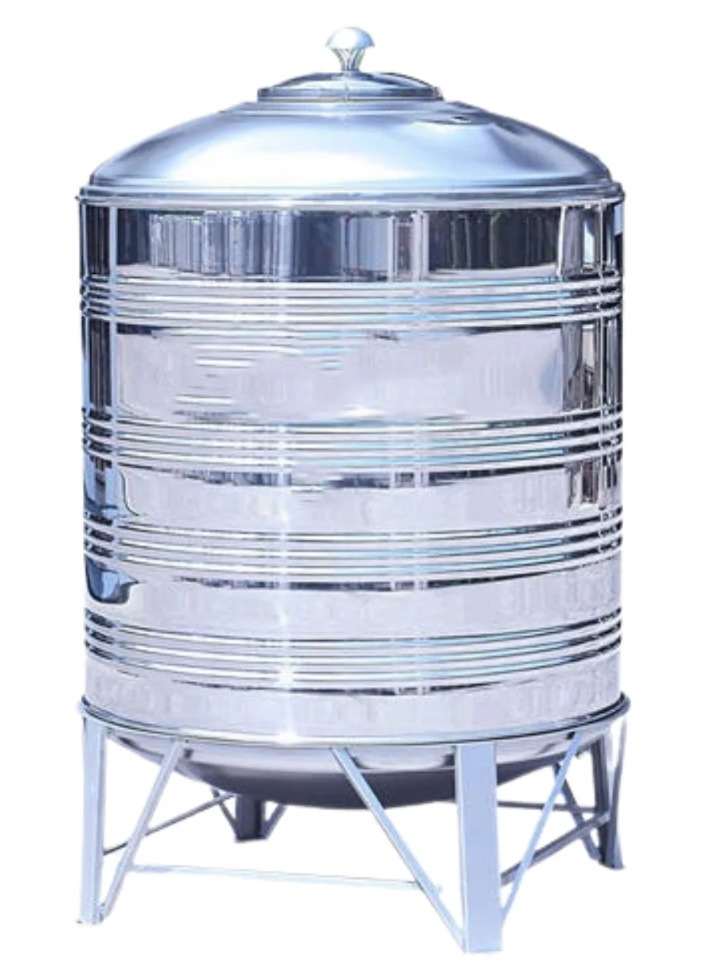
- Stainless Steel Tanks: Strong, heat-resistant, and durable. Easy to clean, with a shine that lasts. Available in two grades:
- SUS304: Common, reliable, household-grade.
- SUS316: Premium, industrial-grade, with superior corrosion resistance, used in marine and chemical industries.
Poly offers convenience, stainless offers longevity. The choice depends on your priorities—ease or endurance.
Shape: Circular or Rectangular?
Shape is not just aesthetic, it is functional.
- Cylindrical Tanks: The ideal form. They distribute water pressure evenly, minimize heat radiation, and keep water temperature stable.
- Square or Rectangular Tanks: Compact, modular, easier to store, perfect for construction projects or homes with limited space.
- HDPE Tanks: More versatile in shape—round, square, rectangular—suited for smaller capacities.
- Stainless Steel Tanks: Typically circular or cylindrical, standing or horizontal, with or without a stand.
Round for performance, square for space. Choose based on your environment.
Certification: Trust and Safety
Every tank should carry certification. In Malaysia, look for SIRIM and SPAN approvals to ensure quality. For added assurance:
- IKRAM QA for metal tanks.
- FDA certification for poly tanks, confirming the polyethylene is safe for drinking water.
Warranty: How Long Will It Last?
- HDPE Tanks: 5 to 10 years, depending on indoor or outdoor use.
- Stainless Steel Tanks: Typically 10 years, subject to manufacturer terms.
Examples:
- Kossan HDPE: 10 years indoor, 5 years outdoor.
- Mui Fatt: 10 years indoor, 8 years outdoor.
Warranty covers inspections, repairs, and services, usually handled by the original manufacturer.
A water tank is not just a container, it is resilience against disruption, a safeguard for your family. Poly tanks are light, affordable, and versatile; stainless steel water tanks are strong, enduring, and premium. Shape, certification, and warranty all matter, but the true choice lies in how you live—your routines, your space, your priorities. Choose wisely, and your tank will not only hold water, it will hold peace of mind.
Reviews
There are no reviews yet.