
What’s the Difference?
When you lay your head down each night, the fabric beneath your skin becomes more than a pillowcase—it becomes the surface against which you dream, the texture that touches your face for seven or eight hours, the quiet companion that influences your skin, your hair, and even the way you wake. Cotton pillow case and silk, both natural fibers, tell very different stories, and choosing between them is not simply about fabric but about how you wish to be held in sleep.
1. Origins of the Materials
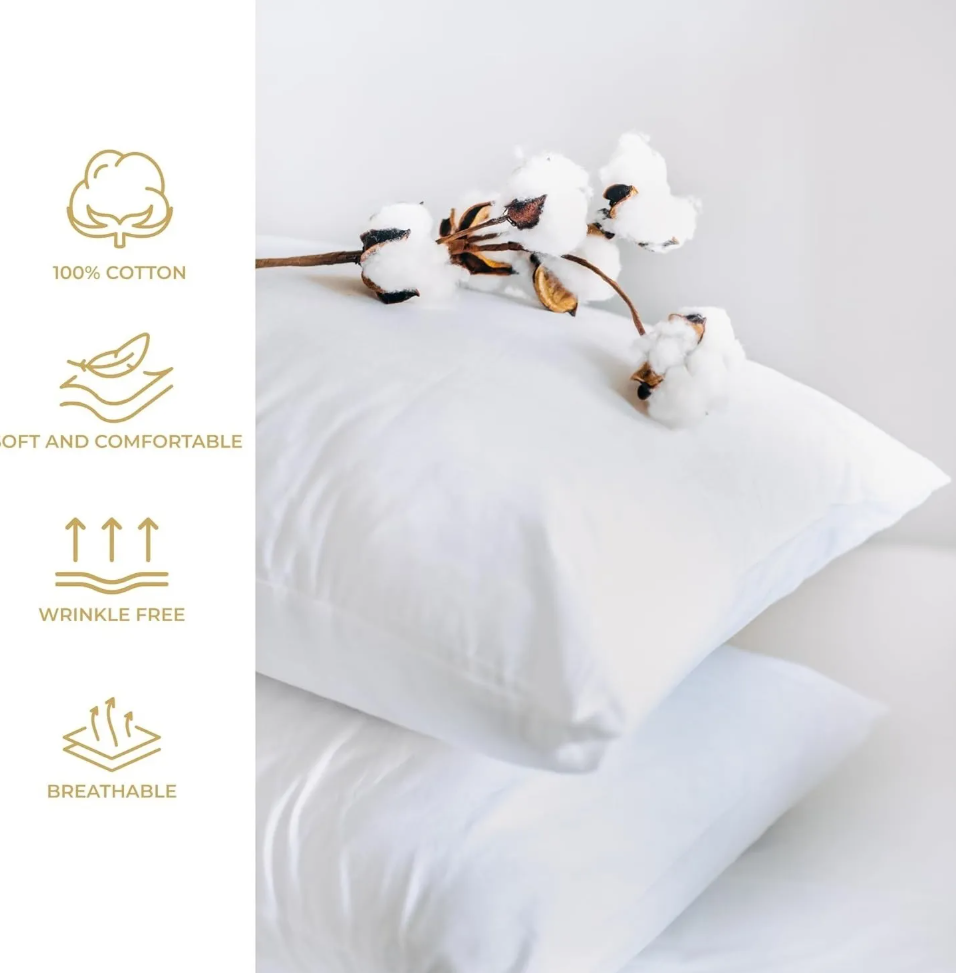
Cotton is born from the cocoon of the Gossypium plant, soft and fluffy, cultivated for thousands of years across America, Central Asia, and Egypt. Harvested in autumn, its fibers are spun into threads that become clothing, towels, sheets, and pillowcases—ubiquitous, accessible, woven into everyday life.
Silk, by contrast, is rare and precious, spun by the Bombyx caterpillar in its chrysalis, cultivated for five millennia in China, still the heartland of its production. The process is delicate: cocoons unwound, threads washed and treated, spun into continuous strands that shimmer with softness. Silk is not common, it is cultivated luxury, a fiber of patience and care.
2. Effects on the Skin
Cotton absorbs. It drinks in sebum, sweat, and even the creams you apply before bed, reducing their effectiveness. For oily skin, this may be helpful, but for dry or sensitive skin, cotton can irritate, leaving behind roughness and micro-abrasions from its friction. Its absorbency also creates a home for bacteria and dust mites, requiring frequent washing to remain fresh.
Silk, on the other hand, glides. Its surface is smooth, frictionless, protecting the skin from irritation and micro-damage. Hydrophobic by nature, silk does not steal your skincare but allows it to remain on your skin, optimizing its benefits. Rich in natural proteins, silk fibers carry healing and regenerating properties, while their antimicrobial and antifungal qualities help guard against acne and infection. Sleeping on silk is like resting against a whisper—gentle, protective, indulgent.
3. Effects on the Hair
Cotton pulls moisture from hair, leaving strands dry, brittle, and prone to frizz. Its rougher texture catches and snags, creating knots, breakage, and split ends. Hairstyles unravel overnight, curls lose their shape, waves collapse under the friction.
Silk preserves. Its smooth surface allows hair to glide freely, reducing frizz, preventing tangles, and protecting against breakage. Styles remain intact, curls stay defined, waves hold their rhythm. Silk is the ally of hair, the fabric that keeps it soft, shiny, and strong, night after night.
4. Practicality and Care
Cotton pillowcases are simple: affordable, durable, easy to wash in warm water with standard detergents. They are accessible, everyday, reliable.
Silk pillowcases demand care: washed inside out, on gentle cycles or by hand, dried delicately to preserve their softness. They are more expensive, but the cost reflects their rarity and their qualities—luxury, beauty, and benefits that extend to skin and hair. Silk is fragile yet noble, a fabric that rewards those who treat it with respect.
Cotton pillow case is the fabric of the everyday—practical, familiar, absorbent. Silk is the fabric of indulgence—rare, smooth, protective. One is common comfort, the other cultivated luxury. Choosing between them is not just about price or care but about how you wish to wake: with skin protected, hair preserved, and a touch of quiet elegance, or with the simplicity of tradition and ease.


Reviews
There are no reviews yet.