
A Guide to High-Efficiency Air Filtration
If you’ve ever searched for air purifiers, you’ve likely seen the phrase HEPA filter again and again. It has become the gold standard in clean air technology, but what makes it so special? Let’s explore how these filters work, why they matter, and how they can transform the air you breathe indoors.
Understanding the Basics
HEPA stands for High-Efficiency Particulate Air. A true HEPA filter forces air through a fine mesh that traps harmful particles—pollen, pet dander, dust mites, even tobacco smoke. To qualify, it must capture 99.97% of particles at 0.3 microns, the size most difficult to filter. Larger and smaller particles are actually easier to catch, which is why this benchmark is so important.
What HEPA Filters Do
- Remove Allergens: Pollen, mould spores, and dust mite debris are captured, easing symptoms for allergy and asthma sufferers.
- Trap Fine Particles: Invisible pollutants from cooking, vehicle exhaust, and household dust are stopped before they reach your lungs.
- Reduce Pathogens: Many bacteria and some viruses fall within the range HEPA filters can capture, lowering airborne risks.
- Eliminate Pet Dander: Tiny flakes of skin shed by pets are caught, helping sensitive households breathe easier.
How They Work
Unlike a simple sieve, HEPA filters use three mechanisms at once:
- Interception: Medium particles stick when they pass close to fibres.
- Impaction: Larger particles collide directly with fibres.
- Diffusion: Tiny particles wander unpredictably, eventually hitting fibres and sticking.
The filter itself is a dense mat of fibres, often pleated to maximize surface area, creating a labyrinth that traps particles while still allowing airflow.
Where and When to Use Them
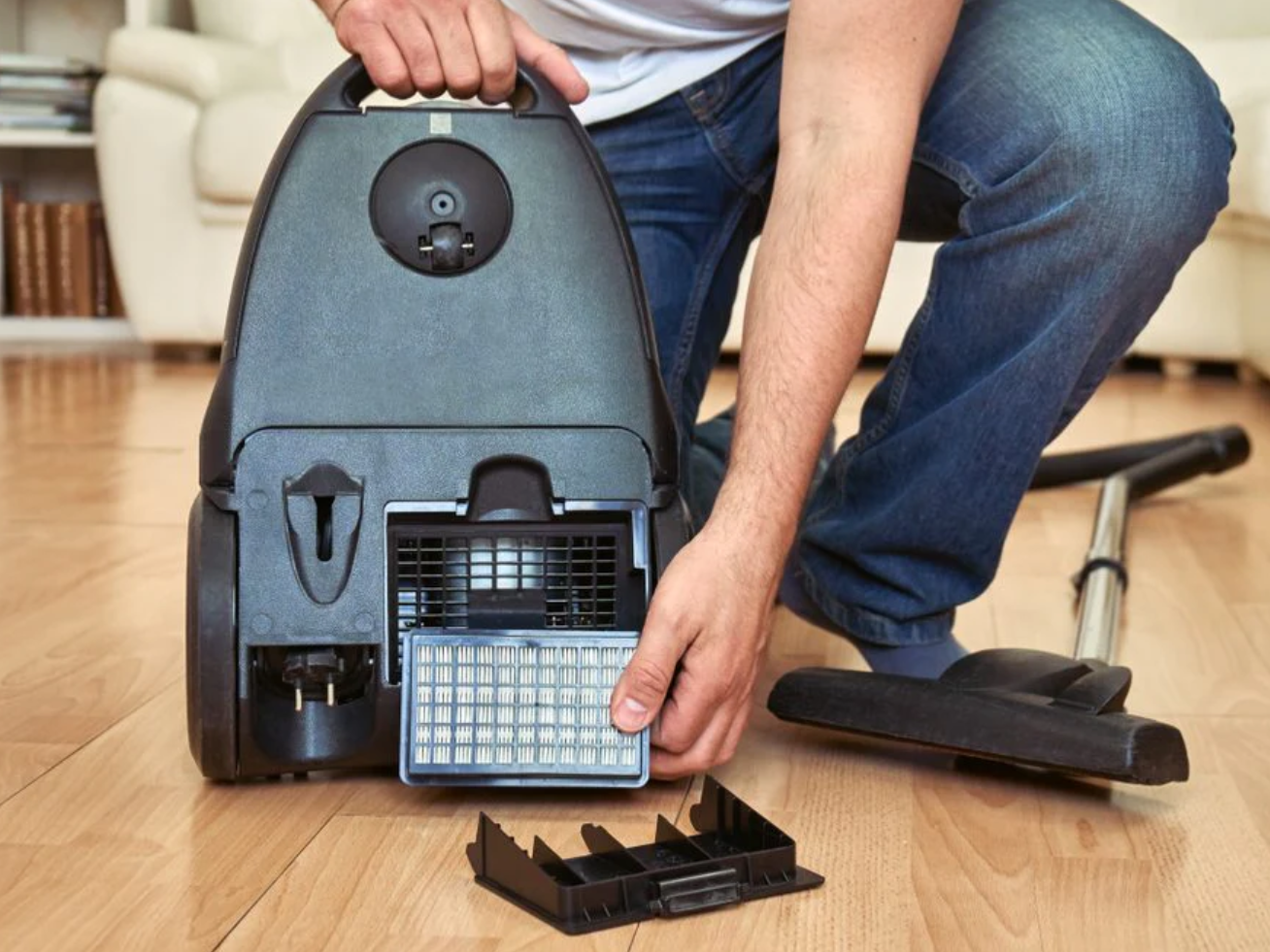
HEPA filters appear in air purifiers, vacuum cleaners, and HVAC systems. For purifiers, placement matters—keep them in open spaces where air can circulate, ideally in bedrooms or living areas. Continuous operation is best, especially for those with allergies or respiratory sensitivities, though higher fan speeds are useful during cooking, cleaning, or pollen season.
Maintenance Essentials
- Replace filters every 6–12 months, depending on use.
- Clean pre-filters regularly to extend lifespan.
- Wipe down units to prevent dust buildup.
Beyond Standard HEPA
Some advanced systems go further, capturing particles as small as 0.01 microns. Multi-stage purifiers combine HEPA with pre-filters, activated carbon, and sometimes UV or ionizers, offering deeper purification and odour control.
Choosing the Right Filter
When selecting a purifier, consider:
- Room size coverage (check CADR ratings).
- Genuine HEPA filters vs. “HEPA-like” imitations.
- Noise levels for bedroom use.
- Energy efficiency for continuous operation.
- Smart features like sensors or automatic modes.
In Short
HEPA filters are more than just fine mesh—they are carefully engineered barriers against the invisible particles that affect health and comfort. With proper use and care, they offer cleaner air, fewer allergens, and a safer indoor environment, making them an essential part of modern living.
Reviews
There are no reviews yet.