Forest Retreats in France > Aiguille Du Midi Cable Car
A Promise in the Valley
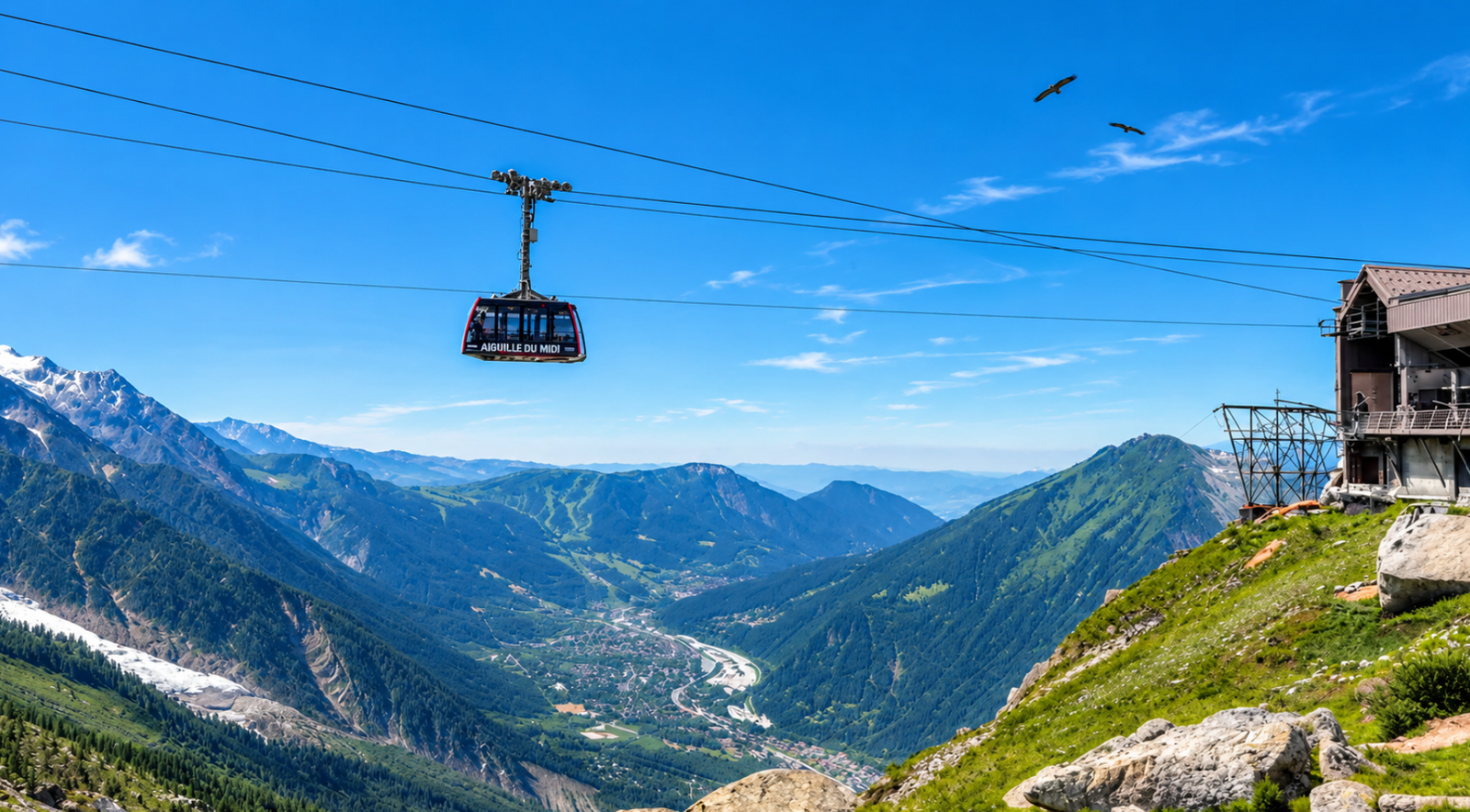
In Chamonix, the streets bustle with climbers, and skiers, but above it all rises a promise: the Aiguille du Midi cable car. From the valley floor at 1,035 meters, it beckons you upward, toward the high mountains. You step into the cabin, the doors slide shut, and the town dissolves beneath you.
The rooftops scatter into a mosaic, the fir trees shrink into brushstrokes, and suddenly you are no longer in the valley—you are on a journey into the sky.
Two Stages of Ascent
The ride unfolds in two acts. The first stage carries you gently to the Plan de l’Aiguille at 2,317 meters. Here, the forest gives way to tundra, and hikers spill onto trails that wind toward glaciers and ridges. It is a place of transition, where the valley still lingers but the high mountains begin to assert themselves.
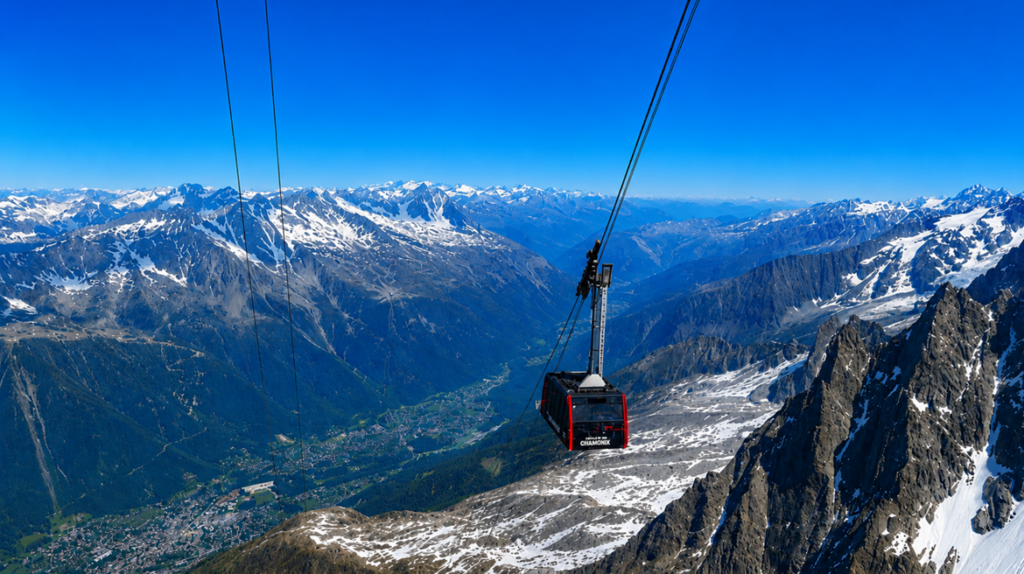
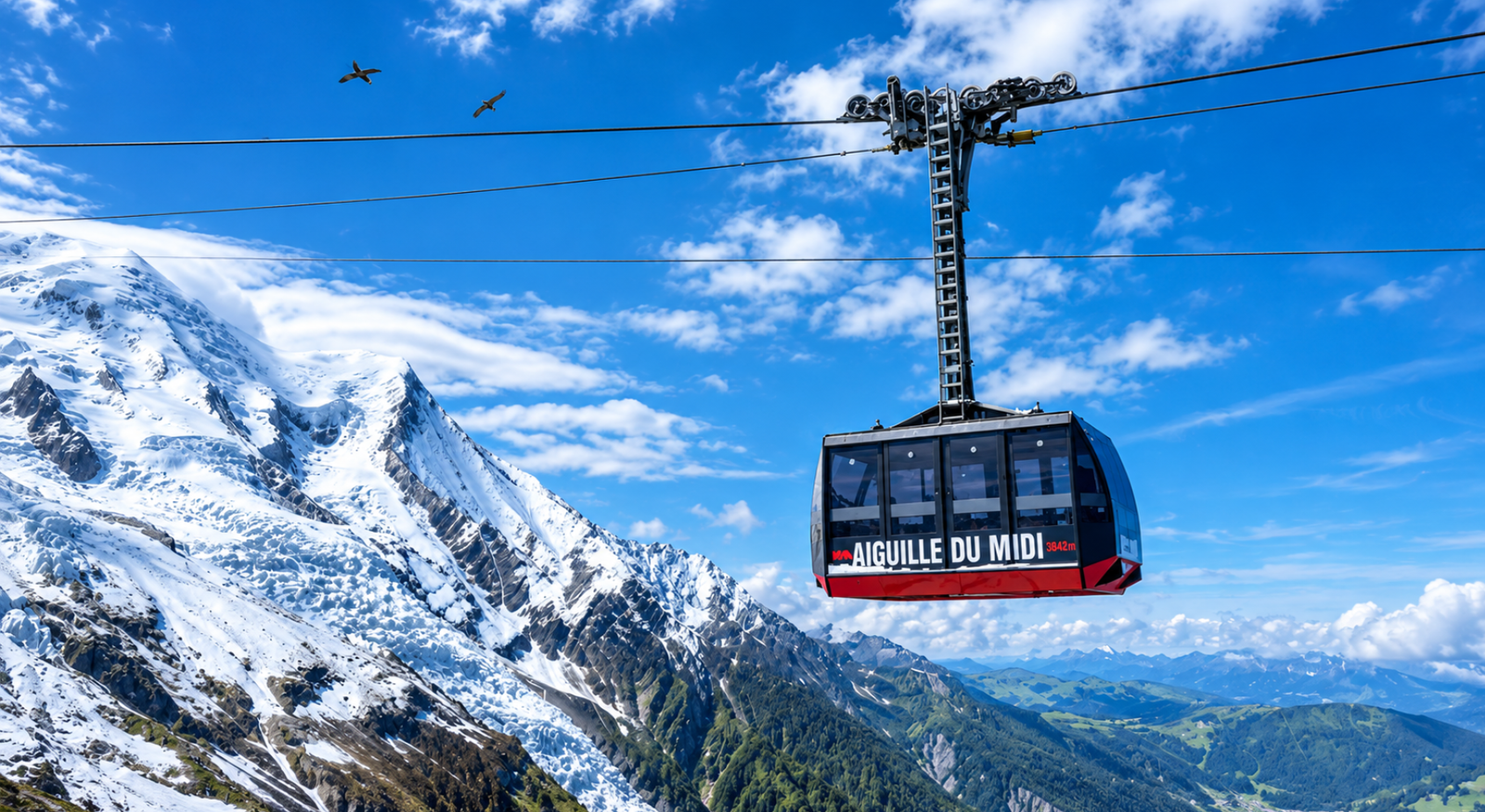
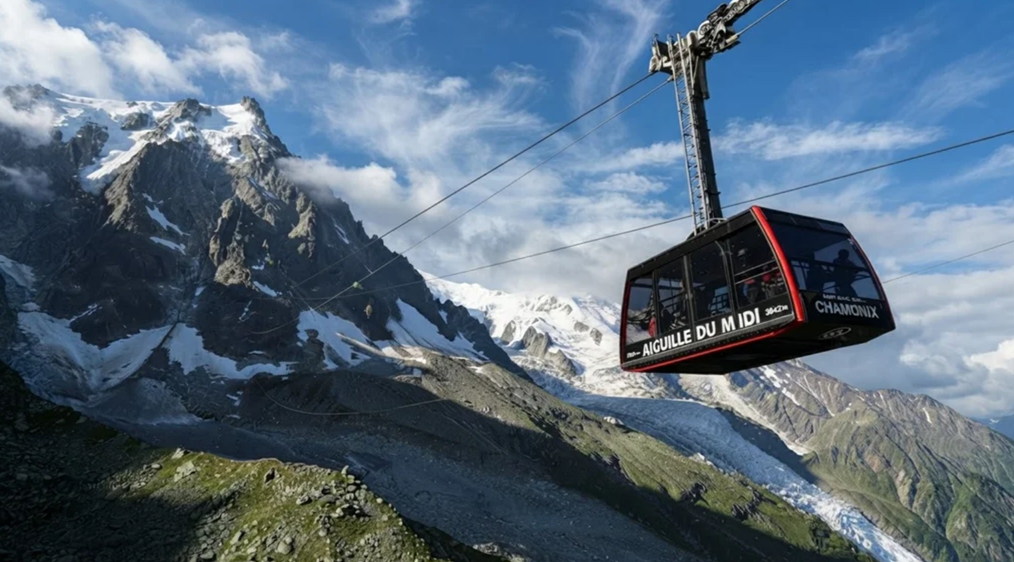
The second stage is steeper, more dramatic, and utterly unforgettable. The cable car soars over the Glacier des Bossons, lifting you toward the sheer North Face of the Aiguille. Inside the cabin, ears pop as you climb 1,461 meters in just ten minutes. The sensation is surreal: a seamless flight into the void, suspended between sky and stone.
The Summit Experience
At 3,842 meters, you step out into another dimension. The summit station clings impossibly to the rock, a fortress of steel and glass perched at the edge of the world. Terraces and walkways open onto a panorama that defies description: the Mont Blanc massif gleaming to the south, the jagged Grandes Jorasses piercing the horizon, the Aiguille Verte rising in defiance, and valleys stretching into Switzerland and Italy.
It is not just a view—it is immersion. The air is thin, the silence profound, and the scale overwhelming. You are no longer a passenger; you are part of the high mountains themselves.
Thrills and Calm
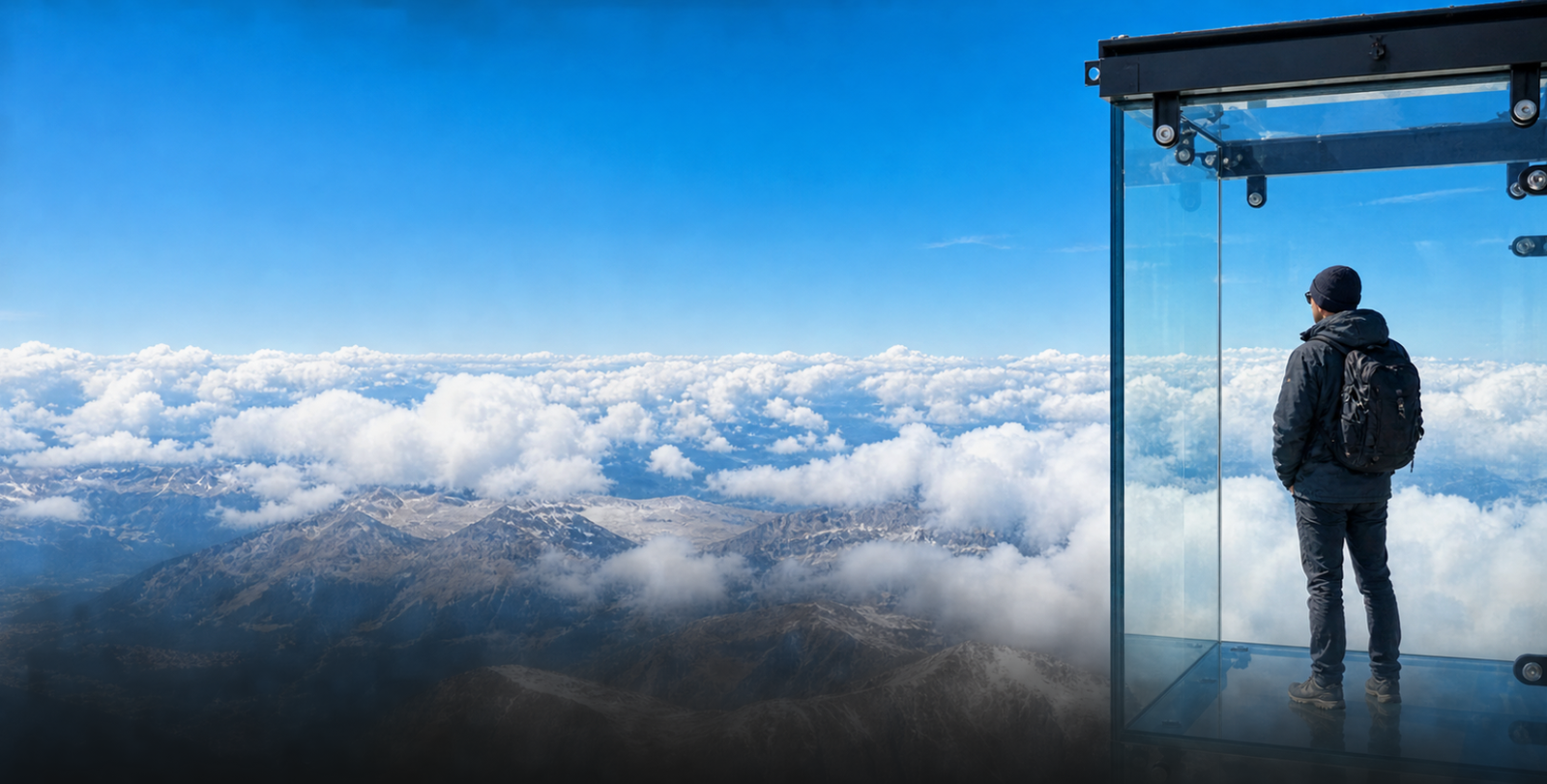
For those who crave adrenaline, the Pas dans le Vide awaits. A glass cage suspended above a thousand meters of emptiness, it invites you to step into nothingness. Beneath your feet, the void stretches endlessly; around you, glass walls dissolve the boundary between body and sky. Vertigo mingles with exhilaration, shivers with euphoria.
For the contemplative, there are gentler paths. Steel galleries encircle the pinnacle, offering quiet immersion in altitude. The Espace Vertical, the highest museum in the world, tells the story of mountaineering in the shadow of Mont Blanc. Here, history and landscape intertwine, reminding you that the mountains are not just scenery but a stage for human courage.
Seasons of Transformation
The Aiguille du Midi cable car is never the same twice. In winter, the summit becomes a crystalline fortress. Extreme skiers launch into the legendary Vallée Blanche descent, a 23-kilometer off-piste route with a 2,000-meter vertical drop. The silence is absolute, broken only by the crunch of skis on snow.
In spring, contrasts emerge: lush valleys below, snowbound peaks above. The landscape is a dialogue between seasons, a reminder of nature’s duality. In summer, clarity reigns. The light is sharp, the ridges defined, every glacier revealed in crystalline detail. It is the season of accessibility, when hikers and families share the terraces with climbers.
In autumn, the crowds thin, and the mountains glow in gold. It is a quieter time, a season of reflection, when the grandeur feels more intimate.
Practical Notes:
How to Ride
Duration: A full visit lasts two to three hours, though crowds can double this time. The ride itself is swift—around 20 minutes from valley floor to summit—but the experience invites lingering.
Altitude: The summit station stands at 3,842 meters. Children under three are not permitted, and under-fives are not recommended due to altitude. Even adults may feel the effects of thin air, so take it slow.
Access: The cable car departs from Chamonix town center. The first stage rises to Plan de l’Aiguille, the second to Piton Nord, followed by an elevator to the summit. Departures run every 15–30 minutes depending on season.
Tickets: Adult return tickets cost around €75–83, with reduced fares for children and seniors. Family passes are available, and children under five travel free. In summer and winter, queues are long—advance booking is essential.
Weather: Operations may close suddenly due to wind, frost, or low temperatures. Clear skies in the valley do not guarantee visibility at the summit, so check forecasts before you ride.
Clothing: Warm layers, sunglasses, and sun cream are essential even in summer. The air is crisp, the sun intense, and conditions can change quickly.
A Living Legacy
The cable car is more than transport—it is heritage. Its construction in the 1950s was a feat of courage and ingenuity, a testament to human determination in the face of nature’s extremes. Today, it remains a symbol of Chamonix, a living link between past and present.
A Gateway to Adventure
Beyond the terraces, the Aiguille du Midi is a gateway. Climbers depart for Mont Blanc routes, skiers launch into the Vallée Blanche, and adventurers cross into Italy via the gondola. It is a hub of possibility, a place where journeys begin.
For non-climbers, it is the closest one can come to Mont Blanc’s summit. To stand here is to touch the roof of Europe, to feel the immensity of the Alps not as distant peaks but as immediate presence.
A Moment Suspended
Ultimately, the Aiguille du Midi cable car is not about altitude or engineering—it is about sensation. The silence of snow, the thrill of the void, the panorama that stretches beyond imagination. It is a ride where time seems to pause, where the infinite feels within reach.
Whether you step into the glass cage, wander galleries, or simply gaze at Mont Blanc, the experience lingers long after you descend. The Aiguille du Midi cable car is not just a journey—it is a moment suspended between earth and sky, a story written in snow, stone, and silence.