
Three Summits Above Howe Sound
The Stawamus Chief is not just a mountain—it is a hike that feels like a rite of passage. Rising 700 metres above Squamish, this granite monolith offers three distinct summits, each with its own character, challenge, and reward. To climb the Chief is to move through sweat, stone, and sky, discovering Howe Sound and the Coast Mountains from perspectives that shift with every step.
Beginning the Ascent
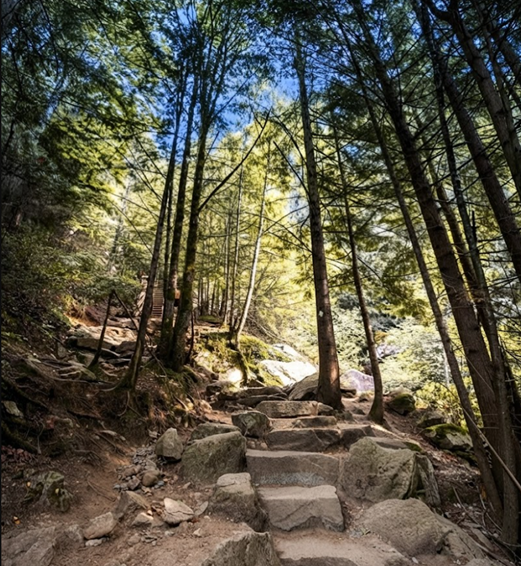
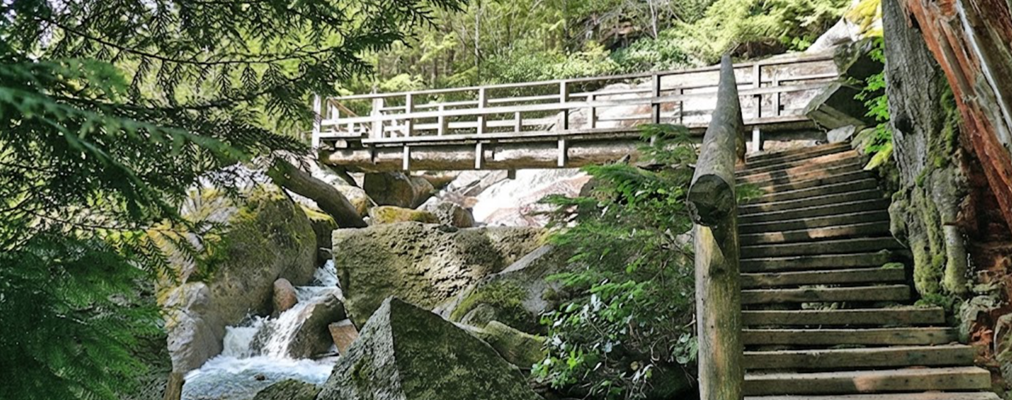
The trailhead sits at the edge of Stawamus Chief Provincial Park, beside the campground. A sign warns that the climb ahead is steep, and within minutes you understand why. Wooden staircases rise sharply, pulling you into the forest. The air is damp, scented with cedar and moss, and the sound of Oleson Creek rushes beside you.
This first section is relentless—stairs, roots, and stone steps that demand lung power. It is the Chief’s way of testing you early, asking if you are ready to commit. Many pause here, catching their breath, before pressing on toward the junctions that lead to the three peaks.
Peak 1 — The South Summit
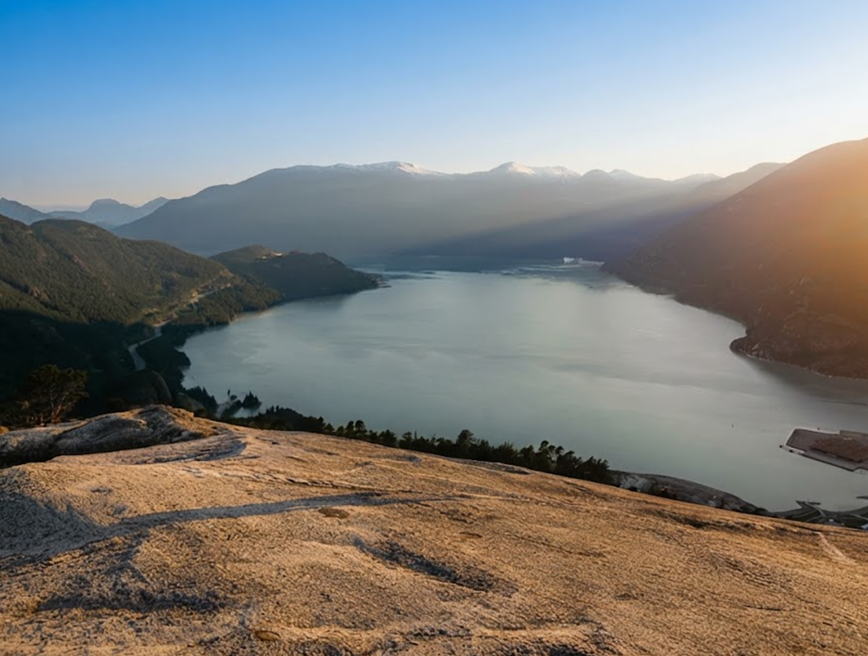
At the first major split, the trail bends toward Peak 1. The climb continues through forest, switchbacks tightening, until the trees thin and granite opens beneath your feet. A short scramble brings you to the summit: 610 metres above sea level, with Squamish spread below like a map.
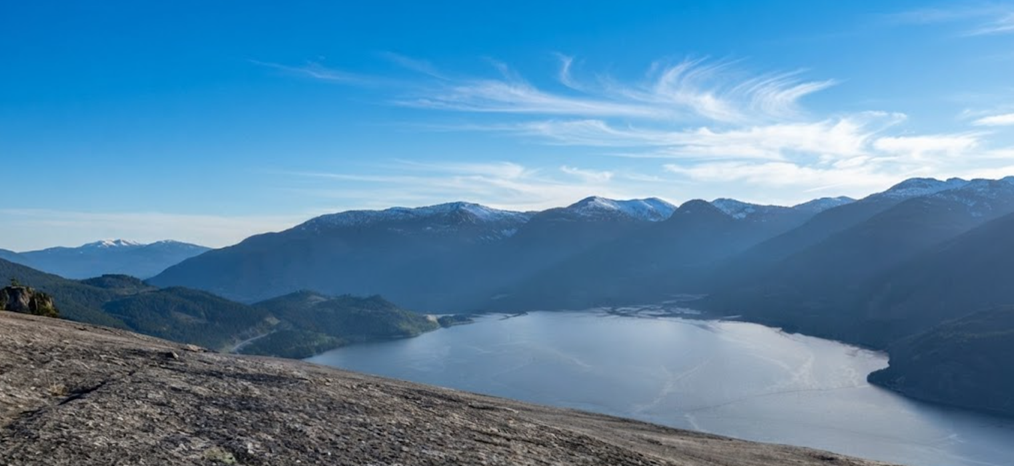
From here, Howe Sound gleams in turquoise and silver, its fjord waters stretching toward the horizon. You can see the town’s streets, the Sea to Sky Highway winding north, and climbers like tiny dots on the Chief’s vertical face. Peak 1 is the busiest summit, often crowded with hikers resting, eating, and taking photos. Yet the view is worth the company—it is the most accessible and the most iconic.
Peak 2 — The Centre Summit
From Peak 1, the trail continues toward Peak 2. This section is quieter, less crowded, and more demanding. The path narrows, climbing through forest before opening onto smooth granite. Here, hands meet stone. You scramble upward, cautious on slick rock, using both balance and grip.
At 655 metres, Peak 2 offers a different perspective. Mount Garibaldi rises to the north, snow‑capped and commanding. To the south, you can look back at Peak 1, often dotted with hikers, and forward toward Peak 3. The atmosphere here is calmer, less frenetic, and many hikers choose it as their favourite.
Peak 3 — The North Summit
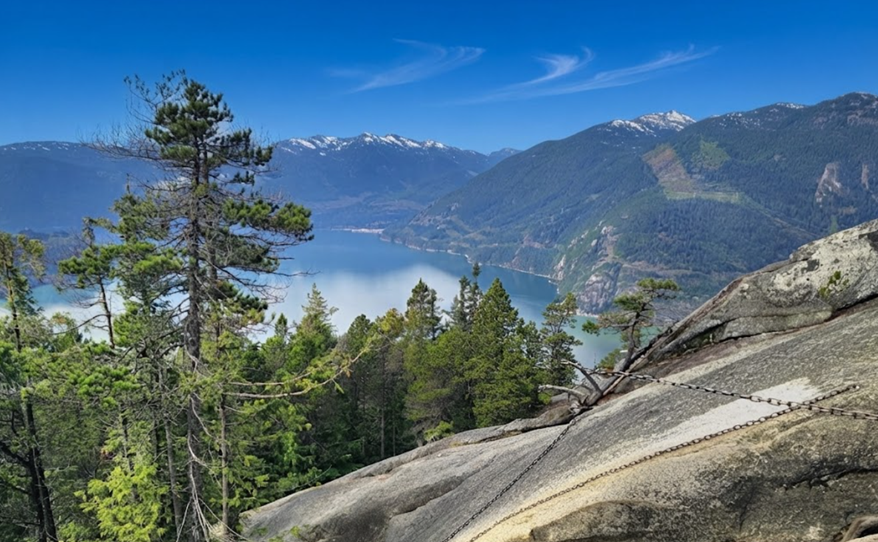
The trail to Peak 3 is the most challenging. From Peak 2, you descend into the North Gully, where a chain‑rope assists your climb along a narrow ledge. The granite is steep, the exposure real, and the sense of adventure undeniable.Scrambling upward, you reach the highest point of the Chief—702 metres.
The summit is broad, open, and often quieter than the others. From here, the panorama is complete: Howe Sound shimmering below, the Tantalus Range jagged to the west, and Garibaldi’s glacier‑capped peak dominating the skyline. The effort to reach Peak 3 is rewarded with solitude and grandeur.
The Descent
Returning from Peak 3, you follow the trail back through the gully, reconnecting with the main path. The descent is steep, technical, and demanding on knees and ankles. Wooden stairs, roots, and slick rock require focus. Yet the rhythm of downward movement feels easier, gravity carrying you back toward the forest floor.
By the time you reach the parking lot, legs are tired, clothes damp, and lungs satisfied. The Chief asks much, but it gives more in return.
Hiking Stats
Distance: 3–7.5 km depending on peaks chosen.
Elevation Gain: 535 m (Peak 1), 580 m (Peak 2), 627 m (Peak 3).
Time Required: 3–6 hours.
Difficulty: Moderate to challenging—steep staircases, scrambles, chains, and ladders.
Season: March to November, with snow lingering only briefly.
Hiking Rhythm and Atmosphere
The Chief is busiest in summer. On weekends, hundreds of hikers ascend, creating bottlenecks at ladders and chains. The trail hums with voices, laughter, and effort. Yet in spring or autumn, the atmosphere changes. The forest is quieter, the granite slick with rain, and the summits feel vast and solitary.
The hike is not just physical—it is sensory. The smell of cedar, the sound of rushing creeks, the feel of granite beneath palms, the sight of Howe Sound opening wide. Each peak offers a different rhythm: the bustle of Peak 1, the calm of Peak 2, the solitude of Peak 3.
Tips for Hikers
Start Early: Beat the crowds and enjoy cooler temperatures.
Footwear: Good hiking boots are essential for slick granite and steep scrambles.
Water & Snacks: The climb is demanding; hydration and energy matter.
Weather: Granite becomes slippery in rain; caution is vital.
Respect Wildlife: Peregrine falcons nest on the cliffs—observe closures and keep distance.
Why the Chief Matters to Hikers
The Stawamus Chief is not the longest hike, nor the highest. But it is unforgettable because it combines accessibility with challenge, and reward with rhythm. In a single day, you can climb three summits, scramble granite, and stand above a fjord.It is a hike that feels both communal and personal.
Crowds gather at Peak 1, yet solitude waits at Peak 3. The Chief offers choice—how far you go, how much you climb, how deeply you connect with stone and sky.