Amsterdam is a city of museums. More than ninety institutions are scattered across its canals and squares, making it the densest museum city in the world. Yet among this abundance, the Stedelijk Museum stands out. Located on Museumplein, it sits shoulder to shoulder with giants: the Rijksmuseum. Together they form the beating cultural heart of the Dutch capital.
The Stedelijk, however, is different. Where the Rijksmuseum preserves the Golden Age, the Stedelijk is a beacon for modern and contemporary art and design. Founded in 18th century, it has grown into a collection of more than 90,000 objects, spanning painting, sculpture, photography, video, and design. Its mission is not simply to display art, but to enrich lives, to build “memories for the future.”
Architecture: Old Staircases and a Bathtub
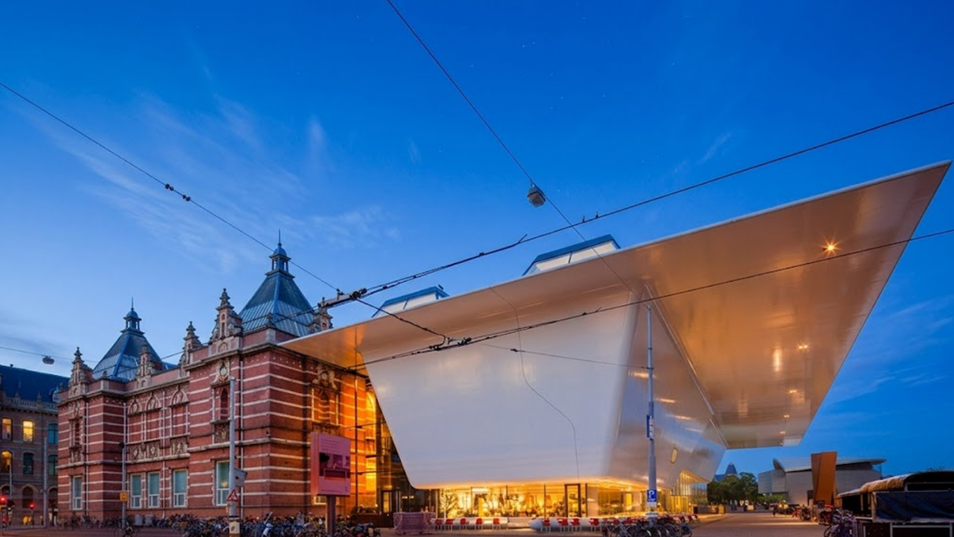
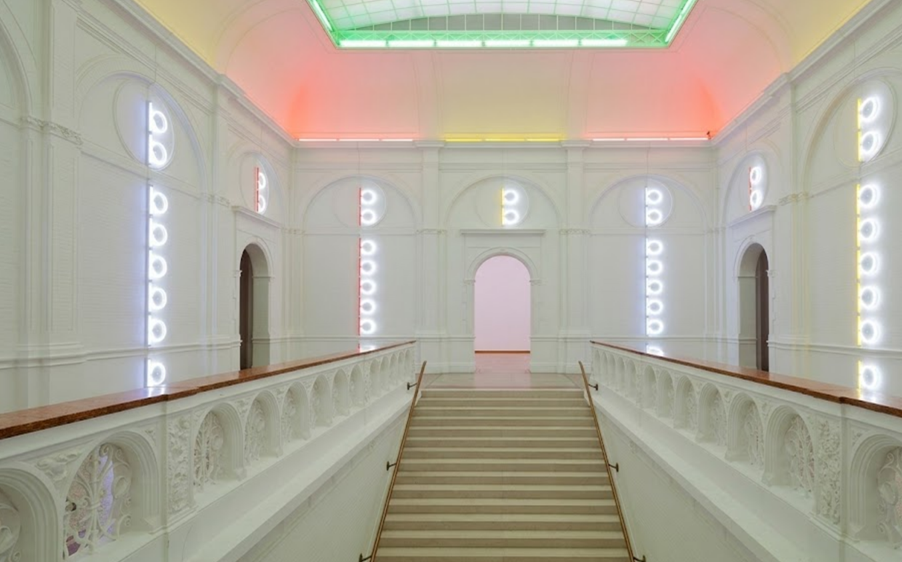
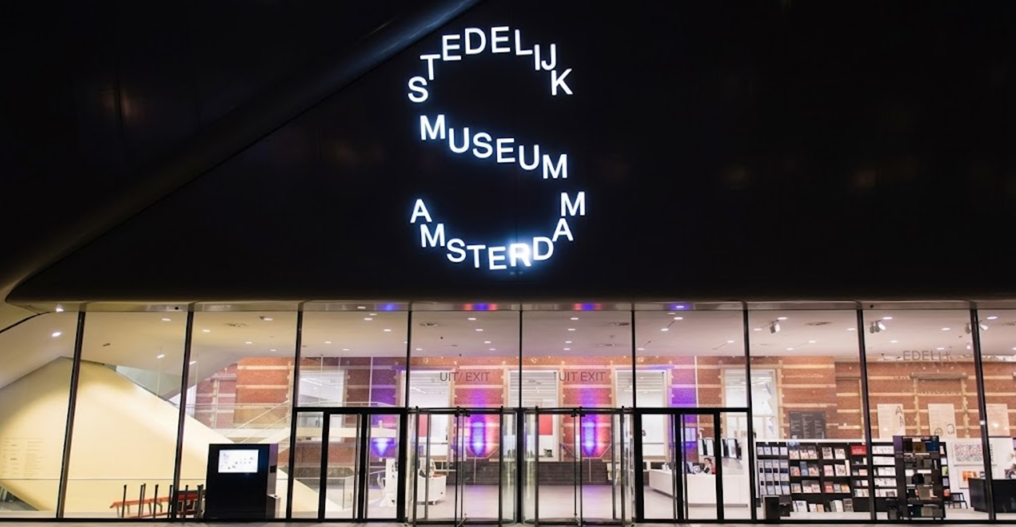
The museum’s architecture tells its own story. The original building, designed by Abraham Willem Weissman in 18th century, is a Dutch Neo‑Renaissance masterpiece. Its grand staircase, high ceilings, and natural light embody the ambition of the late 19th century. Yet time took its toll.
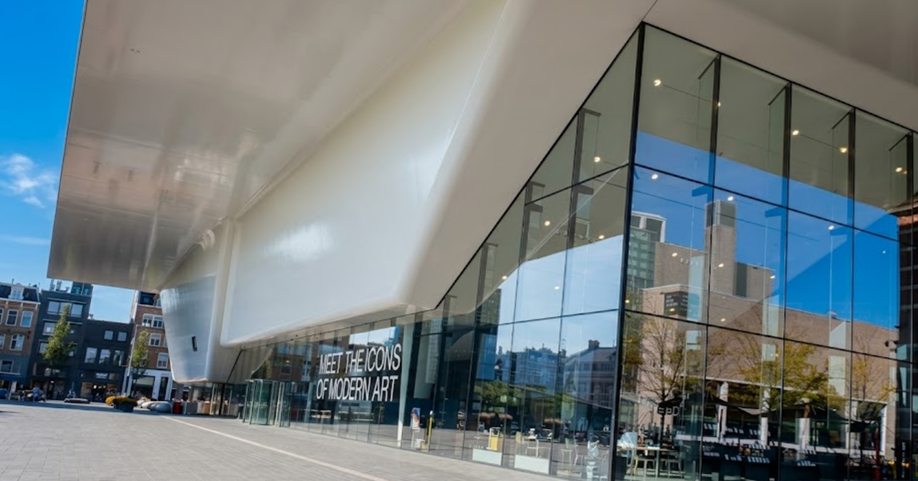
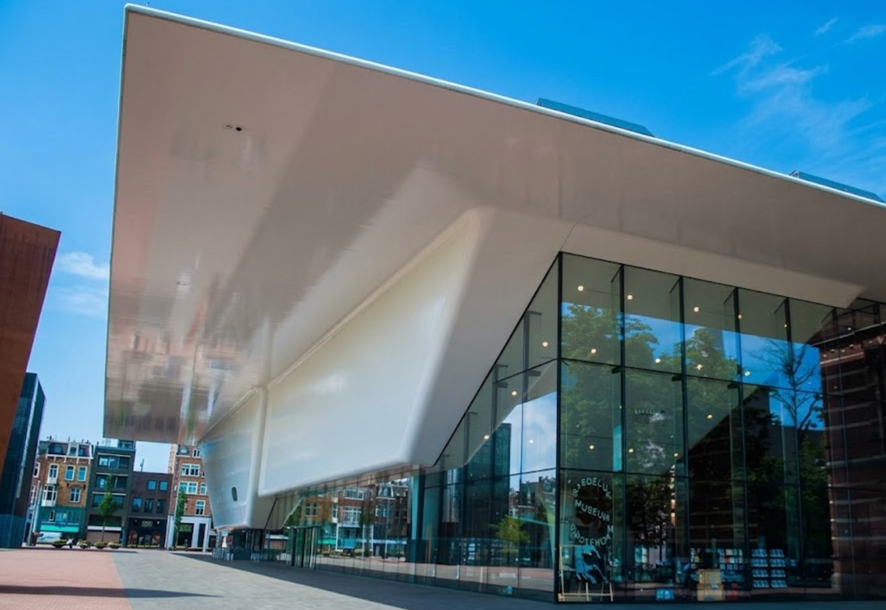
A leaking roof in 1993 damaged works by Ellsworth Kelly and Julian Schnabel, forcing closure and urgent repairs. In 2013, salvation arrived in the form of a new wing by Benthem Crouwel Architects. Nicknamed “The Bathtub” for its gleaming white, curved form, the addition is unapologetically modern.
It contrasts sharply with Weissman’s brick façade, but together they embody the museum’s philosophy: tradition and innovation in dialogue. Walking through the Stedelijk, you feel this tension. The old and the new sit side by side, staging a conversation about continuity and change.
A Walk Through Time and Form
The Stedelijk’s collection is overwhelming in scale, but its curation is thoughtful. Rather than presenting a linear timeline, it stages dialogues between movements.
De Stijl: Piet Mondrian’s geometric utopias, Marlow Moss’s disciplined abstractions.
Bauhaus: Functionalism, clarity, the marriage of art and design.
CoBrA: Chaotic, expressive, raw.
Pop Art: Bright colours, consumer culture, irony.
Minimalism: Silence, restraint, presence. Each gallery feels like a conversation. Moss’s crisp lines whisper discipline, while Rothko’s bleeding rectangles pulse with emotion.
Lingered in front of Rothko’s Untitled (Umber, Blue, Umber, Brown). Rothko never paints just colour; he paints presence. Grief, solitude, dignity — rectangles that bleed emotion. Standing before it, you don’t just look. You feel.
The Present as Provocation
Contemporary art at the Stedelijk is not about comfort. It provokes. Pamela Rosenkranz’s installation of plastic bottles filled with neon liquids is a case in point. Discarded packaging turned into art, a critique of consumption and artificial purity. Is it art? A provocation? Both. Rosenkranz succeeds in sparking discomfort, forcing reflection on capitalism, health, and waste.
Accessibility and Atmosphere
The Stedelijk is committed to inclusivity. Elevators connect exhibition floors, accessible toilets are present throughout, and wheelchairs can be rented. Audiotours in English and Dutch are free, sign language tours are offered, and sensory‑friendly evenings are scheduled for those who prefer minimal stimulation. Even visitors with dementia are welcomed with tailored guided tours. It is a museum that understands art belongs to everyone.
Current Exhibitions
Three interlinked exhibitions currently shape the museum’s narrative:
Yesterday Today: 300 works from mid 18th to mid 19th century, exploring De Stijl, Bauhaus, CoBrA, and the avant‑garde of Malevich and Rozanova.
Everyday, Someday And Other Stories: Art from 1950–1980, charting post‑war shifts.
Tomorrow Is A Different Day: Contemporary works from 1950 onwards, staging dialogues about today’s world.
Events and Initiatives
The museum is not static. Weekly initiatives include:
Whatsapp Trail: A digital treasure hunt for families.
Introductory lectures: In Dutch and English, offering context on current artists.
Heart Tour: A playful way to turn the museum into a date hotspot.
Practical Notes
Location: Museumplein 10, Amsterdam.
Opening Hours: Daily, 10:00–18:00.
Tickets: €22.50 adults; free for children up to 12.
Lockers: Located in the basement, accessible by elevator.
Parking: Reserved spaces at Paulus Potterstraat 13 and Q‑Park Museumplein.
Why Stedelijk Matters
Amsterdam has more than 90 museums, the highest concentration per square metre in the world. Yet the Stedelijk stands out because it refuses to be just a timeline. It stages contradictions. It lets Rothko’s grief sit beside Rosenkranz’s neon bottles, Moss’s geometry beside CoBrA’s chaos.It is not about spectacle. It is about dialogue. About art as memory, provocation, and presence.
Final Thought
The Stedelijk Museum is not the largest, nor the oldest. But it is one of the most vital. It is where Amsterdam’s past and future meet — Weissman’s staircase and Benthem Crouwel’s Bathtub, Mondrian’s clarity and Rosenkranz’s provocation. It is a place where art doesn’t just hang on walls. It breathes, argues, consoles, unsettles. A place where you leave not with answers, but with questions — and perhaps that is the greatest gift art can give.