
Fondue is more than a pot of melted cheese. It is a dish that carries centuries of history, born from necessity, transformed into traditions, and eventually elevated into a symbol of national pride. Its name comes from the French fondre, meaning “to melt,” and its journey from Alpine farmhouses is a tale of resilience, reinvention, and community.
Ancient Echoes of Fondue
Though most people associate fondue with Switzerland in the 18th and 19th centuries, its roots stretch back much further. In Homer’s Iliad, written around 800 BC, there is mention of a mixture of goat’s or sheep’s milk cheese blended with flour —an early precursor to what we now recognize as fondue.
This ancient description reminds us that the idea of melting cheese was not only practical but celebratory, a way to transform humble ingredients into something greater than the sum of its parts.
Alpine Necessity
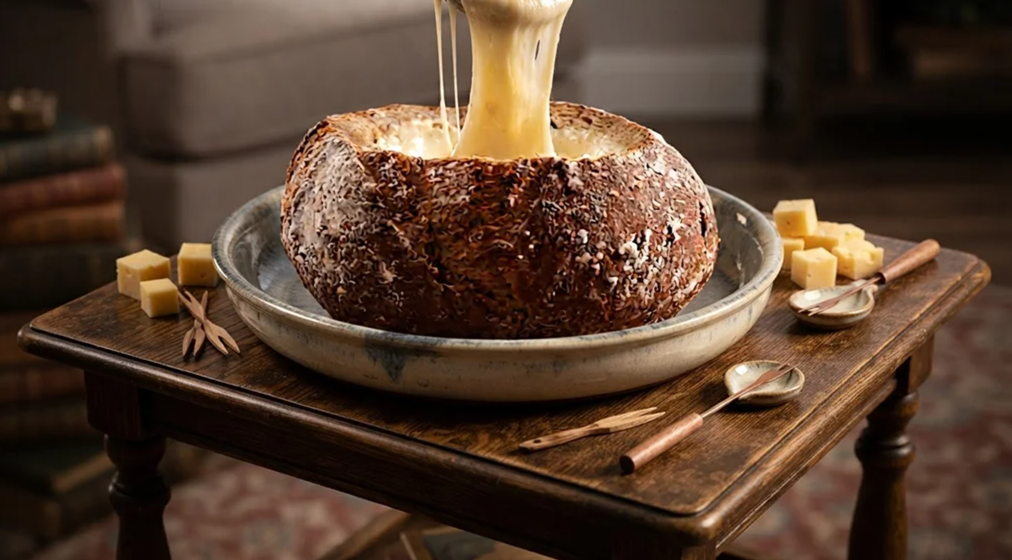
Fast forward to the 18th century, and fondue emerges as a staple in the Alpine regions of Switzerland and France. Winters were long and harsh, fresh food scarce, and bread baked only occasionally. Families relied on aged cheeses like Gruyère or Vacherin and stale bread that had hardened over time.
By melting the cheese and dipping bread into it, they softened what was otherwise inedible and created a communal meal that warmed body. Fondue was not confined to peasants. Wealthier households embraced it too, recognizing its convivial nature.
A pot of melted cheese became a centerpiece for gatherings, a dish that encouraged conversation and togetherness.
The Swiss Cheese Union Campaign
Fondue might have remained a regional tradition if not for the Swiss Cheese Union (Schweizerische Käseunion). In the 1930s, this organization launched a campaign to increase cheese consumption and unify the nation around a shared dish. Fondue was promoted as the national meal of Switzerland, a symbol of identity and solidarity.
After World War II, the campaign resumed with renewed vigor. Fondue recipes appeared in military cookbooks, and advertisements encouraged families to gather around the pot. By the 1960s, fondue had crossed the Atlantic. At the 1964 New York World’s Fair, fondue was introduced to Americans to the joy of dipping bread into molten cheese.
The Caquelon and the Tradition of Stirring
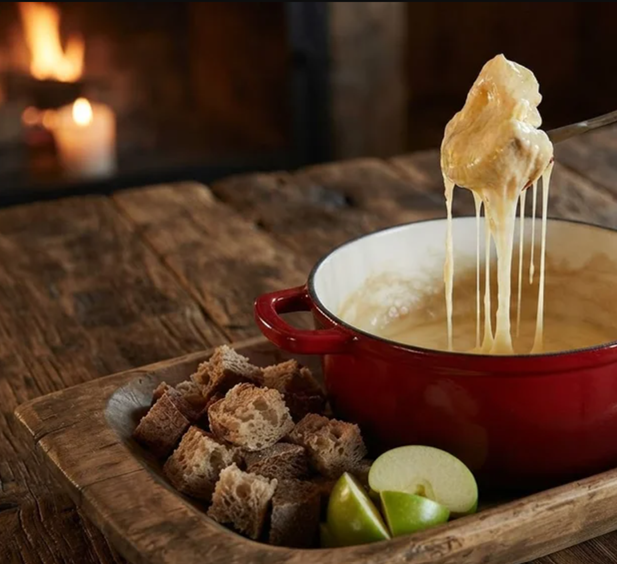
Traditional fondue is prepared in a caquelon, a wide, shallow earthenware pot that distributes heat evenly and retains warmth. The technique is as important as the ingredients. Cheese must be freshly grated—never pre-shredded, as anti-caking agents interfere with melting.
The stirring motion is distinctive: a figure-eight pattern with a wooden spoon. This ensures the cheese melts smoothly, prevents scorching, and keeps the mixture cohesive. Some recipes call for a dusting of cornstarch as insurance against separation, while others rely on patience and steady heat.
Regional Variations
Fondue is not a monolith. Across Switzerland, variations abound:
Moitié-Moitié: Half Gruyère, half Vacherin Fribourgeois, beloved in the canton of Fribourg.
Appenzeller Fondue: Sharp and aromatic, reflecting the cheese of the Appenzell region.
Emmentaler Fondue: Nutty and mild, often blended with Gruyère for balance. French fondue traditions lean toward Comté, while Italian versions incorporate Fontina, particularly in the Valle d’Aosta.
Each variation reflects local terroir, turning fondue into a culinary map of the Alps.
Dippers: Classic and Creative
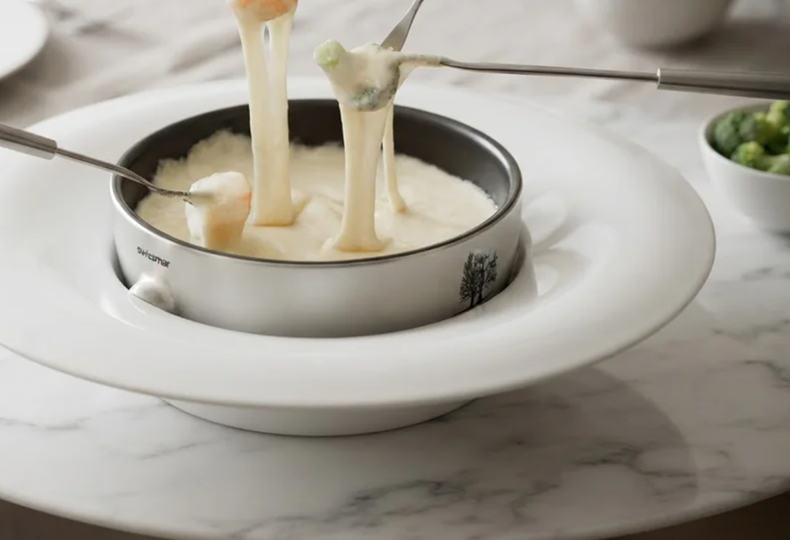
Bread remains the quintessential dipper, ideally a day-old baguette cut into cubes. But fondue invites creativity:
Vegetables: Blanched broccoli, roasted Brussels sprouts, steamed green beans, or raw radishes.
Fruits: Sliced apples, pears, or grapes for sweetness and crunch.
Proteins: Poached shrimp, cubes of beef filet mignon.
Specialty Breads: Pretzel bites, focaccia, or caraway croutons.
Etiquette dictates no double dipping. If a morsel slips into the pot, tradition calls for playful penalties—perhaps buying the next round of drinks or singing a song.
Fondue Beyond Cheese
While cheese fondue is the most iconic, other variations have emerged:
Fondue Bourguignonne: Cubes of beef cooked in hot oil, served with dipping sauces.
Chocolate Fondue: Melted chocolate with fruit, marshmallows, or cake cubes.
Broth-Based Fondue: Meat or seafood simmered in seasoned broth, lighter but equally communal.
These adaptations show fondue’s versatility, transforming it from rustic sustenance into a global dining experience.
Fondue in Modern Cuisine
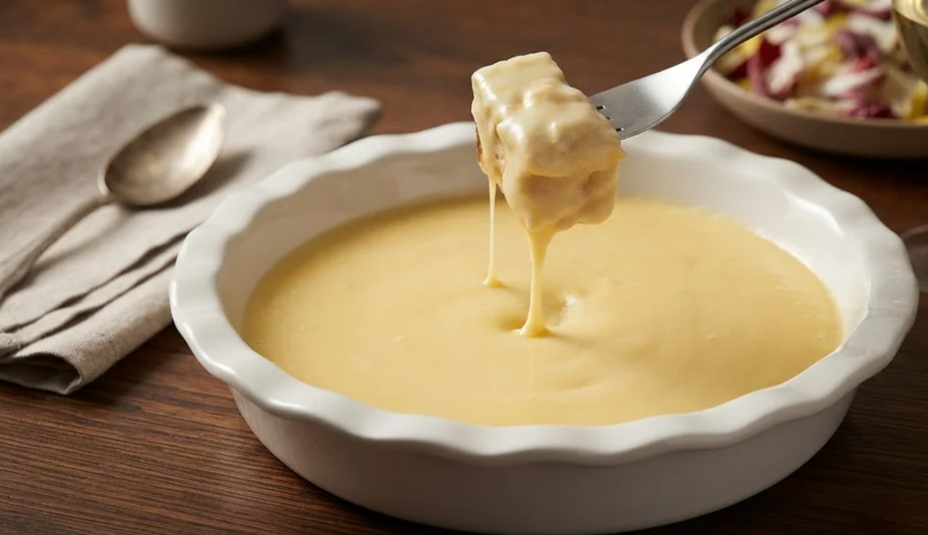
Chefs continue to reinvent fondue. In Wisconsin, Swiss and German immigrants popularized fondue, blending Alpine traditions with American cheese culture. While home cooks experiment with new cheeses, spices, and dippers. Dessert fondues have become staples at parties, proving that the concept of dipping into something warm and indulgent transcends cultures.
Fondue as Social Tradition
At its heart, fondue is about gathering. The pot sits at the center of the table, inviting everyone to participate. It slows the pace of dining, encourages conversation, and creates shared memories. Whether after a day on the slopes, at a holiday party, or during a quiet evening at home, fondue transforms eating into an event.
Conclusion: The Enduring Appeal of Fondue
From Homer’s verses to Alpine farmhouses, from Swiss campaigns to New York fairs, fondue has traveled through time and across continents. It remains a dish of warmth and connection, a reminder that food is not only sustenance but also story. Fondue is simple yet profound: cheese, bread and fire. But in its simplicity lies its magic.
It is a dish that melts not only cheese but also barriers, bringing people together around a shared pot. And in that act of gathering, fondue continues to embody the essence of hospitality, tradition, and joy.