
Introduction to Zermatt
Zermatt lies in the Valais region of southern Switzerland, a car-free alpine resort town that has become synonymous with the Matterhorn. The village is accessed via Täsch, where secure parking facilities are available and trains run frequently into the valley.
The Matterhorn Gotthard Bahn connects Täsch to Zermatt in ten minutes, making arrival straightforward. Once in Zermatt, the atmosphere shifts immediately: chalets line the streets, peaks rise sharply above, and the absence of cars creates a quiet rhythm broken only by footsteps and the sound of bells from grazing cattle.
Trail Overview
The 5 Lakes hike, known locally as the 5 Seenweg, is one of the most celebrated day hikes in Switzerland. The route links five alpine lakes in close proximity, each with distinct colours and character. The trail begins at Blauherd, reached by funicular and cable car, and ends at Sunnegga.
Covering approximately 10 kilometres, the hike takes around four hours excluding transport. Elevation gain is modest at 175 metres, while elevation loss totals 450 metres, making the hike accessible to most. The trail is well signposted, with yellow markers indicating “5 Seenweg.”
Stellisee — The Mirror of the Matterhorn
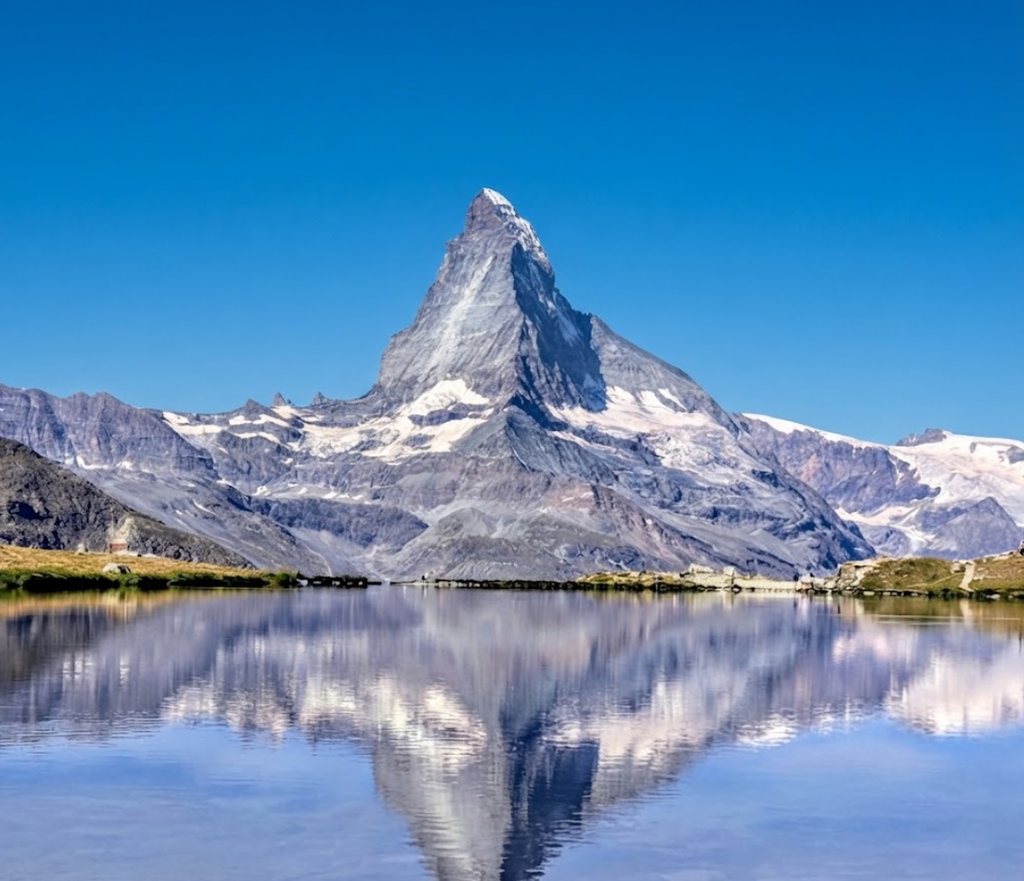
The first lake encountered is Stellisee, situated at 2,537 metres. Stellisee is renowned for its perfect reflection of the Matterhorn on calm days, a view that has become iconic in Swiss imagery. The lake is expansive, its surface shimmering with blues and silvers, and it offers uninterrupted alpine panoramas. Stellisee is often the busiest of the five, attracting photographers and hikers eager to capture the mirrored peak.
Grindjisee — Emerald Depths
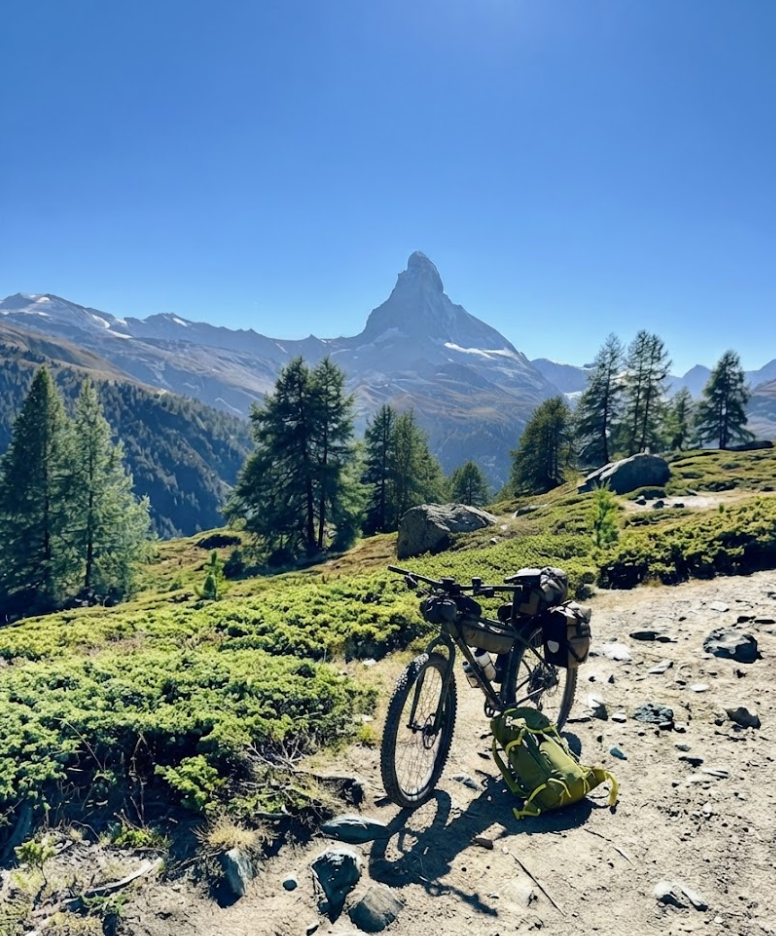
Descending from Stellisee, the trail leads to Grindjisee at 2,324 metres. Smaller and more intimate, Grindjisee is framed by trees and distinguished by its saturated emerald hues. The Matterhorn is visible through the forest, reflected in the lake’s surface. Grindjisee is quieter than Stellisee, offering a sense of seclusion despite its popularity.
Grünsee — Blues and Greens
Further along lies Grünsee at 2,300 metres. The lake blends blues and greens, its clarity revealing algae-covered rocks beneath the water. Grünsee is a favoured rest stop, with hikers often pausing to eat and enjoy the view. The surrounding landscape is open, with meadows and gravel paths leading to the lake.
Moosjisee — Glacial Blues
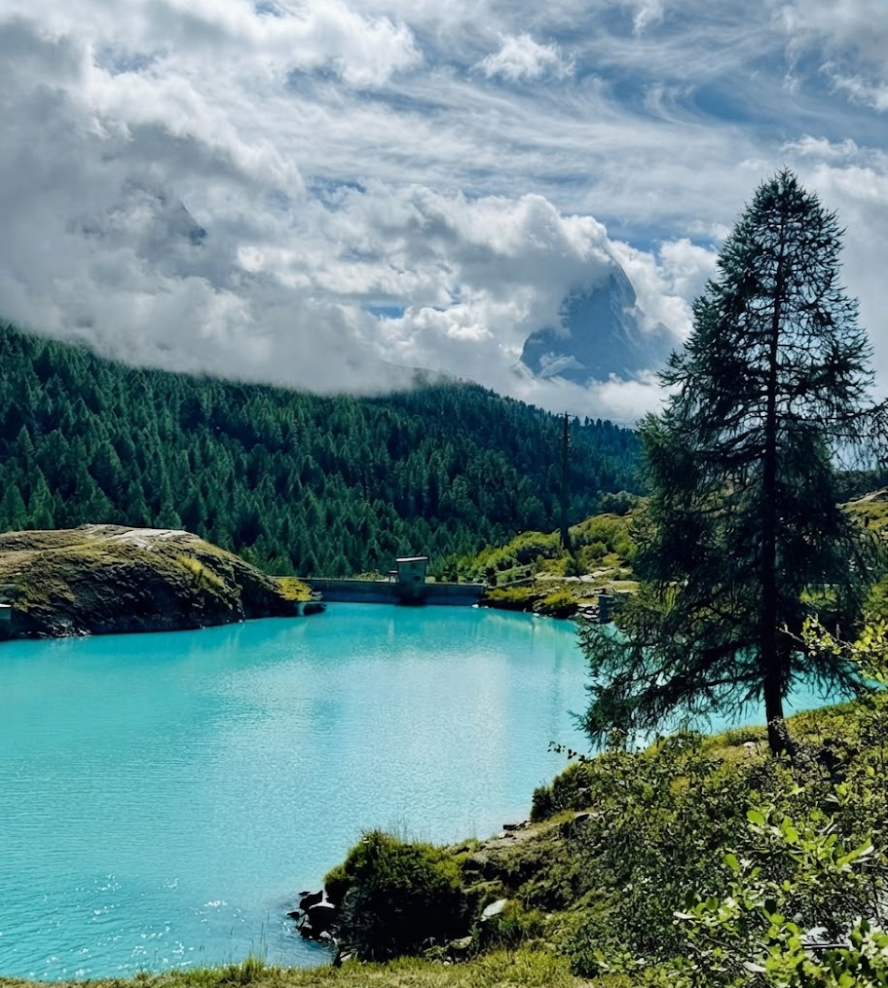
Moosjisee, at 2,140 metres, contrasts sharply with the others. Fed by glacial waters, its colour is vivid turquoise, milky and striking against the autumn forest. The lake’s hue is startling, appearing almost artificial in intensity. Moosjisee is a highlight of the trail, its unusual colour making it distinct among alpine lakes.
Leisee — The Family Lake
The final lake, Leisee, lies at 2,232 metres near Sunnegga. Smaller and gentler, Leisee is often used by families for swimming and picnicking during summer months. The Matterhorn remains visible, though the atmosphere here is more recreational than contemplative.
Alternative Route via Riffelsee
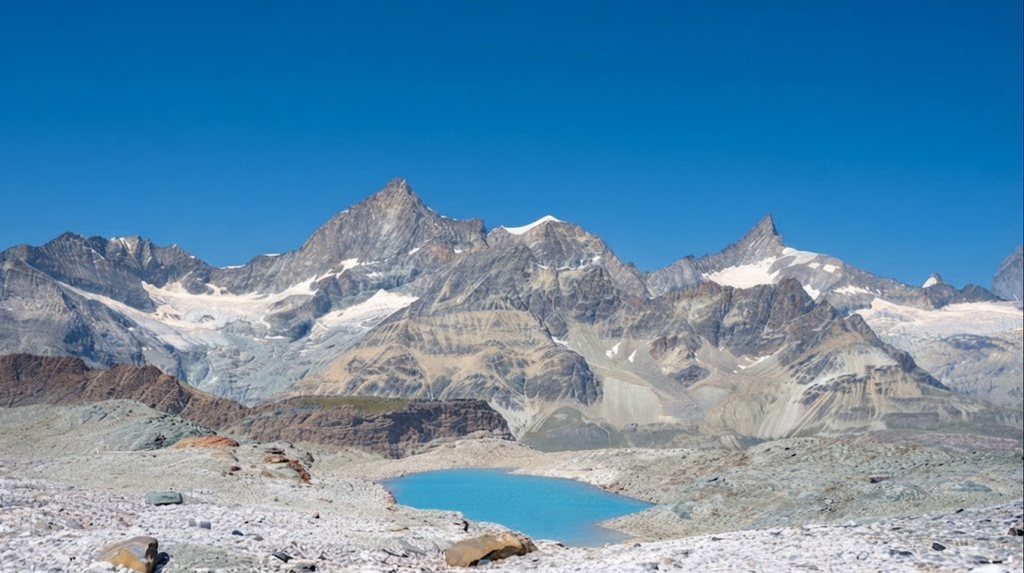
An extended option begins at Riffelsee, located at 2,785 metres. Riffelsee is famous for sunrise reflections of the Matterhorn, a view that draws many hikers and photographers. From Riffelsee, a short detour leads to the Gorner Glacier, one of the largest in the Alps.
Returning to Riffelsee, the trail descends to Grünsee, then continues through Grindjisee, Stellisee, and Moosjisee before ending in Zermatt. This route covers approximately twenty kilometres and requires eight to nine hours, with elevation ranging from 2,785 metres down to Zermatt at 1,604 metres. The difficulty is rated easy to moderate, depending on pace and weather conditions.
Seasonal Considerations
The best time to hike the 5 Lakes trail is between June and September, when weather is warm, days are long, and skies are clear. These months also bring the largest crowds. October offers mild conditions and vibrant autumn colours, though evenings cool quickly and daylight hours are shorter. Trails remain busy even in October, though less congested than in peak summer.
Preparation and Packing
Alpine hiking requires preparation. A 25–30 litre backpack with waterproof cover is recommended, along with navigation tools such as a topographic map, compass, or GPS. A head torch is essential in autumn when days are shorter. Clothing should be layered: waterproof jacket, insulated layers, fleece, gloves, beanie, and thermal base layers.
Waterproof hiking boots are necessary for uneven terrain. Food and water should be carried, with a filter bottle for refills. Safety equipment such as a first aid kit and pocket knife is advised. Optional items include a camera, tripod, and battery pack for extended use.
Atmosphere of the Trail
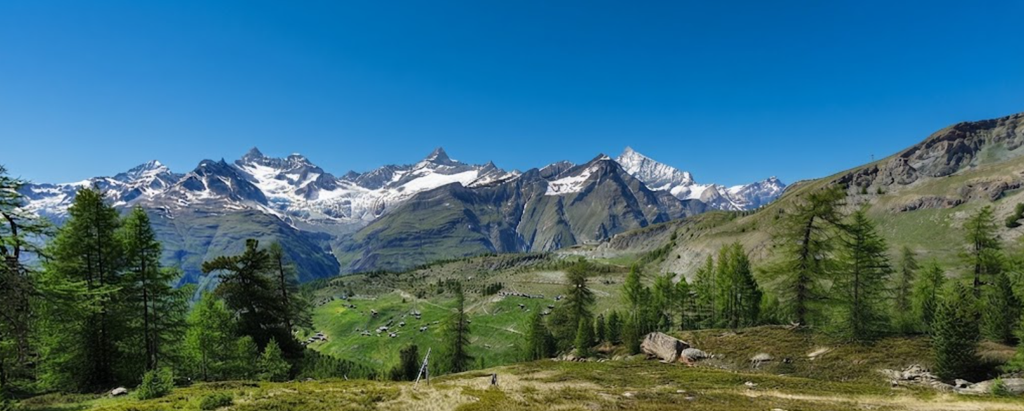
The 5 Lakes hike is not only a sequence of destinations but a rhythm of landscapes. Each lake offers a distinct atmosphere: Stellisee as the iconic mirror, Grindjisee as the emerald enclave, Grünsee as the clear pause, Moosjisee as the glacial surprise, and Leisee as the recreational conclusion.
The Matterhorn threads them together, appearing repeatedly in reflections and vistas. The trail is accessible yet immersive, offering a comprehensive encounter with the alpine environment.
Upshot
The 5 Lakes hike in Zermatt is one of Switzerland’s most rewarding day hikes, combining accessibility with striking scenery. Whether completed as a half-day circuit from Blauherd to Sunnegga or extended into a two-day journey via Riffelsee and the Gorner Glacier, the trail provides a layered experience of alpine lakes, forests, and mountain views.
The Matterhorn remains the constant presence, reflected in waters and rising above valleys, anchoring the journey. The hike is well signposted, manageable in distance, and rich in visual variety, making it a definitive introduction to the landscapes of the Valais.