
Amsterdam’s Museumplein is a stage of giants. The Rijksmuseum looms with its Gothic arches, the Van Gogh Museum hums with colour, the Stedelijk stretches into modernist white. And then, tucked into Villa Alsberg — a 1904 townhouse with carved staircases, stained‑glass light, and a history that whispers of priests and lawyers — sits the Moco Museum.
Small, sharp, and subversive. Moco doesn’t whisper reverence. It laughs. It provokes. It plays. Its collection is a cocktail of irony and humour, poured by artists who refuse to behave: Banksy, Warhol, Lichtenstein, Koons, Haring. The mansion itself, once a family home, now stages art that bites back.
Compact, yes, sometimes crowded, but intimacy here is part of the theatre. Every piece feels like it’s leaning in, daring you to respond.
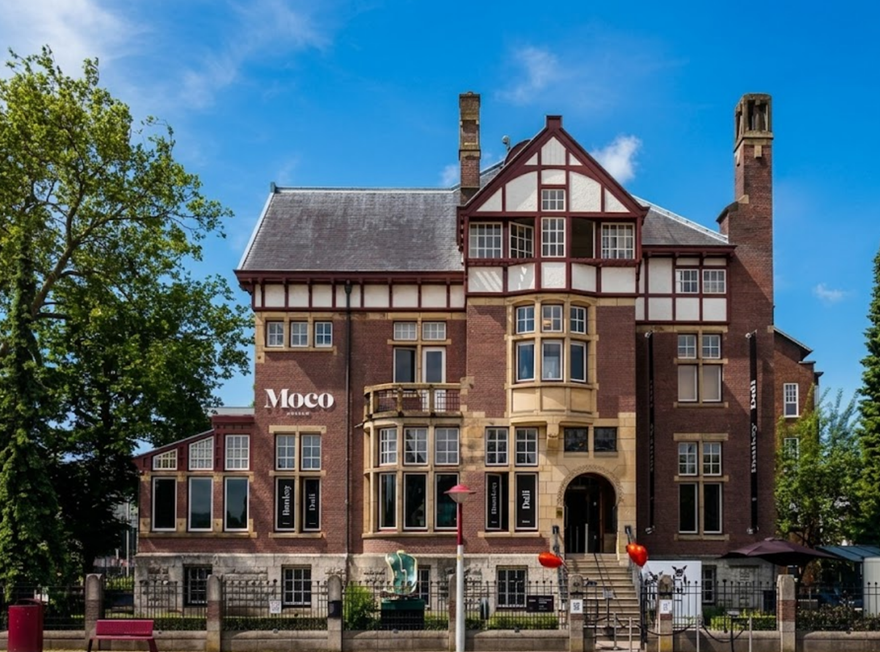
Villa Alsberg: The Setting
Designed in 1904 by Eduard Cuypers, nephew of Pierre Cuypers (the architect behind Amsterdam’s Central Station and the Rijksmuseum), Villa Alsberg was one of the first family homes built along Museumplein. For decades it was domestic, then clerical, then corporate.
Now, its carved staircases and stained glass frame art that thrives on contradiction. The building itself is part of the exhibition — a bourgeois mansion turned stage for rebellion. Its compactness means crowds, yes, but also closeness. You don’t just view the art; you share space with it.
Banksy: The Rebel Inside
On the ground floor, Banksy dominates. His Beanfield painting is impossible to miss — a riot of colour, contradiction, and satire. Nearby hang familiar ghosts: Girl with Balloon, Laugh Now, Keep It Real. Works that once lived on city walls now hang within Villa Alsberg, their satire sharpened by the contrast of polished wood and stained glass.
Banksy’s humour is political, his irony a mirror. In Moco, the rebel finds a stage, and the audience finds itself implicated. Youdon’t just admire; you confront.
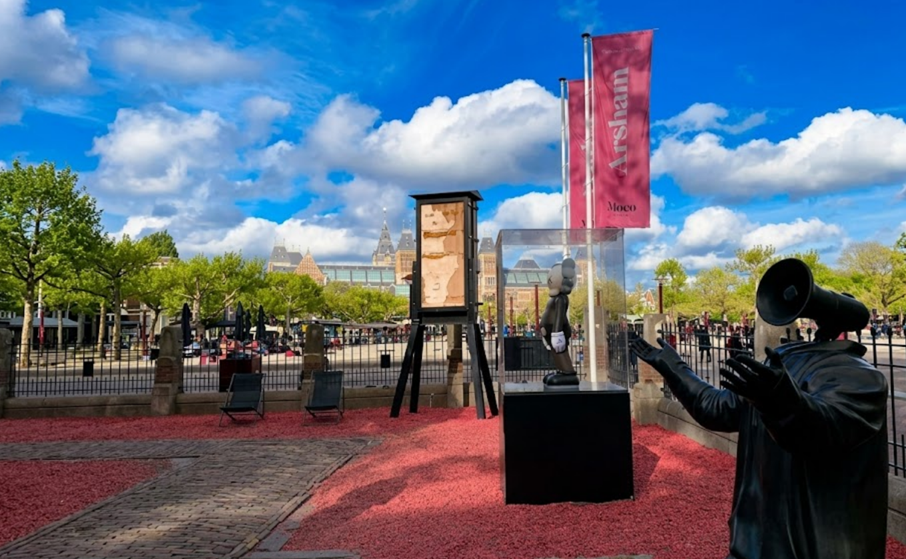
Daniel Arsham: Time Bent and Buckled
Then comes Daniel Arsham, bending surfaces, ageing technology, turning the present into ruins of the future. His paradoxes are playful yet dystopian: a camera eroded as if unearthed from an archaeological dig, a basketball fossilised into stone.
Arsham’s work unsettles, delights, and makes Villa Alsberg feel like a time capsule cracked open.Unexpected is his language. Solid surfaces buckle, high‑tech equipment looks ancient. He challenges perception, asking: what if the world we know has already crumbled?
The Garden of Whimsy
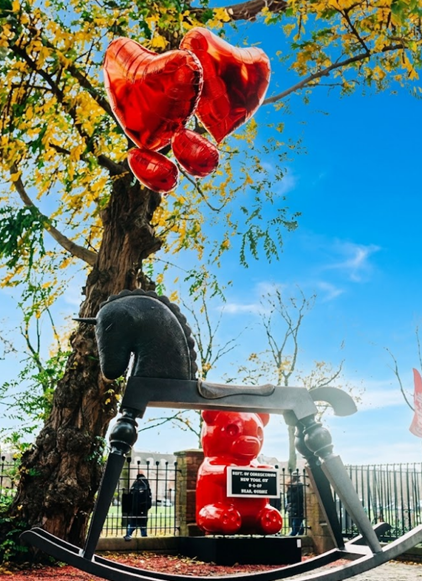
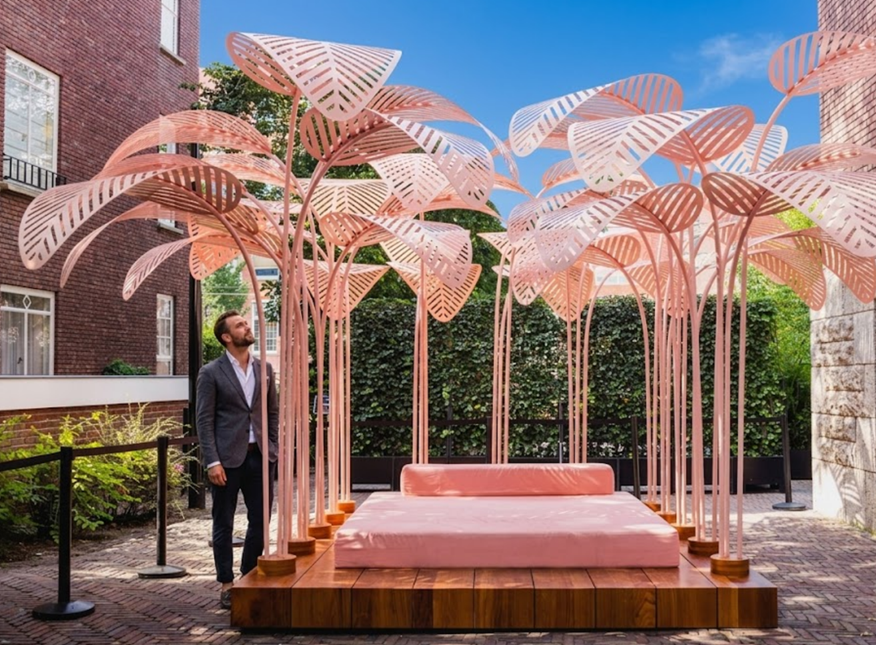
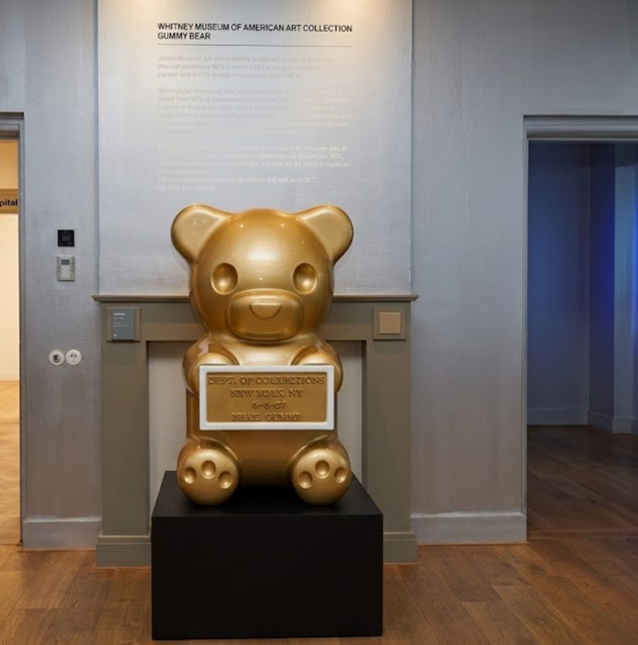
Step outside and the tone shifts. The Moco Garden is a playground of oversized dreams: a red gummy bear waiting in the grass, Marcel Wanders’ Tempter inviting you to straddle childhood fantasy, his Portrait collecting visitor wishes like constellations.
The garden is alive, changing with seasons, artists, and moods. It’s a place to wander without direction, to stumble into adventure. A head trip, yes, but also a reminder: art isn’t confined to walls.
The Collection: Icons and Emerging Voices
Moco’s mission is accessibility. Founded in 2016, it pairs icons with emerging voices, creating dialogues between past provocations and future visions. It’s a museum that doesn’t just show art; it stages conversations about society, rebellion, and imagination. Pop art, street art, contemporary installations — all curated to challenge, delight, and democratise.
Practical Notes
Location: Honthorststraat 20, Museumplein — neighbours with the Rijksmuseum and Van Gogh.
Opening Hours: Daily; 9 a.m.–7 p.m. (extended to 9 p.m. on Fridays and Saturdays).
Tickets: Adults €22.95; Youth 10–17 €19.95; Children under 6 free. Discounts with Museumkaart or I amsterdam City Card.
Time Needed: 1–1.5 hours, perfect to pair with nearby museums.
Access: Metro line 52 to Vijzelgracht; Q‑Park Museumplein for parking (from €37.50/day).
Accessibility: Stairs only, no lifts — wheelchair users can access the main floor free of charge.
The Experience
Visiting Moco is less about chronology and more about mood. You move from satire to paradox, from rebellion to whimsy. The intimacy of Villa Alsberg means you’re never far from the art; it surrounds you, confronts you, surprises you.Crowds can gather, yes, but that closeness is part of the theatre. You’re not just a spectator; you’re part of the dialogue.
Why Moco Matters
In Amsterdam, where tradition and grandeur dominate, Moco is the boutique rebel. Compact but unforgettable, ironic yet sincere, it’s a must‑visit for anyone who wants their art with a wink, a challenge, and a touch of play. It’s not about spending an entire day; it’s about spending an intense hour. An hour that leaves you thinking, laughing, questioning. An hour that reminds you art can be mischievous, democratic, and alive.
Final Thought
The Moco Museum is not the largest, nor the grandest. But it is one of the most memorable. A place where art doesn’t just hang; it provokes. In Amsterdam, Moco is the boutique rebel. And rebels, as history shows, are always worth visiting.