Arrival in Wengen
High above the Lauterbrunnen Valley lies Wengen, a village where chalets cling to green slopes and balconies overlook waterfalls tumbling from cliffs. It is not merely a base but a vantage point, a place where mornings arrive with mist curling through the valley and evenings close with alpenglow painting the peaks. 5 nights here felt like a gift — enough to breathe its air, wander its streets, and let the rhythm of mountain life seep in.
The Gondola Journey
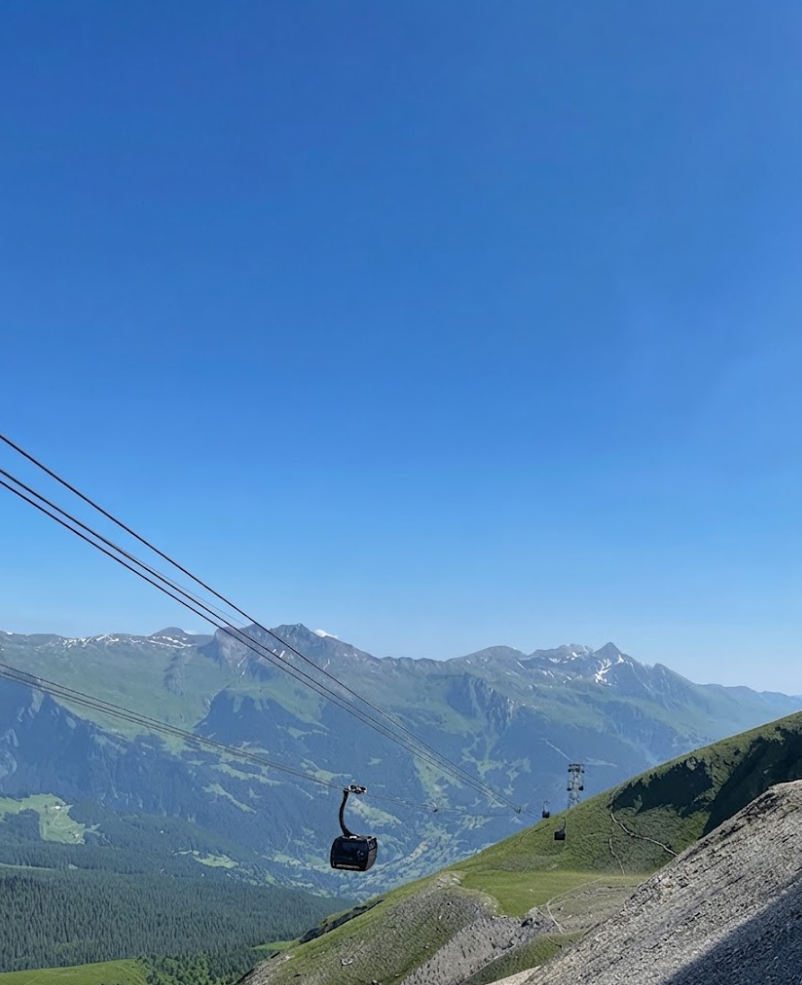
The ascent unfolded in stages. First came the gondola to Männlichen, a ride that always feels like floating through a dream. Then down to Grindelwald Terminal, where the valley widened and anticipation grew. Finally, the Eiger Express — a marvel of engineering, gliding silently over forests and meadows.
Its tricable system spans nearly 6,500 meters, supported by only seven towers, and in 15 minutes it carried passengers to the doorstep of the Eigergletscher. Inside the gondola, twenty-six seats faced panoramic windows. Free WiFi hummed quietly, but eyes stayed fixed on glaciers gleaming, ridges sharp against the sky, and the Eiger looming ever closer.
Eigergletscher Station
The station itself felt more like a mountain spa than a transit hub. Polished floors, immaculate restrooms, and a viewing platform opened directly onto the peaks. Eiger, Mönch, and Jungfrau stood impossibly near, their summits etched against the horizon.
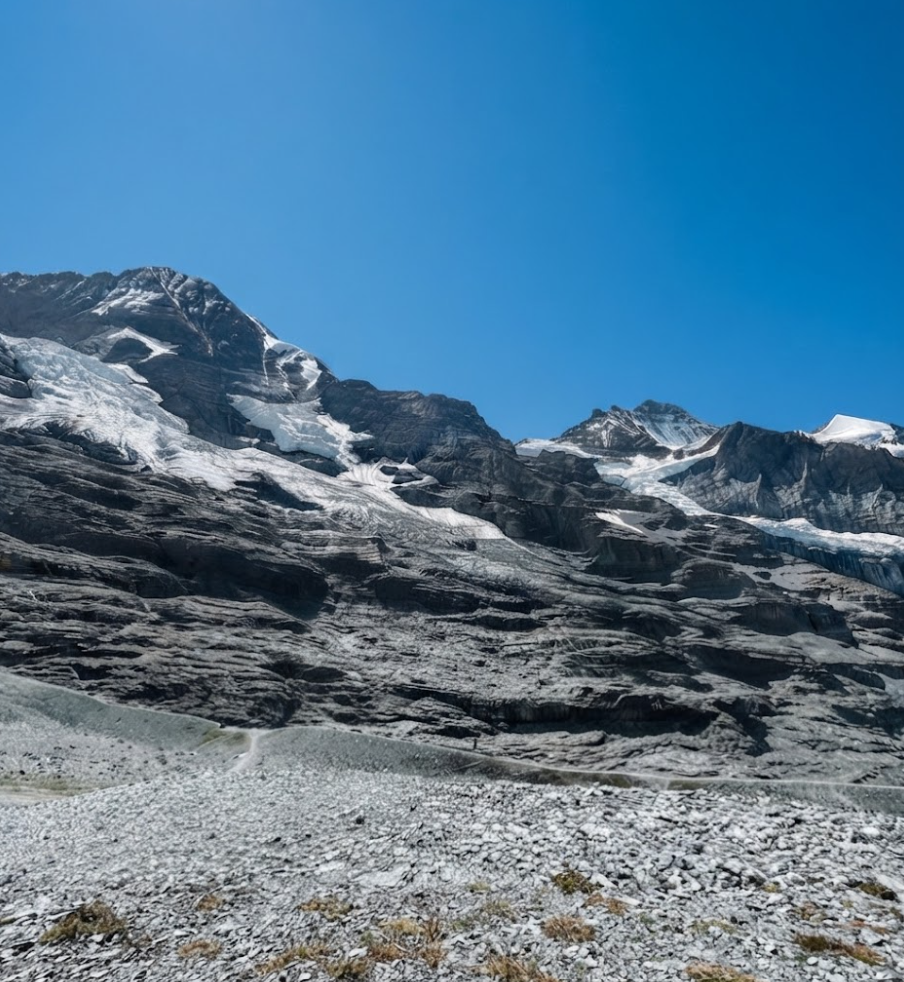
Here the trail began, beneath the shadow of the North Face — a wall of legend, treachery, and triumph. Climbers have tested themselves against it since 1938, and more than sixty have never returned. Boots crunched on gravel as the path unfurled.
The Descent Begins
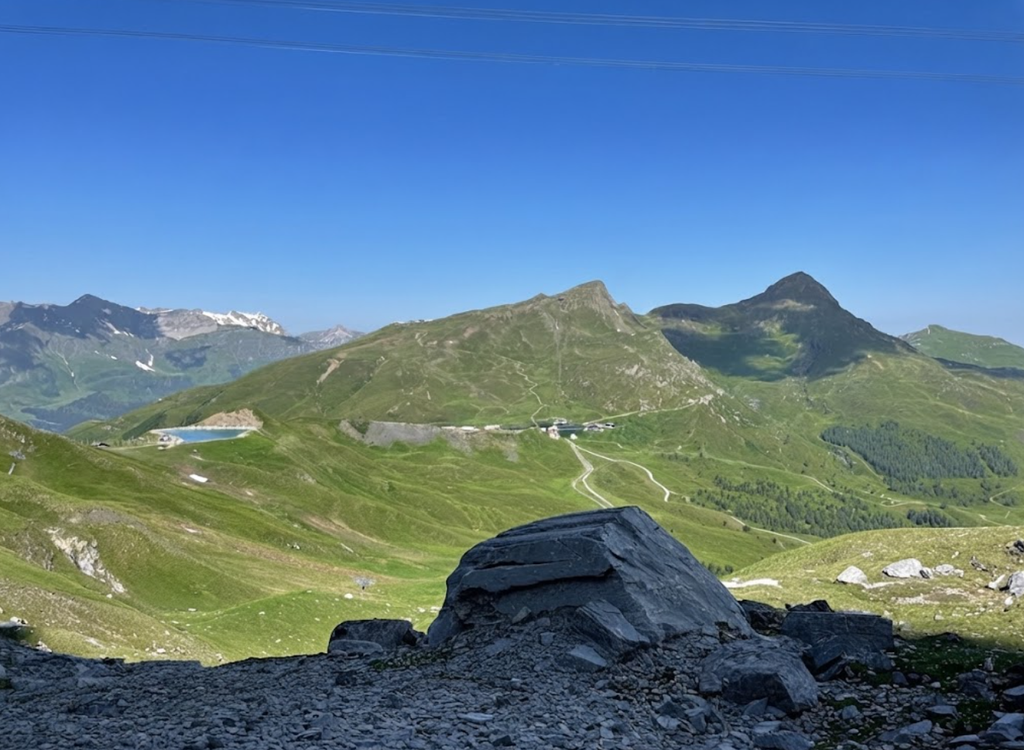
The Eiger Trail is a point‑to‑point hike, 6 km long, dropping more than 2,500 feet toward Alpiglen. At first, the path is gentle, winding past streams and patches of snow. The mountain presses close, its cliffs streaked with ice, its silence broken only by meltwater rushing through gullies.
The gondola above altered the solitude — the first twenty minutes now run beneath its cables. Yet the grandeur remained. The North Face towered, indifferent to human presence, and the valley stretched wide below.
The Middle Stretch
Here the trail grew rocky, demanding hands as well as feet. Rivulets crossed, boulders scrambled, pauses taken to photograph the shifting light. Clouds drifted across the face of the Eiger, revealing and concealing its scars.Other hikers passed — some swift, some slow, all drawn by the same magnetism. The mountain seemed to command silence, conversations dropping to whispers beneath its shadow.
The Final Descent
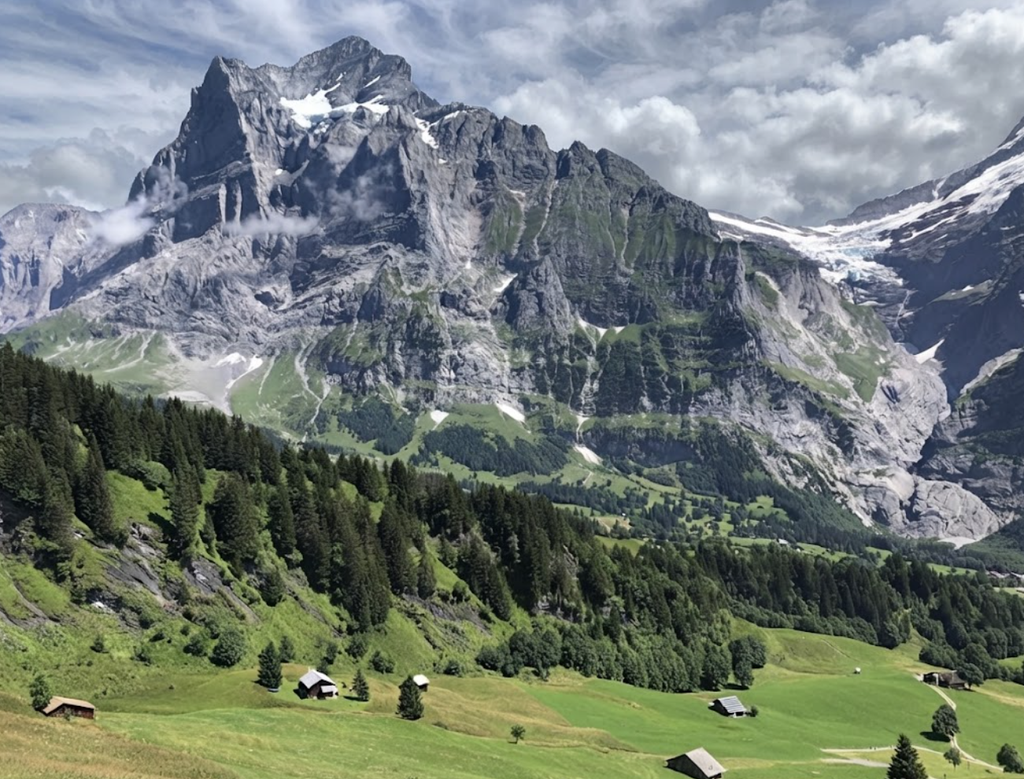
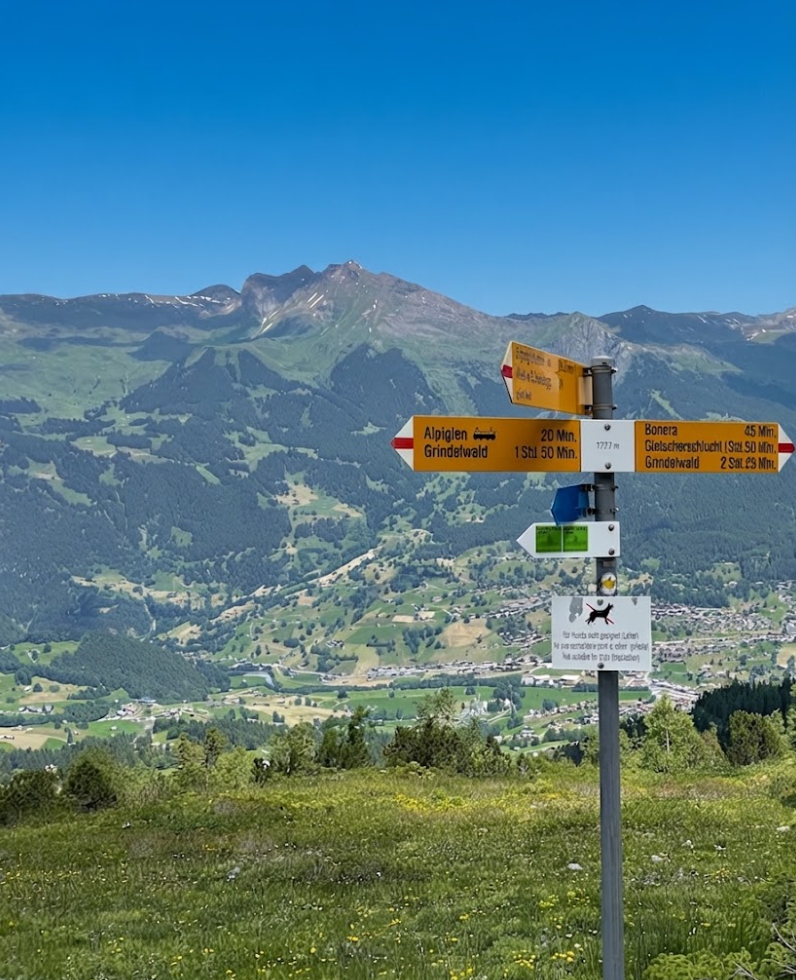
The last leg was punishing. Steep switchbacks tested knees and balance, each step a negotiation with gravity. Legs burned, yet the valley opened, and Alpiglen appeared — chalets scattered among meadows, a train waiting to carry hikers down.
Lunch was taken, alpine cheese and bread grounding the body after hours of sky and stone. The train rattled toward Grindelwald, and one last gondola lifted back to Männlichen, where ridgelines and wildflowers lingered before returning to Wengen.
Reflections on the Trail
This hike did not inspire the same affection as others. Perhaps because it came last, after the magic of Mürren’s North Face Trail and the crystalline beauty of Bachalpsee. The Eiger Trail was spectacular, yes, but steep, demanding, and less secluded than before. Favorites, in order: the North Face Trail, First to Bachalpsee, the Panorama Trail, and lastly the Eiger Trail.Yet even in fatigue, the memory lingers: the North Face rising above, its history palpable, its silence profound.
Practical Notes
Difficulty: Moderate, with steep downhill sections.
Distance: 6 km (3.75 miles).
Time: 2–3 hours depending on pace.
Elevation change: Up 260 feet, down 2,560 feet.
Season: Mid‑June to October, weather permitting.
Cautions: Good boots essential; avoid rain or snow.
Getting to Eigergletscher:
Gondola from Grindelwald via the Eiger Express. Gondolas from Wengen via Männlichen, Grindelwald, then Eiger Express. Train from Grindelwald or Wengen/Lauterbrunnen via Kleine Scheidegg.
Returning from Alpiglen:
Train to Grindelwald. Train/gondola combinations back to Wengen.
Wengen: A Perfect Base
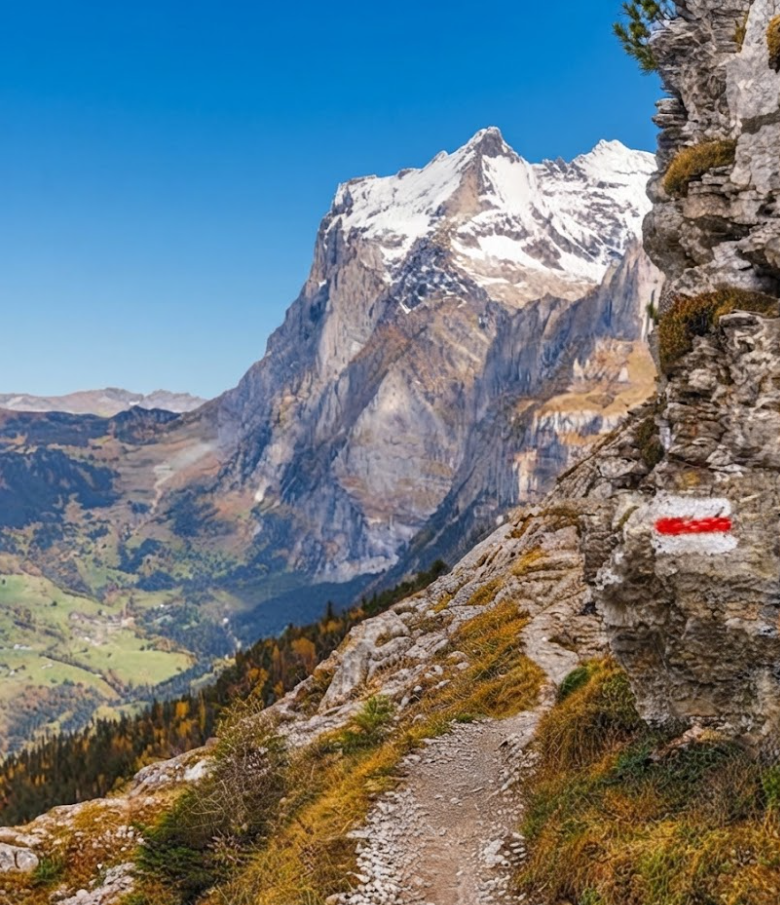
Wengen proved ideal. Convenient connections, valley views, and enough shops to fill an afternoon. 5 nights felt right — long enough to explore without rushing, short enough to leave a desire for more. The sun sinking behind the Jungfrau massif.
Beyond the Trail
The Jungfrau Region offers more than the Eiger Trail. The Jungfraujoch itself — Europe’s highest train station at 3,454 meters — is a Heritage site, with ice caves, viewing platforms, and adventure parks. Tickets are costly (201 CHF, half with the Swiss Half Fare Card), and weather matters. The choice was made to skip it, content with memories of Mount Titlis and quieter trails.
The Broader Bernese Oberland
Classic scenery defines this region. Beyond Grindelwald and Wengen lie passes like the Hohtürli — “the high little door” — and valleys like the Kiental, remote and mysterious. The Sefinenfurgge offers views across the Eiger, Mönch, and Jungfrau, peaks that dominate Europe’s imagination. To walk here is to move through history, each trail a thread in the tapestry of the Alps.
Upshots
The Eiger Trail may not have been the favorite, but it was unforgettable. Its steep descent tested endurance, its views humbled, and its proximity to the North Face placed hikers in the presence of legend. Wengen gave comfort, the gondolas gave flight, and the mountains gave silence. Switzerland had been generous. Five nights in Wengen, one final day in Zurich, and memories that linger long after the knees stop aching