
The Upper Engadin Panoramic Trail
The Upper Engadin Panoramic Trail is a short but radiant walk — 6.8 kilometres of alpine clarity, climbing 315 metres above Samedan. It is graded medium, a point‑to‑point journey that takes just under two hours. Yet the measure of time here is deceptive: the crystalline air, the sweep of larch forests, and the turquoise shimmer of glacial lakes stretch each moment into something larger.
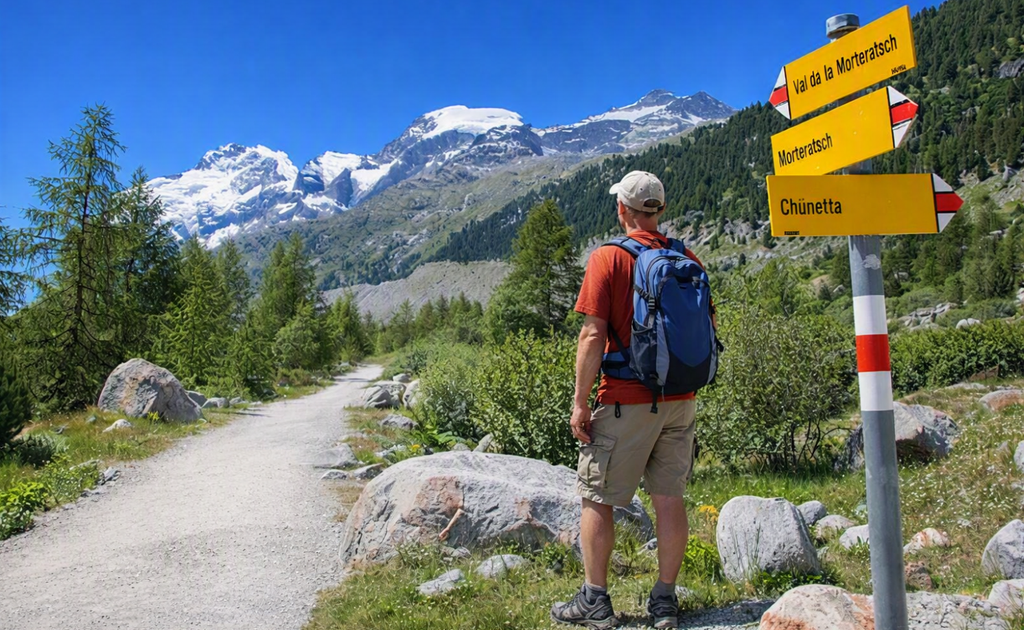
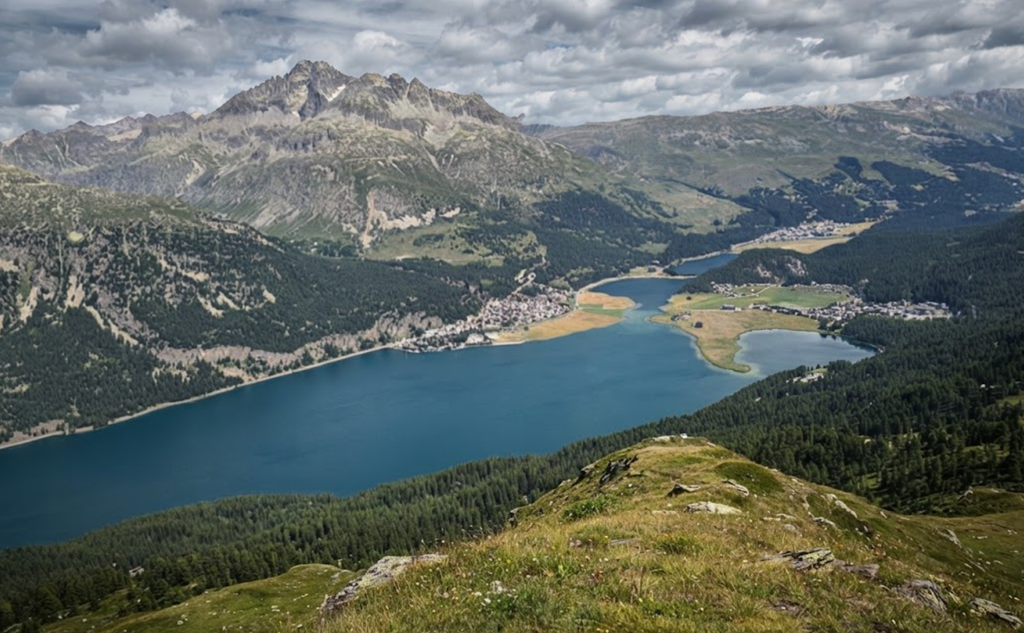
This trail is not about endurance but immersion — a way to step into the valley’s light and let it carry you forward.The path itself is a ribbon across the slopes, a vantage line where the valley opens beneath you. The Inn River glitters far below, villages cluster like painted miniatures, and the Bernina massif rises in the distance, its peaks sharp against the sky. To walk here is to feel suspended between earth and sky, each step a meditation in altitude.
The Character of the Engadin Valley
The Engadin valley is the highest permanently inhabited valley in the Alps, its floor between 1,400 and 1,900 metres, its peaks rising to 4,000 metres on the Bernina massif. It divides into two worlds: the Upper Engadin, with its fashionable resorts and crystalline summers, and the Lower Engadin, quieter, more traditional, where Romansh culture still breathes through painted houses and village festivals.
The climate is extraordinary — more than 300 sunny days each year, winters of dry powder snow, summers of low humidity and sharp light. In autumn, the larch forests turn gold, one of the finest spectacles in the Alps. The landscape alternates between pine and larch forests, glacial lakes of extraordinary colour, and carved cliff terrain.
Scuol: Thermal Heart of the Lower Valley
Scuol is the beating heart of the Lower Engadin, a gorge town of 2,200 residents. Its old town is a gallery of Engadin‑style houses, facades etched with sgraffito patterns. The Bogn Engiadina spa is its crown jewel: Roman‑Irish baths, steam rooms, solarium, and outdoor pools fed by iron‑rich springs.
To soak here at 1,250 metres, gazing over the gorge, is to feel both the warmth of the earth and the clarity of mountain air. The Sunday market in summer fills the streets with colour. Scuol is not just a spa town but a cultural anchor, a place where tradition and wellness meet.
The Engadine Trek: Day One
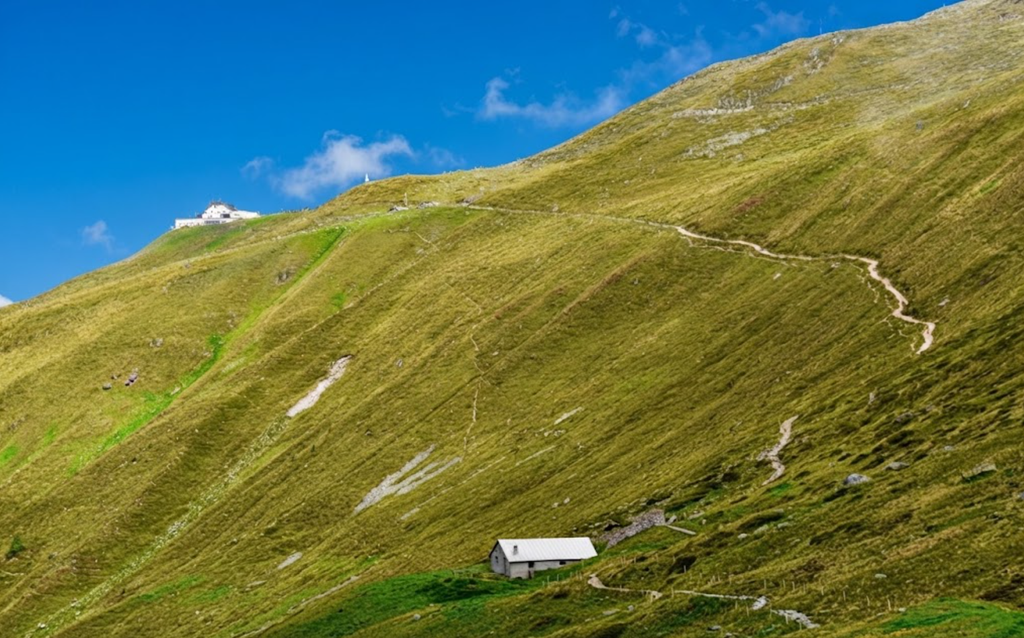
The Engadine Trek begins in Scuol, a 95‑kilometre journey to Maloja, typically covered in six stages. Day One stretches 20.4 kilometres to Guarda, a hard hike of 6.5–7 hours. The Motta Naluns cable car lifts you into alpine meadows, where the trail crosses sunny slopes above the Inn.
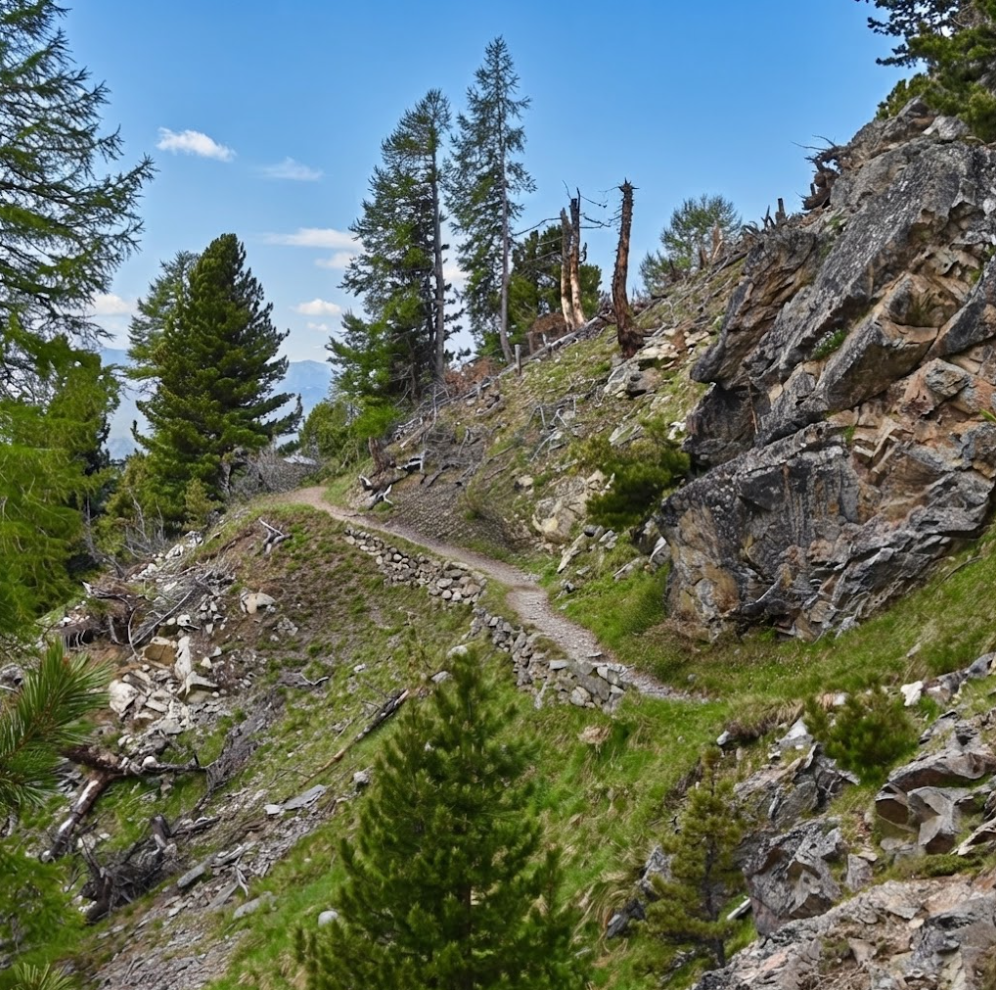
You pass Val Tasna, the settlement of Ardez, and finally Guarda, a village of Rhaetian architecture and Romanesque culture. Wild camping is forbidden, but fountains in each village offer cold water, and guesthouses welcome weary walkers. The rhythm of the trek is one of ascent and descent, of solitude broken by the sight of painted houses and stone fountains. It is a journey through both landscape and culture, a reminder that the Engadin is as much about people as peaks.
Other Trails Radiating from Scuol
From Scuol, the valley opens like a wheel, its spokes leading into landscapes of culture, solitude, and light. Each trail is a different lens on the Engadin — some steeped in history, others in raw alpine drama, all of them carrying the walker deeper into the valley’s character.
1. Jakobsweg Graubünden — Pilgrim’s Path of Peaks and Ruins
The Jakobsweg Graubünden is more than a hike; it is a pilgrimage through altitude and memory. Stretching 15 kilometres with 740 metres of ascent, it threads past three‑thousand‑metre peaks and ruins that have stood for centuries. The trail is part of the Santiago pilgrim’s path, and its rhythm is contemplative: each step a reflection, each view a reminder of endurance.
The villages along the way are living museums of Romansh culture. Painted houses with sgraffito facades line narrow streets, fountains spill cold water, and the silence of the mountains presses close. The path is not only physical but spiritual, a journey into values and beauty.
2. Senda Scuol–Samnaun — Terraces, Bridges, and Glacier Residue
The Senda Scuol–Samnaun is a long traverse — 37 kilometres across sunny terraces, hanging bridges, lakes, waterfalls, and glacier residue. It is a trail of contrasts: dry grasslands blooming with colour, alpine villages tucked into slopes, and sudden crossings over suspension bridges that sway above torrents.
The ascent is demanding, with 2,300 metres gained and 1,750 lost, but the reward is immersion in a landscape that feels both vast and intimate. The trail is a dialogue between human settlement and raw geology, between the warmth of terraces and the cold memory of glaciers.
3. Via Engiadina — The Classic High‑Altitude Traverse
The Via Engiadina is the valley’s classic high‑altitude trail, a line of light along the sunny side of the Inn. It passes through pine and larch forests, crystal‑clear streams, and lush alpine meadows. Villages appear like punctuation marks, each with its own rhythm of painted houses and fountains.
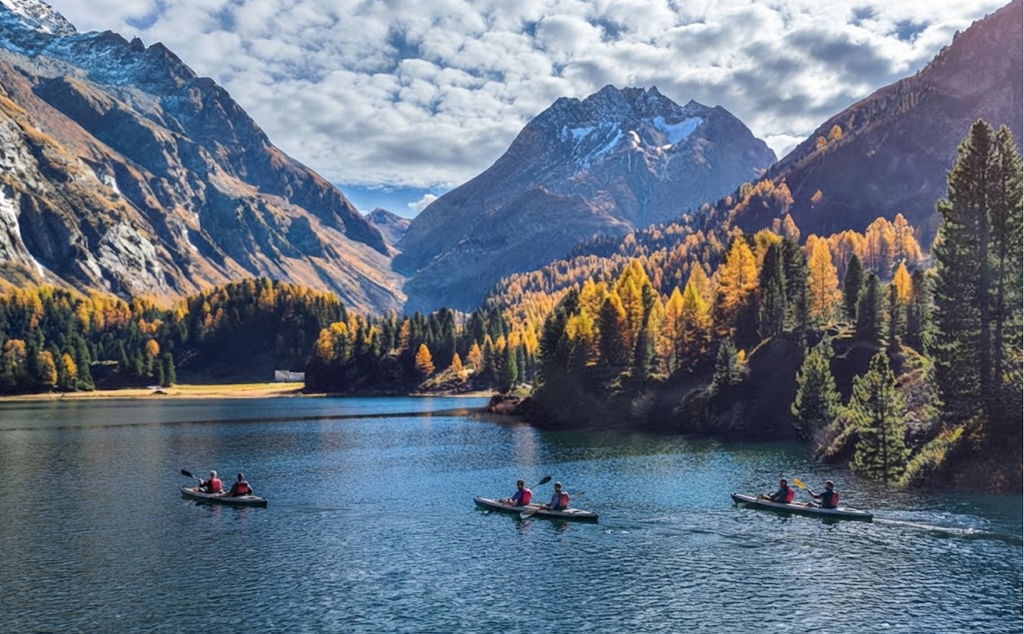
This trail is less about challenge than continuity. It is a way of stitching together the valley’s character — the forests, the meadows, the villages, the streams — into a single narrative. To walk it is to see the Engadin in panorama, a valley of light and culture unfolding step by step.
4. Senda Scuol–Samnaun Stage 1/2 — Meadows to the Fimberpass
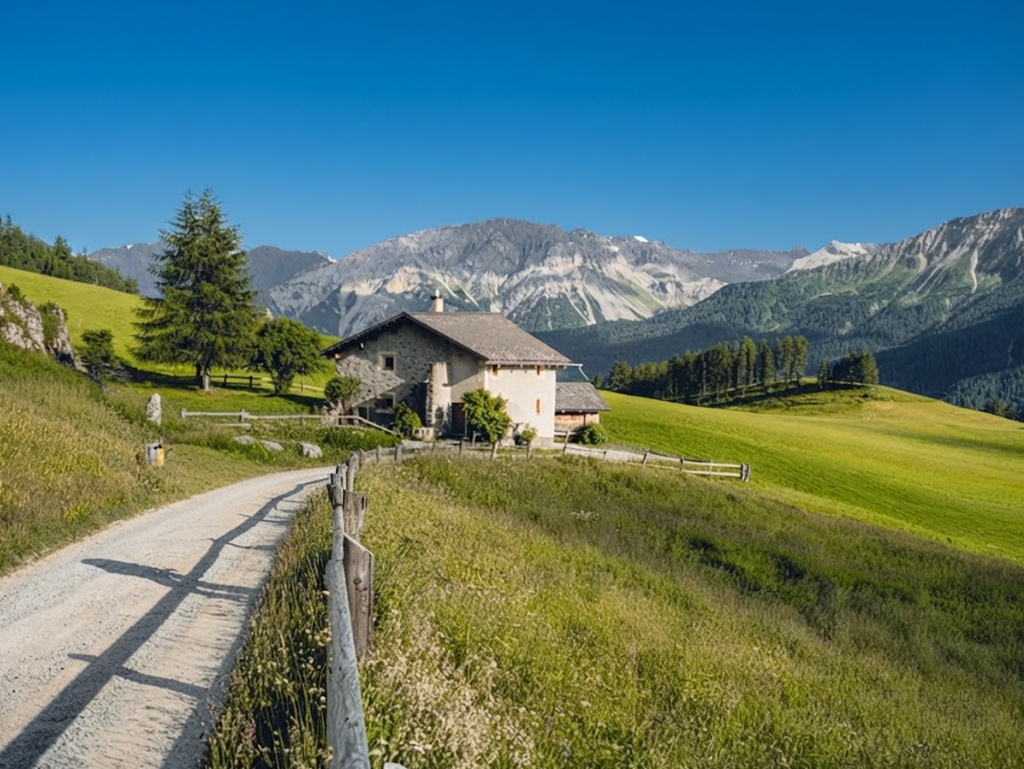
Stage 1 of the Senda Scuol–Samnaun is 25 kilometres, climbing 1,700 metres and descending 720. It begins with flower‑filled meadows, slopes bright with alpine blooms, before turning into the wild Val Sinestra. Here, forests close in, historic buildings stand weathered, and the climb steepens toward the Fimberpass.
The pass itself is a threshold — a gateway to the Heidelberger Hut and beyond. To reach it is to feel the valley’s scale, the way meadows soften into forests, forests harden into rock, and rock opens into sky. It is a stage of transformation, a microcosm of the Engadin’s shifting landscapes.
5. Jakobsweg Graubünden Stage 4 — Through Val Mingèr and the Clemgia Ravine
Stage 4 of the Jakobsweg Graubünden is shorter — 13 kilometres, with 280 metres of ascent and 800 of descent. Yet it is rich in drama. The trail passes Schmelzra and its old furnace ruins, then turns into the Val Mingèr valley. Mixed woods line the path, the Clemgia River runs beside it, and the descent through the Clemgia ravine is a plunge into shadow and sound. The stage ends in Scuol, where the gorge opens and the village gathers its houses above the Inn.
It is a trail of contrasts — ruins and woods, ravine and village — a reminder that the Engadin is a valley of both history and renewal.
The Landscape of Light
The Engadin’s landscape alternates between pine and larch forests, glacial lakes of extraordinary colour, and carved cliff terrain. In late September, the larches blaze gold, turning the valley into a living canvas. The air is crystalline, the light sharp, and solitude deepens with altitude.
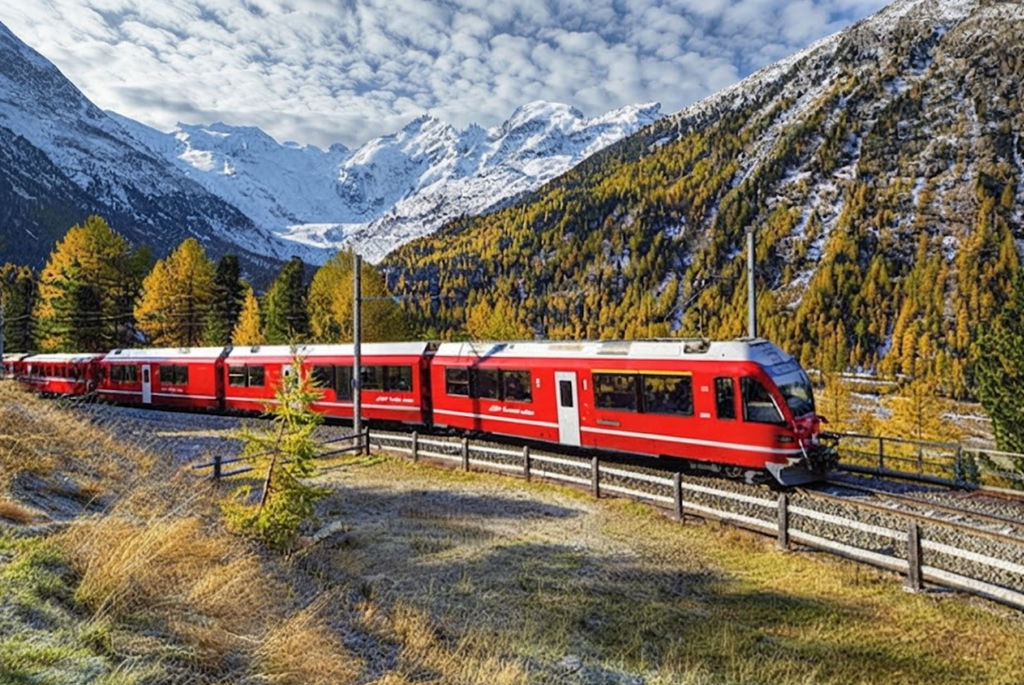
To walk here is to move through light itself, to feel grandeur and intimacy in the same breath. The valley’s rhythm is defined by its seasons: crystalline summers, golden autumns, powder‑white winters. Each season reshapes the trails, each light refracts differently across the peaks. The Engadin is not static but a living theatre, where nature performs endlessly.
Practical Notes for Travellers
Getting to the Engadin is simple: the Rhaetian Railway from Zurich or Chur takes 3.5–4 hours, winding through mountain passes. Roads close seasonally, so trains are the most reliable. Costs vary: Scuol and Zernez are mid‑range, while Pontresina edges toward St. Moritz prices in winter.
The best times are June–September for hiking and the National Park, December–March for snow. Plan 3–5 days to explore the valley, or at least two to see Scuol and Pontresina. Accommodation ranges from guesthouses in Guarda to spa hotels in Scuol, from alpine huts to boutique lodges. Drinking water is readily available at village fountains, though springs at higher elevations should be treated. Wild camping is prohibited, protecting the fragile alpine ecosystem.
Why the Engadin Matters
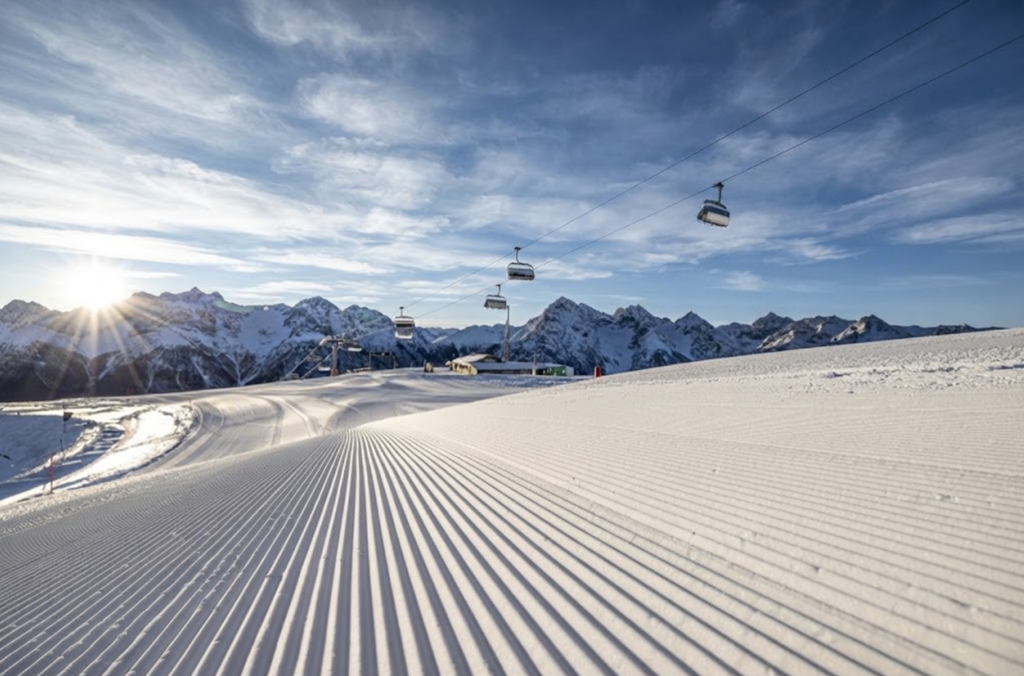
The Engadin is not just a valley but a way of seeing. Its villages preserve Romansh culture, its trails open onto solitude, its spas blend mountain air with thermal warmth. To walk its paths is to discover how the Alps can hold both grandeur and intimacy, tradition and modernity, silence and celebration. The valley is a reminder that travel is not only movement but perception.