
🌊 Introduction: Where Water Meets History
Ottawa’s locks are not simply mechanical gateways; they are living rituals, performed daily with iron cranks, wooden gates, and the steady patience of water. To stand at the edge of a lock is to watch history breathe. The locks are the canal’s heartbeat. Each chamber is a pause, a recalibration, a place where boats rise or fall to meet the next level. To paddle through one is to feel the weight of centuries lift you gently, on the shoulders of water.
🚢 Bytown Locks: The Grand Staircase
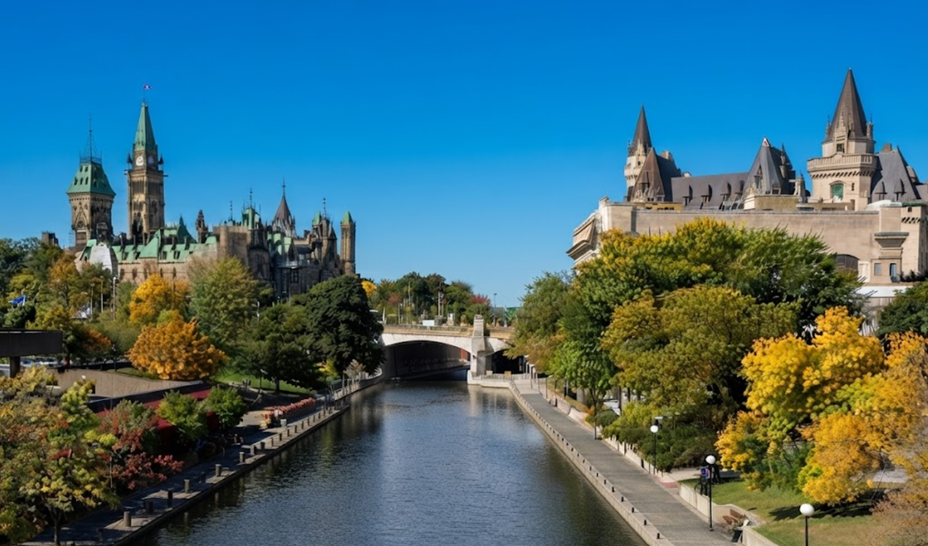
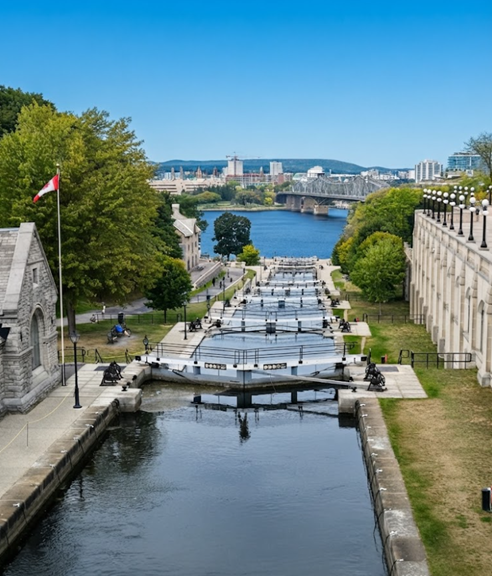
At the foot of Parliament Hill, the Bytown Locks form a dramatic staircase of eight chambers. Here, the canal meets the Ottawa River, and the towers of Parliament loom above, casting long shadows across the stone walls. Tourists gather in clusters, cameras clicking as boats ascend. The air smells faintly of wet limestone and cut grass, mingling with the metallic tang of iron cranks.
For paddlers, slipping through these locks is surreal. Canoes and kayaks, dwarfed by the scale of engineering, rise slowly as water pours in. Parks Canada staff lean into the iron cranks, shoulders taut, faces set in concentration. The gates creak open, one massive door at a time, and the chamber fills with calm, deliberate water. The Bytown Locks are more than functional—they are theatre. Each lift is a performance, each boat an actor, each tourist an audience member.
🏡 Burritts Rapids Lockstation: Heritage in Motion
Burritts Rapids is intimate, almost domestic. A single lock, hand‑cranked and human‑scaled, it feels like stepping into a village storybook. The Bridgehouse, once home to the bridgemaster and now a library, watches over the swing bridge. Its cedar shingles and gabled roof whisper of early 20th‑century craftsmanship, while its porch overlooks the canal like a sentinel.
Here, paddlers find themselves part of the ritual. Dragging a heavy canoe down the grassy slope of the portage, lifting it awkwardly over the narrow footbridge railings, sweat mixes with laughter. Then, slipping into the lock chamber, they watch as Parks staff crank open the gates. One massive grey door swings wide, enough for a canoe to pass.
The chamber fills, smooth and steady, lifting boats 2.7 meters in about 15 minutes. Herons patrol the banks, geese honk across the channel, and an osprey hovers overhead. The lock is not just heritage—it is habitat.
🌿 Nicholson Lockstation: Quiet Contemplation
Downstream from Burritts Rapids, Nicholson Lockstation sits along a slackwater stretch created by dams and weirs. The water here is contemplative, glassy, lined with cattails and wildflowers. Black‑eyed Susans nod in the breeze, frogs plop into the water with comic timing, and paddlers glide silently through.
Motorboats wait at blue‑lined docks, signaling intent to lock through. The custom repeats: cranks turn, gates swing, chambers fill. But here, the pace is slower, the atmosphere quieter. It is a place where engineering and ecology meet in balance, where the canal feels less like infrastructure and more like sanctuary.
🏰 Hartwells and Hogs Back Locks: Urban and Wild
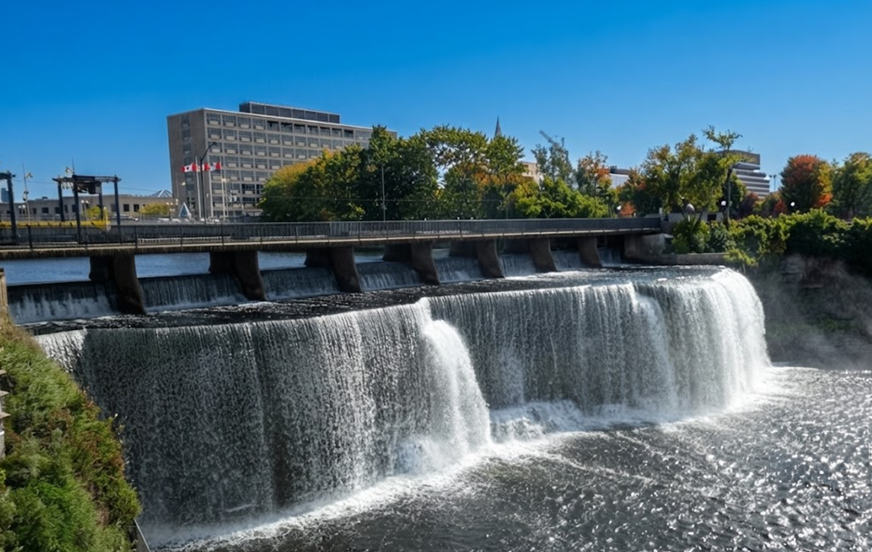
Closer to Ottawa’s heart, Hartwells and Hogs Back Locks showcase the canal’s dual identity—urban and natural. At Hogs Back, water thunders over a spillway dam, white spray catching sunlight in prisms. The roar is constant, a reminder of the river’s untamed power. Hartwells, by contrast, offers a gentler lift, its chambers framed by parkland and pathways.
Together, they embody the canal’s paradox: carved from rivers and rapids, reshaped to serve both defense and community. Soldiers once guarded these waters; today, joggers, cyclists, and picnickers linger nearby, folding heritage into daily life.
🌅 Long Island Locks: A Place of Gathering
South of the city, Long Island Locks form a triple chamber, surrounded by parkland and picnic tables. Families spread blankets on the grass, children chase geese along the banks, and boaters wait patiently as the chambers fill. The lock is a gathering place, where heritage blends seamlessly with recreation. The custom of cranking gates and filling chambers continues, but here it feels communal, almost celebratory. The canal is not just a route—it is a destination.
🐦 Companions on the Water
Wildlife is constant along the locks. Great blue herons lift off in slow arcs, wings beating like ancient fans. Canada Geese patrol the banks, their honks echoing across the water. Ospreys hover overhead, eyes sharp, talons poised. Frogs leap from cattails, splashing into the canal with comic timing.
Even machines join the chorus: drones buzz like curious spectators, motorboats churn waves, and the occasional bi‑plane rattles the sky. The locks are not silent—they are symphonies, blending natural and mechanical sounds into a layered soundtrack.
📜 Lessons from the Canal
Every lock teaches something: Blue‑lined docks signal intent to lock through. Annual passes spare paddlers repeated fees. Locks stitch together water levels, allowing boats to glide from Kingston to Ottawa. Built between 1826–1832, the canal was a military safeguard, a settler’s highway, and an Indigenous canoe route reborn.
Blockhouses once guarded it, though never needed. The canal is not just infrastructure—it is instruction, a living classroom of history and heritage.
🏡 The Bridgehouse Legacy
The Bridgehouse at Burritts Rapids embodies vernacular craftsmanship. Its gabled roof, painted plank floors, and porch overlooking the swing bridge reflect early 20th‑century design. Built as a residence for the bridgemaster, it now serves as a library, folding heritage into community life.
It remains a landmark—rooted in its grassed site, visible from the water, familiar to locals and visitors alike. Its cedar shingles whisper of past generations, while its role as a library ensures it remains part of daily life.
🌿 The Long Reach
At Burritts Rapids, the canal bypasses a chain of natural rapids with a 2.5‑km excavated channel. The spillway dam, weir, and swing bridge—all still manually operated—form a tableau of living heritage. Boats pass between stone abutments, paddlers slip quietly through, and the lock continues its hand‑cranked custom. The Long Reach is not just geography—it is narrative, a stretch of water that tells the story of human ingenuity meeting natural challenge.
Closing Note: Lifted by History
Ottawa’s locks are not just functional—they are experiences. Each one tells a story: of soldiers who built them, settlers who traveled them, and modern paddlers who rediscover them. To pass through a lock is to feel history lift you, gently, on the shoulders of water.
The Rideau Canal is a living heritage, a place where iron cranks, wooden gates, and flowing water continue their daily ritual. To paddle through its locks is to join that ritual, to become part of a story that began two centuries ago and continues, quietly, every day.