
Practical notes
Address: Burgring 7, 1010 Vienna
Subway: U2 / U3 Volkstheater
Tram: 1, 2, 71, D Ring/Volkstheater
Bus: 48A Volkstheater
Hours: Mon, Wed–Sun 9:00–18:00 (20:00 on Wed) | Closed Tue
Entry: Adults €18 | Kids free | Vienna Pass = one‑time free entry
Closed: Dec 25 & Jan 1 | Early closing Dec 24 (3 pm) | Open Dec 31 until 6 pm
Where meteorites meet mammoths and molluscs
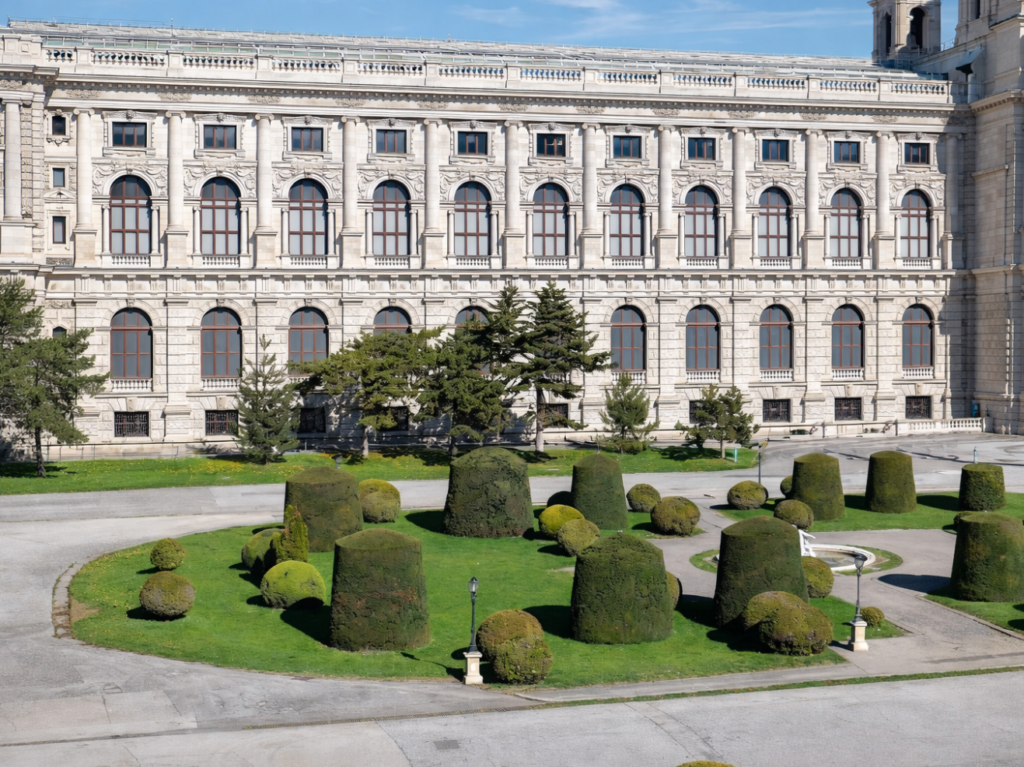
Step through the grand doors of Maria‑Theresien‑Platz, and you cross a threshold between centuries. The air shifts — marble cool against your fingertips, the faint echo of footsteps rising toward frescoed ceilings. Vienna’s Naturhistorisches Museum (NHM) is not merely a museum; it’s a time capsule of Earth itself, a cathedral of science where meteorites, mammoths, and molluscs coexist beneath a dome painted with allegories of discovery.
A palace built for curiosity
Two identical palaces face each other across the square — one devoted to art, the other to nature. The NHM, guarded by a bronze elephant, was completed in 1889 as part of Emperor Franz Joseph’s grand vision for Vienna’s cultural heart. Its neoclassical façade hides a labyrinth of marble staircases, oil‑painted ceilings, and carved stone archways that rival any royal residence. Even before you reach the exhibits, the building itself feels alive — a monument to the idea that knowledge deserves architecture worthy of reverence.Inside, sunlight filters through arched windows onto polished floors. The scent of old wood and paper mingles with the hum of modern displays. Every corridor feels like a conversation between centuries — the 19th‑century scholars who catalogued the world and the 21st‑century visitors rediscovering it.
Inside the NHM: a journey through time
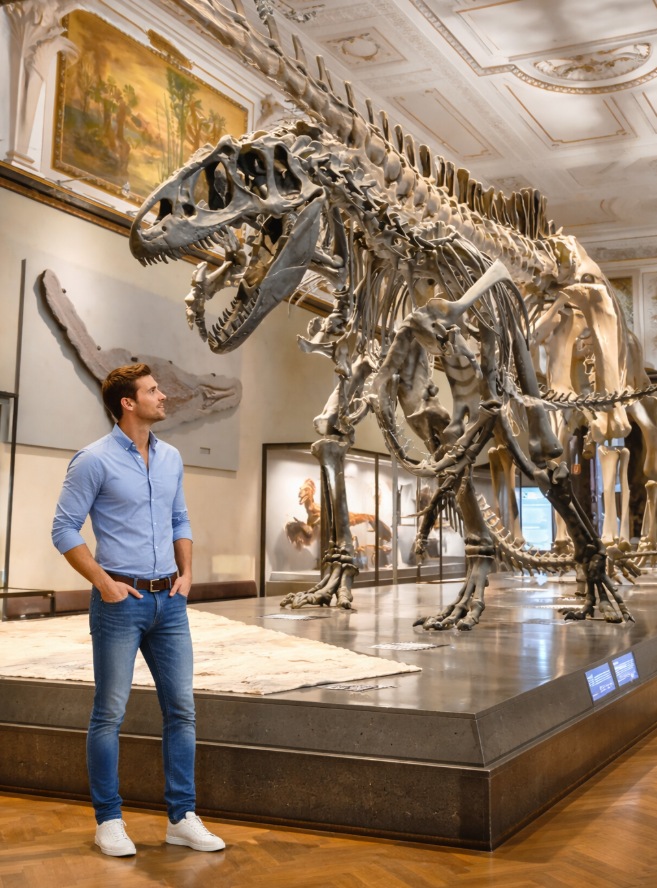
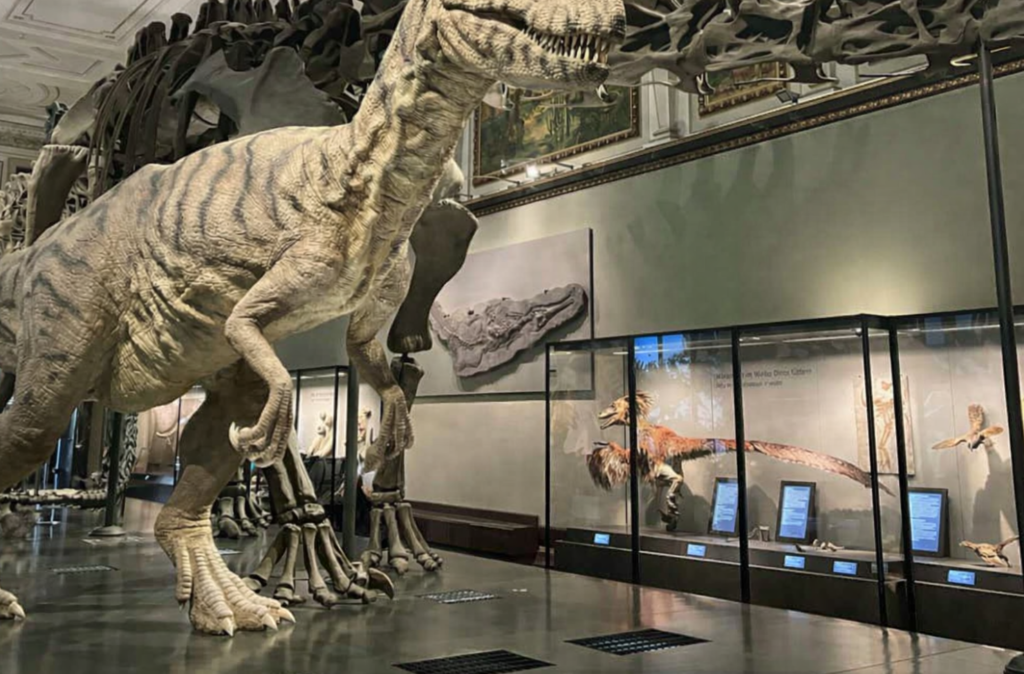
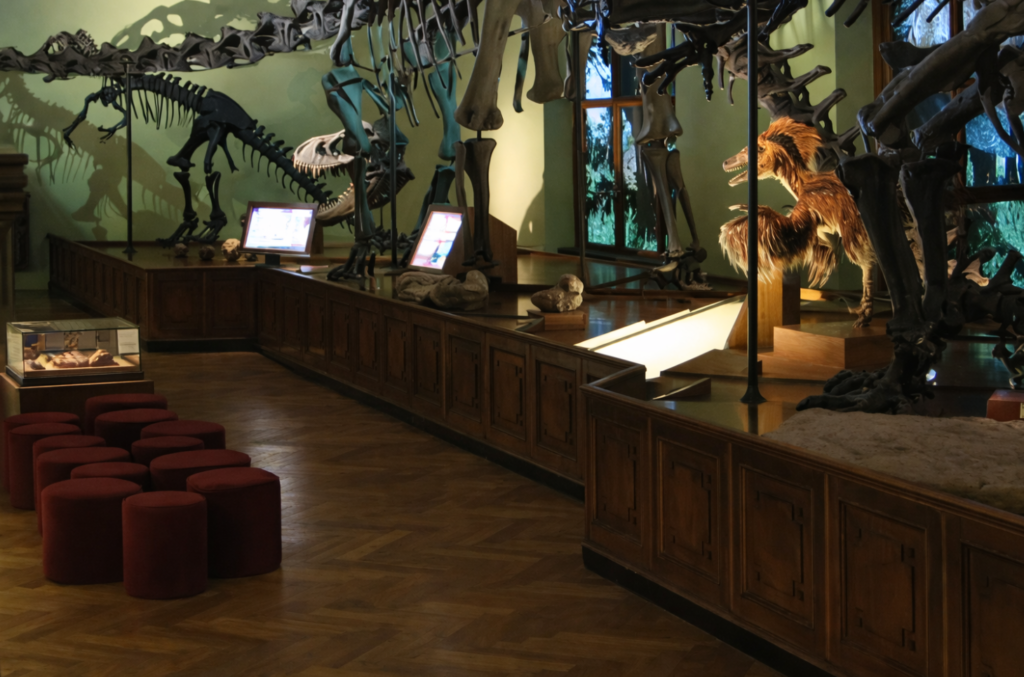
The museum unfolds in two acts:Geology, Dinosaurs & Prehistory — Here, the Venus of Willendorf, a 29,000‑year‑old symbol of fertility, stands quietly beside an animatronic Allosaurus that roars to life. Fossils, minerals, and meteorites tell the story of Earth’s formation, from volcanic birth to cosmic collisions.
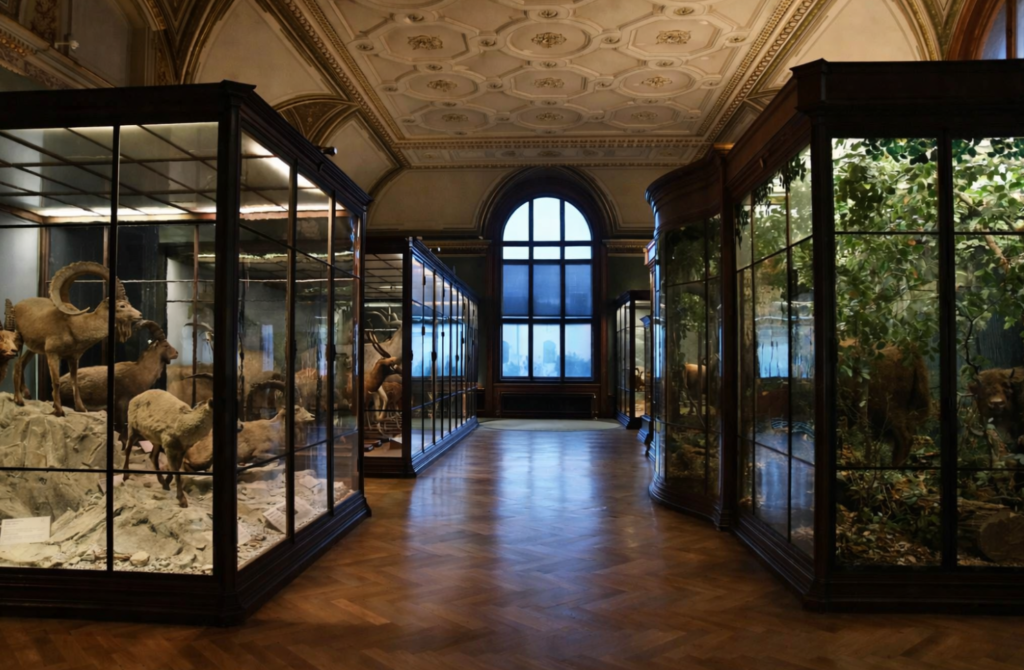
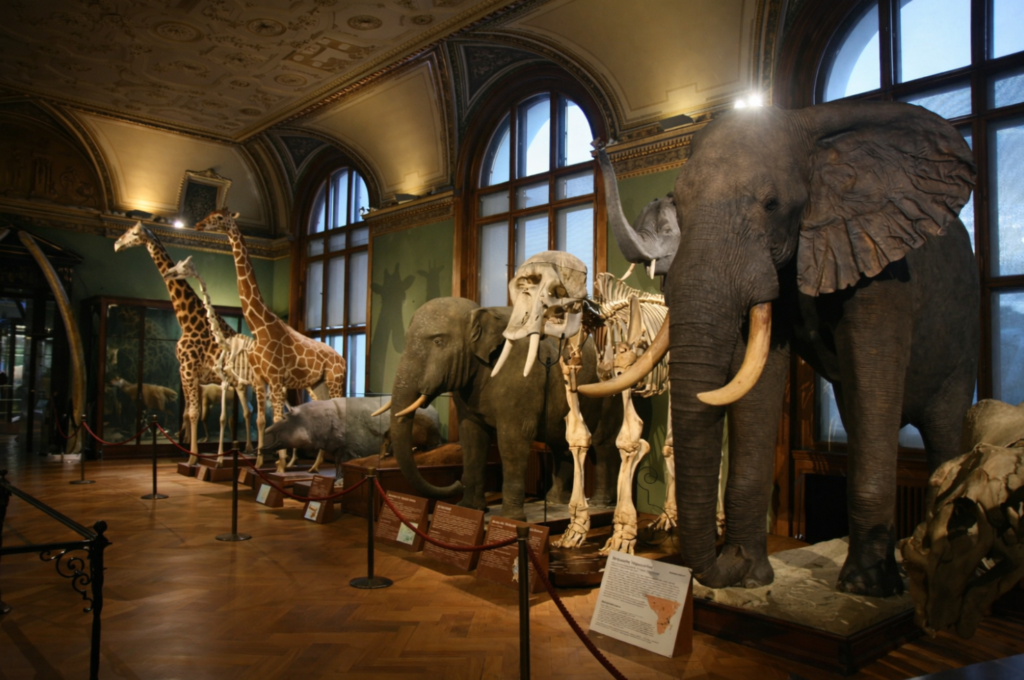
Zoology & Life Sciences — Rows of Victorian display cabinets hold butterflies, birds, and mammals, their arrangement unchanged since the museum’s founding. Yet interactive screens and digital reconstructions breathe new life into these timeless specimens.Between these worlds lies the café — a sanctuary beneath the central dome. Sip a cappuccino surrounded by frescoes of explorers and astronomers, each immortalized mid‑discovery. It’s a pause that feels poetic: science meeting serenity.
The experience: look up, always
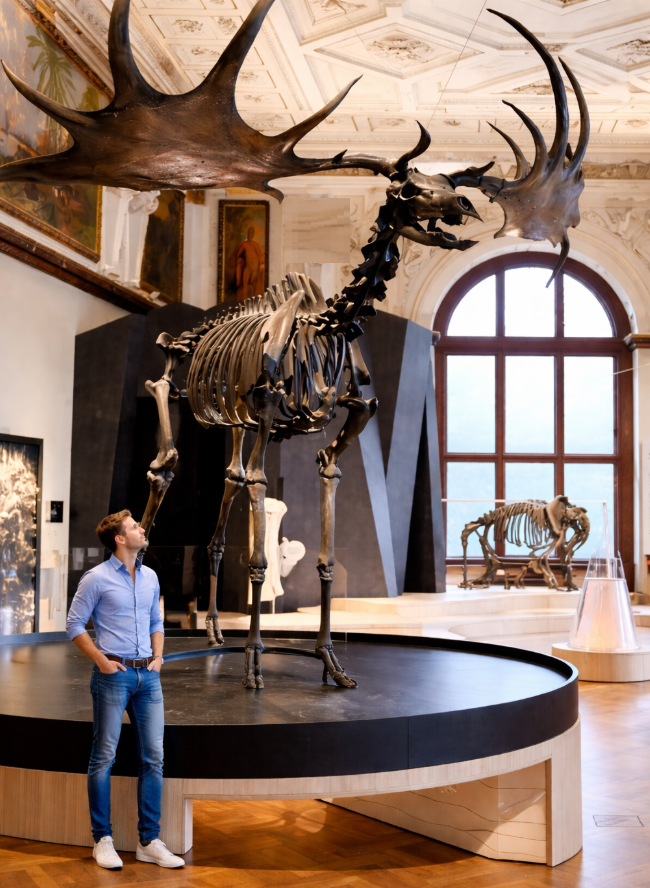
The NHM rewards those who notice the details. Look up — the ceilings are canvases of marble and myth. Look around — staircases curve like symphonies. Look closer — each numbered artifact marks one of the museum’s
Top 100 exhibits, a breadcrumb trail through deep time. Set aside half a day to wander, to linger, to let the rhythm of discovery unfold. Rushing through would be like skimming a novel written by the planet itself.
Highlights worth lingering over
Dinosaur Hall — Diplodocus, Allosaurus, and Iguanodon skeletons tower above visitors, while a life‑size Pteranodon glides overhead with a seven‑meter wingspan. Children stare upward, wide‑eyed; adults rediscover awe.
Meteorite Hall — 1,100 stones that fell from the sky, including the Tissint meteorite from Mars. A simulator lets you experience a meteorite impact in 3D — thunder, light, and vibration merging into spectacle.
Gem Hall — A 117 kg topaz gleams beside Maria Theresa’s bouquet of jewels, a masterpiece of imperial craftsmanship. Light refracts across crystals, quartz, and emeralds, turning the room into a prism of color.
Ice Age Children — Hall 16 transforms prehistory into play: freestanding skeletons, fire pits, and themed stations on hunting, housing, and health. It’s tactile, immersive, and designed for families.
Digital Planetarium — A fulldome projection carries visitors through Saturn’s rings and the Milky Way, blending scientific precision with cinematic wonder.
Behind the scenes
Beyond the public halls, the NHM houses around 60 scientists conducting research in earth, life, and human sciences. It’s one of Austria’s largest non‑university research centers — a place where fossils become data, meteorites become clues, and evolution becomes a living study. The museum’s collections, begun nearly three centuries ago, continue to expand, proving that curiosity never ages.
Why it matters
The NHM is more than a museum — it’s a mirror held up to the planet. From the depths of the oceans to the edge of the galaxy, it captures 4.5 billion years of Earth’s history in forty halls of marble and light. It’s where science becomes storytelling, and where Vienna’s imperial grandeur meets the infinite curiosity of humankind.
Whether you come for the roaring Allosaurus, or the quiet shimmer of a meteorite that once crossed the void, you leave with something rarer — perspective. The Naturhistorisches Museum reminds us that we are all part of the same cosmic narrative, written in stone, bone, and starlight.