
Duck confit, or confit de canard, is a dish that carries the soul of Gascony. In the southwest of France, where winters were long and ducks were plentiful, preservation was not a luxury but a necessity. Before refrigeration, families relied on salt and fat to keep meat edible through the cold months.
The word confit itself comes from confire, meaning “to preserve,” and the technique was as much about survival as it was about flavor. Over time, what began as a practical method became a culinary treasure, celebrated in Parisian bistros and home kitchens alike.
The Classic Method
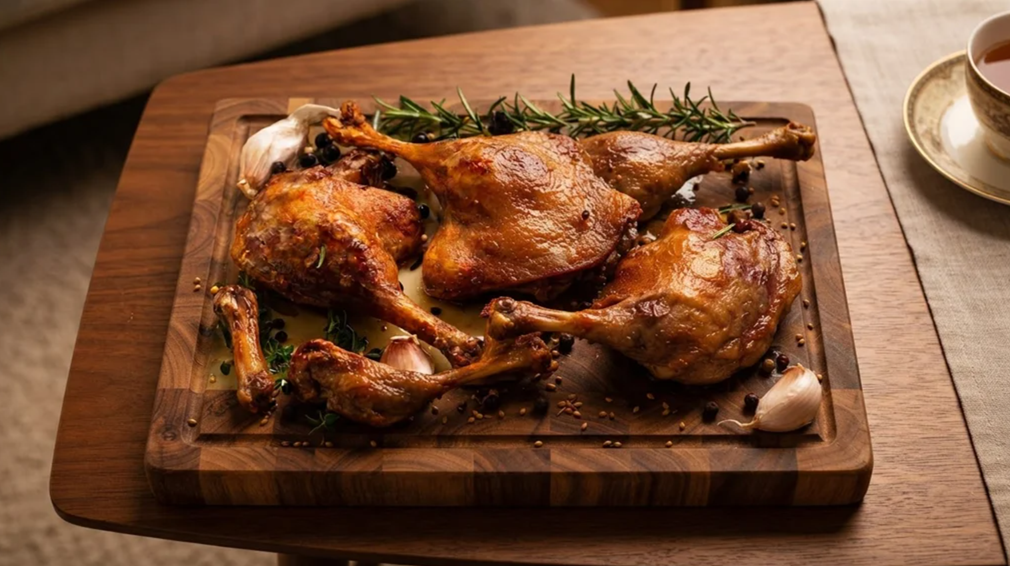
The traditional process begins with curing. Duck legs—Marylands, with their drumstick and thigh—are rubbed with salt, garlic, thyme, bay leaves, and sometimes juniper or lemon zest. Left to rest for a day or two, the cure penetrates deeply, seasoning the meat and drawing out moisture.
The legs are then submerged in duck fat and cooked slowly at a low temperature until the flesh yields effortlessly from the bone. Once cooled, the duck can be stored beneath its fat for weeks or even months, developing a deeper, more complex flavor as it “ripens.”
The Modern Approach
Sous vide confit offers a streamlined alternative. Using an immersion circulator, duck legs are sealed in bags with fat and aromatics, then cooked at a precise temperature. The results are consistently tender, silky, and ready with minimal effort. Yet, while sous vide confit excels in efficiency, it lacks the evolving depth of flavor that comes from traditional preservation.
The fat does not absorb the same richness, nor can it be reused to elevate vegetables or potatoes in future meals. It is confit for the present moment, not for the cellar.
The Flavor of Fat
One of the great joys of confit lies not only in the duck itself but in the fat it leaves behind. This rendered fat becomes liquid gold in the kitchen. Potatoes roasted in duck fat are legendary, crisp at the edges and fluffy within. Vegetables sautéed in it take on a meaty richness without the need for additional protein.
In Gascony, the fat was treasured as much as the duck, reused again and again until it carried layers of flavor from each batch.
Beyond Duck
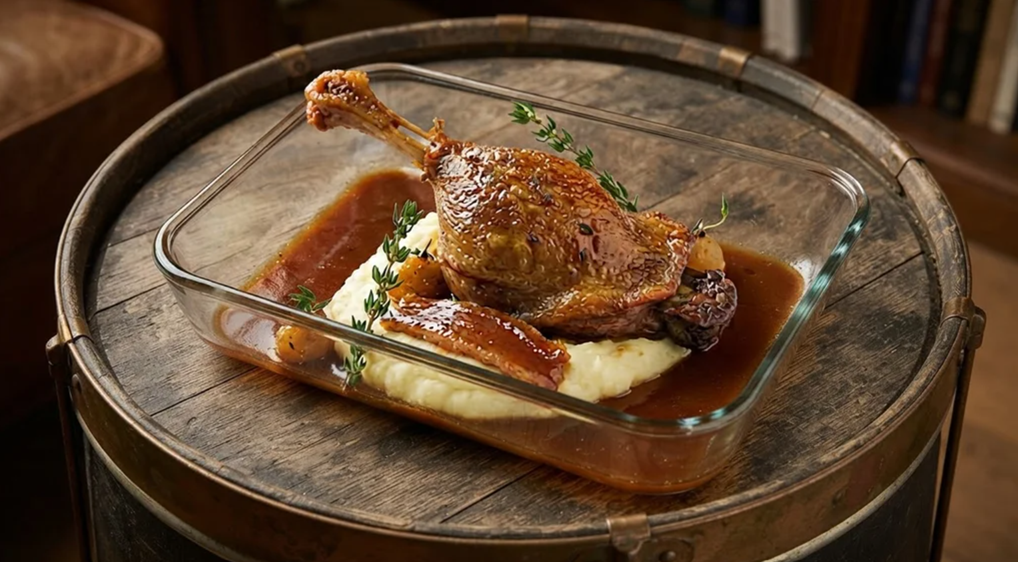
The technique of confit extends far beyond duck. Chicken and goose can all be preserved in fat. Fish and seafood, too, can be gently cooked this way. Even vegetables and fruits have their place: garlic confit, with its mellow sweetness, transforms sauces and dressings; tomato confit brings summer brightness to winter stews.
In each case, the principle is the same—slow cooking at low temperature, preserving flavor and texture in fat, sugar, or water.
Serving Traditions
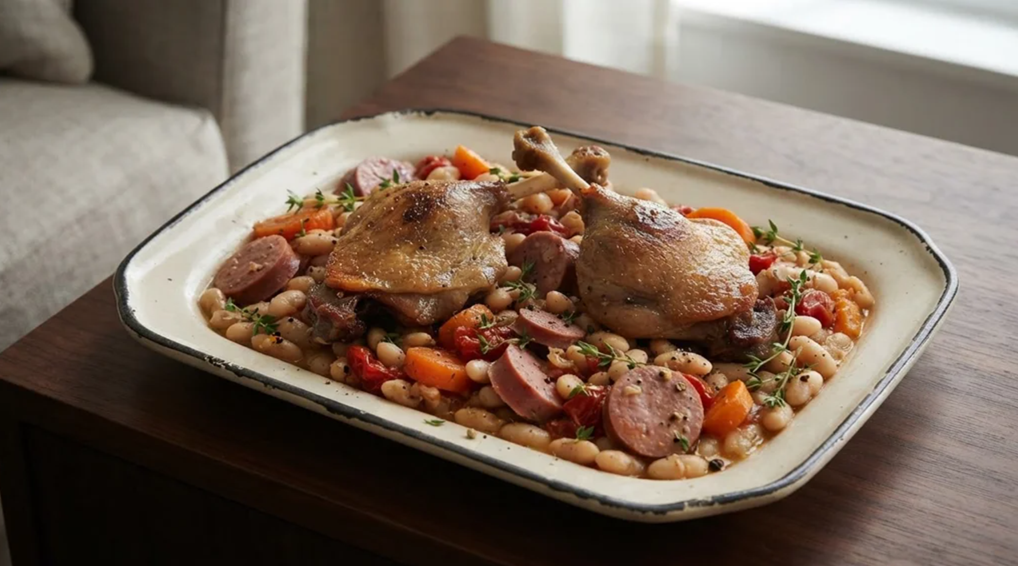
In France, confit is often paired with pommes de terre à la Sarladaise, potatoes sliced into thick coins and fried in duck fat until golden. Some prefer restraint, serving confit with a sharp vinaigrette and greens to balance the richness. Others lean into indulgence, letting the duck fat spill into roast potatoes, the kind that make you swear you’ll never cook them any other way.
In bistros, confit is comfort food elevated, rustic yet refined, a dish that bridges the gap between necessity and pleasure.
The Debate: Analog vs Digital
The choice between traditional and sous vide confit is not about superiority but philosophy. The analog method connects you to centuries of practice, yielding flavors that deepen over time and fat that enriches future meals. The digital method offers precision, efficiency, and reliability, perfect for cooks who value consistency and convenience.
Both have their place, and both honor the duck in their own way. To cook confit is to decide not only how you want your duck to taste, but how you want to engage with the process itself.
The Broader Meaning of Confit
Confit is more than a recipe; it is a philosophy of preservation. It reminds us that cooking is not only about immediate gratification but about patience, foresight, and respect for ingredients. In Gascony, confit was survival. In modern kitchens, it is indulgence.
Yet the essence remains the same: to preserve, to transform, to savor. Whether duck, garlic, or tomatoes, confit teaches us that flavor deepens with time, and that sometimes the old ways still have something to say.