
There are boulevards that belong to their cities, and then there are boulevards that define them. In Nice, the Promenade des Anglais is not simply a stretch of pavement along the Mediterranean; it is the city’s living artery, a place where history, leisure, and spectacle converge. Known affectionately as “the Prom,” this seven‑kilometer ribbon of stone and sea has become the most iconic symbol of Nice, a stage where locals and visitors alike perform the timeless rituals of seaside life.
A Walk Through Time
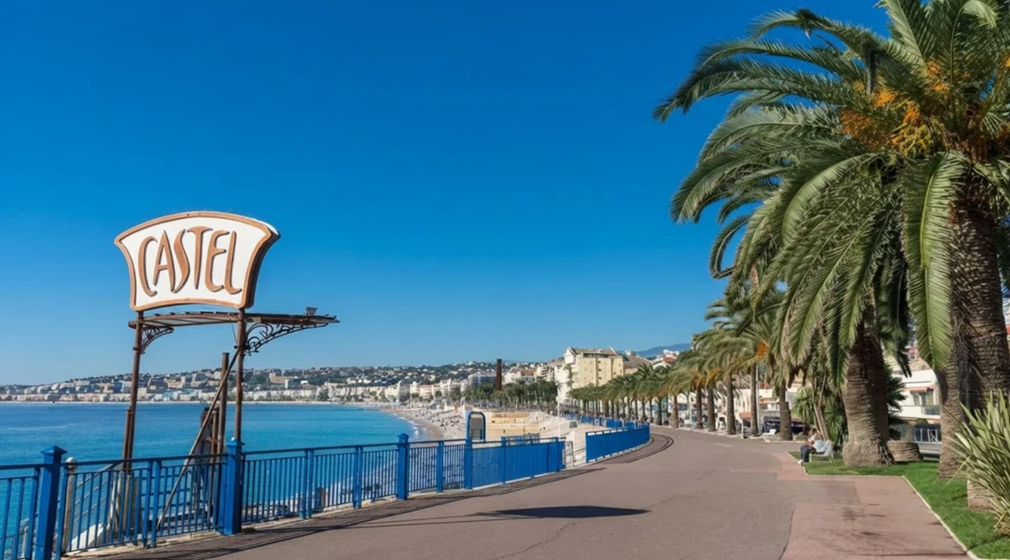
The story of the Promenade begins in the 18th century, when English aristocrats discovered the gentle climate of Nice and flocked here to escape the damp winters of their homeland. At that time, the shoreline was irregular, hardly suited for elegant strolls in silk gowns and tailored coats. What began as a modest path became, over the decades, a grand boulevard — a gift of leisure etched into the city’s edge.
Even today, the English imprint lingers. Hotels such as the Westminster and West End carry names that recall the islanders who once walked here. The Promenade’s very name — “des Anglais” — is a tribute to those early visitors who shaped its destiny.
The Pulse of the Prom
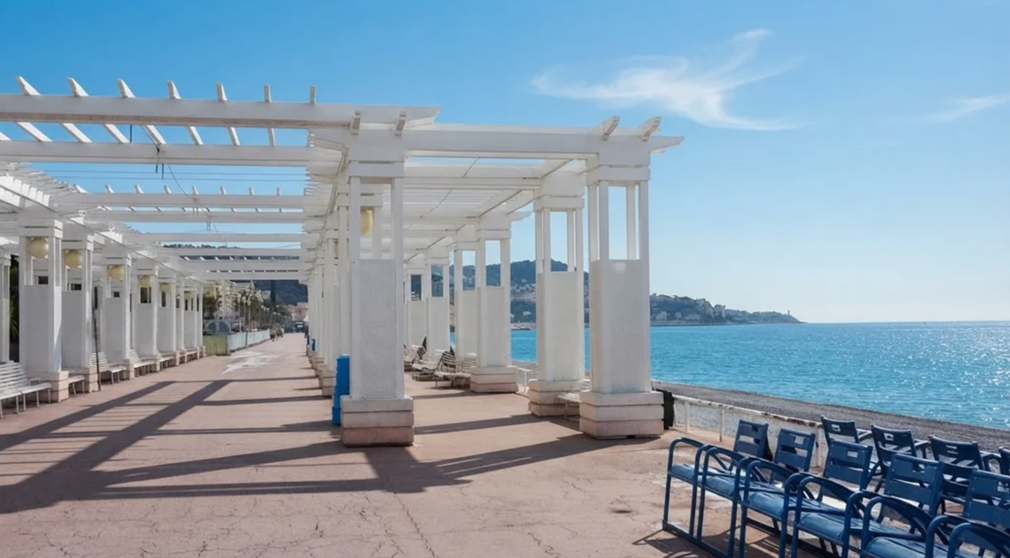
To walk the Promenade today is to join a living current. Joggers pound the pavement, rollerbladers glide past, families push strollers, and cyclists weave along the dedicated bike path. The rhythm is constant, yet never monotonous. The famous blue chairs, designed in 1950 by Charles Tordo, line the seafront, inviting you to pause and face the Mediterranean.
Sitting here, you feel the sea’s pulse, the waves rolling in with a steady cadence, the horizon stretching endlessly before you. In summer, the Promenade transforms into a rout of color. Flower battles and fireworks spill across its length. It is not just a walkway; it is a gathering place, a communal heartbeat where the city celebrates itself.
Landmarks Along the Way
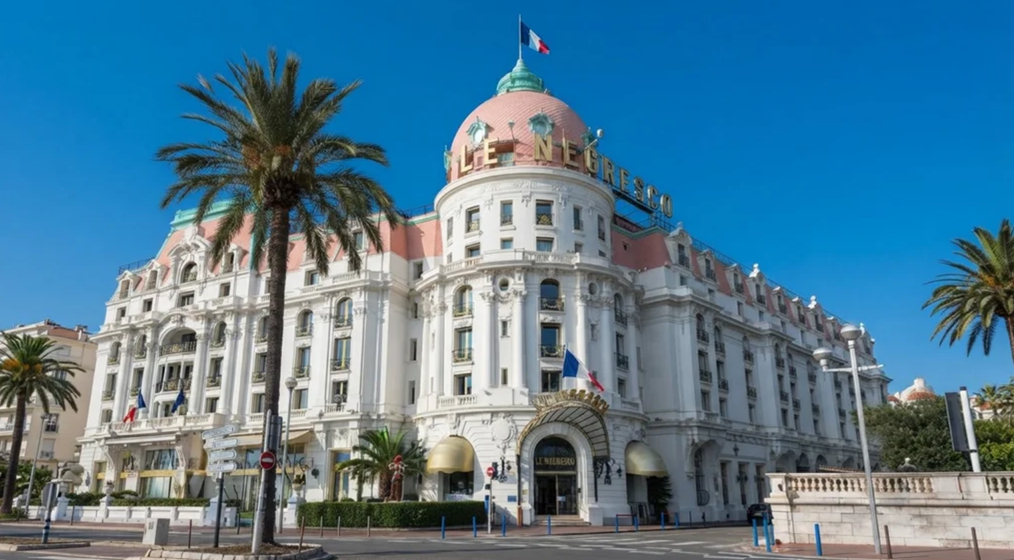
The architecture along the Promenade tells its own story. The Palais de la Méditerranée, with its art deco façade and white columns, stands like a sentinel of the 1920s, a reminder of the city’s glamorous past. The Hôtel Negresco, crowned with its pink dome, has welcomed royalty and celebrities.
Its interior is a museum in itself, with chandeliers, tapestries, and art that speak of Belle Époque grandeur. The Villa Masséna, now a museum, offers another glimpse into the city’s aristocratic past. Its gardens spill onto the Promenade, a green oasis amid the bustle.
Closer to Castle Hill, the monumental sculpture Neuf Lignes Obliques by Bernar Venet pierces the sky — nine steel poles converging at their tips, commemorating the annexation of Nice to France in 18th century.
Everyday Escapes
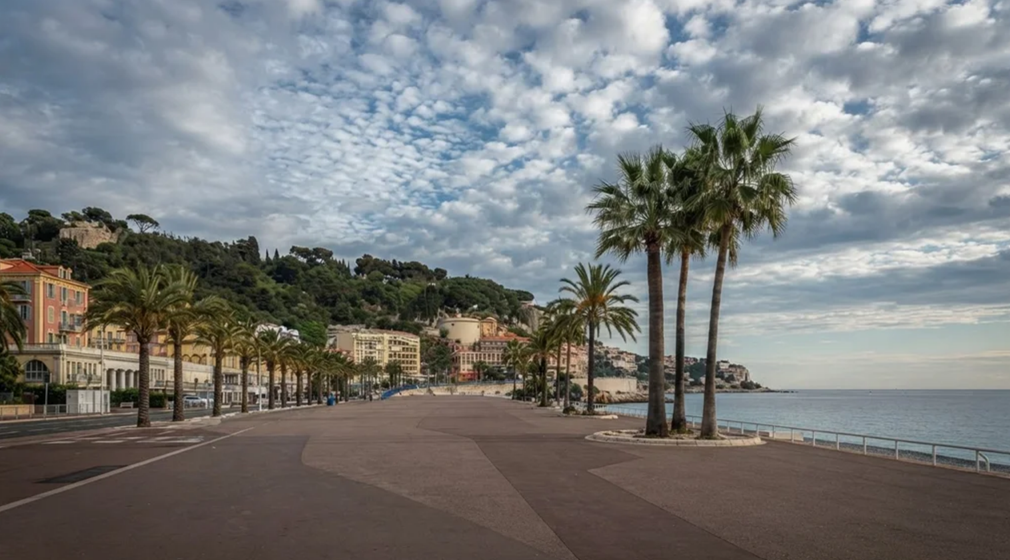
The Promenade is not only about history and spectacle; it is about everyday escape. Locals come here to breathe, to run, to cycle, to skate. Tourists rent scooters or electric bikes, tracing the seafront in ninety minutes while listening to anecdotes of the city.
Boutiques line the avenue, selling fashion and souvenirs, while the pebbled beaches below invite sunbathers to stretch out beneath coordinated parasols — blue, of course, like the chairs, the bins, the bikes, and the sea itself. There is a rhythm to the day here. Early mornings belong to joggers and dog walkers, the air cool and the light soft.
Afternoons bring families, children on scooters, couples strolling hand in hand. Evenings are for contemplation: the sun sinking into the horizon, the sky painted in shades of pink and gold, the Mediterranean shimmering like liquid glass.
Views Worth Pausing For
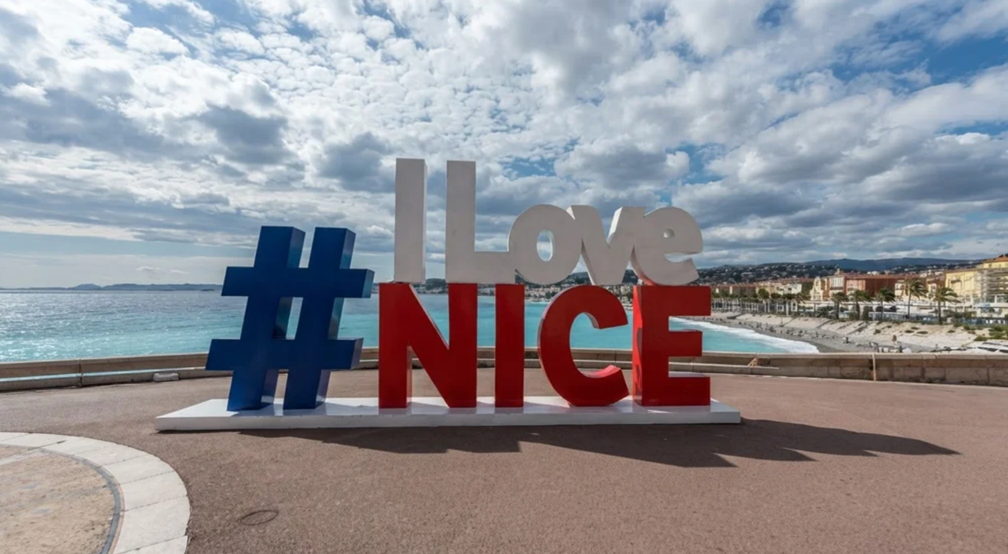
Every stretch of the Promenade offers a postcard. The Jardin Albert‑Ier gazebo frames the Bay of Angels at sunrise, its view unobstructed and serene. The I LOVE NICE sign at Rauba‑Capéu is a magnet for visitors, its bold letters capturing the spirit of the city.
The façade of the Palais de la Méditerranée gleams against the sky, its art deco lines a perfect contrast to the sea’s fluid horizon. Even the discreet Plage des Chiens offers raw, natural views of sea meeting stone, a quieter corner away from the crowds.
Practical Notes
Getting here is effortless. From the airport, buses and trams deliver you directly to the Promenade. Parking lots like Ruhl Méridien and Palais Masséna tuck beneath the boulevard, offering convenient access. On‑street parking is limited, but that’s hardly a concern when the real joy lies in walking.
For the perfect itinerary, begin at Ruhl, wander west toward the airport, then circle back into Vieux‑Nice, where the narrow alleys and markets of Cours Saleya await. The transition from the wide, sunlit Promenade to the shadowed lanes of Old Nice is like stepping from one world into another — from grandeur to intimacy, from spectacle to tradition.
When to Go
Timing shapes the experience. At dawn, the Promenade is hushed, bathed in soft light, the sea a mirror of tranquility. Late afternoon brings warmth and fewer crowds, terraces buzzing with relaxed conversation. Midday in summer, however, is best avoided — the heat and throngs can overwhelm even the most patient stroller.
The Prom as a Signature
The Promenade des Anglais is more than a boulevard; it is Nice’s signature, a living artery that connects past and present, locals and visitors, leisure and spectacle. To walk it is to join a tradition centuries old, yet still alive with the rhythm of today.
It is a place where history whispers through architecture, where everyday life unfolds in motion, and where the sea itself seems to lean in, reminding you that here, at the edge of France, the Mediterranean is not just a view — it is a way of life.