
Niagara Falls > Things to do in Niagara Falls
Arrival in Canada
Niagara Falls is a borderland wonder, but it is from the Canadian side that its grandeur truly unfolds. Here, you stand face‑on to the three waterfalls—Horseshoe, American, and Bridal Veil—watching them thunder in unison. Horseshoe dominates, nearly 800 meters wide, its curve like a crescent of fury. Ninety percent of the river’s flow plunges here, a torrent that seems endless. The American and Bridal Veil Falls lie across the border, but from Canada you see them together, framed in mist and light.The roar greets you before the sight, a low thunder that builds into something elemental. You arrive with only a single day, but that is enough.
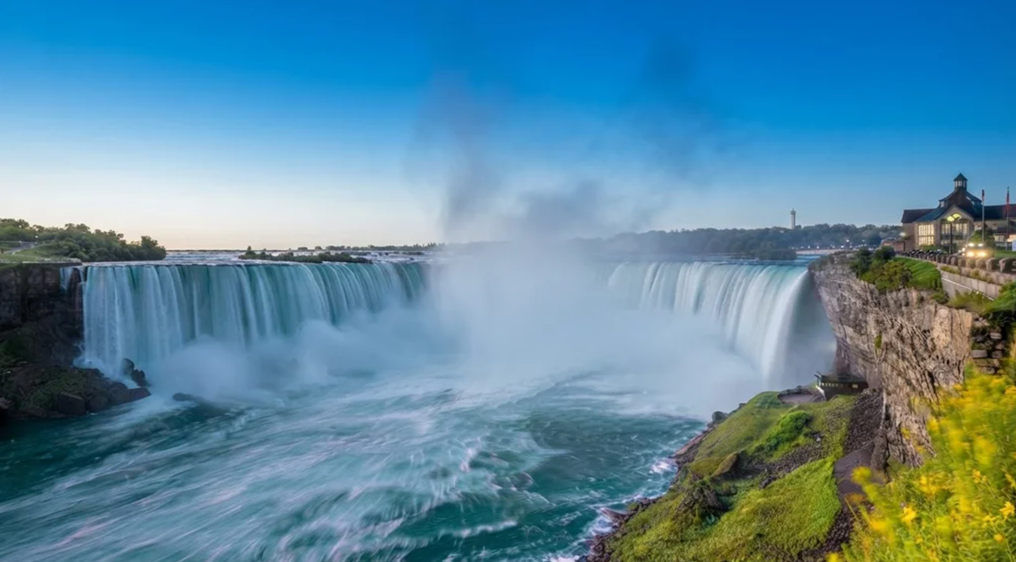
Morning at Table Rock
The day begins at Table Rock Centre, perched directly beside Horseshoe Falls. From here, you are not just near the water—you are above it, watching the river collapse into spray. The view is free, immediate, unforgettable. Inside, the centre offers shops, restaurants, and history, but the true draw is outside: the raw spectacle of water plunging at five tons per second.
Journey Behind the Falls
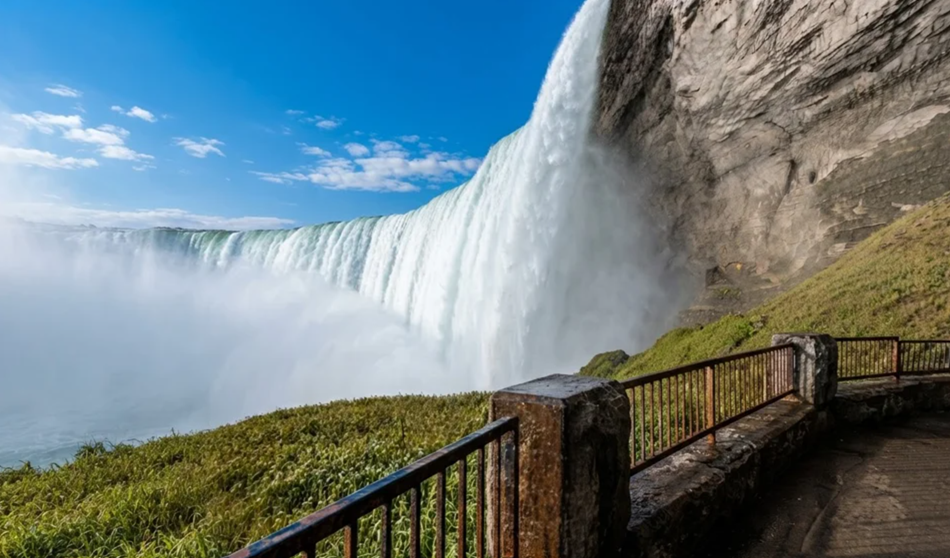
From Table Rock, you descend into tunnels carved through bedrock. The Journey Behind the Falls takes you to portals that open directly behind the cascade. The sound is deafening, the spray constant. You stand in shadow, looking out at a wall of white water, feeling the vibration of its power through stone. On the observation deck, mist drenches you, but the view is worth every drop.
The Boat Ride
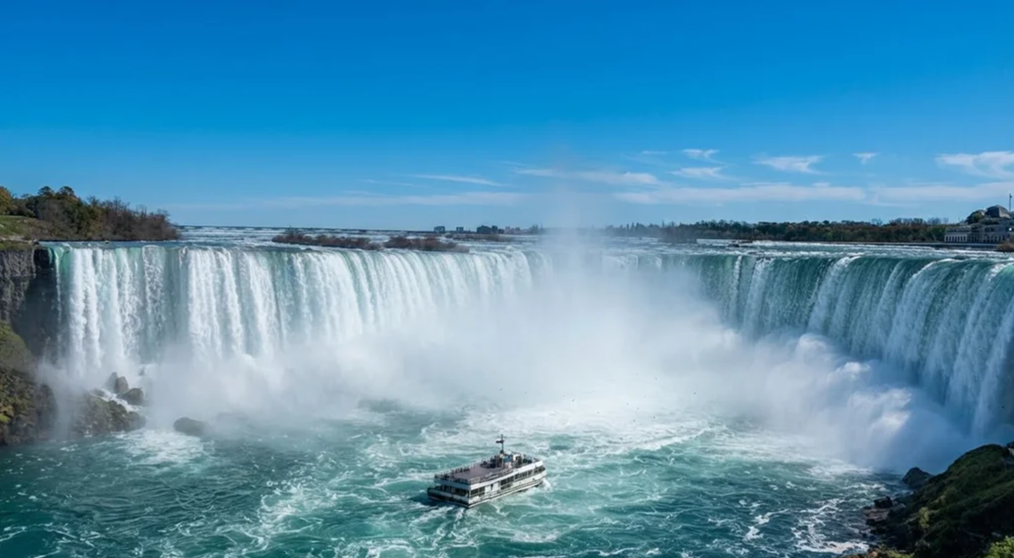
No visit is complete without the boat. On the Canadian side, it is Niagara City Cruises, successor to the Maid of the Mist. You don the red poncho, flimsy armor against the storm, and step aboard. The boat pushes into the river, closer, closer, until Horseshoe Falls rises ahead. Spray lashes your face, thunder fills your chest, and for a moment you are inside the waterfall itself.The world becomes white water and sound. Cameras falter, but memory etches deep. It is chaos and beauty, baptism by spray. You laugh, you gasp, you grip the railing as the river’s fury surrounds you.
White Water Walk
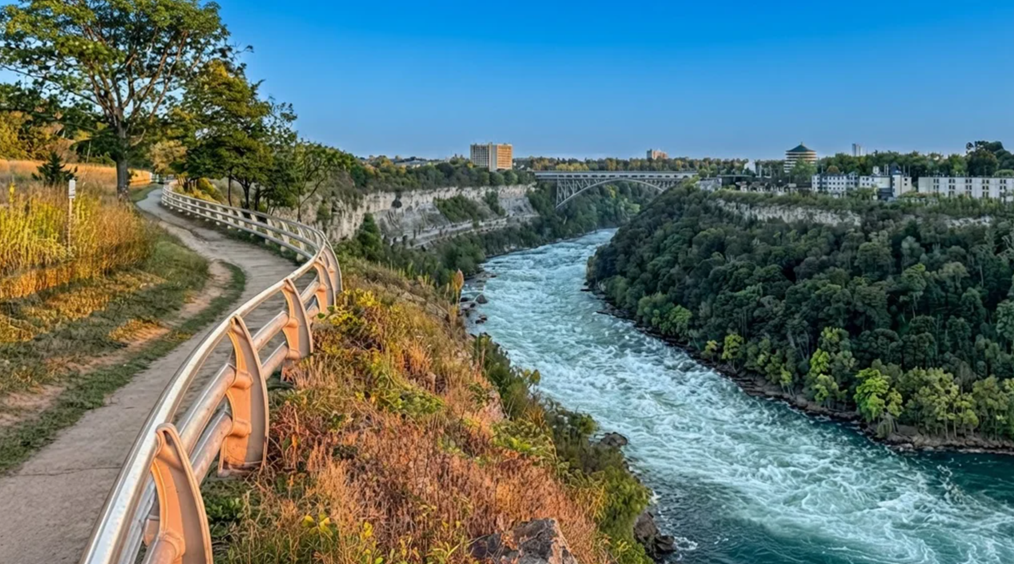
After the boat, you seek the rapids themselves. The White Water Walk is a boardwalk along the edge of the Niagara River, where Class VI rapids churn with impossible force. The path is quiet compared to the crowds at the falls, but the water here is wild, untamed. Standing beside it, you feel the river’s raw pulse, a reminder that Niagara is more than its plunge—it is its journey.
Whirlpool Aero Car
Suspended above the gorge, the Whirlpool Aero Car carries you across a natural whirlpool where the river twists upon itself. The cable car sways gently, the view dizzying. Below, the water spins in endless circles, a vortex carved by geology and time. It is both spectacle and serenity, a pause above chaos.
Afternoon at Clifton Hill
By afternoon, you wander into Clifton Hill, Niagara’s carnival street. Arcades flash, restaurants spill laughter, neon signs glow even in daylight. It is a contrast to the natural wonder nearby, but part of Niagara’s identity: spectacle layered upon spectacle. You ride the SkyWheel, a giant Ferris wheel that lifts you above the town, offering panoramic views of the falls and the river.
Evening Calm at the Botanical Gardens
As the day softens, you step into the Niagara Parks Botanical Gardens. Paths wind through roses, arboretums, and quiet lawns. The roar of the falls fades here, replaced by birdsong and rustling leaves. It is a place of pause, a reminder that Niagara is not only fury but also beauty.
Nearby, the Butterfly Conservatory offers another kind of wonder—thousands of butterflies in a glasshouse, wings flashing like jewels.
The Light Show
Darkness falls, and the waterfalls transform. Colored beams strike the cascades, turning them into shifting curtains of red, blue, green. The Niagara Falls Light Show is spectacle layered upon spectacle, a final act that crowns the day.From the Canadian side, you watch as all three waterfalls glow, mist catching the colors, spray turning into rainbow. It is the perfect end, a reminder that even nature’s fury can be painted with light.
Midnight Reflections
Twenty‑four hours at Niagara Falls is enough to feel its grandeur. Free viewpoints remind you that access to wonder costs nothing. Paid experiences—boats, tunnels, cable cars—draw you closer, each one a different angle on power. Compared to Montmorency Falls, Niagara is less wild but more immense, its scale unmatched. The water comes from the Great Lakes, five tons per second in spring, halved in summer, yet always relentless. You leave drenched, exhilarated, and changed. The thunder remains inside you, long after the mist has faded.
Niagara Falls in Winter: Witnessing the Frozen Wonder
Niagara Falls is one of those rare places where nature’s drama feels larger than life in every season. In summer, the roar of cascading water competes with the hum of tourists. In autumn, fiery leaves frame the mist. In spring, the thaw brings renewed energy. But winter — winter is something else entirely. When the temperatures plunge and the winds sweep across the Niagara River, the Falls transform into a surreal landscape of ice, mist, and crystalline sculptures. This is the season when visitors come searching for one thing above all: the chance to see Niagara Falls frozen.
The Allure of a Frozen Waterfall
Why does the idea of a frozen Niagara Falls captivate so many? Perhaps it’s the paradox. The Falls are defined by motion, by relentless torrents of water plunging over cliffs. To imagine them halted, encased in ice, feels almost impossible. Yet winter delivers a version of that dream.
While the Falls never completely stop, sections of the cascade become encased in thick layers of ice. The mist rises, freezes midair, and drapes itself over railings, trees, and pathways. The result is a landscape that looks sculpted by an artist rather than carved by nature. Nearby Hamilton, Ontario, is famous for its smaller waterfalls that do freeze solid in winter.
These frozen curtains of water offer a preview of what visitors hope to glimpse at Niagara. But Niagara’s scale makes its icy transformation far more dramatic. Standing at the edge of the gorge, you see water rushing beneath layers of ice, snow clinging to every surface, and the entire scene shimmering in pale blues and whites.
What You’ll See in Winter
Visiting Niagara Falls in January or February means stepping into a world where the ordinary feels enchanted. The protective fences and barriers along the viewing platforms are often buried beneath dense clumps of snow and ice, hardened to the touch like concrete. Trees and shrubs cling to the rocky cliffs, their branches encased in glassy shells.
Every gust of wind carries chilling mist that freezes on contact, leaving visitors dusted in icy crystals. Look closely at the river below. Only small sections of the Niagara River remain visible, but even these reveal astonishing speed. Beneath the icy crust, the water surges forward, reminding you that the Falls are alive. The juxtaposition of motion and stillness is what makes the winter view so mesmerizing.
Does Niagara Falls Ever Completely Freeze?
The question every visitor asks: does Niagara Falls ever become entirely frozen? The answer is no — not in the way people imagine. The sheer volume of water, combined with the constant flow from the Great Lakes, prevents a total freeze. What does happen is partial freezing.
Large sheets of ice form at the base, mist crystallizes on the cliffs, and sections of the cascade appear locked in place. Historically, there have been rare moments when ice jams upstream caused the flow to slow dramatically. But even then, the Falls themselves were never entirely frozen solid.
So if you’re planning a winter trip, expect breathtaking icy formations — but don’t expect silence where there is usually thunder.
The Best Time to Visit
Timing is everything. To see Niagara Falls at its most frozen, you’ll want to arrive after several consecutive days of frigid temperatures. Late January and February are typically the coldest months, when Arctic winds sweep across Ontario and temperatures dip well below freezing.
After a week or more of this weather, the ice builds layer upon layer, creating the dramatic spectacle visitors crave. Morning visits often feel the coldest, with mist hanging heavy in the air. Afternoons bring brighter light, which makes the ice sparkle. Nighttime, however, is magical. The Falls are illuminated with colored lights, the entire scene glows like a crystal palace.
The Experience of Winter at Niagara
Walking along the pathways in winter is an adventure in itself. The crunch of snow beneath your boots, the sting of icy mist on your cheeks, all combine to heighten the atmosphere. Every corner reveals a new sculpture: icicles dangling like chandeliers, branches bending under the weight of ice, and snowdrifts piled high against stone walls.
The soundscape changes too. The roar of the Falls is muffled by layers of ice, replaced by the crackle of surfaces shifting and breaking. It feels quieter, more contemplative, as though the Falls are whispering instead of shouting.
Photography and Frozen Beauty
For photographers, winter at Niagara is a dream. The frozen formations create endless opportunities for dramatic shots. Wide-angle views capture the grandeur of the icy cascade, while close-ups reveal delicate details: frost patterns on railings, droplets suspended midair, and crystalline branches glowing in the sunlight. The contrast between the white ice and the deep blue water makes every image striking.
Safety and Preparation
Of course, winter at Niagara comes with challenges. Pathways can be slippery, and the mist freezes quickly on clothing. Dressing warmly is essential: layered clothing, waterproof boots, gloves, and hats. Visitors should also be cautious near railings, as surfaces can be deceptively slick. But with preparation, the experience is unforgettable.
Why Winter is Worth It
Many travelers assume summer is the best time to visit Niagara Falls. The weather is warm, attractions are open, and boat tours run daily. Yet winter offers something summer cannot: the chance to see the Falls transformed into a frozen wonderland. The crowds are smaller, the atmosphere more serene, and the scenery utterly unique.
Standing at the edge of the gorge, surrounded by mist and glittering ice, you realize you’re witnessing a version of Niagara that few ever see. Niagara Falls in winter is not about seeing the waterfall completely frozen — because that never truly happens. It’s about witnessing the interplay of ice and water, stillness and motion, silence and roar.
It’s about feeling the mist crystallize on your skin, watching trees bow under icy weight, and marveling at nature’s artistry. After days of frigid weather, the Falls become a masterpiece, reminding us that even the most powerful forces of nature can be reshaped by winter’s touch.