
Appenzell > Things to do in Appenzell > Säntis Cable Car
The Road to Schwägalp
The journey to Säntis begins not with a climb but with a rhythm — the steady pulse of the SBB train rolling east from Zurich. The carriages hum through valleys where the land folds into green pastures, and villages appear like punctuation marks against the hills.
After about an hour, you step off at Urnäsch or Nesslau, stations that feel like gateways rather than destinations. Here, the yellow PostBus waits, its route curling upward into the Alpstein massif. The road to Schwägalp is the only one that reaches the mountain’s base.
It is a road of switchbacks and sudden views, of meadows that tilt toward limestone walls. By the time you arrive at Schwägalp Pass, the air is sharper, cooler, and the mountain itself looms above you — a sheer wall of stone rising into cloud.
The Cable Car Ascent
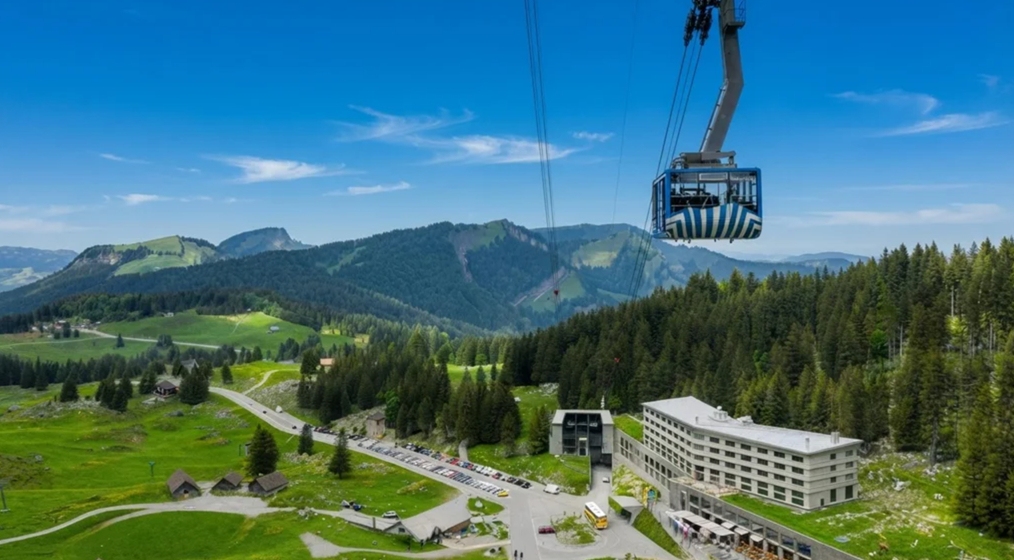
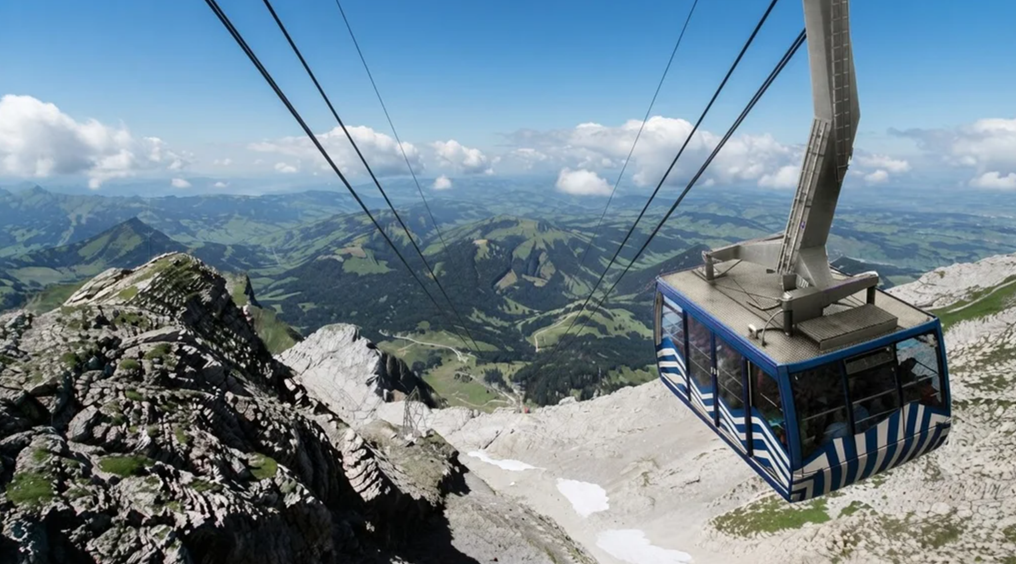
At Schwägalp, 1,351 meters above sea level, the Säntis cable car station is both functional and ceremonial. Since 1935, gondolas have lifted visitors into the sky here, and the ten-minute ride to the summit is a passage through space as much as altitude.
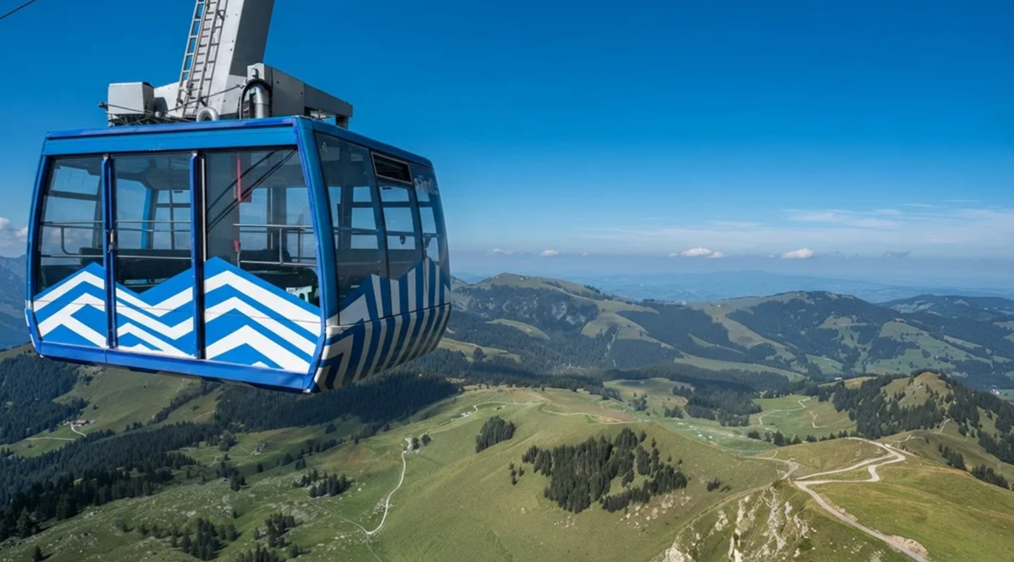
The vertical rise is 1,151 meters, and the sensation is immediate: the valley drops away, the ridges unfold, and the horizon expands until six countries lie in view. On clear days, the panorama is astonishing. Lake Constance gleams to the north, Lake Zurich lies westward, and the jagged silhouettes of Austria and Italy stretch east and south.
The summit terrace is broad, modern, and welcoming — three restaurants, exhibitions, and the modest summit cross and chapel that mark the peak. Yet the air is always alpine: cold, windy, raw even in midsummer.
Engineering Marvel
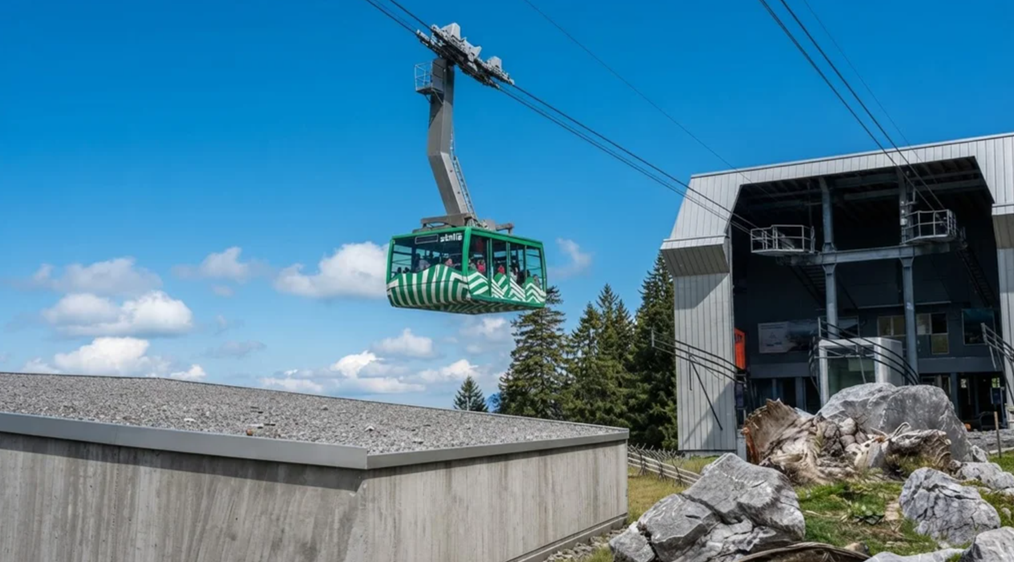
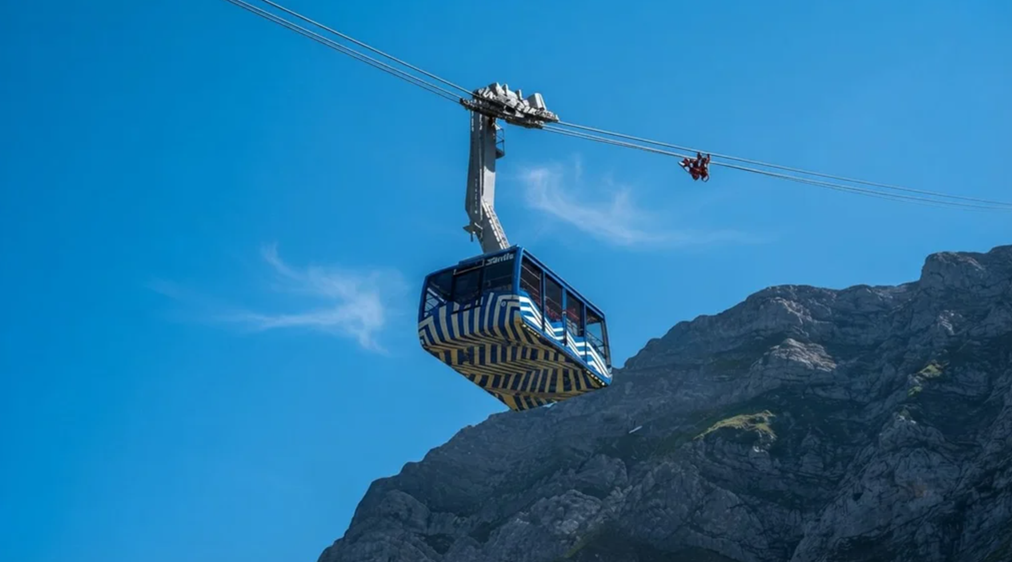
The Säntis cable car is more than transport; it is engineering poetry. Built by Garaventa in the late 1960s, its two cabins each carry 100 passengers, suspended across daring spans with only two support towers. Capable of transporting 800 people per hour, it was once among Switzerland’s largest aerial tramways.
The ride itself is a thrill — long stretches above steep rock faces, the valley dropping away beneath you, anticipation rising with every meter gained.
The Summit Experience
Standing at 2,502 meters, Säntis is the highest peak of the Alpstein massif. It sits at the junction of four cantons — Appenzell Innerrhoden, Appenzell Ausserrhoden, St. Gallen, and Glarus — and feels like a meeting place of landscapes. The summit is also one of Switzerland’s main telecom relay points, so ironically, mobile signal here is flawless.
But the true experience is elemental. Wind averages 35 km/h, gusts often exceed 100 km/h, and even on calm valley days, the summit can be a gale. The limestone ridges stretch in every direction, their pale walls catching the light. On September afternoons, the sun angles low, sharpening every contour.
Winter on Säntis
In winter, Säntis transforms. Snow piles deep — around 420 cm annually, making it one of Switzerland’s snowiest summits. The summit terrace becomes a frozen citadel, every railing and wall encased in ice. The Schwägalp ski area operates around the mid-station, small and family-oriented, while lantern-lit trails glow at dusk.
The cable car runs year-round, though high winds often force closures. The road to Schwägalp is cleared, but heavy snowfall can block it temporarily. Winter visits demand preparation: layers, windproof shells, and a willingness to step into weather that feels otherworldly.
Practicalities and Passes
Travel here is straightforward but not trivial.
Tickets: CHF 58 roundtrip (adult).
Swiss Travel Pass: 25% reduction, covering rail and bus connections.
Half Fare Card: 50% off, reducing the cable car to CHF 29.
Children under 16: reduced rates; under 6 free.
Schedules matter: the last PostBus from Schwägalp departs mid-evening, not late. Always check the SBB app or sbb.ch.
Best Times to Ride
The cable car is accessible year-round, but each season has its character:
May to October: Hiking season, though trails remain snow-covered until late May.
July and August: Busy, with coach tours filling the terrace by midday.
September: Outstanding — stable weather, fewer visitors, and limestone ridges glowing in autumn light.
Winter: Extraordinary but challenging, with closures possible in storms.
Time of day matters too. Mornings are clearer; by afternoon, cumulus clouds build and thunderstorms are common. Go up early, descend by noon if you can.
The Human Touch
Despite its scale, Säntis is humanized by small details. The summit chapel, tiny and non-denominational, feels like a gesture of humility against the vastness. The cross is modest, but in this setting, it carries weight. At Schwägalp, the hotel connects directly to the cable car station — you can step from lobby to gondola, and in ten minutes be above the storm.
Reflections on the Alpstein
The Alpstein massif is not the highest in Switzerland, but it is among the most dramatic. Its limestone walls rise sheer, its valleys hold lakes like mirrors, and its ridges carve the sky. Säntis, at the center, is both accessible and formidable. It is a mountain you can reach without mountaineering skill, yet one that never feels domesticated.
The experience is layered: the ease of public transport, the thrill of the cable car, the rawness of the summit, the intimacy of trails winding through pastures. It is a mountain for families, for hikers, for photographers, for anyone willing to step into alpine weather and be humbled by scale.