
Dawn in Vieux Nice
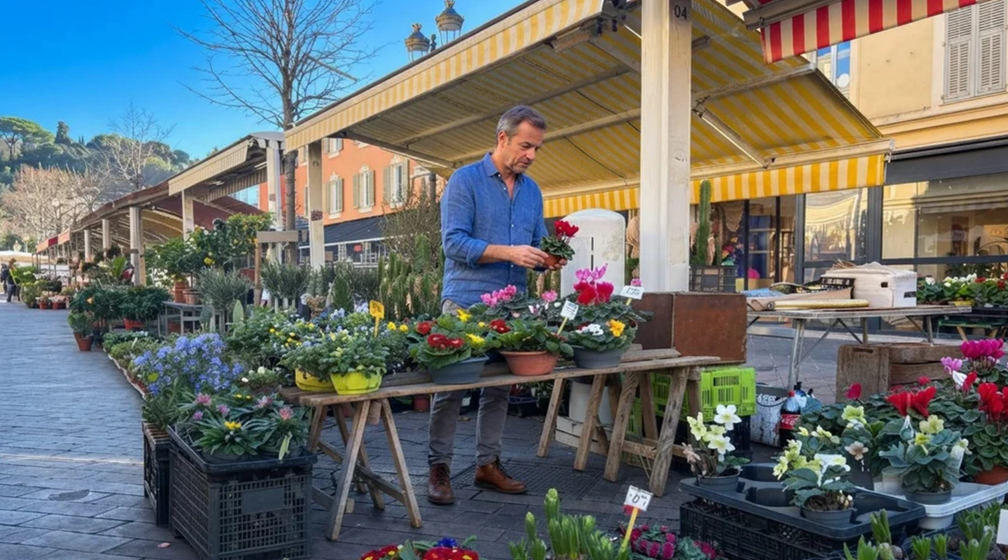
The day begins in whispers. Before the city stirs, before the cafés clatter with cups and saucers, Cours Saleya is already alive. Vendors arrive in the half‑light, their vans stacked with crates of lavender, mimosa, roses, and zucchini blossoms. Canvas awnings are pulled taut, baskets are arranged, and the cobblestones of Old Nice are transformed into a living tapestry of colour and scent.
By the time the sun crests the terracotta rooftops, the Marché aux Fleurs—the Flower Market—has unfurled in full glory. From Tuesday to Sunday, this open‑air marketplace sets the rhythm of mornings in the Vieux Nice, a ritual as old as the city’s stones.
A Market with Memory
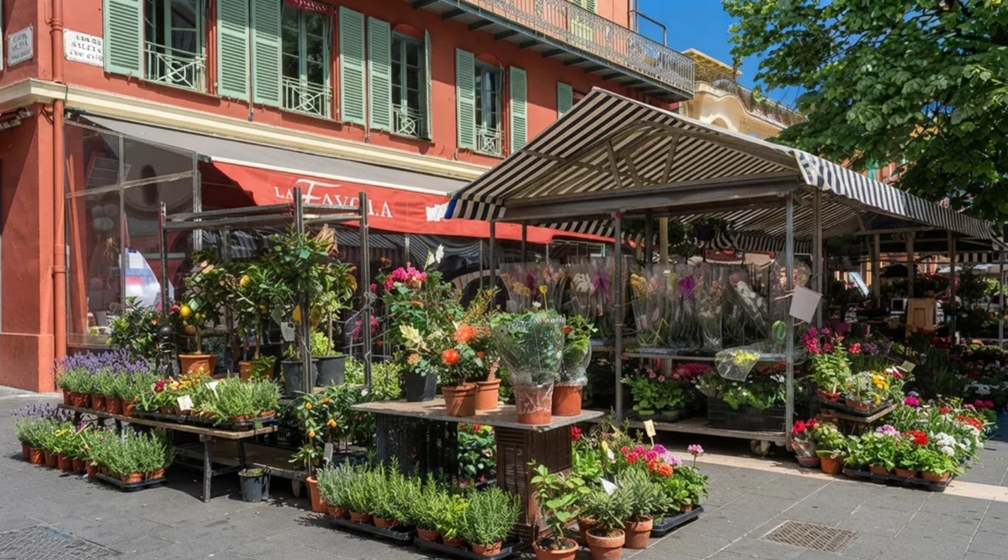
The Marché aux Fleurs is not simply a place to buy flowers. It is a tradition woven into the fabric of Nice. Since the 18th century, growers from the hills above the city have carried their cut flowers down to the coast. In those days, Nice was home to the world’s first wholesale cut‑flower market.
Wholesalers would arrive at dawn, purchasing blooms in bulk before the market opened to individuals. That wholesale section has long since moved elsewhere, but the spirit remains. Today, the flower stalls at the west end of Cours Saleya continue to supply the daily floral needs of the Niçois.
Bouquets are wrapped in brown paper, advice is given freely—how to keep mimosa fresh, how to coax orchids into bloom—and the market hums with the same energy it has carried for centuries.
A Sensory Overload
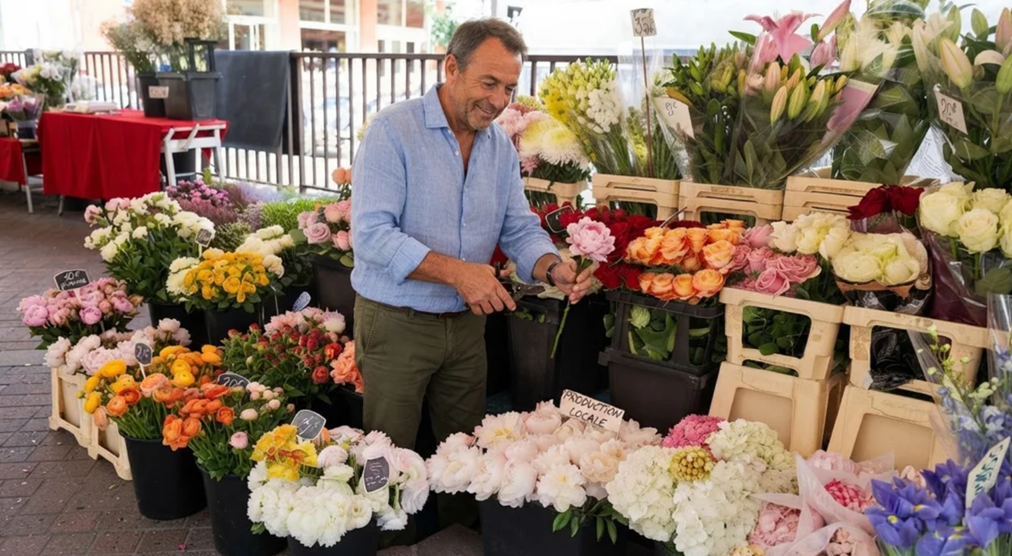
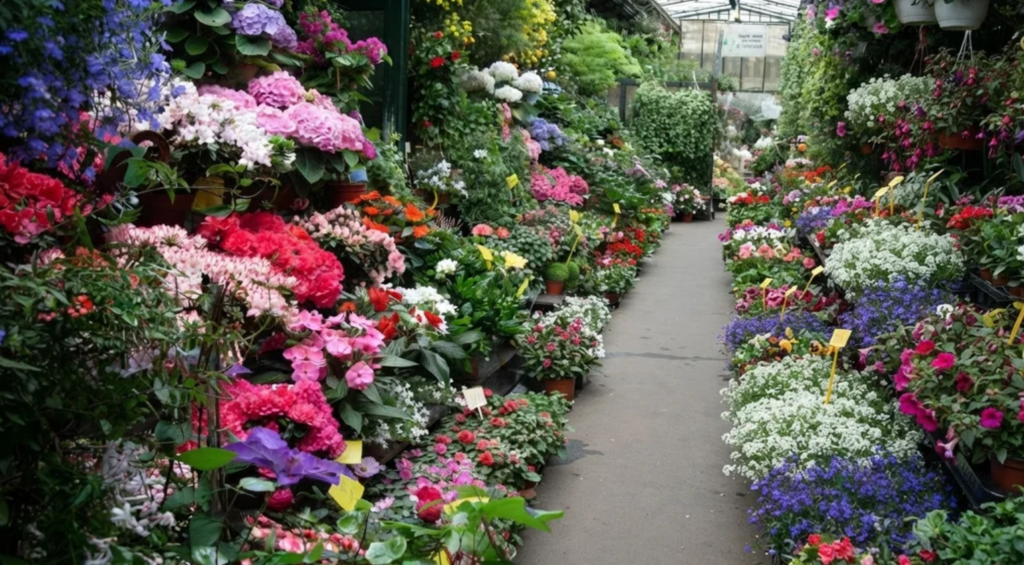
To wander through Cours Saleya is to surrender to the senses. The colours are dazzling: crimson roses stacked beside pale pink peonies, sun‑yellow mimosa glowing against the deep green of olive branches. The scents are intoxicating: lavender drifting in waves, mingling with the sweetness of figs and the sharpness of fresh herbs.
The sounds are part of the symphony too. Vendors call out prices, children laugh as they dart between stalls, and the occasional accordion player adds a soundtrack to the morning. Even the textures are irresistible—rough wicker baskets, smooth petals, the sticky sweetness of honey jars catching the light.
Beyond the Flowers
Though the blooms are the headline act, the market is no single‑note performance. The fruit and vegetable stalls are equally captivating. Melons sliced open to reveal their golden flesh, figs glistening like jewels, tomatoes stacked in pyramids of red and orange.
Vendors tempt passers‑by with samples, and it works—after one taste of melt‑in‑your‑mouth melon, baskets fill quickly. Alongside the produce are stalls selling spices, olives, honey, soaps, and artisanal crafts. Each item carries the imprint of Provence: rosemary‑scented soaps, jars of tapenade, sachets of dried lavender. It is impossible to leave empty‑handed.
By 1:30 PM, the fruit and vegetable vendors pack away, but the flower stalls linger until late afternoon, their blossoms glowing in the fading sun.
Mondays in Transition
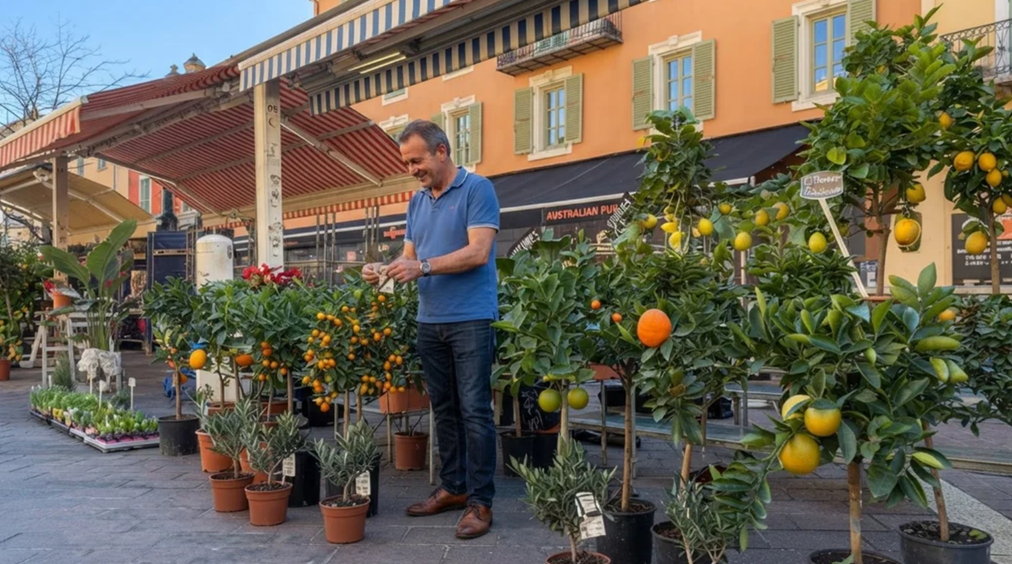
On Mondays, the rhythm shifts. The flowers retreat, and Cours Saleya becomes an antique market. Tables are laden with vintage jewelry, old books, Provençal ceramics, and curiosities that whisper of other lives. Collectors and browsers alike wander the aisles, searching for treasures. By evening, the boulevard transforms again.
A Market of Many Faces
Cours Saleya hosts four distinct markets, each with its own personality: Flower Market — Tuesday to Sunday, blossoms and bouquets until 5:30 PM.
Fruit & Vegetable Market — daily except Monday, closing at 1:30 PM.
Antique Market — every Monday, a collector’s delight.
Night Market — summer evenings from June to September, offering crafts and souvenirs beneath the stars.
Each market is a chapter in the story of Cours Saleya, together forming a narrative of colour, commerce, and community.
Faces Behind the Flowers
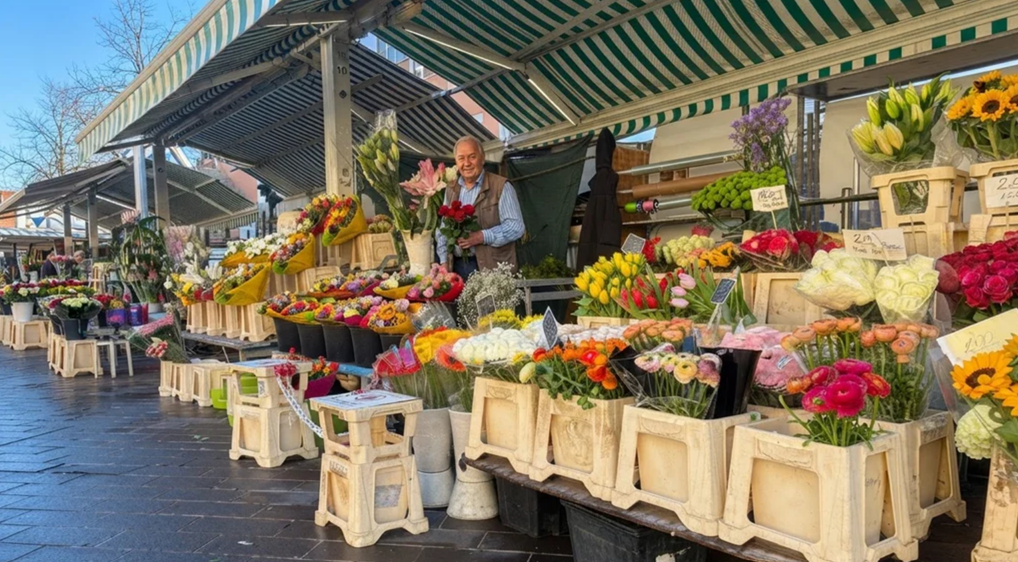
The true charm of the Marché aux Fleurs lies not only in its offerings but in its people. Florists and growers stand proudly behind their stalls, eager to share advice. They know their flowers intimately—how long they will last, which blooms pair best, which herbs will thrive on a balcony.
There is generosity here. Vendors often offer free samples—of fruit, of honey, of olives—enticing customers with a taste of Provence. Conversations flow easily, and even a brief exchange feels like a moment of connection.
Recognition and Legacy
The Marché aux Fleurs is registered among France’s exceptional markets by the National Council of Culinary Arts. Its reputation extends beyond Nice. Stories tell of Nicholas II, the Russian Tsar, who was so smitten with flower markets that he opened one in Saint Petersburg, sourcing blooms directly from Nice.
Such anecdotes underscore the global reach of this local tradition. What began as a simple exchange of flowers has become a cultural landmark, celebrated far beyond the Côte d’Azur.
Practical Rhythms
For those planning a visit, timing matters. Arrive early to avoid crowds and to see the market at its freshest. The schedule is as follows:
Flower Market — Tuesday, Thursday, Friday: 6:00–17:30; Wednesday & Saturday: 6:30–18:30; Sunday: 6:30–13:30. Closed Mondays.
Fruit & Vegetable Market — daily except Monday, 6:00–13:30.By afternoon, the market yields to café terraces, making Cours Saleya the perfect place to linger over lunch or an aperitivo.
The Atmosphere of Place
Cours Saleya itself is part of the magic. The street is pedestrianized, framed by ochre facades and shuttered windows. Terraces spill onto the cobblestones, and the Mediterranean is only a few steps away. The setting is quintessentially Provençal—sun‑drenched, convivial, enchanting.
To stroll here is to experience the essence of Nice. It is not just about what you buy, but about what you feel: the warmth of the sun, the hum of voices, the fragrance of flowers carried on the breeze.
A Traveler’s Reflection
Having visited Nice countless times, I have watched many sunrises over Cours Saleya as vendors set up their colourful stalls. Each visit feels new, yet familiar. The market is my go‑to recommendation for anyone wanting to experience the authentic soul of Nice.
It is a place where history and daily life converge, where locals and tourists mingle, where flowers are not just sold but celebrated. To wander here is to step into a living tradition, one that has endured for centuries and continues to thrive.
The Soul of Nice
The Marché aux Fleurs at Cours Saleya is more than a market. It is a sensory feast, a cultural landmark, a community gathering place. It is colour, scent, and sound woven into the fabric of Old Nice. Whether you come for the flowers, the produce, the antiques, or simply the atmosphere, you will leave with more than you expected.
You will carry with you the essence of Nice—the warmth of its people, the beauty of its blooms, and the rhythm of its mornings.