
A bison burger is not simply a leaner alternative to beef; it is a revelation in flavor. Bite into one and you’ll notice immediately that it carries the familiar richness of beef yet with a cleaner, sweeter finish. It is mild without being bland, robust without being heavy, and it lacks the gamey undertone that often defines other wild meats.
The closest comparison is ground sirloin, with its 90/10 lean-to-fat ratio, but bison has a subtle sweetness that makes it distinct. This is what makes the experience so memorable: you taste something familiar, yet elevated, as though beef has been refined into a purer form of itself. The lean quality of bison is both its strength and its challenge.
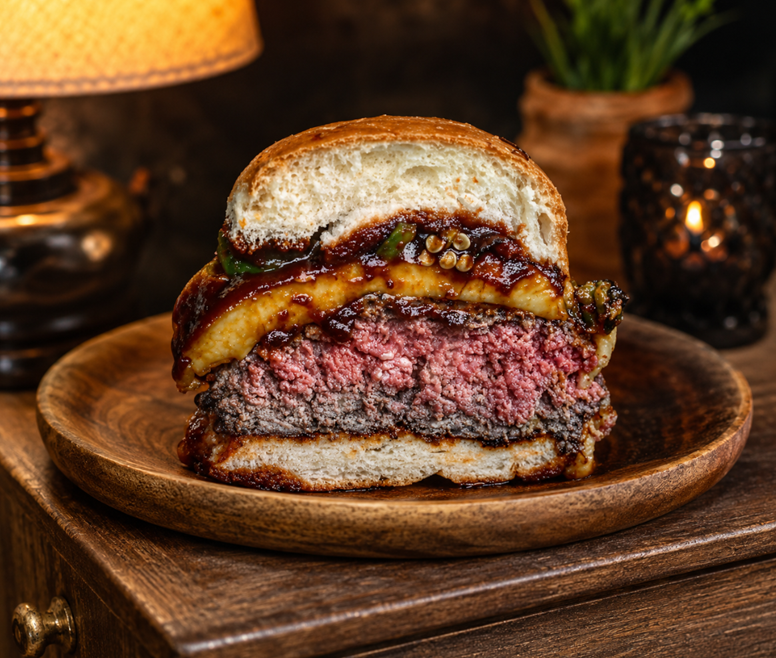
Because it contains less fat than beef, it is easy to overcook, and when that happens, the meat quickly loses its tenderness. The key to unlocking its flavor lies in restraint. Cook it only to medium-rare or medium, and you’ll discover a patty that is juicy, tender, and deeply satisfying. Push it past that point, and you risk dryness.
This is why bison rewards careful preparation. It is not a meat to rush or mishandle; it asks for respect, and in return, it gives you a burger that feels both indulgent and wholesome.
Cooking with Care
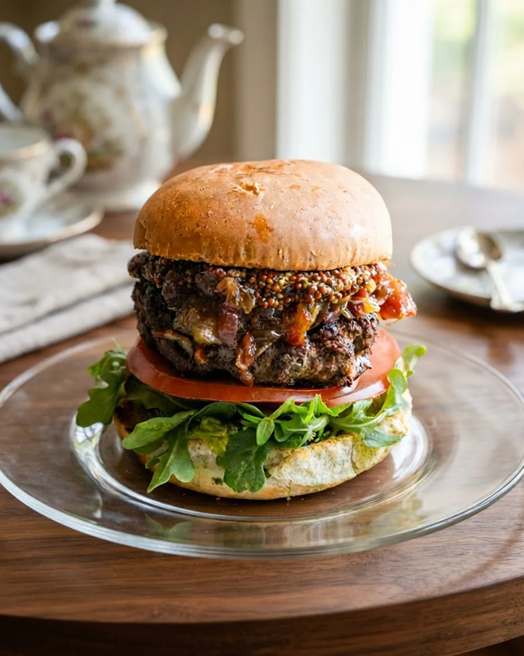
The art of cooking bison lies in small, deliberate choices. Seasoning should be light and thoughtful. Salt, pepper, garlic powder, and a splash of Worcestershire sauce are enough to enhance the natural flavor without overwhelming it. The meat should be handled gently, mixed just enough to incorporate the spices but never overworked.
Overmixing compacts the meat, creating a patty that is tough rather than tender. Forming the patty is another moment where care matters. Pressing a small dimple into the center before cooking prevents the burger from ballooning or shrinking unevenly. It is a simple gesture, but it ensures that the patty cooks evenly and retains its shape.
Some cooks choose to add fat back into the mix — a little beef tallow or grated cold butter folded into the ground bison. This is optional, but it can help restore juiciness without altering the flavor. Whether you choose to add fat or not, the principle remains the same: treat the meat with respect, and it will reward you.

Simplicity at Its Best
The beauty of bison is that it does not need elaborate preparation. A truly great bison burger requires only three ingredients: ground bison, salt, and pepper. Anything more is garnish. The meat itself is the star, and the less you interfere, the more it shines.
Form patties no thicker than an inch, let them cook gently, and resist the urge to press or smash them on the grill. The result is a burger that tastes of the prairie — clean, honest, and deeply satisfying. This simplicity is not just culinary; it is philosophical.
When you eat bison, you are tasting something elemental, something tied to land and tradition. It is food that carries history in its flavor, and to overcomplicate it would be to miss the point.
A Meat with History
Long before Canada was a nation, bison roamed the Great Plains in the millions. For Indigenous communities such as the Cree, Blackfoot, and Métis, the bison — often called buffalo — was central to life. Every part of the animal was used: meat for nourishment, hides for clothing and shelter, bones for tools, sinew for thread.
It was not simply food; it was a sacred symbol of abundance, respect, and balance with nature. Traditional preparation methods reflected this reverence. Drying and smoking preserved the meat for winter months or long journeys. Pemmican, a mixture of dried bison, berries, and fat, was one of the earliest examples of portable protein.
It was nutrient-rich, long-lasting, and deeply symbolic of Indigenous ingenuity. To eat pemmican was to carry with you the resilience of a people who lived in harmony with the land.
Modern Canadian Revival
Today, bison is experiencing a renaissance in Canadian kitchens. It appears on menus grilled, roasted, ground into burgers, or elevated in gourmet dishes. Its appeal lies not only in flavor but in health. Bison is naturally leaner than beef, lower in cholesterol, and packed with essential nutrients.
It is high in protein, supporting muscle repair and growth. It contains 25–30 percent less fat than beef, making it a lighter choice without sacrificing flavor. It is rich in iron, which supports healthy blood and energy levels, and it is high in B12 and zinc, crucial for immune function and metabolism.
Grass-fed bison even contains omega-3 fatty acids, contributing to heart health. For health-conscious Canadians, bison is more than a culinary choice; it is a lifestyle choice. It offers clean, nutrient-dense protein that aligns with modern values of sustainability and wellness. Eating bison is not about rejecting beef but about embracing variety, balance, and a deeper connection to food.
Ethical Farming and Sustainability
Bison farming in Canada reflects the animal’s natural rhythms. Herds roam wide pastures, grazing as they always have. Most are grass-fed, pasture-raised, and free from antibiotics or hormones. This is not industrial farming; it is regenerative agriculture.
By mimicking natural grazing behavior, bison farming supports biodiversity, enriches soil health, and sustains rural economies. Choosing bison means choosing a food system that honors land and heritage. It is a way of supporting local producers, preserving culinary traditions, and participating in a cycle of respect.
For consumers seeking natural, responsibly raised meat, Canadian bison stands out as a symbol of integrity.
Cooking Wisdom
To unlock bison’s best flavor, certain principles apply. For roasts and stews, cook low and slow. This keeps the meat tender and allows flavors to deepen. For steaks and burgers, avoid overcooking. Medium-rare to medium is perfection; beyond that, the meat risks dryness.
Moisture-retaining techniques such as marinating or cooking with broths and sauces help preserve tenderness. And always let the meat rest after cooking. This allows juices to redistribute, ensuring that every bite is flavorful. These are not complicated rules, but they are essential.
Bison is lean, and lean meat requires care. Treat it with patience, and it will reward you with flavor that is both bold and refined.
A Symbol of Resilience
Beyond its culinary and nutritional qualities, bison carries symbolic weight. It nourished Indigenous communities for millennia, sustained explorers and settlers, and now re-emerges as a staple of Canadian cuisine. It is a symbol of resilience, sustainability, and tradition.
To eat bison is to participate in a story that stretches across centuries, a story of survival, respect, and renewal. In every bite of a bison burger, you taste more than meat. You taste history, health, and heritage. You taste the land itself, transformed into nourishment. It is food that connects past and present, tradition and innovation, simplicity and sophistication.
Conclusion
Bison burgers are not just better than beef; they are different. They are leaner, sweeter, and cleaner, demanding careful cooking but rewarding it with flavor that feels both familiar and new. They carry with them the weight of history, the values of sustainability, and the promise of health.
They are a culinary experience that is deeply Canadian, rooted in Indigenous tradition yet thriving in modern kitchens. To cook a bison burger is to honor the land. To eat one is to taste resilience. And to share one is to participate in a story that continues to unfold — a story of food, culture, and connection.