
The Ascent
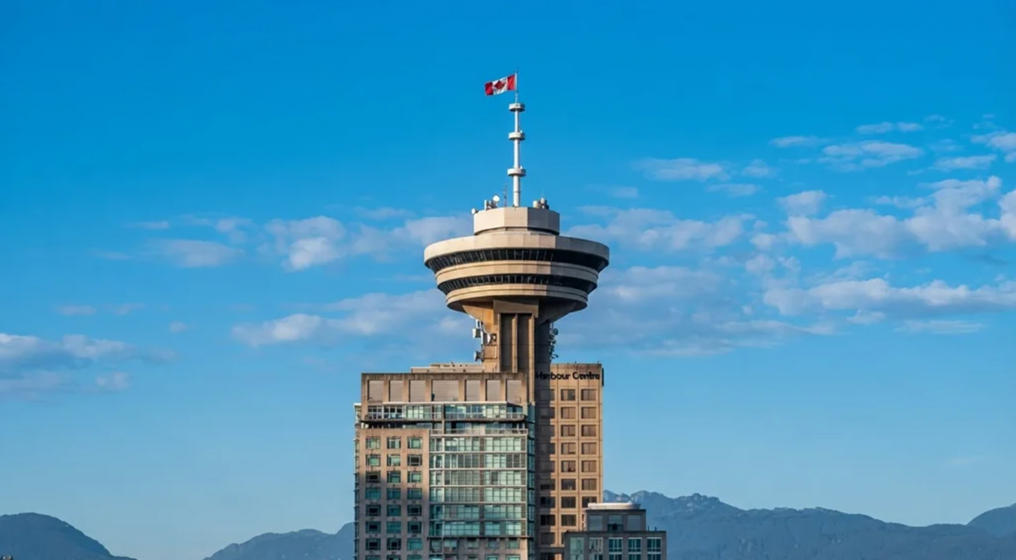
The journey begins at the base of Harbour Centre, where a glass-fronted elevator waits to carry visitors into the sky. In forty seconds, the city falls away, and the platform opens into a circular panorama. At 168 metres above the streets, Vancouver stretches in every direction.
The North Shore Mountains rise like guardians, Gastown’s brickwork whispers of the 19th century, and the Pacific Ocean gleams at the horizon. The Lookout is not simply a viewpoint—it is a revelation, a place where the city’s geography finally makes sense.
The Panorama
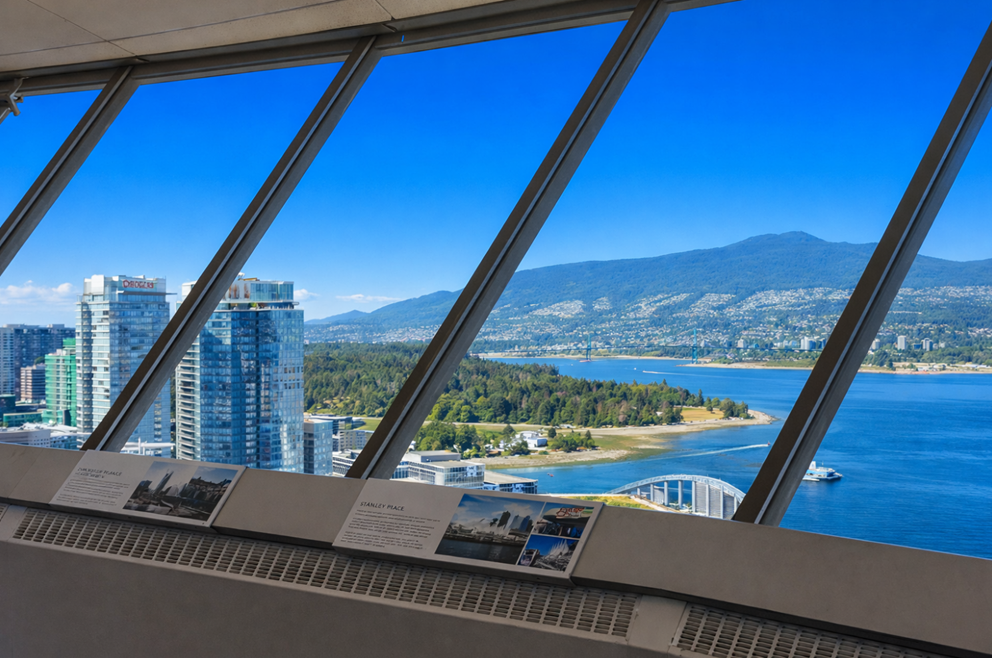
The deck offers a 360-degree sweep of Vancouver’s contrasts. Skyscrapers pierce the skyline, their steel and glass reflecting the harbour’s restless waters. Beyond, Stanley Park unfurls in green, its forest canopy a reminder of the wilderness that still defines the city.
To the east, the historic neighbourhoods of East Vancouver stretch toward the Fraser River, while to the west the ocean opens into infinity. Each step along the platform reveals another layer of Vancouver’s identity, urban ambition balanced against natural splendour.
The Rhythm of Light
Time transforms the view. Morning sharpens the outlines of towers, while afternoon softens them into amber haze. Sunset, when the season allows, is a spectacle worth waiting for—the mountains etched in violet, the ocean burning with copper fire. Tickets are valid all day, encouraging visitors to return at dusk for a second, entirely different perspective.
The skyline becomes a theatre of light, and the Lookout a stage where Vancouver performs its daily drama.
The Storytelling Deck
Panels line the walkway, offering fragments of Vancouver’s history: the rise of Gastown in the 1870s, the evolution of the harbour, the growth of the city’s infrastructure. A complimentary audio tour, available in ten languages, deepens the experience.
Free Wi-Fi keeps visitors connected, though the temptation is to disconnect entirely and let the city’s rhythm speak instead. The Lookout is not only a place to see—it is a place to learn, to understand how Vancouver became what it is today.
Gastown at the Base
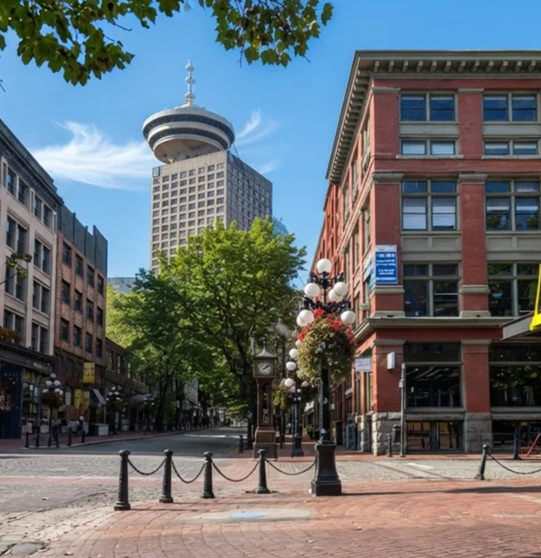
At street level, Gastown waits with cobbled lanes and the famous steam clock. This is Vancouver’s oldest neighbourhood, where brick warehouses have been reborn as boutiques. The Lookout’s proximity makes it effortless to pair the aerial view with a ground-level wander.
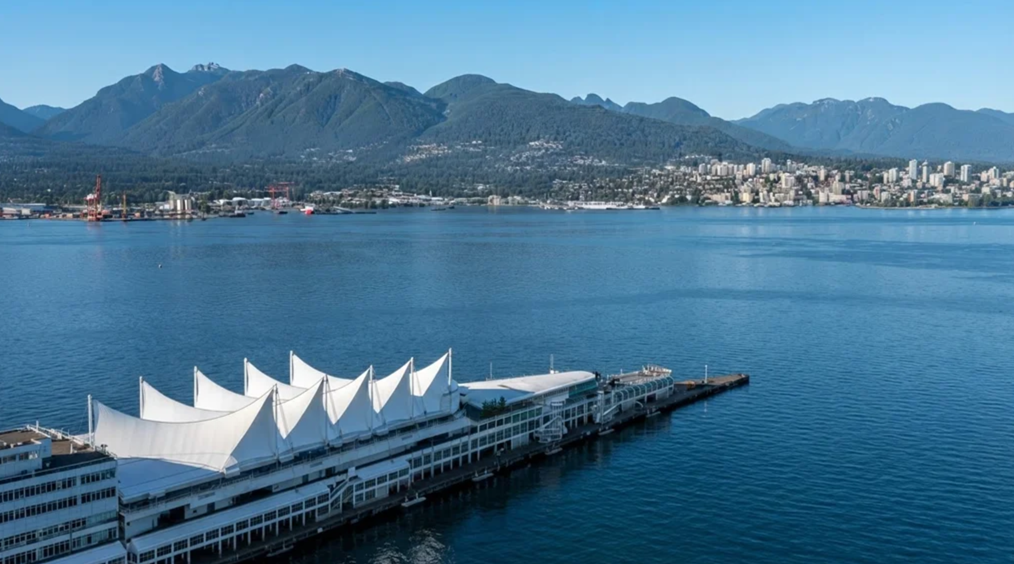
Within fifteen minutes’ walk, the city’s pulse quickens—Canada Place, Chinatown’s gardens, and the waterfront where ferries and seaplanes stitch together sea and sky.
The Practicalities
Tickets are straightforward: $19.95 for adults, $14.17 for students and children aged six to twelve, while younger children ascend free. Operational hours run from 10 a.m. to 6 p.m., with the last elevator ride at 6:30 during high season. A visit takes about 45 minutes to an hour—enough time to circle the deck, absorb the skyline, and pause for reflection.
Online booking is recommended, especially in summer, to avoid queues and secure the complimentary audio guide.
The Legacy
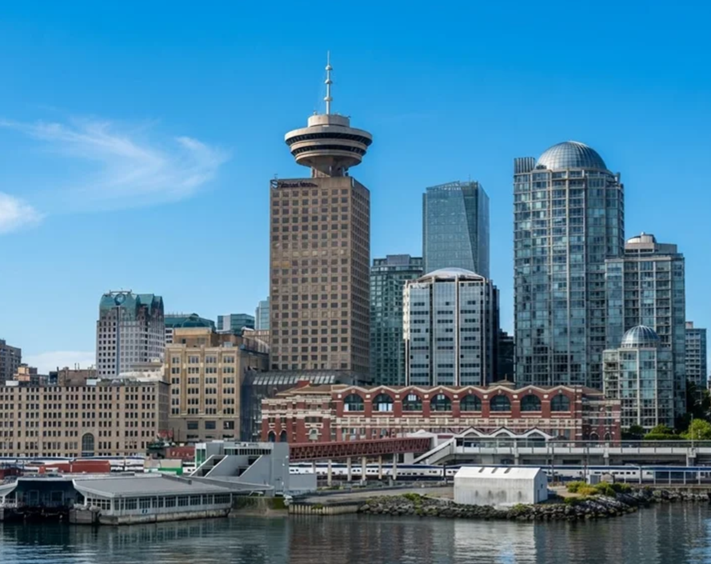
Since 1977, the Vancouver Lookout has stood as both landmark and lens. At one time the tallest building in the city, it remains an iconic feature of the skyline. Its longevity is part of its charm—decades of visitors have stood on the deck, gazing outward, each seeing the city anew.
The Lookout is not merely an attraction; it is a tradition, a rite of passage for those who wish to understand Vancouver.
The Neighbourhood Connections
Waterfront Station lies directly across the street, making the Lookout effortless to reach by SkyTrain, Seabus, or West Coast Express. Cruise passengers find it a short stroll from the terminal, while hotel guests in downtown can walk easily. The tower’s central location means it is not an isolated viewpoint but part of the city’s fabric, woven into the daily rhythm of commuters, tourists, and residents alike.
The Seasonal Shifts
Weather shapes the experience. On clear days, the mountains stand sharp against the sky, while clouds can veil them in mystery. Rain softens the city into mist, turning the view into a study of atmosphere. Each season brings its own character—winter’s snow-dusted peaks, spring’s fresh green, summer’s long sunsets, autumn’s burnished light.
The Lookout is never the same twice, and that is its enduring allure.
The Visitor’s Journey
The experience begins with anticipation—the elevator doors closing, the ascent swift and silent. At the top, the city opens like a map, each district visible, each landmark placed in context. Visitors circle the deck, pausing at windows, tracing streets, pointing out parks.
Cameras click, but the true memory is the sensation of standing above it all, seeing Vancouver as a whole.
The Educational Layer
The audio guide transforms the view into narrative, explaining the history of the harbour, the growth of the skyline, the cultural significance of neighbourhoods. It is a one-stop lesson in Vancouver’s evolution, delivered against the backdrop of the city itself. For families, students, and curious travellers, the Lookout becomes both classroom and observatory.
The Sunset Return
Those who return at dusk find the city transformed. Lights flicker on, bridges glow, and the ocean reflects the fading sky. The mountains darken into silhouette, while the downtown towers shimmer like lanterns. The Lookout at sunset is not just a view but an atmosphere, a moment when Vancouver feels both vast and intimate.
The Enduring Symbol
The Vancouver Lookout is more than an observation deck. It is a symbol of the city’s balance between urban ambition and natural splendour. It is a place where visitors understand Vancouver not as fragments but as a whole. Since 1977, it has offered proof of the city’s beauty, a vantage point where everything finally makes sense.