
Toronto vibes with energy — skyscrapers, streetcars, and the constant pulse of urban life. Yet just fifteen minutes across Lake Ontario lies a different rhythm entirely. The Toronto Islands, a chain of fifteen small islands linked by bridges and trails, form the largest urban car‑free community in North America. Known simply as “the Island,” this place is both playground and sanctuary: beaches, boardwalks, gardens, amusement rides, and quiet coves where the skyline feels like a distant dream.
To step onto the ferry is to step into another world. The city recedes, the lake opens wide, and the islands beckon with promises of escape.
Toronto’s Gentle Escape: A Day Trip to the Island
Centre Island: The Heart of Play
Centre Island is the hub of activity, a place where families gather and laughter fills the air. At Centreville Amusement Park, children squeal on roller coasters and spin on carousels, while parents linger at food stalls offering everything from ice cream to fries.
A short walk south brings you to Centre Island Beach, shallow and safe, perfect for swimming or picnicking. The pier stretches into Lake Ontario, framing the skyline in perfect symmetry. Nearby, the William Meany Maze recreates a centennial landmark with 1,200 Black Cedars, while Sakura cherry trees bloom each spring, lining paths with blossoms. Centre Island is not just a destination; it is a stage for memory.
Ward’s Island: Community by the Water
Ward’s Island is the only place where people live year‑round, and its beach reflects that intimacy. Just five minutes from the ferry dock, it feels like a small‑town shoreline, open to all but infused with community spirit. The refurbished Waiting Shed greets visitors, surrounded by native shrub gardens.
Trails lead to quiet corners, and the boardwalk stretches 1.5 kilometres along the lake, connecting Ward’s to Centre Island. Ward’s Island is not just a place; it is a neighbourhood woven into nature.
Olympic & Algonquin Islands: Hidden Corners
Smaller islands like Olympic and Algonquin offer quieter escapes. Picnic areas, gardens, and shaded paths invite lingering afternoons. These are places where you bring a book, spread a blanket, and let the day drift.
Gibraltar Point: History and Mystery
Between Centre and Hanlan’s lies Gibraltar Point Beach, quieter and more secluded. Couples and small groups find their own sandy alcoves, far from crowds. Nearby stands the Gibraltar Point Lighthouse, Canada’s oldest, built over 200 years ago. Its ghost stories linger in the air, whispered among dunes and fire ants. To walk here is to feel both history and solitude.
Boating the Lagoons
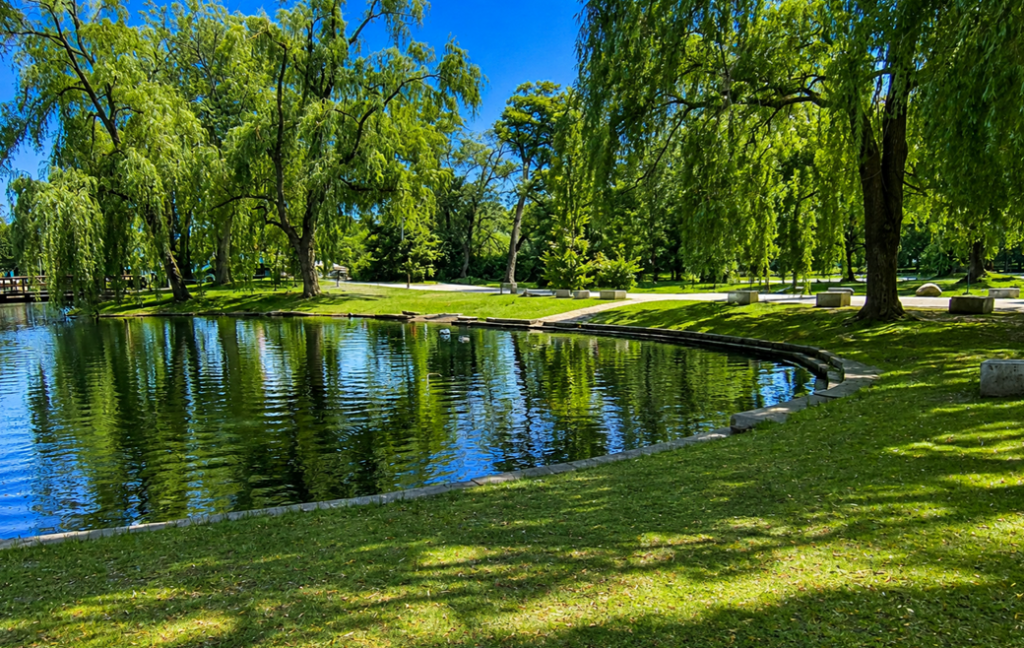
The islands are stitched together by lagoons, perfect for paddling. Rent a canoe or kayak at the Boat House, open daily in summer, and glide through waterways where bridges arch overhead and willows trail into the water. Moorings, marinas, and yacht clubs dot the shores, from the Toronto Islands Marina to the Royal Canadian Yacht Club. Boating here is not just recreation; it is exploration.
Franklin Children’s Garden
Inspired by Franklin the Turtle, this garden is a place of play and learning. Wheelchair accessible, it features vegetable plots, pollinator habitats, storytelling areas, and sculptures of beloved characters. Children explore hide‑and‑seek gardens, pine groves, and wetlands, discovering nature through imagination.
Horticultural Walks
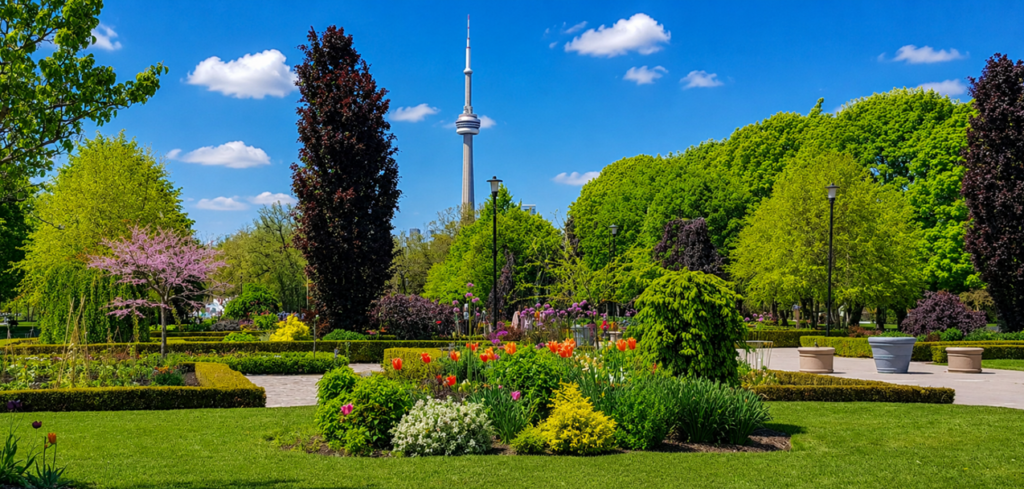
From the Centre Island ferry dock, perennial beds line the paths, leading south through lawns and clustered trees. The Avenue of the Islands is a formal pedestrian mall, manicured and colourful, extending to the pier. Each season reshapes the gardens, offering new palettes of bloom.
Walking & Hiking
Fourteen kilometres of trails connect the islands, open year‑round. Bridges link lagoons, paths wind through dunes, and boardwalks trace the shoreline. The Ward’s Island Boardwalk offers views of Lake Ontario and Tommy Thompson Park, while the Centre Island Pier frames the skyline in perfect symmetry.Walking here is not about distance; it is about discovery.
Bicycling
Bring your own bike or rent one on the island. Paved and gravel trails weave through forests and beaches, offering freedom without cars. Cycling here is not about speed; it is about immersion.
Birdwatching
The islands are an Environmentally Significant Area, a haven for migrating birds in spring and fall. Key spots include Hanlan’s Point, Gibraltar Point dunes, Snug Harbour, Snake Island, and Ward’s Island’s southeast. Herons, plovers, grebes, and kingfishers thrive here, alongside rare species adapted to fragile dune ecosystems. Birdwatching is not just pastime; it is pilgrimage.
Beaches: A Trio of Moods
Centre Island Beach: lively, family‑friendly, shallow waters.
Ward’s Island Beach: intimate, community‑spirited, closest to the dock.
Gibraltar Point Beach: secluded, quiet, perfect for couples or solitude.
Each beach offers its own rhythm, from laughter to silence, from crowds to calm.
Far Enough Farm
On Centre Island, Far Enough Farm invites visitors to meet over forty species of animals, from alpacas and llamas to exotic birds. It is a place where children learn the joy of connection, where city life feels far away.
History of the Islands
Once a peninsula connected to the mainland, the islands were severed by a storm during the gilded age. Sandbars shifted, lagoons formed, and settlements grew. Today, Ward’s Island still hosts residents, while the rest of the archipelago remains a park — 332 hectares of land shaped by wind, water, and time.
Know Before You Go
Ferries depart from the Jack Layton Ferry Terminal, with tickets available online or in person. Private water taxis offer faster crossings. Cars are not allowed; bicycles and walking are the way to explore. Off‑season runs from late October to mid‑April, with limited food and closed facilities, but trails remain open year‑round. Summer weekends bring long ferry lines; travel off‑peak for ease.
The Toronto Islands are a paradox: so close to downtown, yet worlds away. They are beaches and boardwalks, gardens and mazes, lighthouses and lagoons. They are history and mystery, play and peace. Whether you come for Centreville’s rides, Ward’s intimacy, or Gibraltar’s solitude, the islands remind you that escape need not be far. Sometimes paradise is just across the water.
Toronto Island Lookout
Dundas West Glow
At Dovercourt, the sun slides off glass towers while the street holds its grit. A neighborhood foreground, a skyline backdrop — two Torontos in one frame. Stay long enough and you’ll see the light shift from gold to rose, the glass catching every shade while the street hums with evening traffic. It’s a view that feels both accidental and deliberate, a collision of everyday life and architectural ambition.
Riverdale Park Stage
Broadview’s slope is a natural amphitheater. Families, joggers, and the skyline itself — all waiting for dusk to cue the lights. The hill is alive with chatter, dogs chasing frisbees, and couples leaning into the horizon. When the sun drops, the towers ignite one by one, and the park becomes a theater of silhouettes against the city’s glow. It’s communal, cinematic, and unmistakably Toronto.
Island Postcard
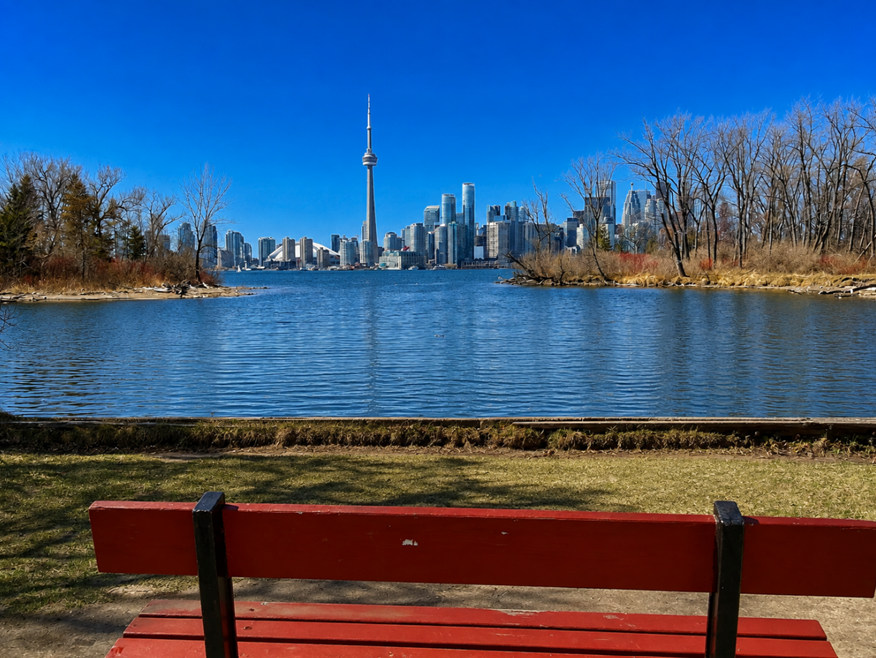
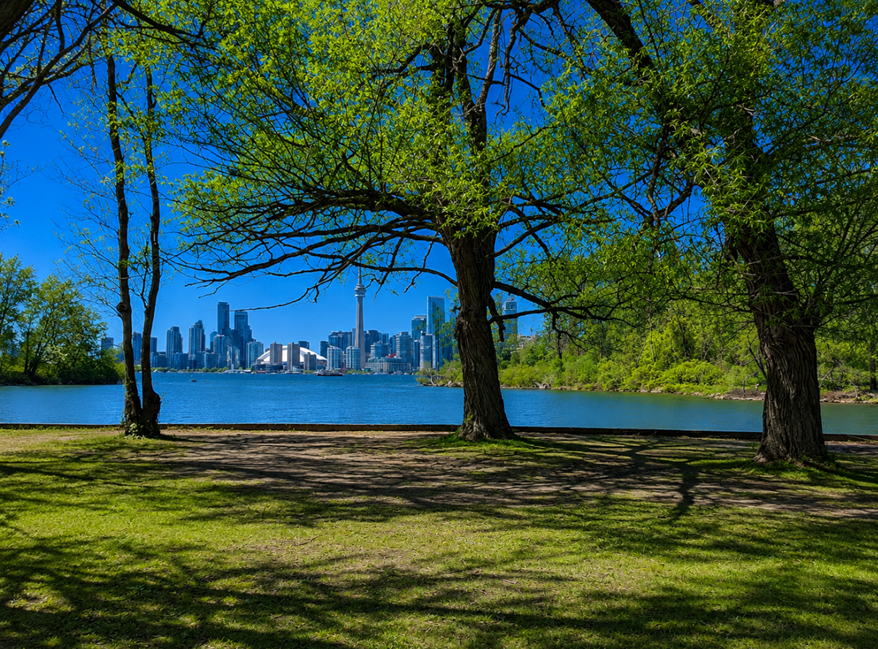
Wards, Centre, Hanlan’s — one long shoreline stitched by bridges. Stand on the north edge and the city unfurls, wide and cinematic. Olympic Island is the full panorama, the skyline stretched like a mural across the lake. The water softens the edges, the towers rise crisp against the sky, and the ferry ride itself feels like a prelude. At night, the reflection doubles the city, lights shimmering across the surface, a postcard come alive.
Leslie Spit Wilds
A trek to Tommy Thompson Park, better with a bike. Marsh, meadow, and then — the city rising beyond, singular and unexpected. The path winds through wildflowers and bird calls, until suddenly the skyline appears, framed by untamed nature. It’s a contrast that feels almost surreal: cranes and towers beyond cattails and quiet water. The Leslie Spit is where Toronto shows its dual identity — urban ambition and natural refuge, side by side.
Polson Pier Frame
The skyline squared against the water, sharp and direct. A photographer’s clean shot, the city lined up like a portrait. From here, the CN Tower dominates, flanked by glass and steel, every detail crisp. It’s the kind of view that feels designed for postcards and album covers, a perfect composition. Stay until twilight and the lights sharpen into neon clarity, the skyline glowing like a stage set waiting for applause.
Trillium Trail
Behind Ontario Place, the path bends toward the towers. A quieter angle, softened by lake breeze, where joggers and cyclists weave past. The skyline here feels more intimate, less formal — towers rising beyond trees and water, softened by distance. It’s a place for reflection, where the city seems approachable, almost gentle. At sunset, the trail becomes a corridor of light, the skyline glowing through branches and open sky.
Chester Hill Quiet
A tucked‑away perch, intimate and still. The skyline feels closer here, almost personal, framed by rooftops and treetops. It’s the kind of spot you stumble upon, where the city reveals itself without spectacle. The view is layered — houses in the foreground, towers beyond — a reminder of Toronto’s scale and intimacy. At dusk, the skyline glows softly, not overwhelming but steady, a quiet companion to the neighborhood below.
Humber Bay Sweep
From the west, the city stretches across the horizon. A panorama that feels both distant and complete, the skyline rising beyond the lake’s curve. The towers line up like a procession, the CN Tower anchoring the view. Here, the city feels monumental, a silhouette against open water. At sunrise, the skyline glows from behind, the lake catching every reflection. It’s expansive, dramatic, and unforgettable — Toronto in full sweep.
Where Should You Stay Near the Toronto Islands? Hotel Tips
Overnight stays on the Toronto Islands are not part of the usual visitor experience. There are no hotels or campgrounds, and it is forbidden to simply miss the last ferry and wander the islands after dark. The islands are meant to be a day trip, a pause from the city, not a place to settle in for the night.
There are exceptions, though rare. A handful of homes on Ward’s Island occasionally appear on Airbnb, offering a glimpse into the quiet rhythms of island life. Marinas also line the shore, and sometimes luck means meeting a local with a boat who extends an invitation to stay aboard.
But for most visitors, the islands close with the sunset, and the return ferry is the only way back. The best option is to stay close to the ferry docks, where hotels offer comfort and convenience with views of the lake. The Radisson Blu Toronto Downtown sits at Queens Quay, a short walk from both ferries and water taxis.
Its outdoor pool looks out over the CN Tower and the harbour, a rare vantage point that blends city skyline with lake horizon. Even closer is the Westin Harbour Castle, positioned right beside the ferry terminal. It is impossible to stay nearer to the boats, and the hotel’s lakefront suites and wellness amenities make it a seamless choice for those who want to wake up and step directly into the day’s island adventure.
For a more boutique experience, Union Hotel near Union Station offers a creative, artist-friendly atmosphere. Its design-forward interiors and proximity to transit make it easy to reach the ferry docks within minutes, while still feeling immersed in Toronto’s cultural core.
The islands themselves may not host overnight guests, but the hotels along the waterfront provide the next best thing: waking up with the lake at your doorstep, ready to cross the water and spend the day among beaches, gardens, and trails.