
The Triglav Lakes Valley, known locally as Dolina Triglavskih jezer and internationally as the Seven Lakes Valley, is one of the most celebrated alpine corridors in Slovenia. It lies within the Julian Alps, a mountain range that forms the backbone of Triglav National Park.
This valley is not simply a hiking destination; it is a living museum of glacial history, pastoral tradition, and alpine ecology. To walk here is to trace the contours of Slovenia’s national identity, for Mount Triglav itself — the highest peak in the country — lends its name to the valley and symbolizes the spirit of the Slovenian people.
The Seven Lakes of Triglav
The valley’s fame rests on its string of seven lakes, each distinct in character. Together they form a sequence of alpine jewels, scattered across an 8‑kilometer corridor carved by glaciers.
- Jezero pod Vršacem, also called Jezero v Podstenju, lies quietly beneath the ridges, a reflective pool that feels hidden from time.
- Mlaka v Laštah is more pond than lake, delicate and seasonal, yet vital to the valley’s biodiversity.
- Rjavo jezero, the Brown Lake, is earthy in tone, its waters tinted by minerals and surrounding rock.
- Zeleno jezero, the Green Lake, shimmers with emerald hues, a favorite among photographers.
- Veliko jezero, also called Jezero v Ledvicah or Kidney Lake, is the largest, stretching wide beneath alpine ridges.
- Dvojno jezero, the Double Lake, is perhaps the most romantic, two basins joined together, reflecting sky and stone.
- Črno jezero, the Black Lake, lies lower in the valley, its dark waters framed by forest.
Each lake is a chapter in the valley’s story, and together they form a pilgrimage route for hikers who seek both beauty and solitude.

Approaches to the Valley
There are two principal approaches to the Seven Lakes Valley. The gentlest begins at Planina Blato, reached by a toll road from the village of Stara Fužina. This route is pastoral, winding across alpine meadows where herdsmen huts still stand, reminders of centuries of transhumance. It is the most romantic approach, and the one favored by day hikers.
The second approach begins at Koča pri Savici, above Ukanc on the far side of Lake Bohinj. This path is steeper, more demanding, and often slippery after rain. The tourist board at Ribčev Laz cautions strongly against descending this way, especially in wet conditions. For safety and enjoyment, most hikers choose Planina Blato.
Trail Details
- Trailhead: Planina Blato (1147 m)
- Destination: Koča pri Triglavskih jezerih (1685 m)
- Distance: 15.2 km out‑and‑back
- Time Required: 6 hours
- Elevation Gain/Loss: 1051 m
- Difficulty: Easy‑Moderate, well‑marked trail
- Fees: None, aside from the 20 EUR toll road
The route ascends steadily through forest and pasture, reaching Koča na Planini pri Jezeru, then Dedno Polje, Ovčarija, Štapce, and finally the Triglav Lakes Hut. The return via Viševnik offers variation and fresh scenery.

Responsible Exploration
The valley lies within Triglav National Park, Slovenia’s only national park and a protected landscape. Visitors must respect strict rules: bathing in lakes is prohibited, as are bonfires, wild camping, and drone flights. Meadows and forests belong to local farmers, so hikers must remain on marked trails. Picking flowers is forbidden, and all garbage must be carried out. The ethos here is simple: leave no trace, so that future generations may experience the valley as it is today.
Getting to Planina Blato
The journey begins in Stara Fužina, an alpine village on the eastern shore of Lake Bohinj. From here, a serpentine toll road climbs 8.2 km to Planina Blato. The toll is 20 EUR, and parking is limited, so early starts are recommended. Camper vans are banned, but in summer a free shuttle connects Bohinj villages to the Vogar‑Blato crossroad, just 640 m from the trailhead.
Off‑season, hikers without cars can ascend from Stara Fužina, adding 600 m of elevation and extending the hike to 12 km one way. This longer route is demanding, but can be broken into two days with overnight stays at mountain huts.

Route Experience
The first hour climbs steadily through spruce forest to Koča na Planini pri Jezeru, a hut above a small lake. This section is monotonous compared to what follows, but the hut offers rest and refreshment.
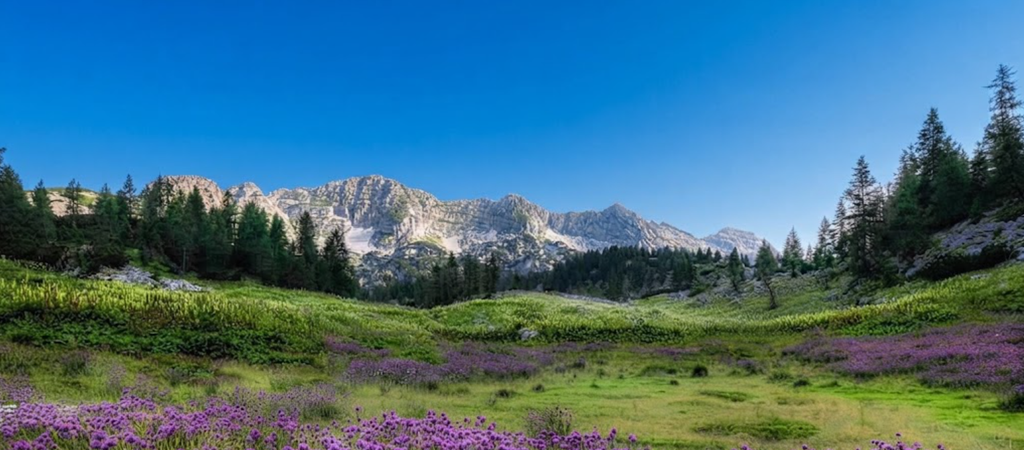
From here, two paths lead to the Triglav Lakes Hut: via Dedno Polje or Viševnik. Ascending through Dedno Polje is shorter and gentler. The trail passes through meadows dotted with herdsmen huts, unfolding into wide views of the Southern Julian Alps. Peaks such as Tolminski kuk, Mahavšček, and Bogatin rise in the distance, their ridges etched against the sky.
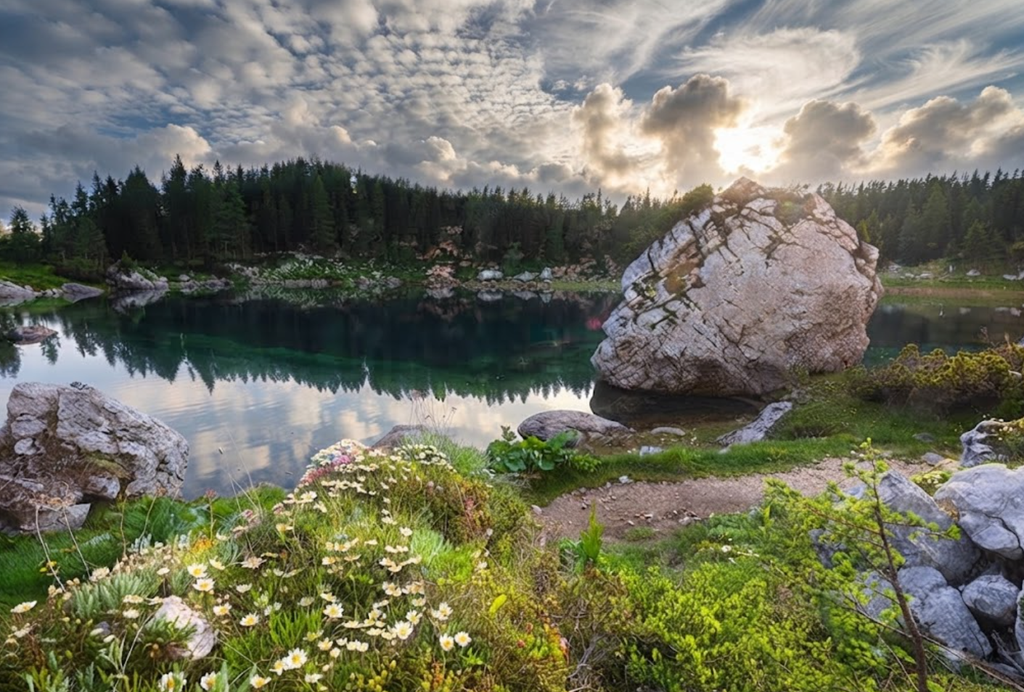
At Ovčarija, hikers choose between the Štapce saddle or the longer Prodov route. Štapce is steeper but direct, secured with cables for safety. Beyond the saddle, the trail descends to Dvojno jezero, its mirrored surface framed by ridges. Just minutes further lies the Triglav Lakes Hut, where hikers pause for lunch.
Extending the Journey
Most day hikers turn back at Double Lake, but the valley stretches further. A 45‑minute climb leads to Veliko Jezero, the largest of the seven. Its kidney shape and vast surface make it a highlight of the valley.
For multi‑day treks, hikers can continue to Zasavska koča na Prehodavcih, perched at 2071 m. From here, experienced hikers may tackle the Veliko Špičje Ridge Trail, a demanding crest walk with sweeping alpine views. The ridge requires stamina and skill, but rewards with panoramas of the Julian Alps.
The descent follows the valley, passing Zeleno Jezero and Veliko Jezero before returning to the Triglav Lakes Hut. This circuit transforms the hike into a pilgrimage, touching each of the seven lakes.
Return Journey
The recommended return follows Viševnik, offering variation and fresh scenery. Meadows and forests unfold differently in descent, and the trail feels renewed. By the time hikers reach Planina Blato, the valley has imprinted itself deeply: a sequence of lakes, pastures, and ridges, each carrying its own memory.

The Spirit of the Valley
The Triglav Lakes Valley is more than a hike. It is a passage through Slovenia’s alpine heritage. Each lake reflects the Julian Alps, each pasture carries centuries of tradition, and each trail reminds hikers that this is a protected, living landscape. To walk here is to honor both nature and culture, to move slowly through a corridor where water, stone, and sky converge.