
Faroe Islands > Things to do in Faroe Islands > Vágar Island
The Island of Contrasts
Vágar Island, the third largest of the Faroe Islands, is a compact showcase of dramatic landscapes, folklore, and living heritage. With six populated villages and a coastline carved by waterfalls and sea stacks, it balances accessibility with wilderness. For travellers, Vágar is often the first impression of the Faroes, thanks to its airport, yet it remains a destination worthy of a full day or more.
Múlafossur Waterfall – The Iconic Cascade
On the western edge lies Múlafossur Waterfall, plunging over 30 metres into the Atlantic. The viewpoint is reached by a short walk, where the turf‑roofed village of Gásadalur forms a backdrop of green valley and towering cliffs. This waterfall is among the most photographed sites in the Faroes, its beauty amplified by the isolation of its setting.
Gásadalur – Valley Settlement
Encircled by mountains, Gásadalur remained cut off until the tunnel opened in 2006. Before then, residents relied on strenuous hikes or helicopter transport. The Postman’s Route, a 2.8 km trail linking Bøur and Gásadalur, recalls the days when mail was carried on foot twice weekly. Today, hikers retrace this path, experiencing both history and challenge.
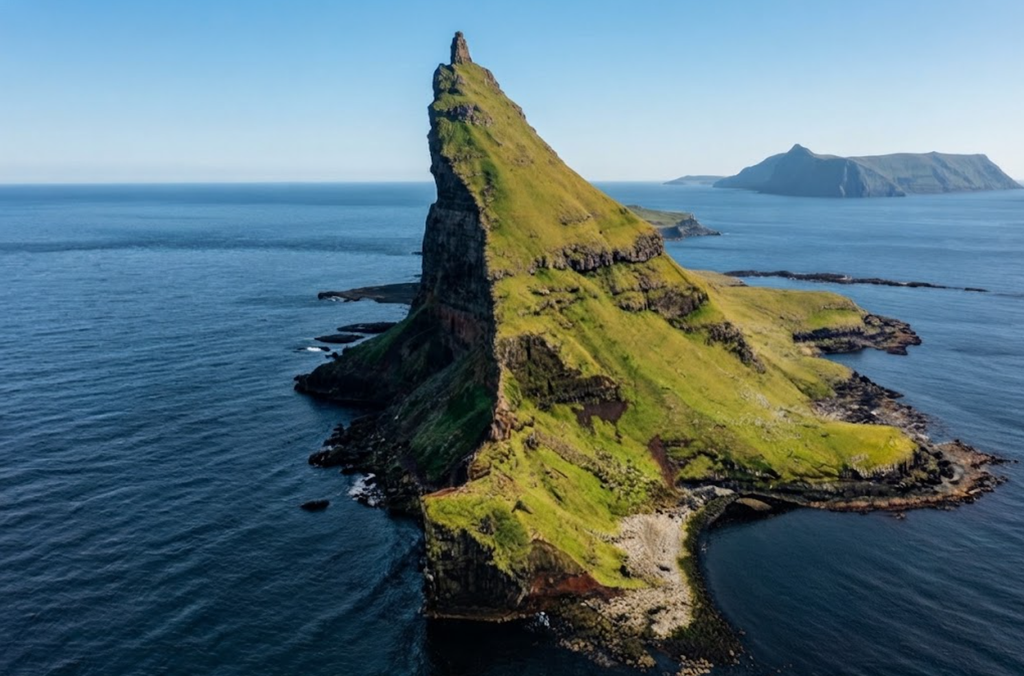
Tindhólmur and Drangarnir – Offshore Landmarks
East of Gásadalur, a roadside pull‑off reveals views of Tindhólmur, an uninhabited islet with five jagged peaks, and the Drangarnir Sea Stacks. Both are accessible only with guides, their hikes considered demanding. Easier perspectives come from boat tours departing Sørvágur, where the silhouettes rise starkly against the horizon.

Bøur – Historic Village
Mentioned in records as early as 1350, Bøur is a cluster of turf‑roofed houses along narrow lanes. Its coastal setting provides sweeping views of Mykines and Tindhólmur. From here, a 3 km hike leads to Vatnsdalsvatn Lake, perched 275 metres above sea level and shaped like a heart. The trail takes 1.5 hours, rewarding hikers with panoramic vistas of the western coast.
Sørvágur – Gateway Port
Sørvágur serves as Vágar’s transport hub, home to the airport and ferry departures to Mykines. Its fjord reveals one of the Faroes’ largest sandy stretches at low tide, though the beach vanishes completely at high tide. The harbour blends traditional fishing with modern tourism, offering boat tours to sea stacks and neighbouring islands.
Vatnsoyrar – Lakeside Village
Founded in 1921, Vatnsoyrar is unique as the only Faroese village not on the ocean. Instead, it sits beside Sørvágsvatn Lake, reflecting the adaptability of settlers who chose inland waters over coastal exposure.
Miðvágur – Middle Bay Settlement
The village of Miðvágur, dating back to Viking settlement, lies on the southern coast. Colourful houses with turf roofs line its streets. From here begins the celebrated hike to Sørvágsvatn Lake, Trælanípa cliff, and Bøsdalafossur waterfall.
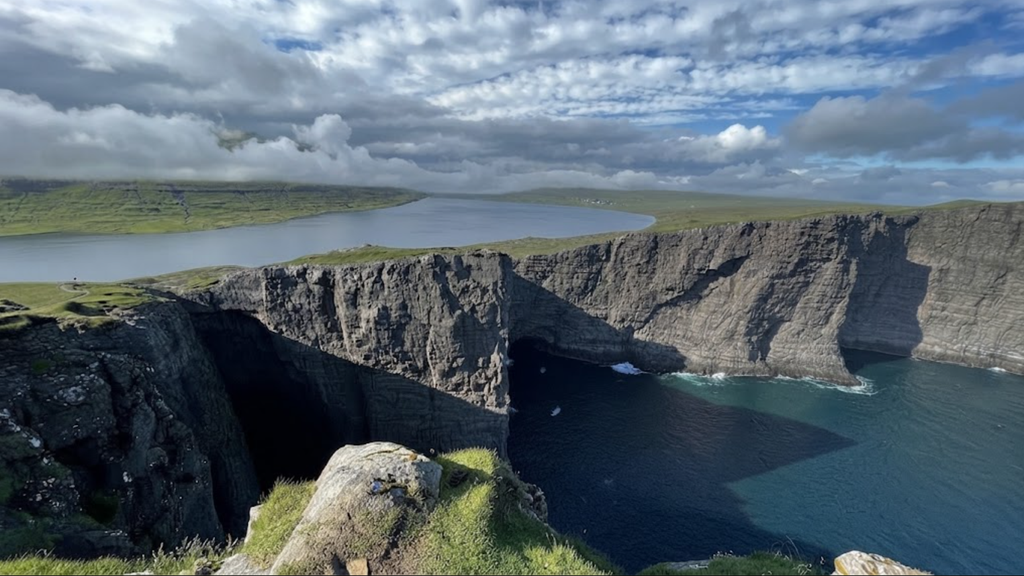
Sørvágsvatn Lake – The Hanging Lake
Known as “The Lake Above the Ocean,” Sørvágsvatn sits 30 metres above sea level. The 7 km trail parallels its shore, leading to Trælanípa. From certain angles, the lake appears suspended above the Atlantic, an optical illusion created by elevation and cliff perspective.
Trælanípa – Slave Cliff
Rising 140 metres above the ocean, Trælanípa carries legend. Viking slaves, when disobedient, were said to be cast from its edge, giving rise to the name “Slave Cliff.” The viewpoint offers sweeping panoramas of the lake and ocean, with paths branching toward Bøsdalafossur waterfall.

Bøsdalafossur Waterfall – Ocean Outflow
At the western end of Sørvágsvatn, Bøsdalafossur Waterfall spills directly into the Atlantic. The cliffs surrounding the cascade host seabird colonies, making the site both scenic and ecological. The combination of lake, waterfall, and ocean embodies the island’s layered landscapes.
Sandavágur – Viking Echoes
Sandavágur preserves medieval heritage with its runestone housed in the church. The café Fiskastykkið – Úti á Gjógv, set in a former fishing warehouse, serves Faroese specialties including salted cod, still exported globally as Bacalao Faroe. The stone‑paved ground nearby recalls centuries of fish drying and trade.
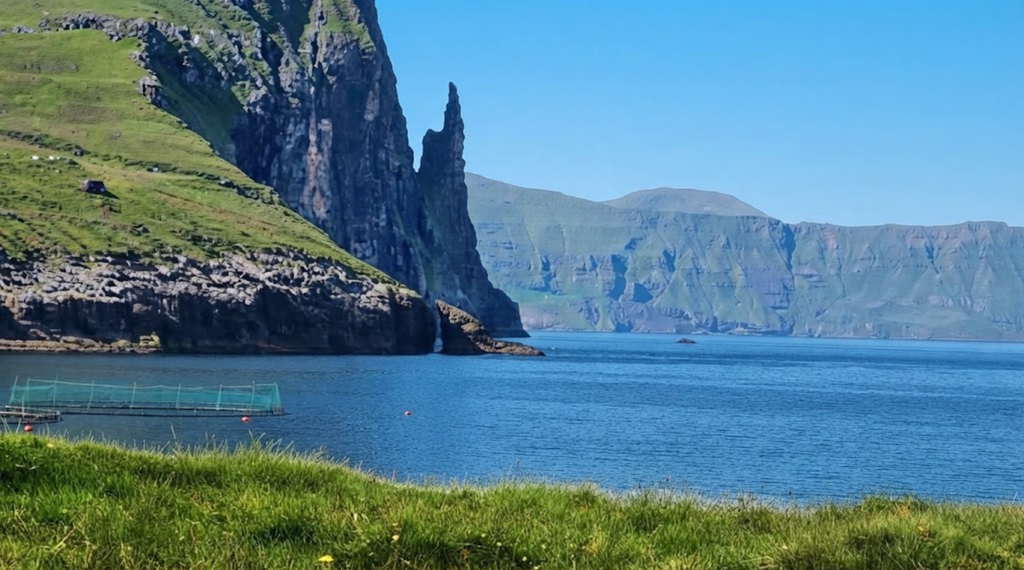
Trøllkonufingur – Witch’s Finger
A short 3 km trail from Sandavágur leads to Trøllkonufingur, a slender sea stack rising 313 metres above the waves. Folklore tells of a witch turned to stone, her crooked finger pointing skyward. Photographers favour late afternoon light for capturing its silhouette against the ocean.
Mykines – Puffin Island
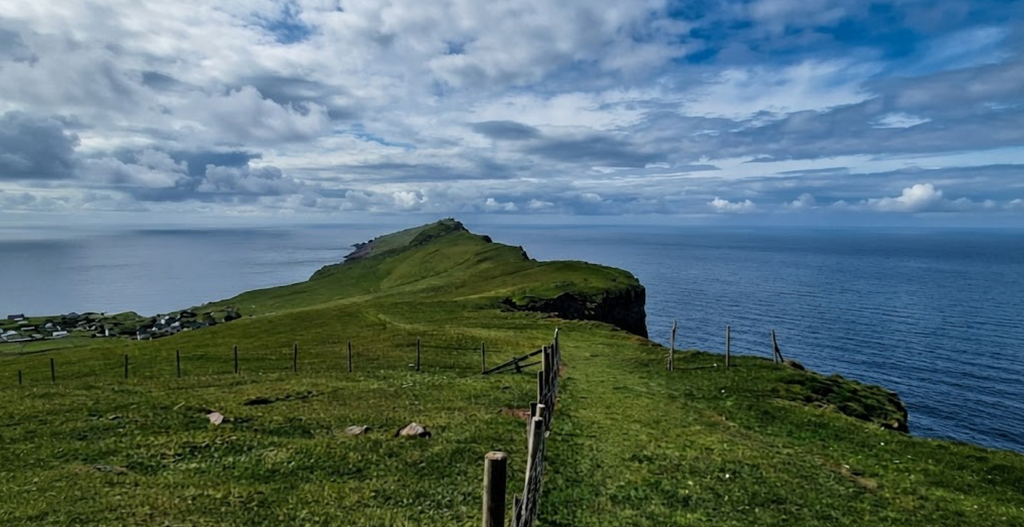
For those extending their stay, Mykines offers grassy slopes dotted with puffin burrows from May to August. The ferry from Sørvágur takes 45 minutes, though weather can cancel crossings. A local fee grants access to puffin viewing areas and trails, including the footbridge to Mykineshólmur and the climb to Knúkur peak. Puffins, gannets, and other seabirds make the island a living aviary.
Folklore and Legends – Stories in Stone
Vágar’s landscapes are interwoven with tales. Trælanípa recalls Viking cruelty, while Trøllkonufingur embodies witchcraft halted by sunrise. These legends enrich the scenery, transforming cliffs and stacks into cultural landmarks.
Hiking Culture – Trails and Access
Vágar’s trails range from easy walks to demanding climbs. The Postman’s Route challenges hikers with steep ascents, while Sørvágsvatn’s path offers accessible grandeur. Regulations ensure protection of bird nesting sites, balancing tourism with conservation.
Villages and Community – Living Heritage
Each village reflects adaptation to geography. Gásadalur’s isolation, Vatnsoyrar’s inland setting, and Sandavágur’s Viking roots illustrate resilience. Turf roofs, wooden houses, and communal traditions preserve identity amid modern tourism.
Practical Travel – Logistics and Timing
Vágar Airport connects the Faroes to Europe, making the island the entry point for most visitors. Roads link villages within short drives, enabling a full day itinerary. Weather shifts rapidly, requiring preparation for rain and wind. Hiking fees, such as those at Sørvágsvatn, support trail maintenance and local stewardship.
Compact Grandeur
Vágar Island condenses the essence of the Faroes: waterfalls plunging into the sea, lakes suspended above cliffs, villages rooted in Viking history, and folklore etched into stone. Whether explored in a single day or extended with Mykines, it offers travellers a journey through landscapes both natural and cultural.